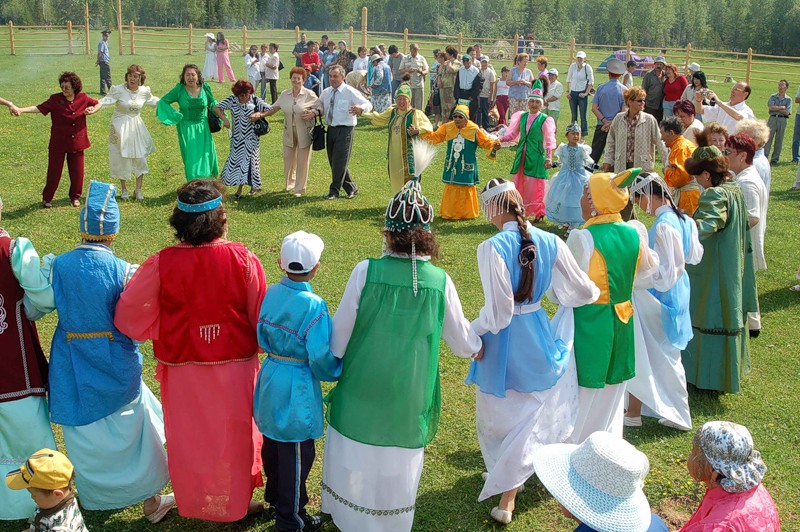
Yhyakh
In its own language: Ыһыах
from the Yakut word meaning abundance
A summer solstice festival of the Sakha people marking the new year and nature's return
Yhyakh is a traditional holiday celebrated by the Yakuts and Dolgans in the Sakha Republic of Russia. It marks the beginning of the new year and celebrates the rebirth of nature after winter.
- Celebrated on June 21st, the summer solstice
- Marks the Sakha New Year and nature's rebirth
- Elder sprinkles kymys and feeds the sacred fire
- Ohuokhai dance features poetic improvisation and circle formation
- Revived publicly in Yakutsk starting in 1990
What it is
Yhyakh serves as the primary New Year celebration for the Sakha people, distinct from the standard Russian winter observance. The festival aligns with the summer solstice on June 21st. It honors the revival of the natural world following the severe cold. Participants view it as a victory of life over the harsh season. The event fosters community bonding through shared meals and rituals.
Where it comes from
The holiday has roots in ancient Sakha customs linked to solar worship. Historically, it marked the agricultural cycle in a region with extreme temperature swings. The name translates to abundance, reflecting hopes for prosperity. The celebration was nearly lost during periods of cultural stagnation. A formal revival began in Yakutsk in 1990, restoring public visibility to these ancient rites.
How it is done
The oldest man, dressed in white, initiates the ceremony. He sprinkles fermented mare's milk onto the ground. He then feeds the sacred fire while praying to the Ai-ii spirits. These prayers seek blessings for the gathered community. Following this, participants engage in the Ohuokhai circle dance. Women and children decorate trees and posts with horsehair bundles called salama.
Tools and materials
Kymys, or fermented mare's milk, is central to the ritual offerings. Fire represents the solar deity and receives prayers. Salama consists of nine bunches of horsehair tied to ropes. These items are hung on tethering posts and trees. The white clothing worn by the elder signifies purity and status.
Yhyakh, drawn and placed
- Living
- Revived
- Fading
- Historical
- Legendary
- Performed
- Lineage
- Sakha cultural traditions
- Timing
- June 21st
What it is for
People gather to ask for well-being and protection from the Ai-ii spirits. The festival aims to ensure a successful year ahead. It strengthens social ties among families and neighbors. The rituals express gratitude for the returning warmth and light. Community members seek harmony with the natural forces they depend on.
Who does it
The entire household participates in the festivities. The oldest male member holds a specific leadership role in the opening rite. Dancers require skill in singing and poetic improvisation. The Ohuokhai leader guides the group with rhythmic movements. Participation is open to all community members regardless of age.
Peoples and places
The Yakuts and Dolgans are the primary groups observing Yhyakh. They reside mainly in the Sakha Republic within Russia. The climate there features long winters and short summers. This environment shapes the festival's focus on seasonal change. Diaspora groups also celebrate the holiday in places like Washington State.
At a glance: who, where and when
Who does it
Belief worlds
What people believe
The Sakha worldview includes a cult of a solar deity. Spirits known as Ai-ii are believed to influence human fortune. Prayers are directed to these entities for communal welfare. The festival acknowledges the power of nature and the seasons. Ancestral traditions connect modern practitioners to their cattle-breeding past.
When it is done
The main date is June 21st, the summer solstice. Celebrations typically occur between June 10th and 25th. This timing coincides with the brief warm season. The festival marks the start of the local new year. It stands apart from the January New Year celebrations common elsewhere in Russia.
How scholars and sceptics see it
Researchers note the festival's connection to ancient sun worship. Anthropologists study the Ohuokhai dance as a form of poetic expression. The dance combines movement, song, and improvised verse. Experts appreciate the unique vocal techniques used in the performances. The revival of Yhyakh is seen as a key part of cultural preservation.
Cautions and what is closed
No specific health or legal risks are associated with the festival. The practices are cultural and religious expressions of the Sakha people. Outsiders are welcome to observe the public celebrations. The rituals are not intended for private or secretive practice.
Compare and confuse
Yhyakh shares themes with other solstice festivals worldwide. It is related to Sabantuy and Tsagaan Sar in some cultural contexts. The Sun Dance of Plains Indians also occurs around midsummer. However, Yhyakh remains distinct in its specific Sakha rituals and spirit beliefs.
Law and persecution
The Sakha Republic officially recognizes and supports the festival. It is a protected part of regional cultural heritage. Government involvement helped revive the holiday in the late twentieth century. There are no legal restrictions on its practice.
Questions people ask about Yhyakh
What is Yhyakh?
Yhyakh is the traditional New Year festival of the Yakuts and Dolgans in Russia. It celebrates the summer solstice and the return of nature after winter.
When is Yhyakh held?
The main celebration occurs on June 21st. Events often take place throughout June, marking the beginning of the local new year.
What is the significance of the fire?
The fire is fed with prayers by the oldest man. It symbolizes the solar deity and receives offerings of kymys for the community's well-being.
What is the Ohuokhai dance?
Ohuokhai is a circle dance combining singing and poetry. A leader improvises verses while dancers move in rhythm, honoring ancestral traditions.
Good reading and sources
- Yhyakh on WikipediaEncyclopedia
- More photos on Wikimedia CommonsPhotos and video
- Wikidata recordOpen data
The facts on this page come from the Wikipedia article "Yhyakh", written by its contributors and used under the CC BY-SA 4.0 licence, and from its Wikidata record (CC0). EveryJaadu rewrote the text in its own words, with AI assistance, and compares every page with the article to make sure no passage is copied. It may be reused under the same CC BY-SA 4.0 licence with a link back.
It may contain mistakes. Names and customs differ from one community to the next, and some knowledge is closed to outsiders and left out here. This page describes belief and practice. It does not say that any of it works, it is not a how-to, and it is not medical advice. If something is wrong, tell us. Last refreshed 2026-10-06.
More from Russia
All the entries from Russia 🇷🇺 Russia and 3 moreSiberian shamanism
The spirit-journey practices of North Asian peoples and their linguistic relativesTradition · Healing · Speaking with spirits and the dead Fading
🇷🇺 Russia and 3 moreSiberian shamanism
The spirit-journey practices of North Asian peoples and their linguistic relativesTradition · Healing · Speaking with spirits and the dead Fading
 🇲🇳 Mongolia and 2 moreMongolian shamanismBöö mörgöl
The animistic and shamanic ethnic religion of the Mongol peoples, centered on sky worship and ancestral spirits.Tradition · Protection · Healing Living
🇲🇳 Mongolia and 2 moreMongolian shamanismBöö mörgöl
The animistic and shamanic ethnic religion of the Mongol peoples, centered on sky worship and ancestral spirits.Tradition · Protection · Healing Living
 🇷🇺 RussiaReindeer in Siberian shamanism
The role of reindeer as spirit helpers, ritual tools, and burial vehicles in the shamanic traditions of Northern AsiaTradition · Healing · Speaking with spirits and the dead Living
🇲🇳 Mongolia and 1 moreYellow shamanismШар бөө
A Mongolian and Siberian shamanic tradition blended with Buddhist ritualsTradition · Speaking with spirits and the dead · Protection Historical
🇷🇺 RussiaReindeer in Siberian shamanism
The role of reindeer as spirit helpers, ritual tools, and burial vehicles in the shamanic traditions of Northern AsiaTradition · Healing · Speaking with spirits and the dead Living
🇲🇳 Mongolia and 1 moreYellow shamanismШар бөө
A Mongolian and Siberian shamanic tradition blended with Buddhist ritualsTradition · Speaking with spirits and the dead · Protection Historical
Related elsewhere
All tradition 🇬🇧 United Kingdom and 1 moreWell dressing
A rural English custom of decorating water sources with natural designsTradition · Protection · Speaking with spirits and the dead Living
🇬🇧 United Kingdom and 1 moreWell dressing
A rural English custom of decorating water sources with natural designsTradition · Protection · Speaking with spirits and the dead Living
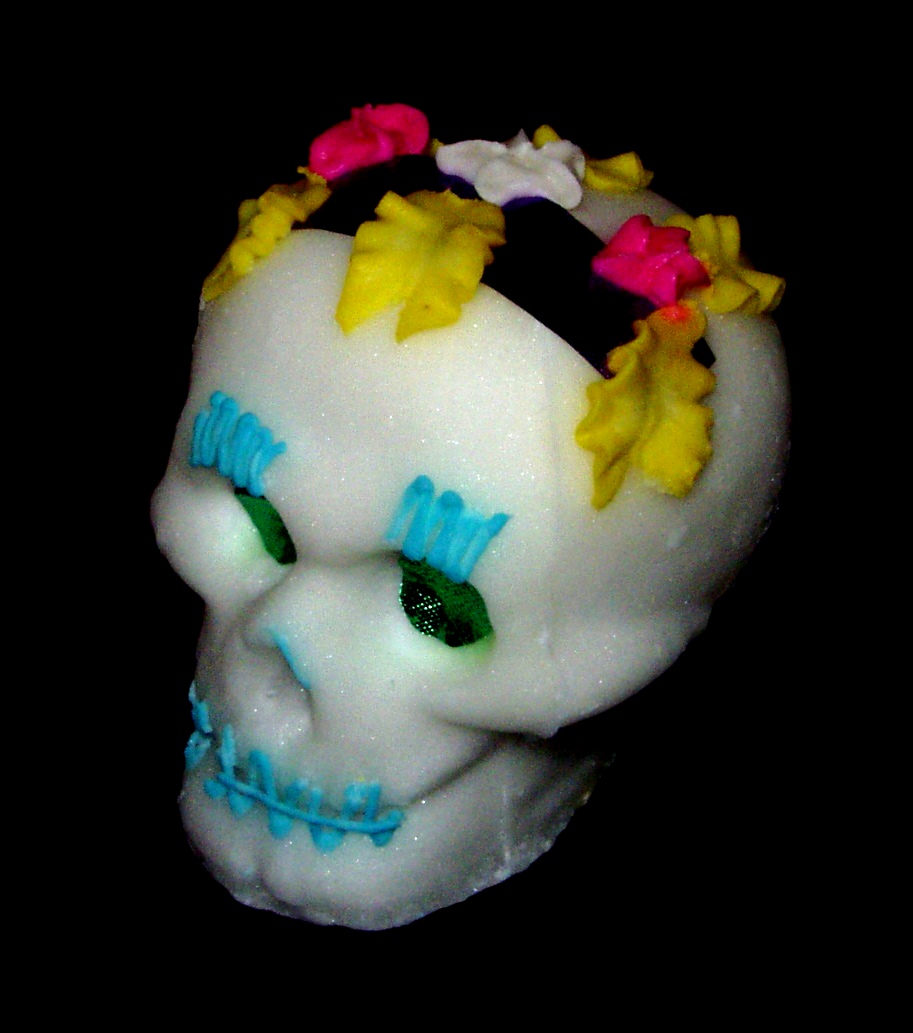 🇲🇽 MexicoCalavera
A sugar or clay skull used in Mexican Day of the Dead celebrations.Charm · Speaking with spirits and the dead · Luck and prosperity Living
🇲🇽 MexicoCalavera
A sugar or clay skull used in Mexican Day of the Dead celebrations.Charm · Speaking with spirits and the dead · Luck and prosperity Living
 🇬🇷 Greece and 5 moreCrossroads (folklore)
A junction between worlds where spirits are met and deals are madeBelief · Speaking with spirits and the dead · Cursing and harm Living
🇬🇷 Greece and 5 moreCrossroads (folklore)
A junction between worlds where spirits are met and deals are madeBelief · Speaking with spirits and the dead · Cursing and harm Living