
Folk practices in Punjab
Indigenous beliefs and rituals of the Punjabi people across India and Pakistan
A system of local mysticism and saint veneration practiced by the Punjabi people in the Punjab region. It blends ancestral worship, spirit belief, and healing rites into a fluid tradition that crosses formal religious lines.
- Seetla Mata protects against smallpox and chickenpox
- Ancestor worship introduced by Kushans from China
- Shrines managed outside formal religious hierarchies
- Donkeys are decorated and fed sweets at fairs
- Misfortune linked to jealous spirits and evil eye
What it is
Folk practices in Punjab form a distinct layer of spiritual life for the Punjabi people. This tradition includes ancestral worship, reverence for local saints, and engagement with spirits. Scholars describe it as a discourse between different organized religions rather than a separate faith. The practice focuses on daily life, offering protection against misfortune and aid during times of grief or illness. It operates alongside formal religious structures like Sikhism, Hinduism, and Islam, often blending elements from each into a unique cultural expression.
Where it comes from
The roots of these practices are ancient and varied. Ancestor worship was introduced to the region by the Kushans, who adopted it from Chinese traditions. Over time, groups like the Jats brought their own beliefs centered on figures such as Sakhi Sarwar and Gugga Pir. Some cults, like that of Seetla Mata, are linked to the prehistoric Harappan civilization. These traditions evolved through interaction with Sufi, bhakti, and occult beliefs, creating a syncretic system that transcends strict religious boundaries.
How it is done
Practitioners engage with the spiritual world through visits to shrines, offerings of food, and recitation of folk ballads called dhadi. During crises, people seek help from healers and spiritual masters. Annual fairs are held in months like Chait, where devotees gather near ponds to create mounds of earth as shrines. Sweet jaggery cakes are offered to goddesses and given to decorated donkeys. Humility and social mores are also used to protect against the evil eye, which is believed to cause harm through jealous gazes.
Tools and materials
Amulets and customs serve as shields against the nazar or evil eye. Shrines are often simple brick structures located near ponds or under specific trees like neem and kikar. Offerings include sweet gulgula cakes and decorated donkeys. In some traditions, winnowing fans and brooms are symbolic tools associated with deities like Shitala, representing the sweeping away of disease or germs. Folk ballads accompany rituals, providing a musical framework for the ceremonies.
Folk practices in Punjab, drawn and placed
- Living
- Revived
- Fading
- Historical
- Legendary
- Performed
- Lineage
- Punjabi folk religion
- Timing
- March to April, weddings, illness
What it is for
The primary aims are protection, healing, and communion with ancestors. People turn to these practices to guard against malevolent spirits, witches, and the evil eye. They seek recovery from diseases like smallpox and chickenpox through the veneration of deities like Seetla Mata. Ancestral shrines are visited during weddings to gain favor and ensure family well-being. The tradition provides a cognitive framework for understanding illness, misfortune, and the need for spiritual intervention in everyday life.
Who does it
Healers and spiritual masters guide individuals through crises, while households maintain personal shrines and follow daily protective customs. Followers manage local shrines dedicated to folk heroes, often excluding themselves from formal religious hierarchies. The practice is widespread in rural areas and serves the subordinate social sector. Women play significant roles, particularly in the worship of goddesses like Seetla Mata and her sisters. Training is not formal but passed down through community participation and oral tradition.
Peoples and places
The tradition is central to the Punjabi people in both India and Pakistan. It is particularly strong among the Jat community, who maintain egalitarian social customs and venerate clan ancestors. The practice transcends caste and creed, attracting followers from various religious backgrounds. While formal religions have become more polarized, folk beliefs remain a unifying cultural force. Different regions may vary in their specific forms of worship, but the core elements of saint veneration and spirit belief remain consistent across the Punjabi diaspora.
At a glance: who, where and when
Who does it


![Painting of Gugga Pir [alt. known as 'Goga' or 'Gogaji', Jahirpeer or Jaharveer, and Bagad Wala, alt. spelt as 'Peer'], Popular Sikh, Punjab, circa early 20th century. Inscribed with identifying Gurmukhi/Perso-Arabic mar](https://upload.wikimedia.org/wikipedia/commons/c/c6/Painting_of_Gugga_Pir%2C_Popular_Sikh%2C_Punjab%2C_circa_early_20th_century_%28cropped%29.png)

What people believe
The worldview divides the universe into realms, including Devlok, the sky realm of gods and ancestors. Misfortune is often attributed to the kismetic dimension, caused by jealous spirits, jinns, or the evil eye. Ancestors can become gods or saints, bridging the gap between the living and the divine. Malevolent spirits are believed to cause harm due to unfulfilled desires, such as childlessness. The tradition integrates Sufi, bhakti, and occult beliefs, viewing the inexplicable through a lens of rationalized spiritual forces rather than superstition.
When it is done
Worship peaks during the month of Chait, which corresponds to March and April. This period marks the ripening of wheat and the arrival of spring. Annual fairs are held at major shrines, such as those in Seel and Jarg villages. Devotees gather early in the week, particularly on Mondays, Tuesdays, and Wednesdays. Weddings are also key occasions for visiting ancestral shrines to secure blessings. The timing aligns with agricultural cycles and seasonal changes, reinforcing the connection between nature and spirituality.
Questions people ask about Folk practices in Punjab
What is folk religion in Punjab?
It is a system of indigenous beliefs and rituals practiced by Punjabi people. It includes ancestor worship, saint veneration, and spirit engagement. The tradition blends elements from Hinduism, Islam, and local customs into a fluid cultural practice.
Where do these practices come from?
They originate from ancient traditions, including Kushan-era ancestor worship and Harappan-linked cults. Groups like the Jats contributed their own beliefs. The practice evolved through interaction with Sufi and bhakti movements over centuries.
Who are the main deities worshipped?
Key figures include Gugga Pir, Sakhi Sarwar, and Seetla Mata. Seetla Mata is revered for healing diseases like smallpox. Gugga is seen as a serpent deity, while Sakhi Sarwar protects children and animals.
How is the evil eye addressed?
The nazar is believed to cause harm through jealous gazes. Protection involves wearing amulets, practicing humility, and following specific social mores. Rituals and charms are used to ward off this misfortune.
Good reading and sources
The facts on this page come from the Wikipedia article "Folk practices in Punjab", written by its contributors and used under the CC BY-SA 4.0 licence, and from its Wikidata record (CC0). EveryJaadu rewrote the text in its own words, with AI assistance, and compares every page with the article to make sure no passage is copied. It may be reused under the same CC BY-SA 4.0 licence with a link back.
It may contain mistakes. Names and customs differ from one community to the next, and some knowledge is closed to outsiders and left out here. This page describes belief and practice. It does not say that any of it works, it is not a how-to, and it is not medical advice. If something is wrong, tell us. Last refreshed 2026-10-11.
More from India
All the entries from India 🇮🇳 IndiaChakraचक्र
Meditation points in the subtle body used in Hindu and Buddhist yogaTradition · Speaking with spirits and the dead · Change and initiation Living
🇮🇳 IndiaChakraचक्र
Meditation points in the subtle body used in Hindu and Buddhist yogaTradition · Speaking with spirits and the dead · Change and initiation Living
 🇮🇳 IndiaMahakaleshwar JyotirlingaMahākāleśvara
A sacred Shiva shrine in Ujjain, India, known for its south-facing idol and ancient origins.Tradition · Protection · Power and authority Living
🇮🇳 IndiaMahakaleshwar JyotirlingaMahākāleśvara
A sacred Shiva shrine in Ujjain, India, known for its south-facing idol and ancient origins.Tradition · Protection · Power and authority Living
 🇮🇳 India and 5 moreHoliहोली
A Hindu spring festival marked by coloured powders and bonfires to celebrate love and virtue.Tradition · Love and attraction · Cursing and harm Living
🇮🇳 India and 5 moreHoliहोली
A Hindu spring festival marked by coloured powders and bonfires to celebrate love and virtue.Tradition · Love and attraction · Cursing and harm Living
 🇮🇳 India and 5 moreKolamகோலம்
A daily geometric floor drawing made with rice flour at the home entrance in South IndiaTradition · Protection · Luck and prosperity Living
🇮🇳 India and 5 moreKolamகோலம்
A daily geometric floor drawing made with rice flour at the home entrance in South IndiaTradition · Protection · Luck and prosperity Living
Related elsewhere
All tradition 🇫🇷 France and 5 moreKardecist SpiritismSpiritisme
A French spiritualist doctrine based on communication with spirits and reincarnation.Tradition · Speaking with spirits and the dead · Protection Living
🇫🇷 France and 5 moreKardecist SpiritismSpiritisme
A French spiritualist doctrine based on communication with spirits and reincarnation.Tradition · Speaking with spirits and the dead · Protection Living
 🇮🇶 Iraq and 5 moreGrimoire
A textbook containing instructions for spells, rituals, and the creation of magical objects.Text · Protection · Healing Historical
🇮🇶 Iraq and 5 moreGrimoire
A textbook containing instructions for spells, rituals, and the creation of magical objects.Text · Protection · Healing Historical
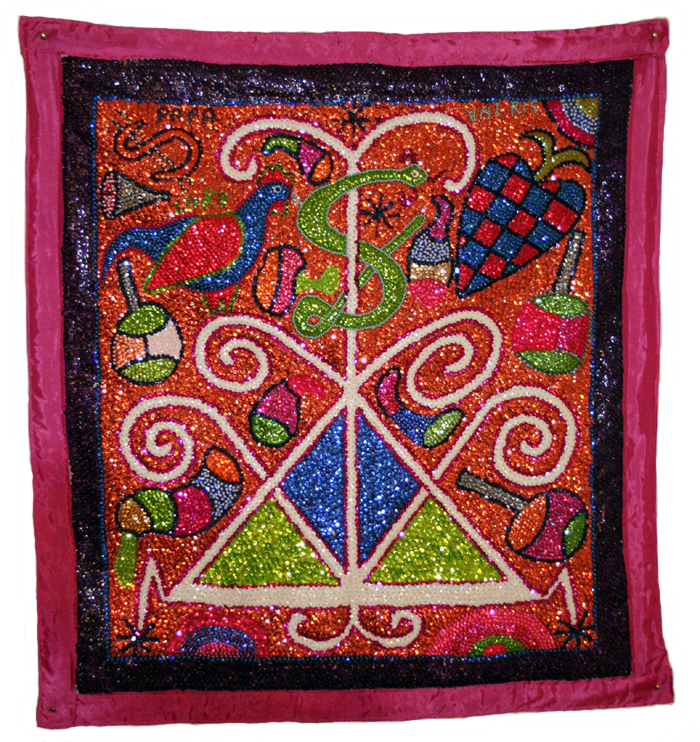 🇭🇹 Haiti and 2 moreHaitian VodouVodou
An Afro-Haitian religion blending West African traditions with Catholicism and FreemasonryTradition · Protection · Healing Living
🇭🇹 Haiti and 2 moreHaitian VodouVodou
An Afro-Haitian religion blending West African traditions with Catholicism and FreemasonryTradition · Protection · Healing Living
 🇰🇷 South Korea and 3 moreKorean shamanism무속
A Korean folk religion centered on ritual specialists who mediate between humans and spiritsTradition · Protection · Healing Living
🇰🇷 South Korea and 3 moreKorean shamanism무속
A Korean folk religion centered on ritual specialists who mediate between humans and spiritsTradition · Protection · Healing Living