Vietnamese ghosts
In its own language: Hồn ma
Wandering spirits in Vietnam, and the rites held to feed or calm them
In Vietnamese folk tradition, wandering spirits known as ma or hồn ma are souls who suffered violent or untimely deaths away from home. Families and ritual specialists make food offerings, burn incense, and consult mediums to placate these restless dead or help bring their bodies back for proper ancestor worship.
- Souls given proper burials and altar tablets become ancestors who bring prosperity to their families.
- Hungry ghosts are envisioned with bloated bellies and tiny mouths, driven by insatiable hunger.
- Offerings of sticky rice are made before ceremonies to keep restless spirits from stealing provisions.
- Families consult spirit mediums to locate the unmarked graves of soldiers lost during the Vietnam War.
What it is
In Vietnamese tradition, spirits known as ma or vong are wandering souls that interact closely with the living. While ancestors die peacefully at home and receive proper burials and altar tablets, ghosts are thought to be individuals who perished prematurely, violently, or far from their households. These beings take many forms. Some are viewed as gentle or benevolent, while others inspire deep fear and danger. Souls that lack care or held unresolved anguish wander the land. Among them are hungry spirits, imagined as distorted figures with swollen bellies and narrow mouths, who roam like thieves looking for sustenance.
Where it comes from
The presence of wandering souls is traced to disruptions in the passage from living person to settled ancestor. When someone dies away from home, by suicide, or through sudden violence without proper funeral rites, their soul is believed to become trapped between realms. A major historical catalyst for ghost encounters was the Vietnam War. That conflict left thousands of casualties missing or hastily interred across gardens, paths, and farmland. Because their resting places remained unmarked and unvisited by family members, these fallen fighters were believed to linger as restless spirits across the countryside.
How it is done
People use several rituals to manage restless spirits. When passing a spot where a phantom was sighted or an unknown body is buried, travellers commonly burn incense sticks and say prayers. If a spirit causes trouble, households may hire a ritual specialist to recite incantations, known as cau chu, compelling the entity to depart. To prevent hungry ghosts from meddling or taking food, communities lay out offerings of sticky rice before major ceremonies and during funerals. Families also engage spirit mediums to communicate with lost souls and discover where missing relatives lie.
Tools and materials
Vietnamese spirit customs rely on physical goods to satisfy the needs of the dead. Souls in the next world are thought to require everyday items, including food, clothing, footwear, paper currency, and paper models of houses or bicycles. Sticky rice serves as a protective offering to keep hungry ghosts from snatching ceremonial items. At home, families maintain an ancestor altar holding commemorative tablets. Settling a soul requires a designated tombstone placed at a carefully chosen gravesite alongside the burning of fragrant incense sticks during prayers.
Vietnamese ghosts, drawn and placed
- Living
- Revived
- Fading
- Historical
- Legendary
- Performed
- Lineage
- Vietnamese ancestor worship and folk belief
- Timing
- during funerals, before rituals, and upon passing burial or sighting sites
What it is for
Rites directed toward the dead seek peace for restless souls and safety for surviving relatives. People make offerings so that wandering spirits do not steal food or cause highway accidents by jumping in front of passing cars. By locating unmarked remains and holding reburials, families convert wandering phantoms into benevolent ancestors who protect the home and bring prosperity. In addition, ordinary people seek out mediums and fortune tellers who rely on spirits for guidance, hoping to gain clear insight regarding romantic dilemmas or family finances.
Who does it
Several figures mediate interactions with the spirit world. Everyday villagers and household members burn incense and set out rice offerings at roadside sites or during family rites. When more difficult disturbances occur, families turn to ritual specialists who recite specific incantations to drive ghosts away. Spirit mediums serve as bridges between realms, helping families locate missing relatives while also allowing wandering souls to find their kin. Fortune tellers similarly work alongside spirits, using the knowledge provided by these unseen entities to counsel visitors on financial affairs and courtship.
At a glance: who, where and when
Peoples
Belief worlds
What people believe
Underlying these customs is the conviction that the dead maintain human needs, including food, clothing, and shelter. A soul that receives a proper resting place, grave markers, and a memorial tablet placed upon the household altar becomes an ancestor, continuously blessing descendants with good fortune. In contrast, spirits deprived of formal burials or burdened by unresolved grief remain tethered to the physical world. Those who lived unethically or starved become hungry ghosts with swollen bellies and narrow throats, driven by endless appetite to wander the countryside stealing what they find.
When it is done
Appeasing spirits occurs during life transitions and everyday travel rather than on a single fixed date. Offerings of sticky rice are prepared immediately before community rites and throughout funeral ceremonies to ensure hungry ghosts do not pilfer provisions. On an ordinary basis, villagers burn incense and whisper prayers whenever they pass known burial spots, unmarked graves, or road turns where spectral sightings regularly happen.
Compare and confuse
Vietnamese tradition draws a sharp line between ghosts and ancestors. Ancestors are deceased family members who passed away peacefully at home, received full funeral rites, and reside on the household altar where they aid their kin. Ghosts, by contrast, are unsettled spirits who suffered violent or untimely deaths away from home, lacking graves and memorial tablets.
Law and persecution
State authorities in Vietnam have historically opposed spiritual practices involving the dead. The Communist government viewed ideas about ghosts as backward and lacking moral discipline, leading officials to discourage commemoration rituals and suppress supernatural stories in public media. At the same time, the state participates in recovering deceased service personnel, organizing formal military funerals with honours for fallen soldiers recognized as patriotic martyrs.
Today
The legacy of the Vietnam War keeps ghost practices active in contemporary society. Countless missing soldiers remain buried in unmarked spots across fields, walking trails, and private gardens. Seeking spiritual closure, modern families regularly turn to spirit mediums to discover the location of lost relatives. Once identified, remains are exhumed and transported to ancestral villages for proper reburial, ending the soul's wanderings and bringing relief to living descendants.
Questions people ask about Vietnamese ghosts
What are ghosts in Vietnamese culture?
In Vietnamese culture, ghosts are wandering souls of people who died violently, prematurely, or far from home. Unlike domestic ancestors who are cared for on household altars, these roaming spirits are believed to lack proper graves and may wander the countryside in search of food or unfinished emotional business.
Where do these ghost beliefs originate?
The beliefs originate in Vietnamese folk traditions and ancestor worship. They developed around the idea that human souls require post-mortem funeral rites, tombs, and family offerings to settle peacefully, a concern intensified by the many unrecovered casualties left across the countryside by the Vietnam War.
What is a hungry ghost according to Vietnamese belief?
A hungry ghost, or ma đói, is believed to be the wandering spirit of an immoral person or someone who suffered a tragic death. Depicted with an excessively swollen stomach and a tiny mouth, it experiences constant, unquenchable hunger and roams the countryside stealing offerings.
How do people in Vietnam deal with restless spirits?
People burn incense and pray when passing suspected resting places. Ritual specialists may be hired to chant incantations that drive away troublesome entities. In addition, communities offer sticky rice before ceremonies so wandering ghosts do not disrupt the event or take goods meant for ancestors.
Good reading and sources
The facts on this page come from the Wikipedia article "Ghosts in Vietnamese culture", written by its contributors and used under the CC BY-SA 4.0 licence, and from its Wikidata record (CC0). EveryJaadu rewrote the text in its own words, with AI assistance, and compares every page with the article to make sure no passage is copied. It may be reused under the same CC BY-SA 4.0 licence with a link back.
It may contain mistakes. Names and customs differ from one community to the next, and some knowledge is closed to outsiders and left out here. This page describes belief and practice. It does not say that any of it works, it is not a how-to, and it is not medical advice. If something is wrong, tell us. Last refreshed 2026-10-23.
More from Vietnam
All the entries from Vietnam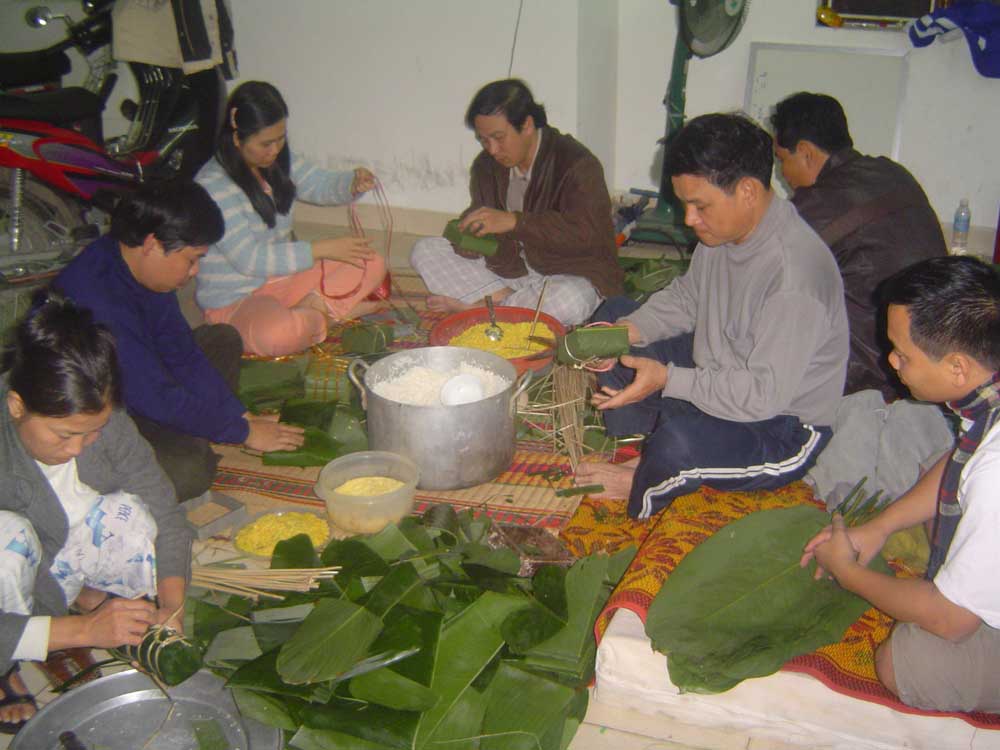 🇻🇳 Vietnam and 5 moreTếtTết Nguyên Đán
The Vietnamese lunisolar new year and the most important annual celebration in VietnamTradition · Luck and prosperity · Speaking with spirits and the dead Living
 🇻🇳 Vietnam and 1 moreVietnamese folk religiontín ngưỡng dân gian Việt Nam
A collection of local spirit worship and ancestral veneration in VietnamTradition · Protection · Healing Living
 🇲🇾 Malaysia and 5 morePenanggalan
A floating head with trailing organs from Malay folklore, said to hunt pregnant women and newborns.Being · Cursing and harm Legendary
 🇻🇳 Vietnam and 2 moreThiên Y A Na
A Vietnamese goddess worshipped in folk religion and Đạo Mẫu through spirit mediumshipBeing · Protection · Luck and prosperity Living
Related elsewhere
All being 🇨🇺 Cuba and 4 moreSanteríaRegla de Ocha
An Afro-Cuban religion blending Yoruba spirits with Catholic saintsTradition · Protection · Healing Living
🇯🇵 JapanYutaユタ
Okinawan folk shamans who guide families through spirits and fortune-tellingTradition · Protection · Healing Living
 🇨🇱 Chile and 1 moreMachi
Mapuche spiritual authorities and healers who bridge herbal knowledge and spirit realmsTradition · Healing · Speaking with spirits and the dead Living
 🇪🇬 Egypt and 1 moreSoul flight
A shamanic trance journey in which the soul is said to leave the bodyRite · Healing · Seeing and foretelling Living