Rites, spells and ceremonies
Things done in a set way: cleansings, offerings, blessings, binding and unbinding, initiations.
A rite is something done in a set way: a cleansing, an offering, a blessing, an initiation, a binding. What marks it out is form, with fixed words, gestures, timing and often a specialist to lead it. Rites exist in every culture, from the Catholic exorcism and the Vedic fire offering to the Yoruba sacrifice and the Aboriginal ceremony. This page describes them as customs, in outline. Here they are described as customs and in outline only.
Parts of a rite
Most rites share a few parts: a prepared space, a purifying act, speech or song, a gesture, an offering, and a closing that returns everyone to ordinary life. Scholars such as Arnold van Gennep called rites of passage a sequence of separation, threshold and return. Many rites also mark a time: the new moon, the solstice, a death, a birth, a wedding. Some are done once in a lifetime and some every day, and the same gesture can be a rite in one house and a habit in the next.
Who may perform
Some rites belong to anyone in the household, such as sweeping the house at new year or tying a thread on a child's wrist. Others need an officiant: a priest, a medium, a shaman or an initiated elder. Women often hold domestic rites and are shut out of public priesthood, though in places such as Korea, the Philippines and parts of Africa women lead spirit rites. A rite is also tied to a community: it is done with others present, who witness it and agree that it counts.
Rites that hurt
Not every rite is gentle. Some involve animal sacrifice, which is a normal part of a number of living religions and is performed under rules of its own. Exorcism rites have caused real harm when applied to people with mental illness or to children accused of witchcraft, with deaths reported from beatings, fasting and restraint. Illness needs real medical care. Others are simple and joyful, such as a blessing over bread or a thread on a wrist, and carry no danger at all, which is why most rites are never remarked upon.
Change and commerce
Rites move with people. Diaspora communities adapt them to apartments, city streets and other languages. Some are now sold as retreats or workshops, which can strip them from their community and context. Tourism has also turned ceremonies into shows, and communities increasingly set rules about who may watch, photograph or join. Government rules shape rites too: some countries license ritual slaughter, others require permits for processions, and a few have banned particular ceremonies outright, so a rite can become a legal question as well as a religious one.
Rite on EveryJaadu
The entries written up so far, best known first.
 🇮🇳 India and 2 moreKalachakraདུས་ཀྱི་འཁོར་ལོ།
A Tibetan Buddhist tantric deity and system of yogic time cyclesTradition · Change and initiation · Speaking with spirits and the dead Living
 🇮🇳 India and 1 morePitru Pakshaपितृ पक्ष
A sixteen-day Hindu period for honoring ancestors through food offerings and death ritesTradition · Speaking with spirits and the dead · Luck and prosperity Living
 🇮🇳 India and 2 moreSomaसोम
A sacred ritual drink of the ancient Vedic religion and its Iranian counterpartSubstance · Speaking with spirits and the dead · Power and authority Living
 🇮🇩 IndonesiaNyepiᬜᬾᬧᬶ
A Balinese Hindu holiday of total silence, fasting, and darkness marking the new year.Tradition · Cleansing and purification · Speaking with spirits and the dead Living
 🇮🇳 India and 2 moreYantraयन्त्र
A geometric diagram from Indian traditions used for worship and meditationCharm · Protection · Speaking with spirits and the dead Living
 🇨🇭 SwitzerlandMagic circle
A ritual boundary drawn or visualised to create sacred space and protectionTradition · Protection · Speaking with spirits and the dead Living
 🇮🇳 India and 2 moreHomaहोम
A fire ritual found in Indian religions and their Asian offshootsRite · Speaking with spirits and the dead · Protection Living
 🇮🇳 IndiaTarpanaतर्पण
A Vedic offering of water and seeds to gods, sages, and ancestorsRite · Speaking with spirits and the dead · Power and authority Living
 🇪🇬 Egypt and 5 moreSacred dance
Movement used in worship to honour deities, heal communities, or connect with the spirit world.Tradition · Protection · Healing Living
 🇮🇳 IndiaPanjurli
A divine wild boar spirit of Tulu Nadu, honoured as guardian of fields and forestsBeing · Protection · Luck and prosperity Living
 🇮🇳 India and 5 moreSpirit possession
A state where a human body is controlled by an external spirit or deityBelief · Healing · Seeing and foretelling Living
 🇨🇳 China and 5 moreSky lantern天燈
A paper hot air balloon lifted by flame to carry wishes and blessingsRite · Luck and prosperity · Protection Living
 🇮🇳 IndiaTheyyam
A ritual dance from Kerala where performers embody deities through elaborate costume and songTradition · Speaking with spirits and the dead · Change and initiation Living
 🇮🇳 IndiaBhuta KolaBhūta Kōla
A Tulu spirit dance in which a performer is believed to host a deityTradition · Speaking with spirits and the dead · Protection Living
 🇨🇳 China and 5 moreGhost FestivalZhongyuan Jie (中元节)
A festival for appeasing wandering spirits and honoring ancestors in East and Southeast AsiaRite · Speaking with spirits and the dead · Protection Living
 🇮🇳 India and 5 moreKolamகோலம்
A daily geometric floor drawing made with rice flour at the home entrance in South IndiaRite · Protection · Luck and prosperity Living
 🇮🇪 Ireland and 5 moreBonfire
A large outdoor fire used in seasonal festivals and religious feasts across many culturesRite · Cleansing and purification · Speaking with spirits and the dead Living
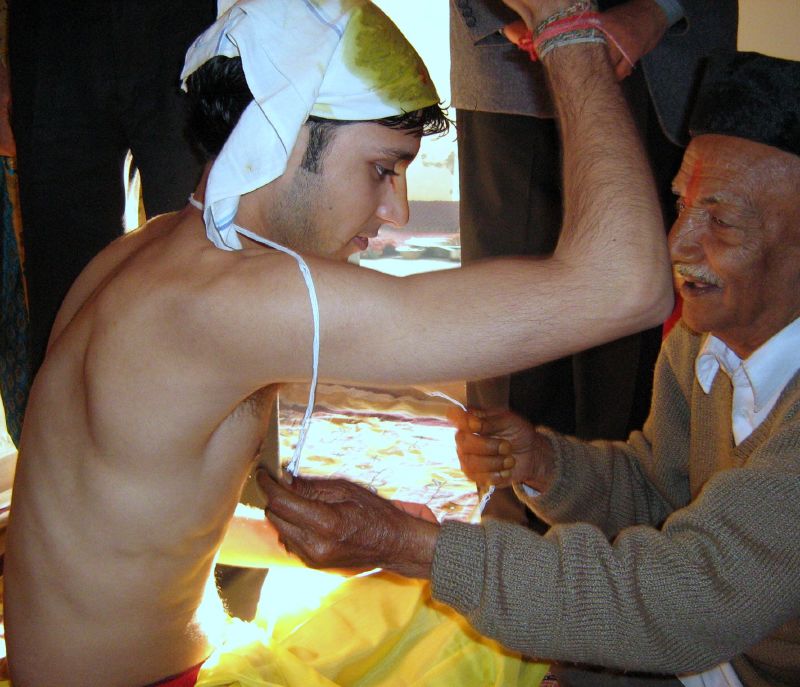 🇮🇳 India and 1 moreUpanayanaउपनयन
A Hindu rite of passage marking a student's initiation into formal education and spiritual discipline.Rite · Speaking with spirits and the dead · Change and initiation Living
 🇬🇷 Greece and 2 moreAstragalomancy
Divination by casting marked bones, carved rods, or numbered diceOracle · Seeing and foretelling · Speaking with spirits and the dead Living
 🇮🇳 India and 1 moreŚrāddhaश्राद्ध
A Hindu rite of ancestor worship involving food offerings and fire ritualsRite · Speaking with spirits and the dead · Cleansing and purification Living
 🇸🇳 Senegal and 5 moreVeneration of the dead
Rituals of respect and offerings for ancestors across global culturesTradition · Protection · Speaking with spirits and the dead Living
 🇱🇦 Laos and 3 moreTai folk religionສາສະໜາຜີ
Spirits, ancestor rites, and soul-calling ceremonies of the Tai peoplesTradition · Protection · Healing Living
🇮🇳 IndiaVelichappaduവെളിച്ചപ്പാട്
A Hindu temple oracle in Kerala who channels deities through trance and danceBeing · Seeing and foretelling · Speaking with spirits and the dead Living
 🇮🇳 India and 1 moreJagarजागर
A Himalayan night ritual to wake local deities through song and tranceRite · Protection · Healing Living
 🇮🇳 IndiaKathivanoor Veeran
A deified warrior of North Malabar, Kerala, whose legend is danced as a Theyyam riteFigure · Love and attraction · Speaking with spirits and the dead Living
 🇮🇳 India and 3 moreOmॐ
A sacred syllable chanted in Hindu, Buddhist, Jain and Sikh practiceBelief · Speaking with spirits and the dead Living
 🇮🇳 IndiaShamanism in Ayyavazhi
A divination practice within the Hindu denomination of Ayyavazhi in South India.Rite · Seeing and foretelling · Speaking with spirits and the dead Living
Photo credits on this page
The small pictures above come from Wikimedia Commons under free licences. Some are cropped to fit.
- Veneration of the dead: Anonymous ( Flemish ) Unknown author, Public domain, source
- Shamanism in Ayyavazhi: Vaikunda Raja, CC BY-SA 3.0, source
- Sacred dance: Jorge Barrios, CC BY-SA 3.0, source
- Panjurli: Uajith, CC BY-SA 3.0, source
- Spirit possession: Unknown author, CC BY 4.0, source
- Sky lantern: Richy, CC BY-SA 3.0, source
- Theyyam: Shagil Kannur, CC BY-SA 4.0, source
- Bhuta Kola: Unknown author, Public domain, source
- Jagar: Digvijay singh janoti, CC BY-SA 4.0, source
- Ghost Festival: Chong Fat, CC BY-SA 3.0, source
- Kolam: mckaysavage, CC BY 2.0, source
- Om: Anandajoti Bhikkhu, CC BY 2.0, source
- Bonfire: S Marshall, CC BY 3.0, source
- Upanayana: vinodbahal, CC BY 2.0, source
- Astragalomancy: Roland zh, CC BY-SA 3.0, source
- Śrāddha: Billjones94, CC BY-SA 4.0, source
- Pitru Paksha: Firoz Shakir, CC BY-SA 3.0, source
- Soma: Krzysztof Ziarnek, Kenraiz, CC BY-SA 4.0, source
- Tai folk religion: ( เทวประภาส มากคล้าย ), Tevaprapas, Public domain, source
- Witch: John William Waterhouse, Public domain, source
- Nyepi: Matt Croxson, Public domain, source
- Kathivanoor Veeran: Uajith, CC BY-SA 4.0, source
- Yantra: Photo by Daniel Conrad (Chromacon), artwork by Daniel Conrad under dir, Public domain, source
- Homa: Vyacheslav Argenberg, CC BY 4.0, source
- Tarpana: Biswarup Ganguly, CC BY 3.0, source
- Kalachakra: Nabin K. Sapkota, CC BY-SA 4.0, source