Beliefs, omens and superstitions
Luck and unluck, the evil eye, knocking on wood and the small customs people keep without asking why.
Beliefs, omens and superstitions are the small customs people keep without asking why: knocking on wood, salt over the shoulder, avoiding the number thirteen, the evil eye, a black cat crossing the road, a first visitor of the new year. They are found on every continent and are rarely tied to a priest or book. This page looks at where they come from, what the word superstition hides, and why they persist.
What they look like
Beliefs differ by place. The number four is avoided in China, Japan and Korea because it sounds like the word for death, while thirteen is avoided in much of the West. In India, a sneeze before leaving home may delay a journey, and a lemon and chillies are hung over a shop. The evil eye is feared under many names: nazar, mal de ojo, ayin hara. First-footing at new year in Scotland is said to bring luck to a house.
Whose word is superstition
The word superstition has a history. Roman writers used it for religion they disliked, and Christian writers for forbidden practice. Today it often means someone else's belief. Many religions regard some of their own customs as faith and others as superstition, and where the line falls depends on the speaker. Using the word can mark a speaker as modern and a neighbour as backward. Tests of common superstitions show that people who hold them are not less educated or less rational than others, and many hold them lightly.
Why people keep them
Psychologists find that superstition rises with uncertainty and stakes, which is why athletes, sailors, students and gamblers are known for them. Anthropologist Bronislaw Malinowski observed in the 1920s that Trobriand fishermen used rites in dangerous deep-sea fishing and not in safe lagoon fishing. Most people who follow small customs say they do so partly in jest and partly just in case. Similar customs turn up in places that have never met each other, which suggests that people everywhere respond to risk in similar ways.
When belief causes harm
Most superstitions are harmless. Some are not: beliefs about witchcraft have led to killings in parts of Africa, India and Papua New Guinea, and beliefs about albinism have led to attacks in Tanzania and Malawi. Others cost people money, as when a fee is demanded to lift a bad omen. Education, law and trusted community leaders have all been part of reducing harm. Campaigns by health workers, teachers and community radio have been effective where they listen first and explain later.
Belief on EveryJaadu
The entries written up so far, best known first.
 🇮🇶 Iraq and 4 moreAstrology
A system of divination that links human affairs to the positions of celestial bodiesTradition · Seeing and foretelling · Luck and prosperity Living
 🇺🇸 United StatesGhost DanceNanissaanah
A circular movement seeking spiritual renewal and reunion with ancestorsRite · Speaking with spirits and the dead · Change and initiation Living
 🇬🇷 Greece and 5 moreNecromancy
A form of divination that seeks to speak with the dead for hidden knowledge.Tradition · Seeing and foretelling · Power and authority Historical
 🇮🇳 India and 5 moreSnake worship
Veneration of serpents as divine or ancestral beings across global culturesTradition · Protection · Healing Living
 🇸🇾 Syria and 5 moreBaetyl
A sacred stone, often a meteorite, believed to house a deity in ancient Near Eastern and Mediterranean traditionsBelief · Speaking with spirits and the dead · Power and authority Historical
 🇱🇻 Latvia and 1 moreLatvian mythology
A collection of myths about gods, spirits, and the afterlife from the Baltic region.Tradition · Speaking with spirits and the dead · Power and authority Living
 🇨🇦 Canada and 1 moreTotemdoodem
A spirit or symbol linking a group to nature, from Ojibwe clan systems to Australian kinshipBelief · Speaking with spirits and the dead · Power and authority Living
 🇲🇳 Mongolia and 2 moreWind Horseརླུང་རྟ་
An East and Central Asian symbol of the soul, luck, and vital energyBeing · Luck and prosperity · Protection Living
 🇸🇳 Senegal and 5 morePentagramπεντάγραμμον
A five-pointed star figure used across history for protection, ritual, and cosmologyCharm · Protection · Binding and oaths Living
 🇲🇽 MexicoNagualnāhualli
A Mesoamerican belief in humans who shapeshift into animal counterparts.Belief · Power and authority · Cursing and harm Living
 🇺🇸 United States and 1 moreMedicine wheel
Circular stone formations built by Indigenous peoples of North America for ceremony and astronomy.Tradition · Speaking with spirits and the dead · Power and authority Living
 🇬🇷 Greece and 2 moreMagic in the Greco-Roman world
Private supernatural practices in ancient Greece and Rome, distinct from public state religion.Tradition · Protection · Cursing and harm Historical
🇪🇬 Egypt and 1 moreMagic and religion
A study of how magical practices and religious beliefs intersect or diverge in human cultureBelief · Power and authority Historical
🇭🇹 HaitiBois Caïman
The sacred site where enslaved Africans planned the Haitian Revolution through a Vodou ceremony.Rite · Cursing and harm · Power and authority Historical
 🇮🇳 India and 3 moreSpirit
An invisible force or soul found in many cultures, linked to gods, humans, and nature.Being · Speaking with spirits and the dead · Power and authority Living
🇫🇮 FinlandVäki
A supernatural power in Finnish mythology found in nature and objectsBelief · Cursing and harm · Healing Historical
🇮🇳 India and 3 moreAstrology
A divinatory practice that links celestial positions to human affairs and earthly eventsTradition · Seeing and foretelling · Luck and prosperity Historical
🇫🇮 Finland and 1 moreHiisi
A Finnic spirit of sacred places that evolved into a demonic giant in folkloreBeing · Cursing and harm · Power and authority Historical
 🇷🇸 Serbia and 5 moreWolves in folklore, religion and mythology
A global survey of how cultures view the wolf as symbol, spirit or threatBelief · Power and authority · Cursing and harm Historical
 🇬🇷 GreeceDaimonδαίμων
A Greek spirit or divine force that mediates between gods and humansBeing · Protection · Speaking with spirits and the dead Historical
🇰🇷 South KoreaDocham도참
A Korean system of prophecy and omens guiding political fate and temple placementTradition · Seeing and foretelling · Power and authority Historical
 🇲🇽 Mexico and 4 moreMirrors in Mesoamerican culture
Reflective stones used for divination and elite status across ancient Mexico and Central AmericaCharm · Seeing and foretelling · Power and authority Historical
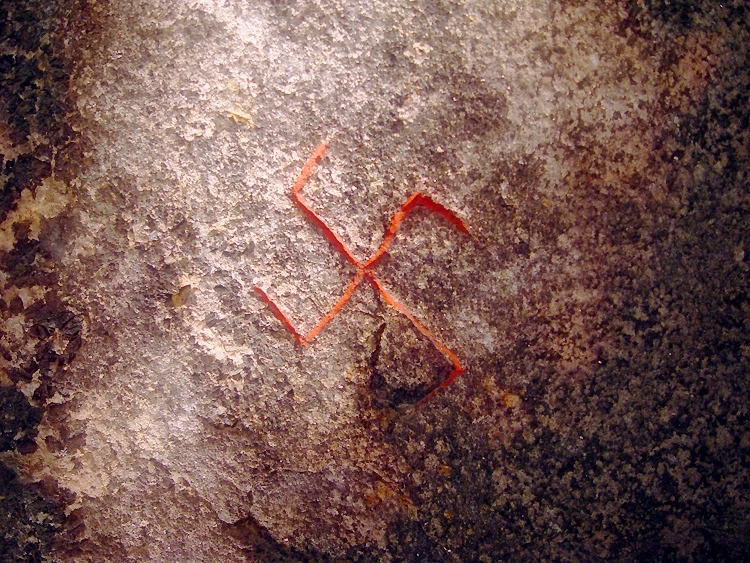 🇸🇪 Sweden and 4 moreSwastika (Germanic Iron Age)
A four-armed symbol found on Germanic artefacts from the Migration to Viking periods.Belief · Power and authority Historical
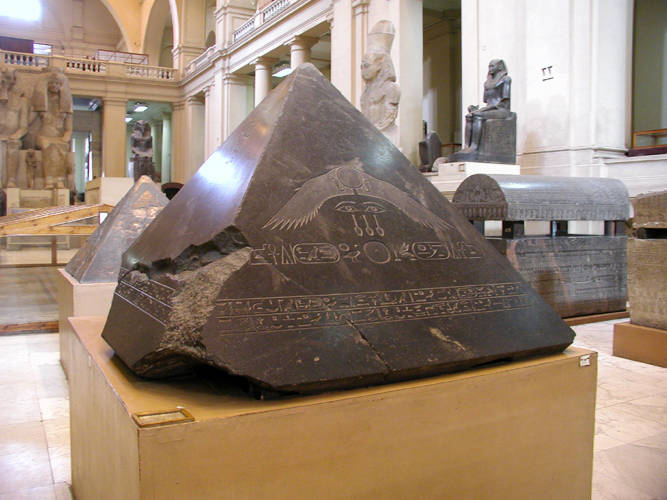 🇪🇬 EgyptBenben
The primeval mound of Egyptian creation myth and the stone cap of a pyramidBelief · Power and authority Historical
 🇻🇺 Vanuatu and 3 moreMana
A spiritual force of power and authority in Oceanic culturesBelief · Power and authority Living
 🇳🇿 New Zealand and 4 moreFeather cloak
A garment of feathers worn by royalty and gods across cultures to signal rank or enable flightCharm · Power and authority · Wonder and entertainment Historical
 🇪🇬 Egypt and 5 moreWorship of heavenly bodies
Veneration of stars, planets, and the sky as divine forces or deitiesTradition · Protection · Power and authority Historical
🇲🇽 Mexico and 1 moreToltecayotl
A Nahuatl concept of the art of living and wisdom derived from Toltec traditionBelief · Power and authority Revived
 🇪🇬 Egypt and 1 moreOuroborosοὐροβόρος
An ancient image of a serpent eating its own tail, symbolizing cycles and wholenessFigure · Power and authority · Wonder and entertainment Historical
 🇮🇷 Iran and 5 moreAxis mundi
A concept describing a central point connecting the earthly and heavenly realms.Belief · Speaking with spirits and the dead · Power and authority Historical
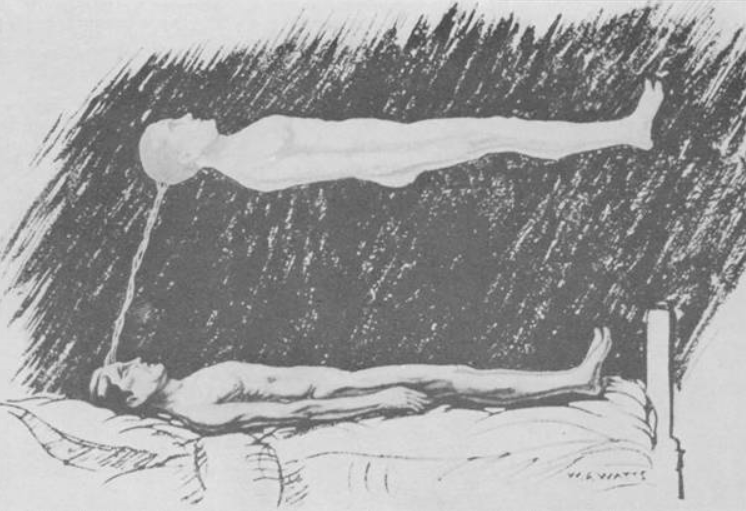 🇮🇳 India and 3 moreAstral projection
An intentional out-of-body experience where consciousness travels through the astral planeTradition · Speaking with spirits and the dead · Change and initiation Living
Photo credits on this page
The small pictures above come from Wikimedia Commons under free licences. Some are cropped to fit.
- Wolves in folklore, religion and mythology: Unknown author, CC0, source
- Daimon: François-André Vincent, Public domain, source
- Ghost Dance: Unknown author, Public domain, source
- Necromancy: Unknown author, CC BY 4.0, source
- Snake worship: Alexandermcnabb, CC BY-SA 4.0, source
- Astrology: Wilfredor, CC0, source
- Latvian mythology: Dezidor, CC BY 3.0, source
- Totem: Jami430, CC BY-SA 4.0, source
- Benben: Unknown author, Public domain, source
- Mana: Unknown author, Public domain, source
- Feather cloak: Lusanaherandraton, CC BY-SA 4.0, source
- Worship of heavenly bodies: Jean-Pierre Dalbéra, CC BY 2.0, source
- Wind Horse: Clemensmarabu, CC BY-SA 3.0, source
- Spirit: Jastrow, Public domain, source
- Ouroboros: Djehouty, CC BY-SA 4.0, source
- Axis mundi: Unknown author, Public domain, source
- Astral projection: Hereward Carrington, Sylvan Muldoon., Public domain, source
- Pentagram: Tomruen, Attribution, source
- Swastika (Germanic Iron Age): No machine-readable author provided. Bloodofox~commonswiki assumed (ba, Public domain, source
- Nagual: Unknown author, Public domain, source
- Mirrors in Mesoamerican culture: Vassil, CC0, source
- Medicine wheel: U.S. Forest Service Photo, Public domain, source
- Magic in the Greco-Roman world: ArchaiOptix, CC BY-SA 4.0, source
- Baetyl: Jusepe de Ribera, Public domain, source