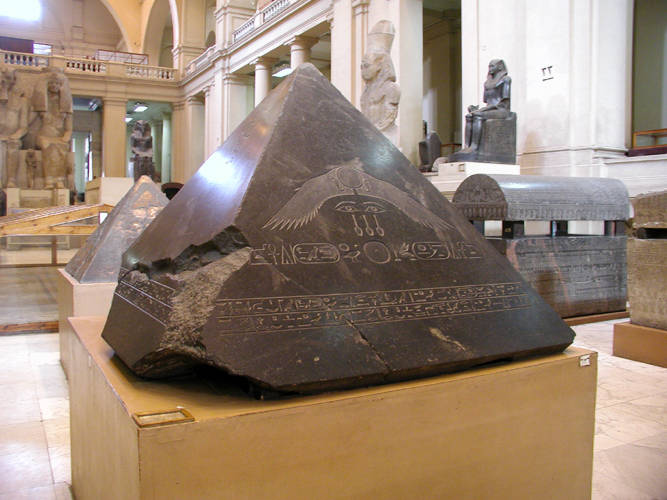
In Heliopolitan theology, Benben was the first land rising from the waters of chaos. The name applies to sacred stones, obelisks, and the pointed caps placed atop pyramids.
- Benben was the first mound rising from the waters of Nu
- Atum the creator deity settled on this mound
- Pyramidions are named benbenet after the original stone
- The Bennu bird was said to live on the Benben stone
- Stones were polished to shine in the sunlight
What it is
Benben describes the mythical mound that emerged from the primordial ocean in ancient Egyptian belief. It represents the first solid ground created by the gods. The term also refers to physical objects that symbolize this event. These include the pyramidion at the top of a pyramid and the sacred stone kept in temples. The shape serves as a link between the earth and the sky.
Where it comes from
The concept originates in the Heliopolitan form of ancient Egyptian religion. Atum, the creator deity, is said to have settled on this mound after it rose from the waters of Nu. Other cities developed their own versions of this story. For example, the god Tatenen represented the primeval mound in Memphis. In the Pyramid Texts, Atum himself is sometimes called the mound.
Tools and materials
The Benben stone was a sacred object in the temple of Ra at Heliopolis. It was believed to be the spot where the first rays of the sun touched the earth. Later structures like obelisks and pyramid caps were based on its design. These stones were likely polished or covered in metal to shine brightly in the sunlight.
Benben, drawn and placed
- Living
- Revived
- Fading
- Historical
- Legendary
- Performed
- Lineage
- Heliopolitan creation myth
What it is for
The Benben symbolizes the act of creation and the establishment of order. It marks the place where the divine interacts with the world. The bird deity Bennu was said to live on this stone. Scholars suggest the connection between the bird, the sun, and the stone may rely on wordplay about the rising sun.
Peoples and places
The tradition belongs to ancient Egypt. Heliopolis was the main center for the veneration of the Benben. The city is also known by the names Annu or Iunu. The practice spread through architectural forms like pyramids and obelisks across the region.
At a glance: who, where and when
Peoples
Belief worlds
What people believe
The worldview holds that the universe began as chaotic water. From this void, a mound appeared, allowing life to begin. Atum rested upon it to start creation. The Bennu bird, an ancestor of the phoenix, lived on the stone. This links the earth, the sun, and rebirth together in a single symbol.
How scholars and sceptics see it
Researchers study how the image of the Benben evolved. Early depictions showed a pointed pyramid shape. Later styles featured a round top. During the Fifth Dynasty, it became a squat obelisk. By the Middle Kingdom, it turned into a long thin pillar. Some tombs show it as a large stela on a platform.
Compare and confuse
The Benben is related to other sacred stones like the baetyl. It shares themes with the Abzu and the Hindu lingam. The Bennu bird connects it to the Greek phoenix. All these symbols deal with creation, fire, and renewal.
Questions people ask about Benben
What is the Benben?
It is the mythical mound that first appeared from the primordial waters in Egyptian creation stories. The name also applies to the stone caps of pyramids and sacred obelisks.
Where did the Benben originate?
It comes from the Heliopolitan form of ancient Egyptian religion. The city of Heliopolis was the center where the sacred stone was kept and worshipped.
How is the Benben connected to the sun?
The sacred stone was believed to be where the first rays of the sun fell. The rising sun and the stone share linguistic connections in ancient texts.
What animals are linked to the Benben?
The Bennu bird, which inspired the phoenix legend, was said to live on the Benben stone or a nearby holy willow tree in Heliopolis.
Good reading and sources
The facts on this page come from the Wikipedia article "Benben", written by its contributors and used under the CC BY-SA 4.0 licence, and from its Wikidata record (CC0). EveryJaadu rewrote the text in its own words, with AI assistance, and compares every page with the article to make sure no passage is copied. It may be reused under the same CC BY-SA 4.0 licence with a link back.
It may contain mistakes. Names and customs differ from one community to the next, and some knowledge is closed to outsiders and left out here. This page describes belief and practice. It does not say that any of it works, it is not a how-to, and it is not medical advice. If something is wrong, tell us. Last refreshed 2026-10-14.
More from Egypt
All the entries from Egypt 🇪🇬 Egypt and 1 moreLilithלִילִית
A feminine figure from Mesopotamian and Jewish mythology, often depicted as a night demon or spirit.Being · Cursing and harm Legendary
🇪🇬 Egypt and 1 moreLilithלִילִית
A feminine figure from Mesopotamian and Jewish mythology, often depicted as a night demon or spirit.Being · Cursing and harm Legendary
 🇪🇬 EgyptCurse
A spoken wish for harm, often backed by ritual or divine authorityBelief · Cursing and harm · Protection Historical
🇪🇬 EgyptCurse
A spoken wish for harm, often backed by ritual or divine authorityBelief · Cursing and harm · Protection Historical
 🇪🇬 EgyptScarab
A carved beetle amulet and seal used in ancient Egypt for protection, identity, and ritual.Charm · Protection · Luck and prosperity Historical
🇪🇬 EgyptScarab
A carved beetle amulet and seal used in ancient Egypt for protection, identity, and ritual.Charm · Protection · Luck and prosperity Historical
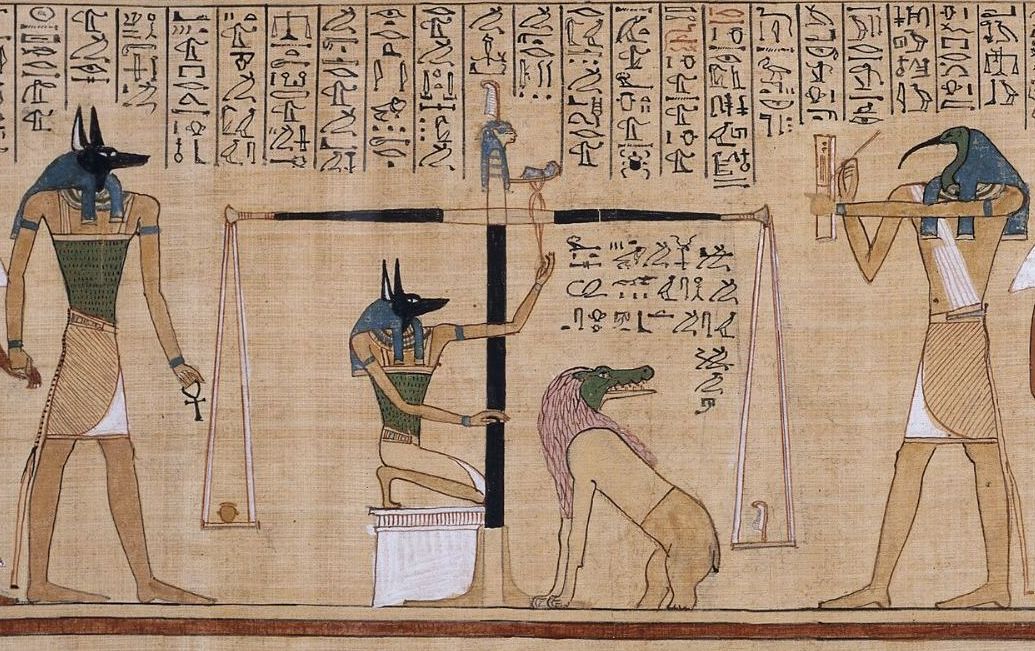 🇪🇬 EgyptAncient Egyptian afterlife beliefs
A system of rituals and texts guiding the soul through the underworld to eternal rebirthTradition · Protection · Speaking with spirits and the dead Historical
🇪🇬 EgyptAncient Egyptian afterlife beliefs
A system of rituals and texts guiding the soul through the underworld to eternal rebirthTradition · Protection · Speaking with spirits and the dead Historical
Related elsewhere
All belief 🇮🇶 Iraq and 4 moreAstrology
A system of divination that links human affairs to the positions of celestial bodiesTradition · Seeing and foretelling · Luck and prosperity Living
🇮🇶 Iraq and 4 moreAstrology
A system of divination that links human affairs to the positions of celestial bodiesTradition · Seeing and foretelling · Luck and prosperity Living
 🇫🇷 France and 2 moreKing ArthurBrenin Arthur
A legendary British king and folk hero of medieval literature and Welsh mythologyFigure · Power and authority · Wonder and entertainment Legendary
🇫🇷 France and 2 moreKing ArthurBrenin Arthur
A legendary British king and folk hero of medieval literature and Welsh mythologyFigure · Power and authority · Wonder and entertainment Legendary
 🇺🇸 United States and 5 moreSatanism
A modern set of beliefs using the figure of Satan as a symbol or deity.Tradition · Power and authority · Cursing and harm Living
🇺🇸 United States and 5 moreSatanism
A modern set of beliefs using the figure of Satan as a symbol or deity.Tradition · Power and authority · Cursing and harm Living
 🇮🇳 India and 1 moreGarba
A Gujarati circle dance performed around a central symbol during NavaratriIllusion · Power and authority · Luck and prosperity Living
🇮🇳 India and 1 moreGarba
A Gujarati circle dance performed around a central symbol during NavaratriIllusion · Power and authority · Luck and prosperity Living