🇧🇾 Magic in Belarus
20 entries from Belarus, best known first.
Slavic paganism was the pre-Christian faith of Slavic peoples, characterized by polytheism, nature reverence, and ancestor worship. It survived in folk traditions as dvoeverie, or double faith, blending with Orthodox and Catholic Christianity after gradual conversion.
- Dvoeverie blended pagan and Christian beliefs for centuries
- Volkhvs acted as pagan priests and shamanic leaders
- Bulls were sacrificed to thunder gods during vows
- Idols of Perun and Veles stood in Kiev before 988
- West Slavs resisted Christianization until the Northern Crusades
Overview
The ancient Slavic religion was polytheistic and animistic, rooted in Proto-Indo-European traditions. It emphasized a deep connection to nature and ancestral spirits. While no single unified pantheon existed across all Slavic groups, core concepts like thunder deities and river spirits were shared. The faith was closely tied to agricultural cycles. Christianization occurred at different speeds, from the ninth century in Bulgaria to later dates in Poland and among West Slavs. This slow process created dvoeverie, a syncretic blend of pagan and Christian beliefs that persisted in rural areas for centuries.
Practices and beliefs
Practitioners offered sacrifices to supreme gods, particularly thunder deities, and to river nymphs. Divination was performed through these rituals. Ancestor veneration was central to daily life. Charms and protective rites were likely used, though specific details are scarce in early sources. The worship of specific local deities varied by region, with some areas focusing on figures like Perun or Veles.
Rites and charms
Rituals included animal sacrifices, often bulls, promised during times of illness or danger. These vows were fulfilled upon survival. Sacred sites included hills and rivers where idols stood. The destruction of idols marked the official end of public pagan worship. However, underground practices continued. Folk customs involving seasonal festivals and household rituals preserved older elements within Christian frameworks.
Who practises
Volkhvs served as pagan priests or shamans, leading resistance against Christianity. They were respected community figures who maintained traditional knowledge. Their influence waned only slowly as church authority grew. Local elders and family heads likely conducted household rites. The role of diviners is mentioned in Byzantine accounts, suggesting they held significant social power.
Regions and communities
Beliefs varied significantly between East, West, and South Slavs. East Slavs adopted Christianity earlier under Kievan Rus', while West Slavs resisted longer due to Northern Crusades. South Slavs integrated into the Byzantine sphere quickly. Regional deities and sanctuary locations differed, reflecting local geography and political structures. Toponyms may preserve traces of old sacred sites, though this is debated.
The calendar
Rituals followed the agricultural calendar, marking planting and harvest seasons. Life events such as birth, marriage, and death involved specific pagan-derived customs. Seasonal festivals likely honored natural forces and ancestors. The exact timing and names of these festivals are not detailed in the provided text, but their integration into Christian holidays suggests a continuous cycle.
Law and the state
Christian rulers suppressed pagan practices, ordering the destruction of idols and temples. Rebellions erupted when conversions were imposed forcibly. Chroniclers recorded relapses into paganism, indicating persistent popular adherence. Legal penalties for practicing old rites are not specified, but social pressure and ecclesiastical condemnation were strong tools of enforcement.
Today
Modern Slavic Native Faith movements seek to reconstruct and revive pre-Christian beliefs. These groups draw on historical texts, archaeology, and folklore. Academic study continues to refine understanding of ancient practices. Folk traditions persist in rural areas, often indistinguishable from mainstream religious observance.
The facts in this overview come from the Wikipedia article "Slavic paganism", written by its contributors and used under the CC BY-SA 4.0 licence. EveryJaadu rewrote the text in its own words, with AI assistance, and compares every page with the article to make sure no passage is copied. It may be reused under the same CC BY-SA 4.0 licence with a link back.
 🇷🇺 Russia and 4 moreRusalkaрусалка
A water spirit of Slavic folklore, often linked to drowned women and seasonal ritesBeing · Cursing and harm · Luck and prosperity Legendary
🇷🇺 Russia and 4 moreRusalkaрусалка
A water spirit of Slavic folklore, often linked to drowned women and seasonal ritesBeing · Cursing and harm · Luck and prosperity Legendary
 🇬🇧 United Kingdom and 7 moreSaint Andrew's Day
A Christian feast day marked by national holidays in Scotland and Romania, and folk divination across Europe.Rite · Seeing and foretelling · Luck and prosperity Living
🇬🇧 United Kingdom and 7 moreSaint Andrew's Day
A Christian feast day marked by national holidays in Scotland and Romania, and folk divination across Europe.Rite · Seeing and foretelling · Luck and prosperity Living
 🇷🇺 Russia and 2 moreDomovoyДомовой
A household spirit in Slavic folklore that guards the family and home.Being · Protection · Seeing and foretelling Historical
🇷🇺 Russia and 2 moreDomovoyДомовой
A household spirit in Slavic folklore that guards the family and home.Being · Protection · Seeing and foretelling Historical
 🇷🇺 Russia and 1 moreLikhoЛихо
A Slavic spirit of bad luck and misfortune, often depicted as a one-eyed creature.Being · Cursing and harm Legendary
🇷🇺 Russia and 1 moreLikhoЛихо
A Slavic spirit of bad luck and misfortune, often depicted as a one-eyed creature.Being · Cursing and harm Legendary
 🇷🇺 Russia and 3 moreLeshyлеший
A forest spirit from Slavic folklore who guards the woods and misleads travelers.Being · Protection · Cursing and harm Legendary
🇷🇺 Russia and 3 moreLeshyлеший
A forest spirit from Slavic folklore who guards the woods and misleads travelers.Being · Protection · Cursing and harm Legendary
 🇷🇺 Russia and 4 moreFolk Orthodoxyнародное православие
A blend of Eastern Orthodox doctrine and pre-Christian pagan beliefs in Slavic communitiesTradition · Protection · Luck and prosperity Living
🇷🇺 Russia and 4 moreFolk Orthodoxyнародное православие
A blend of Eastern Orthodox doctrine and pre-Christian pagan beliefs in Slavic communitiesTradition · Protection · Luck and prosperity Living
 🇷🇺 Russia and 5 moreSlavic religion
The pre-Christian beliefs of the Slavic peoples before their conversion to Christianity.Tradition · Protection · Healing Revived
🇷🇺 Russia and 5 moreSlavic religion
The pre-Christian beliefs of the Slavic peoples before their conversion to Christianity.Tradition · Protection · Healing Revived
 🇷🇺 Russia and 7 moreSlavic Native FaithРодноверие
A modern polytheistic movement drawing on Slavic folklore, romanticism, and global spiritual traditions.Tradition · Speaking with spirits and the dead · Power and authority Living
🇷🇺 Russia and 7 moreSlavic Native FaithРодноверие
A modern polytheistic movement drawing on Slavic folklore, romanticism, and global spiritual traditions.Tradition · Speaking with spirits and the dead · Power and authority Living
 🇩🇪 Germany and 5 moreWild Hunt
A spectral chase across Europe led by a mythic figure and ghostly riders.Belief · Cursing and harm Historical
🇩🇪 Germany and 5 moreWild Hunt
A spectral chase across Europe led by a mythic figure and ghostly riders.Belief · Cursing and harm Historical
 🇪🇪 Estonia and 5 moreFern flower
A mythical bloom said to bring fortune and unlock secrets, found only on midsummer night.Belief · Luck and prosperity · Love and attraction Living
🇪🇪 Estonia and 5 moreFern flower
A mythical bloom said to bring fortune and unlock secrets, found only on midsummer night.Belief · Luck and prosperity · Love and attraction Living
 🇷🇺 Russia and 5 moreAxe of Perun
Bronze axe-shaped pendants worn in honor of the Slavic god PerunCharm · Power and authority Historical
🇦🇱 Albania and 4 moreDhampir
A half-vampire figure from Balkan folklore who hunts the undeadBeing · Cursing and harm Legendary
🇷🇺 Russia and 5 moreAxe of Perun
Bronze axe-shaped pendants worn in honor of the Slavic god PerunCharm · Power and authority Historical
🇦🇱 Albania and 4 moreDhampir
A half-vampire figure from Balkan folklore who hunts the undeadBeing · Cursing and harm Legendary
 🇷🇺 Russia and 3 moreChortчёрт
A Slavic demon spirit with horns and hooves, known in folklore as a trickster or minor evil force.Being · Cursing and harm · Luck and prosperity Historical
🇷🇺 Russia and 3 moreChortчёрт
A Slavic demon spirit with horns and hooves, known in folklore as a trickster or minor evil force.Being · Cursing and harm · Luck and prosperity Historical
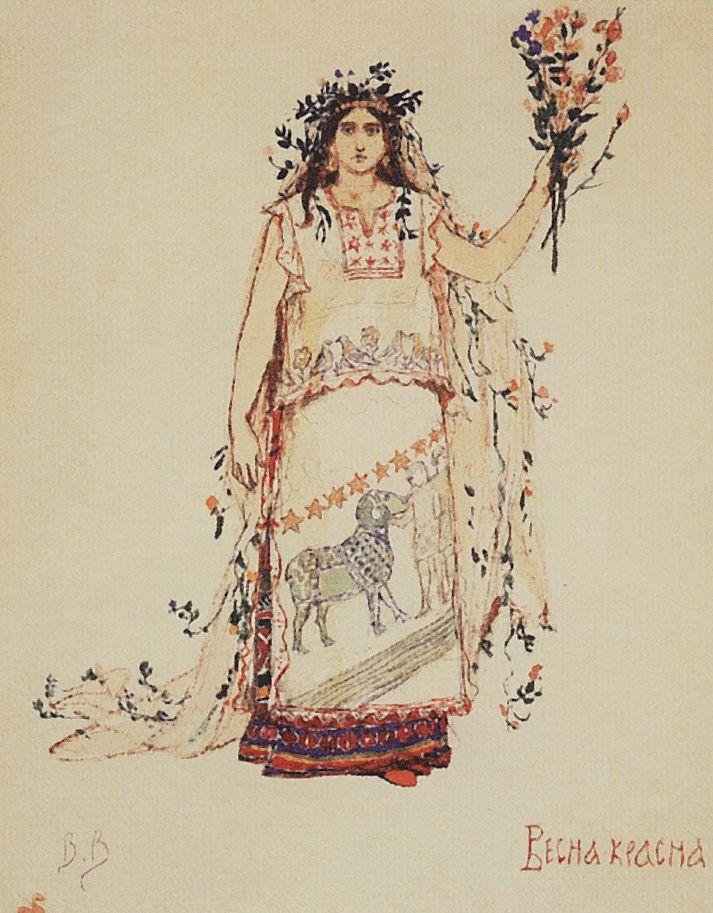 🇸🇮 Slovenia and 5 moreVesnaВесна
A Slavic personification of spring and youth, known in myth and languageFigure · Luck and prosperity Historical
🇷🇺 Russia and 4 moreFiery serpentsогненный змей
A pan-Slavic spirit of fire and wind, seen as a demon or a household helperBeing · Cursing and harm · Luck and prosperity Historical
🇷🇺 Russia and 4 moreIriyВырай
A mythical Slavic realm where souls and birds gather for the winterBelief · Speaking with spirits and the dead Legendary
🇸🇮 Slovenia and 5 moreVesnaВесна
A Slavic personification of spring and youth, known in myth and languageFigure · Luck and prosperity Historical
🇷🇺 Russia and 4 moreFiery serpentsогненный змей
A pan-Slavic spirit of fire and wind, seen as a demon or a household helperBeing · Cursing and harm · Luck and prosperity Historical
🇷🇺 Russia and 4 moreIriyВырай
A mythical Slavic realm where souls and birds gather for the winterBelief · Speaking with spirits and the dead Legendary
 🇷🇺 Russia and 7 moreOgnyena MariaОгнена Марија
A Slavic fire goddess linked to lightning, rain, and seasonal fire bansFigure · Protection · Healing Living
🇷🇺 Russia and 7 moreOgnyena MariaОгнена Марија
A Slavic fire goddess linked to lightning, rain, and seasonal fire bansFigure · Protection · Healing Living
 🇷🇺 Russia and 5 moreFiredrakeognennyi zmei
A European dragon myth born from sightings of shooting stars and will-o'-the-wispsBeing · Cursing and harm · Luck and prosperity Historical
🇧🇬 Bulgaria and 5 moreApocryphal prayer
A folk prayer text blending church forms with apocrypha and incantations for protection and healingText · Protection · Healing Living
🇷🇺 Russia and 2 moreVerliokaВерлиока
A cross-eyed monster from East Slavic folk talesFigure · Cursing and harm Historical
🇷🇺 Russia and 5 moreFiredrakeognennyi zmei
A European dragon myth born from sightings of shooting stars and will-o'-the-wispsBeing · Cursing and harm · Luck and prosperity Historical
🇧🇬 Bulgaria and 5 moreApocryphal prayer
A folk prayer text blending church forms with apocrypha and incantations for protection and healingText · Protection · Healing Living
🇷🇺 Russia and 2 moreVerliokaВерлиока
A cross-eyed monster from East Slavic folk talesFigure · Cursing and harm Historical
Photo credits on this page
The small pictures above come from Wikimedia Commons under free licences. Some are cropped to fit.
- Ognyena Maria: Unknown author, Public domain, source
- Domovoy: Ivan Bilibin, Public domain, source
- Likho: Mhapon, CC BY-SA 4.0, source
- Leshy: Γραφέας, CC BY-SA 4.0, source
- Slavic religion: Alphonse Mucha, Public domain, source
- Axe of Perun: VoivodeZmey, Public domain, source
- Slavic Native Faith: Union of Slavic Rodnover Communities (Союз Славянских Общин Славянской, CC BY-SA 4.0, source
- Wild Hunt: Peter Nicolai Arbo, Public domain, source
- Firedrake: Ramesh Kumar R, CC BY-SA 4.0, source
- Folk Orthodoxy: Лобачев Владимир, CC BY-SA 4.0, source
- Fern flower: Antoni Piotrowski, Public domain, source
- Rusalka: Andrey Shishkin, CC BY 3.0, source
- Saint Andrew's Day: Henryk Siemiradzki, Public domain, source
- Chort: Unknown author, Public domain, source
- Vesna: Viktor Vasnetsov, Public domain, source
The weekly digest
Every Monday: seven entries you may not know, what is on the calendar this week, and one rite drawn step by step.