
Wild Hunt
from Grimm's Wilde Jagd, meaning wild chase
A spectral chase across Europe led by a mythic figure and ghostly riders.
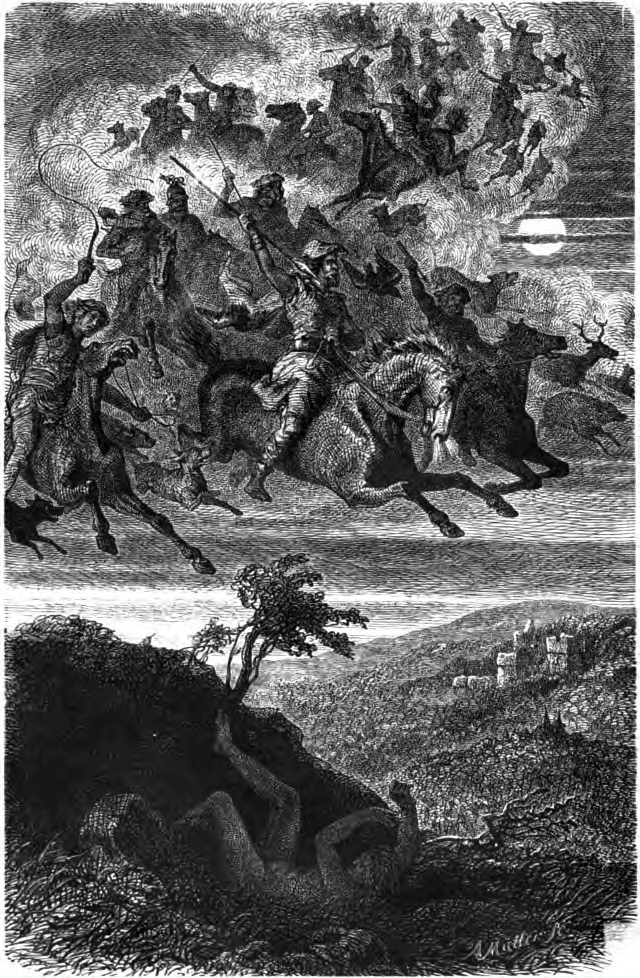
The Wild Hunt is a widespread European folklore motif featuring a supernatural chase. It appears in Germanic, Celtic, and Slavic traditions as a group of hunters pursuing prey or souls through the sky or land.
- Jacob Grimm coined Wilde Jagd in 1835.
- Welsh variant features Gwyn ap Nudd.
- French name derives from Herla king.
- Scandinavian Oskoreia means Asgard Ride.
- Italian version called Caccia Morta.
What it is
This motif describes a chaotic, supernatural procession moving across the sky or earth. A central leader commands a retinue of riders, often identified as spirits, elves, or demons. The group pursues targets with relentless energy. Witnesses fear it brings disaster, death, or abduction to the spirit world. The phenomenon appears in many regional variants across northern and western continents.
Where it comes from
Jacob Grimm first systematized the concept in his 1835 work Deutsche Mythologie. He argued these stories preserved ancient pagan beliefs about gods like Wodan. Modern scholars dispute this single origin, noting similar myths exist globally. Lotte Motz observed the motif clusters heavily in Germanic-speaking regions. Some researchers link it to ritual warrior bands or natural phenomena interpreted as demonic.
How it is done
The hunt moves as an army or pack through the air or forests. Riders may be mounted on multi-legged or fiery-eyed beasts. They pursue humans, animals, or other spirits. In some tales, a herald warns townsfolk to clear streets before the armed host arrives. Encounters can result in capture or spiritual displacement during sleep.
Tools and materials
Riders use spectral mounts, including black horses named Skokse. Hounds with white bodies and red ears accompany the chase. Weapons and armor suggest a martial purpose. Some versions feature werewolves or dragons joining the cavalcade. The imagery emphasizes speed, noise, and supernatural power.
Wild Hunt, drawn and placed
- Living
- Revived
- Fading
- Historical
- Legendary
- Performed
- Lineage
- European folklore
- Timing
- night, storms, holy tides
What it is for
People viewed the sight as an omen of war, plague, or personal doom. Leaders were sometimes blamed for authorizing conflict. The hunt also served as a mechanism for soul collection or fairy abduction. It reinforced social taboos against hunting on sacred days or violating moral codes.
Who does it
Scholars analyze the texts and oral histories. Folklorists track regional name variations and leader identities. Historians examine links to medieval witchcraft concepts. No specific priestly class performs the hunt; it is a narrative framework applied to various local legends.
Peoples and places
Germanic cultures name it Wilde Jagd or Wütendes Heer. Welsh tradition features Gwyn ap Nudd and Cŵn Annwn. French sources cite Familia Hellequini. Italian variants include Caccia Morta. Spanish records show hueste antigua. Slavic groups use terms like divoký hon. Each region adapts the leader and tone.
At a glance: who, where and when


What people believe
The worldview places the hunt between pagan deities and Christian demons. Grimm saw it as a corrupted march of gods turned into devilish spectres. Other views see it as a bridge to the underworld or fairy realm. The chaos reflects fears of uncontrolled nature and divine wrath.
When it is done
Tales associate the hunt with storms, winter nights, and holy seasons. Some leaders are cursed to ride until Judgment Day. Encounters often follow violations of religious rest days. The timing reinforces the boundary between the human world and the spirit realm.
How scholars and sceptics see it
Grimm popularized the term but imposed a rigid pagan survival theory. Later critics emphasized folklore evolution over static preservation. Otto Höfler linked motifs to ecstatic warrior cults. Hans Peter Duerr questioned whether reports describe rituals or natural events. Ronald Hutton challenged direct links to witchcraft sabbaths.
Cautions and what is closed
Witnessing the hunt was considered dangerous. People risked death, madness, or abduction. The lore warned against hunting on Sundays. Modern interpretations focus on psychological projections of guilt and fear. No physical harm occurs from the legend itself.
Compare and confuse
Similar chases appear in global mythology. The English Herlaþing shares traits with the French Maisnie Hellequin. Scandinavian Oskoreia parallels the Germanic hosts. All share the core element of a leaderless or god-led pursuit. Regional names differ but the structure remains consistent.
Law and persecution
No legal statutes govern the legend. Colonial powers did not suppress it specifically. It survived as a folk narrative rather than a regulated practice. Modern interest focuses on academic study and cultural heritage preservation.
Questions people ask about Wild Hunt
What is the Wild Hunt?
It is a European folklore motif describing a supernatural chase led by a mythic figure. The group includes ghostly riders and hounds pursuing prey across the sky or land.
Where does it originate?
The concept was formalized by Jacob Grimm in 1835. He believed it stemmed from Germanic pagan beliefs about gods like Wodan, though origins are debated.
Who leads the hunt?
Leaders vary by region. Common figures include Wodan, Gwyn ap Nudd, Count Hackelberg, or biblical characters like Cain or Herod. Sometimes a female figure leads.
Is it dangerous to see?
Folklore says witnessing it foretells disaster, war, or death. Some believe observers could be abducted to the underworld or fairy kingdom by the riders.
Good reading and sources
- Wild Hunt on WikipediaEncyclopedia
- More photos on Wikimedia CommonsPhotos and video
- Wikidata recordOpen data
The facts on this page come from the Wikipedia article "Wild Hunt", written by its contributors and used under the CC BY-SA 4.0 licence, and from its Wikidata record (CC0). EveryJaadu rewrote the text in its own words, with AI assistance, and compares every page with the article to make sure no passage is copied. It may be reused under the same CC BY-SA 4.0 licence with a link back.
It may contain mistakes. Names and customs differ from one community to the next, and some knowledge is closed to outsiders and left out here. This page describes belief and practice. It does not say that any of it works, it is not a how-to, and it is not medical advice. If something is wrong, tell us. Last refreshed 2026-10-06.
More from Germany
All the entries from Germany 🇺🇦 Ukraine and 5 moreMugwortчорнобиль (chornóbyl')
An aromatic herb used in folk medicine, cooking, and magical protection across Eurasia.Substance · Protection · Healing Living
🇺🇦 Ukraine and 5 moreMugwortчорнобиль (chornóbyl')
An aromatic herb used in folk medicine, cooking, and magical protection across Eurasia.Substance · Protection · Healing Living
 🇩🇪 GermanyPied Piper of Hamelinder Rattenfänger von Hameln
A medieval legend about a piper who leads children away from the town of HamelinFigure · Cursing and harm · Luck and prosperity Legendary
🇩🇪 GermanyPied Piper of Hamelinder Rattenfänger von Hameln
A medieval legend about a piper who leads children away from the town of HamelinFigure · Cursing and harm · Luck and prosperity Legendary
 🇩🇪 Germany and 5 moreWitch trials in the Holy Roman Empire
A wave of executions across Central Europe between the fifteenth and eighteenth centuries.Belief · Cursing and harm Historical
🇩🇪 Germany and 5 moreWitch trials in the Holy Roman Empire
A wave of executions across Central Europe between the fifteenth and eighteenth centuries.Belief · Cursing and harm Historical
 🇩🇪 Germany and 7 moreWalpurgis NightWalpurgisnacht
A spring vigil marking the eve of Saint Walpurga's feast day with bonfires and student festivalsRite · Protection · Speaking with spirits and the dead Living
🇩🇪 Germany and 7 moreWalpurgis NightWalpurgisnacht
A spring vigil marking the eve of Saint Walpurga's feast day with bonfires and student festivalsRite · Protection · Speaking with spirits and the dead Living
Related elsewhere
All belief 🇪🇬 Egypt and 1 moreLilithלִילִית
A feminine figure from Mesopotamian and Jewish mythology, often depicted as a night demon or spirit.Being · Cursing and harm Legendary
🇪🇬 Egypt and 1 moreLilithלִילִית
A feminine figure from Mesopotamian and Jewish mythology, often depicted as a night demon or spirit.Being · Cursing and harm Legendary
 🇪🇬 EgyptCurse
A spoken wish for misfortune to befall a person or placeBelief · Cursing and harm · Luck and prosperity Historical
🇪🇬 EgyptCurse
A spoken wish for misfortune to befall a person or placeBelief · Cursing and harm · Luck and prosperity Historical
 🇮🇳 India and 5 moreHoliहोली
A Hindu spring festival marked by coloured powders and bonfires to celebrate love and virtue.Tradition · Love and attraction · Cursing and harm Living
🇮🇳 India and 5 moreHoliहोली
A Hindu spring festival marked by coloured powders and bonfires to celebrate love and virtue.Tradition · Love and attraction · Cursing and harm Living
 🇮🇩 Indonesia and 2 moreDukun
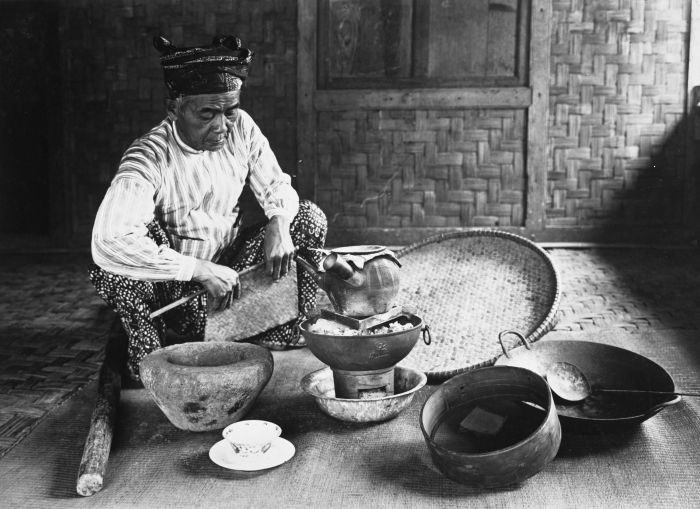
A traditional healer and spirit medium in Indonesian folk practiceTradition · Healing · Seeing and foretelling Living
🇮🇩 Indonesia and 2 moreDukun
A traditional healer and spirit medium in Indonesian folk practiceTradition · Healing · Seeing and foretelling Living