Households and ordinary people
Grandmothers, parents and neighbours doing the small things: the knot, the salt, the red thread.
Households and ordinary people do most of the world's magic: the grandmother who ties a thread on a baby's wrist, the neighbour who throws salt, the shopkeeper who hangs a lemon and chillies, the family that burns incense before a photograph. These people are not specialists and often do not call it magic. This page looks at the domestic side of the subject, which is the commonest and least written about.
Everyday customs
Household practice is woven into daily life: sweeping at new year, a bead on a cradle, a horseshoe over a door, a charm in a car. It tends to be practical, brief and handed down within the family. Many people say they do it because their mother did, or to be safe. It rarely needs a priest, a text or a fee. The hands that do it are those of mothers and grandmothers, who also cook, clean and care, so the magic is part of the labour of the home.
Women and the home
Women are the principal keepers of household custom in many societies, as mothers, grandmothers and aunts. Their knowledge covers birth, child care, food, illness, marriage and death. That knowledge is often undervalued by the formal religion and by scholars, and was also the source of accusations in the witch trials, in which women who were midwives or healers were prominent. A household custom is learned by watching and may never be explained, since the practitioner does not see it as special.
Faith and the home
Religious leaders have seen household custom as faith, as superstition or as a nuisance. Reformers in Protestant Europe, Salafi Islam and some Hindu and Buddhist movements have told people to give up such practices. Many people keep them regardless. In the diaspora, the home customs are sometimes the part of heritage that lasts longest, and are carried to new countries in suitcases. In cities, small shrines, protective charms and everyday rituals often survive in apartments, taxis and shops.
Why scholars care
Anthropologists of everyday religion and folklorists record these customs as evidence of how people manage risk. They show how belief and practice differ, since people may say they do not believe and still knock on wood. Household magic is also the easiest to commercialise, in shops selling charms and kits that detach customs from their homes. A new student or visitor may find that families who say they do not believe still follow such customs carefully, and this gap is one of the more interesting findings.
Households and ordinary people on EveryJaadu
The entries written up so far, best known first.
 🇮🇱 Israel and 3 moreCleromancy
A divination method that uses random chance to reveal divine willOracle · Seeing and foretelling · Speaking with spirits and the dead Living
🇮🇱 Israel and 3 moreCleromancy
A divination method that uses random chance to reveal divine willOracle · Seeing and foretelling · Speaking with spirits and the dead Living
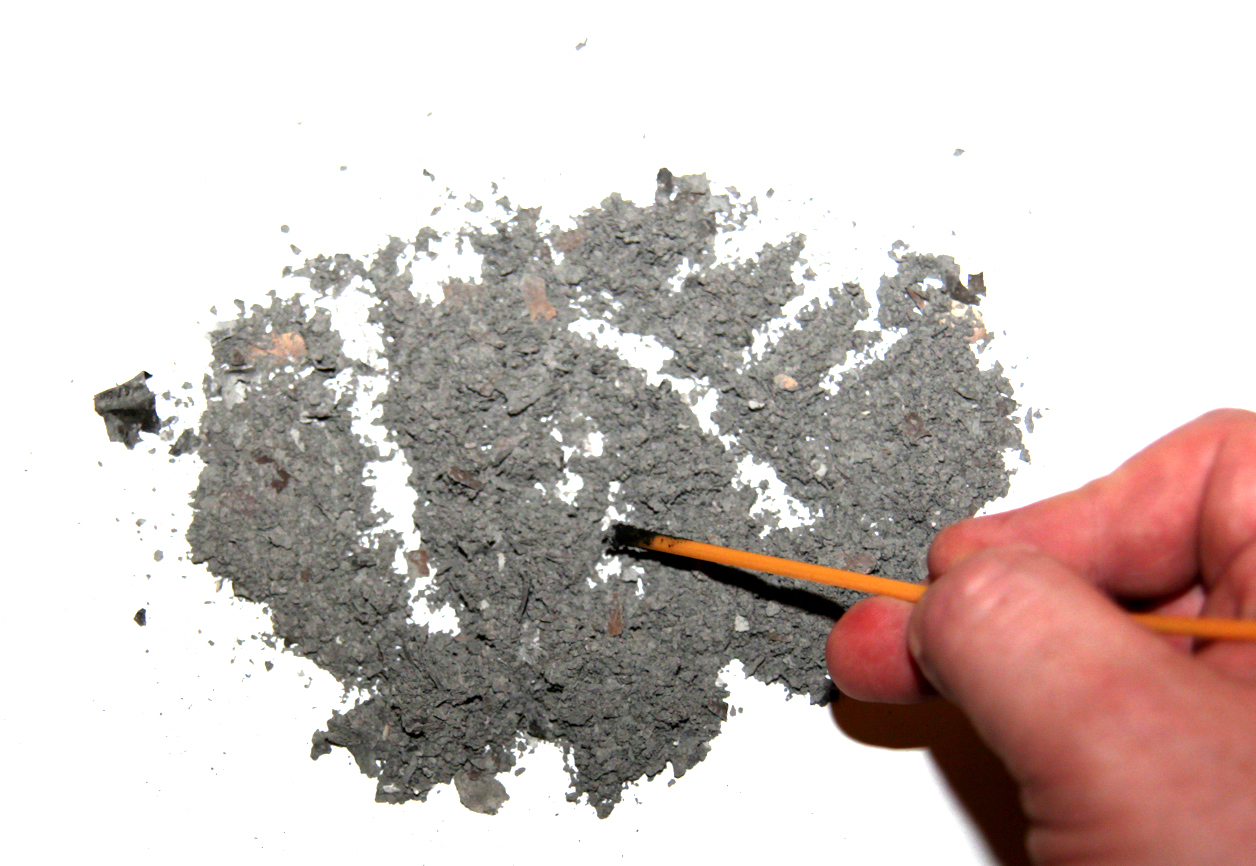 🇬🇷 Greece and 5 moreSpodomancy
Divination by reading omens in ashes, soot, and cindersOracle · Seeing and foretelling · Healing Living
🇬🇷 Greece and 5 moreSpodomancy
Divination by reading omens in ashes, soot, and cindersOracle · Seeing and foretelling · Healing Living
 🇮🇷 Iran and 2 moreBibliomancy
Divination by opening a book at random and reading the first passage foundOracle · Seeing and foretelling · Power and authority Living
🇮🇷 Iran and 2 moreBibliomancy
Divination by opening a book at random and reading the first passage foundOracle · Seeing and foretelling · Power and authority Living
 🇬🇷 Greece and 2 moreAstragalomancy
Divination by casting marked bones, carved rods, or numbered diceOracle · Seeing and foretelling · Speaking with spirits and the dead Living
🇬🇷 Greece and 2 moreAstragalomancy
Divination by casting marked bones, carved rods, or numbered diceOracle · Seeing and foretelling · Speaking with spirits and the dead Living
 🇨🇳 China and 3 moreTasseography
A divination method that reads fortunes in the sediment of tea or coffee cupsOracle · Seeing and foretelling · Luck and prosperity Living
🇨🇳 China and 3 moreTasseography
A divination method that reads fortunes in the sediment of tea or coffee cupsOracle · Seeing and foretelling · Luck and prosperity Living
 🇯🇵 JapanOmikujiおみくじ
Paper fortunes drawn at Japanese shrines and temples to reveal luck and life adviceOracle · Seeing and foretelling · Luck and prosperity Living
🇯🇵 JapanOmikujiおみくじ
Paper fortunes drawn at Japanese shrines and temples to reveal luck and life adviceOracle · Seeing and foretelling · Luck and prosperity Living
 🇨🇳 China and 1 moreMoon blocks筊杯
Two crescent blocks thrown to a deity for a yes or noOracle · Seeing and foretelling Living
🇨🇳 China and 1 moreMoon blocks筊杯
Two crescent blocks thrown to a deity for a yes or noOracle · Seeing and foretelling Living
 🇨🇳 China and 5 moreKau chim求籤
A divination practice using numbered bamboo sticks to seek answers from deitiesOracle · Seeing and foretelling · Power and authority Living
🇨🇳 China and 5 moreKau chim求籤
A divination practice using numbered bamboo sticks to seek answers from deitiesOracle · Seeing and foretelling · Power and authority Living
 🇨🇳 China and 1 moreJiaobei筊杯 (jiǎobēi)
Wooden crescent blocks thrown in pairs to ask temple deities yes or no questionsOracle · Seeing and foretelling · Speaking with spirits and the dead Living
🇨🇳 China and 1 moreJiaobei筊杯 (jiǎobēi)
Wooden crescent blocks thrown in pairs to ask temple deities yes or no questionsOracle · Seeing and foretelling · Speaking with spirits and the dead Living
 🇬🇷 Greece and 1 moreOomancy
Divination by eggs, reading shapes and signs to foresee events or diagnose spiritual statesOracle · Seeing and foretelling · Healing Living
🇯🇵 JapanDōbutsu uranai動物占い
A Japanese divination system that sorts people into animal types based on birthdate and personality axes.Oracle · Luck and prosperity Living
🇮🇹 ItalySmorfia
A Neapolitan dream book that turns visions into lottery numbersOracle · Luck and prosperity Living
🇬🇷 Greece and 1 moreOomancy
Divination by eggs, reading shapes and signs to foresee events or diagnose spiritual statesOracle · Seeing and foretelling · Healing Living
🇯🇵 JapanDōbutsu uranai動物占い
A Japanese divination system that sorts people into animal types based on birthdate and personality axes.Oracle · Luck and prosperity Living
🇮🇹 ItalySmorfia
A Neapolitan dream book that turns visions into lottery numbersOracle · Luck and prosperity Living
Photo credits on this page
The small pictures above come from Wikimedia Commons under free licences. Some are cropped to fit.
- Oomancy: Rollcloud, CC BY 3.0, source
- Omikuji: C121749n, Public domain, source
- Moon blocks: Hsiung/d6478coke, CC BY 2.0, source
- Kau chim: No machine-readable author provided. 9old9 assumed (based on copyright, Public domain, source
- Spodomancy: Tim1965, CC BY-SA 3.0, source
- Bibliomancy: Albert Robida, Public domain, source
- Jiaobei: Jnzl's Public Domain Photos, CC BY 2.0, source
- Astragalomancy: Roland zh, CC BY-SA 3.0, source
- Tasseography: User:MochaSwirl, Public domain, source
- Cleromancy: Julius Schnorr von Carolsfeld, Public domain, source