
Bibliomancy
from Greek biblion (book) and manteia (divination)
Divination by opening a book at random and reading the first passage found
Bibliomancy is a method of seeking guidance or omens by selecting a text and interpreting a random passage. It appears in many traditions, using sacred books like the Bible or Quran, literary works such as Homer or Virgil, and poetry collections like those of Hafez.
- First recorded in 1753 in Chambers' Cyclopædia
- Uses texts like the Bible, Quran, and Hafez
- Falnama manuscripts were large and illustrated
- Robert Browning used it for romantic guidance
- Common in Iran, Turkey, and India historically
What it is
Bibliomancy is a form of divination that uses books to reveal answers or predict outcomes. The practice involves choosing a specific text and opening it to a random page. A sentence or verse found at that spot is then interpreted as a message from the divine or a sign for the future. This method is known by several names, including stichomancy when focusing on lines of verse, and rhapsodomancy when drawing from poems. Historically, it falls under the broader category of sortilege, or divination by lots, which was common in the ancient Roman world.
Where it comes from
The term bibliomancy was first recorded in 1753 in Chambers' Cyclopædia. However, the practice itself has much older roots. In classical antiquity, Romans used sortes Homericae and sortes Virgilianae, drawing random passages from Homer and Virgil. Early Christians practiced sortes biblicae using the Bible, while Islamic cultures developed Falnama, or Book of Omens, manuscripts. These Persian texts were used in Iran, Turkey, and India from at least the late fourteenth century through the nineteenth century to guide major life decisions.
How it is done
The standard method requires the seeker to select a book believed to hold truth. They open the book to a random page and place a finger on a random spot on that page. The text immediately under the finger is read aloud. Variations exist, such as pulling a random book from a library shelf first. If a book falls from a shelf on its own, it may be chosen as an omen. In some Islamic traditions, the seeker performs ablutions and recites prayers before opening the book to interpret the accompanying painting and text.
Tools and materials
The primary tool is the book itself, which can be religious or secular. Common texts include the Bible, the Quran, the Iliad, the Odyssey, Virgil's Aeneid, and the Divan of Hafez. In Islamic tradition, illustrated Falnama manuscripts were used. These were unusually large books featuring bold paintings that depicted mythical or religious figures. Each painting told a self-contained story without a larger narrative, allowing readers to consult them for specific questions about business, marriage, or absent relatives.
Bibliomancy, drawn and placed
- Living
- Revived
- Fading
- Historical
- Legendary
- Performed
- Lineage
- Sortilege
- Timing
- at moments of decision or crisis
What it is for
People use bibliomancy to gain guidance during times of uncertainty or crisis. Seekers ask questions about their fate, relationships, or major life choices. For example, the English poet Robert Browning used the method to inquire about his attraction to Elizabeth Barrett. In Islamic contexts, Falnamas were consulted to divine prospects for business ventures or the condition of friends. The results are often interpreted as favourable, unfavourable, or middling, with recommendations for pious acts to avoid negative outcomes.
Who does it
Bibliomancy is performed by individuals seeking personal guidance, ranging from household members to dedicated diviners. In Christian communities, it is a widespread practice among believers. Among Chabad-Lubavitch Chasidic Jews, messianic followers use the Igrot Kodesh, a collection of letters by Menachem Mendel Schneerson, for spiritual direction. The practice does not require formal training; it relies on the belief that the text holds inherent truth and that the random selection reveals a destined message.
Peoples and places
The practice is found across multiple cultures and religions. In Iran, Fāl-e Ḥafez is a popular form of bibliomancy using the poetry of Hafez. Islamic cultures in Iran, Turkey, and India historically used Quranic Falnamas. European Christians have long used the Bible for sorts. The method also appears in literary circles, where authors like Robert Browning used random books to seek romantic guidance. The specific texts chosen reflect the cultural and religious background of the practitioner.
At a glance: who, where and when

What people believe
Practitioners believe that books contain hidden truths or divine will. By removing human choice from the selection process, the resulting passage is seen as a direct answer from a higher power. In Christian and Jewish traditions, the Bible is viewed as a living oracle. In Islamic culture, the Quran and other sacred texts are believed to offer protection and guidance. The randomness of the selection is key; it ensures that the message is not influenced by the seeker's biases, making it a pure form of communication with the spiritual realm.
When it is done
Bibliomancy is typically performed during times of personal crisis or significant decision-making rather than on fixed calendar dates. It is used when individuals face uncertainty about marriage, business ventures, or health. The practice is also associated with journeys and changes in status. There are no specific festivals tied to the act, but it is often sought out when traditional methods of decision-making feel insufficient or when a clear sign is needed to proceed.
How scholars and sceptics see it
Scholars study bibliomancy as part of the history of religion and magic. Anthropologists view it as a way for individuals to cope with uncertainty and seek agency in unpredictable situations. Historians note its prevalence in late antiquity and the medieval period, particularly in the use of sortes. Researchers examine how different cultures adapted the practice to their own sacred texts, from Homer to the Quran. The practice is understood as a ritualized form of chance, blending psychological need with theological belief.
Cautions and what is closed
There are no widely reported physical harms associated with bibliomancy. However, reliance on random texts can lead to misinterpretation or anxiety if the passage is perceived as negative. Some groups caution against using sacred texts for trivial matters, emphasizing the need for respect and proper preparation. In historical contexts, Falnamas were commissioned by wealthy patrons, suggesting that access to certain forms of bibliomancy was limited by social status. Misuse of the practice is sometimes viewed as a lack of faith or understanding.
Compare and confuse
Bibliomancy is closely related to stichomancy, which focuses specifically on lines of verse. Rhapsodomancy is similar but draws from songs or poems. Both fall under the umbrella of sortilege, which includes drawing lots or casting dice. Unlike oneiromancy, which uses dreams, bibliomancy relies on written text. It differs from astrology, which uses celestial bodies, by using human-made words as the medium for divine communication. The practice shares similarities with the Bible code, though the latter involves complex numerical analysis rather than random selection.
Law and persecution
Bibliomancy is generally legal and unregulated in most countries. It is considered a personal spiritual practice rather than a commercial service. In some regions, the use of sacred texts for divination is protected as part of religious freedom. There are no specific laws prohibiting the practice, though historical persecution of diviners in some eras may have affected its public visibility. Today, it remains a private activity for most practitioners, with no official oversight or licensing required.
Questions people ask about Bibliomancy
What is bibliomancy?
It is a divination method where a person opens a book at random and reads the first passage they find. This text is then interpreted as a message or omen regarding their question or situation.
Where did bibliomancy originate?
The term appeared in 1753, but the practice dates back to ancient Rome with sortes Homericae and Virgilianae. It later spread to Christian and Islamic cultures, using the Bible and Quran respectively.
Which books are used for bibliomancy?
Sacred texts like the Bible and Quran are common. Literary works such as Homer, Virgil, and Hafez are also used. In Iran, the Divan of Hafez is particularly popular for this purpose.
How is the Falnama used?
The Falnama is an illustrated Persian manuscript. Users perform ablutions, open to a random page, and interpret the painting and text to divine outcomes for decisions like marriage or business.
Good reading and sources
- Encyclopaedia BritannicaArticle
- Falnama's Book of Omens: The Future Will Be Bright and SunnySmithsonian Magazine, Article
- Library of Congress CatalogLibrary of Congress, Article
The facts on this page come from the Wikipedia article "Bibliomancy", written by its contributors and used under the CC BY-SA 4.0 licence, and from its Wikidata record (CC0). EveryJaadu rewrote the text in its own words, with AI assistance, and compares every page with the article to make sure no passage is copied. It may be reused under the same CC BY-SA 4.0 licence with a link back.
It may contain mistakes. Names and customs differ from one community to the next, and some knowledge is closed to outsiders and left out here. This page describes belief and practice. It does not say that any of it works, it is not a how-to, and it is not medical advice. If something is wrong, tell us. Last refreshed 2026-10-05.
More from Iran
All the entries from Iran 🇮🇷 Iran and 1 moreJinnجِنّ
Supernatural beings in Islamic and pre-Islamic Arabian belief, created from smokeless fire.Being · Protection · Cursing and harm Living
🇮🇷 Iran and 2 moreHaoma
A divine plant and spirit in Zoroastrianism, linked to healing and ancient rituals.Substance · Healing · Speaking with spirits and the dead Living
🇮🇷 Iran and 1 moreJinnجِنّ
Supernatural beings in Islamic and pre-Islamic Arabian belief, created from smokeless fire.Being · Protection · Cursing and harm Living
🇮🇷 Iran and 2 moreHaoma
A divine plant and spirit in Zoroastrianism, linked to healing and ancient rituals.Substance · Healing · Speaking with spirits and the dead Living
 🇮🇷 Iran and 5 moreMagi
Priests of Zoroastrianism and the figures who inspired the word for magicTradition · Seeing and foretelling · Power and authority Living
🇮🇷 Iran and 5 moreMagi
Priests of Zoroastrianism and the figures who inspired the word for magicTradition · Seeing and foretelling · Power and authority Living
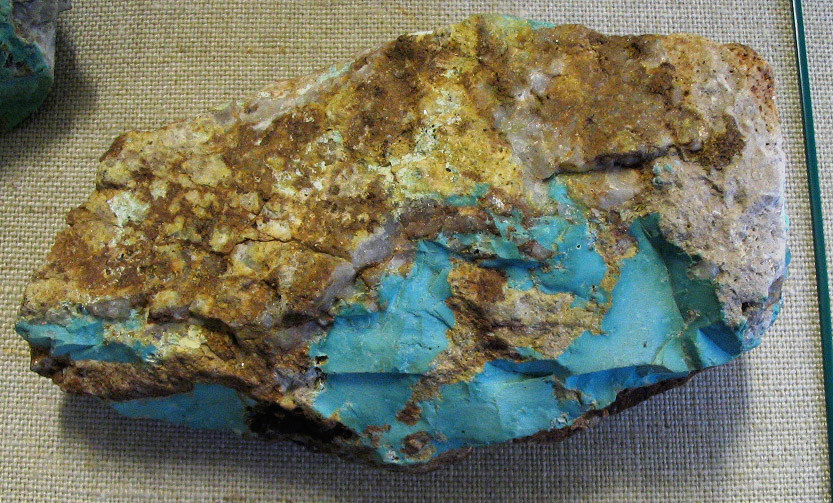 🇮🇷 Iran and 5 moreTurquoise
An opaque blue-green gemstone prized for its color since ancient timesSubstance · Protection · Luck and prosperity Living
🇮🇷 Iran and 5 moreTurquoise
An opaque blue-green gemstone prized for its color since ancient timesSubstance · Protection · Luck and prosperity Living
Related elsewhere
All oracle 🇮🇳 India and 2 morePalmistry
A divination method that interprets the lines and shapes of the hand to predict fate or reveal character.Oracle · Seeing and foretelling · Power and authority Living
🇮🇳 India and 2 morePalmistry
A divination method that interprets the lines and shapes of the hand to predict fate or reveal character.Oracle · Seeing and foretelling · Power and authority Living
 🇩🇿 Algeria and 1 moreAhmad al-Buniأحمد البوني المالكي
A medieval Sufi scholar known for works on letter mysticism and talismansText · Power and authority · Seeing and foretelling Historical
🇩🇿 Algeria and 1 moreAhmad al-Buniأحمد البوني المالكي
A medieval Sufi scholar known for works on letter mysticism and talismansText · Power and authority · Seeing and foretelling Historical
 🇬🇹 Guatemala and 1 moreMaya mythology
The reconstructed tales of the Maya people about gods, heroes, and the creation of the world.Tradition · Seeing and foretelling · Power and authority Historical
🇬🇹 Guatemala and 1 moreMaya mythology
The reconstructed tales of the Maya people about gods, heroes, and the creation of the world.Tradition · Seeing and foretelling · Power and authority Historical
 🇮🇳 India and 5 moreCowrie
A sea snail shell used as currency, divination tool, and charm across many culturesSubstance · Seeing and foretelling · Luck and prosperity Living
🇮🇳 India and 5 moreCowrie
A sea snail shell used as currency, divination tool, and charm across many culturesSubstance · Seeing and foretelling · Luck and prosperity Living