
Cleromancy
from Greek kleros, meaning lot
A divination method that uses random chance to reveal divine will
Cleromancy is a form of divination that determines outcomes through random means like dice or drawing lots. It is practiced in various cultures, including ancient Rome, Germanic tribes, and Jewish traditions, where it is believed to reveal the will of deities.
- Used in ancient Rome and by Germanic tribes
- Mentioned 47 times in the Bible
- Yoruba babalawos use oil palm kernels
- Mi'kmaq Waltes game uses bone dice
- Greek word kleros is the root of cleric
What it is
Cleromancy is a divination practice that uses random methods to determine an outcome. It involves casting lots, rolling dice, or drawing objects. Practitioners believe these random events are not truly random but reveal the will of a deity. This method has been used in many cultures throughout history.
Where it comes from
The term comes from the Greek word for lot. The practice is mentioned in the Bible and described by Roman historians. Ancient Romans used it to tell fortunes. Germanic tribes also used it, as recorded by Tacitus. The practice spread across different regions and cultures.
How it is done
Practitioners use various tools like dice, bones, or shells. In some traditions, oil palm kernels are pounded to create patterns. In others, lots are drawn from a container. The results are interpreted based on established meanings or poems. The process is often done by a priest or family head.
Tools and materials
Tools include dice, bones, shells, and yarrow sticks. In Yoruba tradition, consecrated oil palm kernels and termite dust are used. In Mi'kmaq tradition, bone dice and a counting stick are employed. These items are considered sacred or significant in the ritual.
Cleromancy, drawn and placed
- Living
- Revived
- Fading
- Historical
- Legendary
- Performed
- Lineage
- Judaic and Christian tradition
- Timing
- during decision-making or crisis
What it is for
Cleromancy is used to make decisions, find guilty parties, or determine divine favor. It helps communities resolve disputes or choose leaders. Practitioners seek guidance from deities through this method. It is used in times of crisis or important life events.
Who does it
Priests, diviners, and household heads perform cleromancy. In some traditions, only specific individuals can interpret the results. Gender roles vary by culture. Practitioners are often trained in the symbolic meanings of the lots or patterns.
Peoples and places
Cleromancy is found in Roman, Germanic, Jewish, Christian, Yoruba, and Mi'kmaq cultures. Each culture has its own variations and interpretations. The practice adapts to local beliefs and tools while maintaining the core concept of random chance revealing divine will.
At a glance: who, where and when

What people believe
Practitioners believe that random events are guided by higher powers. The outcome is seen as a message from deities or spirits. This belief system connects chance with destiny and divine intervention. It reflects a worldview where the mundane and spiritual intersect.
When it is done
Cleromancy is performed during crises, decision-making moments, or religious festivals. It is not tied to a specific calendar date but to the needs of the community or individual. Some practices occur daily, while others are reserved for special occasions.
How scholars and sceptics see it
Scholars view cleromancy as a historical divination method. Anthropologists study its role in community decision-making. Historians trace its origins and evolution across cultures. Skeptics attribute it to psychological biases or coincidence.
Cautions and what is closed
Some religious texts prohibit certain forms of divination. Misuse of cleromancy can lead to social conflict or misinterpretation. Practitioners must follow strict protocols to ensure validity. Outsiders may not be allowed to participate in sacred rituals.
Compare and confuse
Cleromancy is similar to other divination methods like astrology or tarot. It differs in its reliance on pure chance rather than symbolic interpretation. Other terms like sortition refer to the mechanical aspect of drawing lots.
Law and persecution
In some regions, cleromancy is protected as part of cultural heritage. In others, it may be restricted due to religious laws. Historical persecution of diviners occurred in certain periods. Modern practices are generally tolerated if conducted privately.
Questions people ask about Cleromancy
What is cleromancy?
Cleromancy is a divination method that uses random chance, like casting lots or rolling dice, to reveal divine will or guide decisions.
Where did cleromancy originate?
The term comes from Greek kleros. The practice appears in ancient Roman, Germanic, Jewish, and Christian traditions, with roots in early Middle Eastern cultures.
How is cleromancy performed?
It involves using tools like dice, bones, or shells. Results are interpreted based on established meanings, often by a priest or diviner following specific rituals.
Who practices cleromancy today?
It is still practiced by Yoruba babalawos, Mi'kmaq communities, and some Christian groups who draw lots for church decisions or personal guidance.
Good reading and sources
The facts on this page come from the Wikipedia article "Cleromancy", written by its contributors and used under the CC BY-SA 4.0 licence, and from its Wikidata record (CC0). EveryJaadu rewrote the text in its own words, with AI assistance, and compares every page with the article to make sure no passage is copied. It may be reused under the same CC BY-SA 4.0 licence with a link back.
It may contain mistakes. Names and customs differ from one community to the next, and some knowledge is closed to outsiders and left out here. This page describes belief and practice. It does not say that any of it works, it is not a how-to, and it is not medical advice. If something is wrong, tell us. Last refreshed 2026-10-05.
More from Israel
All the entries from Israel 🇸🇾 Syria and 5 moreBaetyl
A sacred stone, often a meteorite, believed to house a deity in ancient Near Eastern and Mediterranean traditions.Charm · Power and authority · Speaking with spirits and the dead Historical
🇸🇾 Syria and 5 moreBaetyl
A sacred stone, often a meteorite, believed to house a deity in ancient Near Eastern and Mediterranean traditions.Charm · Power and authority · Speaking with spirits and the dead Historical
 🇮🇱 Israel and 5 moreTetragrammatonיהוה
The four-letter name of God in the Hebrew Bible, written as YHWH.Belief · Speaking with spirits and the dead Living
🇮🇱 Israel and 5 moreTetragrammatonיהוה
The four-letter name of God in the Hebrew Bible, written as YHWH.Belief · Speaking with spirits and the dead Living
 🇮🇱 Israel and 3 moreGematriaגימטריה
A numeric writing system that assigns numerical values to words and phrases for interpretation.Text · Seeing and foretelling · Power and authority Living
🇮🇱 Israel and 3 moreGematriaגימטריה
A numeric writing system that assigns numerical values to words and phrases for interpretation.Text · Seeing and foretelling · Power and authority Living
 🇮🇱 IsraelNumber of the beastἈριθμὸς τοῦ θηρίου
A biblical number linked to a prophetic figure and interpreted through ancient letter values.Belief · Cursing and harm Historical
🇮🇱 IsraelNumber of the beastἈριθμὸς τοῦ θηρίου
A biblical number linked to a prophetic figure and interpreted through ancient letter values.Belief · Cursing and harm Historical
Related elsewhere
All oracle 🇮🇹 ItalyEtruscan religion
The polytheistic beliefs and divination practices of the ancient Etruscans of ItalyTradition · Seeing and foretelling · Speaking with spirits and the dead Historical
🇮🇹 ItalyEtruscan religion
The polytheistic beliefs and divination practices of the ancient Etruscans of ItalyTradition · Seeing and foretelling · Speaking with spirits and the dead Historical
 🇮🇹 ItalyCumaean SibylSibylla Cumana
The priestess of the Apollonian oracle at Cumae, famous in Roman legend for her prophetic books and underworld guidance.Figure · Seeing and foretelling · Speaking with spirits and the dead Legendary
🇮🇹 ItalyCumaean SibylSibylla Cumana
The priestess of the Apollonian oracle at Cumae, famous in Roman legend for her prophetic books and underworld guidance.Figure · Seeing and foretelling · Speaking with spirits and the dead Legendary
 🇳🇬 NigeriaOrunmilaỌ̀rúnmìlà
Yoruba deity of wisdom and the creator of the Ifá divination systemBeing · Seeing and foretelling · Speaking with spirits and the dead Living
🇳🇬 NigeriaOrunmilaỌ̀rúnmìlà
Yoruba deity of wisdom and the creator of the Ifá divination systemBeing · Seeing and foretelling · Speaking with spirits and the dead Living
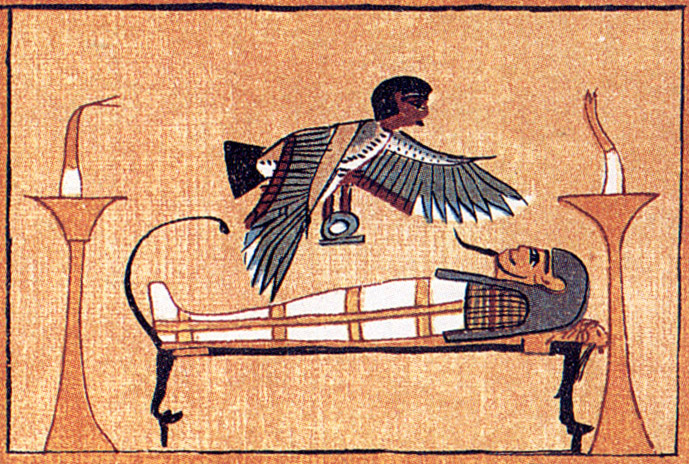 🇸🇪 Sweden and 1 moreSoul flight
A trance practice where the spirit leaves the body to visit other realmsRite · Healing · Seeing and foretelling Historical
🇸🇪 Sweden and 1 moreSoul flight
A trance practice where the spirit leaves the body to visit other realmsRite · Healing · Seeing and foretelling Historical