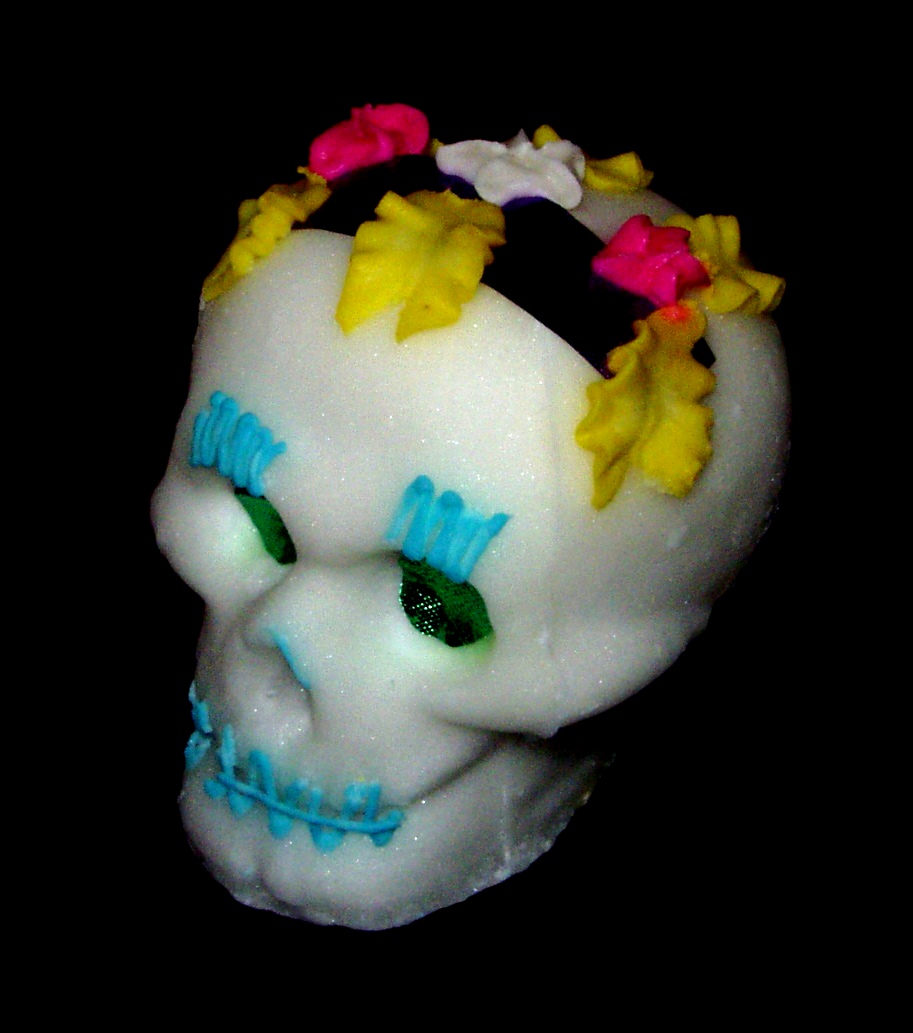
Calavera
from Spanish calavera, meaning skull
A sugar or clay skull used in Mexican Day of the Dead celebrations.
A calavera is a skull representation made from sugar, clay, or other materials. It is central to the Mexican observance of Día de los Muertos and All Souls' Day. These objects serve as offerings on altars or as edible treats for children.
- Sugar skulls are called alfeñiques when made from cane sugar.
- José Guadalupe Posada created famous satirical calavera prints.
- Diego Rivera expanded the Catrina figure into a full-bodied icon.
- Clay skulls are often painted metallic silver with beaded eyes.
- Literary calaveras are poems that humorously criticize the living.
What it is
A calavera is a stylized human skull or skeleton figure. In Mexico, these are often crafted from sugar paste or clay using molds. The term also covers artistic prints and literary poems. They function as decorative items or edible gifts during specific holidays honoring the deceased.
Where it comes from
The practice has roots in indigenous Aztec, Mayan, and Toltec traditions that viewed bones as repositories of power. Spanish colonizers introduced Catholic memento mori symbols. Scholars note that modern forms blend these influences, with some arguing the current celebration is more Catholic due to historical suppression of native religions.
How it is done
Craftsmen use molds to cast sugar or clay into skull shapes. Elaborate versions may take months to produce and decorate with foil, beads, or feathers. Names are written on the forehead with icing. Clay variants are painted metallic silver or bright colors. Literary calaveras involve writing satirical rhymes about living people.
Tools and materials
Materials include cane sugar, vanilla flavoring, chocolate, and clay. Decorations feature colored foil, icing, beads, and sometimes feathers. Molds are essential for casting the basic shape. Vegetable dyes provide color to the sugar paste. Some designs incorporate small sombreros.
Calavera, drawn and placed
- Living
- Revived
- Fading
- Historical
- Legendary
- Performed
- Lineage
- Mexican folk tradition
- Timing
- November 1 and 2
What it is for
Skulls are placed on ofrendas (altars) to welcome returning spirits. Beliefs vary: some think spirits consume the food's essence, while others believe they only sense it. Originally given to children to eat, they now serve as symbolic offerings. Literary versions humorously critique the living.
Who does it
Households create and display these items for family rituals. Artisans produce elaborate versions for sale at markets. Artists like José Guadalupe Posada and Diego Rivera shaped the visual culture through prints and paintings. Modern face painting mimics the skull look but is not traditional.
Peoples and places
The tradition is primarily Mexican. It connects to broader Latin American observances of All Souls' Day. Indigenous groups contributed foundational beliefs about death and bones. Spanish influence added Catholic frameworks. Urban populations now drive commercial production and artistic reinterpretation.
At a glance: who, where and when
Who does it
Peoples
Belief worlds
Occasions


What people believe
Bones were historically seen as storing life energy. Spirits return home on November 2 to visit altars. The skulls act as lighthearted emblems of mortality. They remind the living of their own death while celebrating the departed. This view blends indigenous reverence with secular humor.
When it is done
Sales begin weeks before November 1. Children who died are honored on November 1. Adults return on November 2. The Alfeñique fair in Toluca is a major market event. Production peaks during this autumn period leading up to the holiday.
How scholars and sceptics see it
Stanley Brandes identified nine traits of modern calaveras: ephemeral, seasonal, humorous, secular, commercial, made for the living, playable, portable, and urban-consumed. Historians debate the balance between indigenous and Catholic origins. Scholars view them as complex cultural syntheses rather than pure traditions.
Cautions and what is closed
Decorative skulls often contain inedible items like beads and foil. Craftsmen prioritize aesthetics over food safety for display pieces. Consumers must distinguish between edible sugar treats and ornamental art. Some decorations pose choking hazards if consumed accidentally.
Compare and confuse
Calaveras differ from generic memento mori by their vibrant, humorous style. They relate to Catrina figures popularized by Posada and Rivera. Literary calaveras share traits with political satire prints. Other cultures have skull festivals, but Mexican calaveras are distinct in their material and ritual use.
Law and persecution
The tradition thrives in public markets and private homes. Commercial production supports local artisans. Cultural heritage protections likely apply, though specific laws are not detailed here.
Today
The tradition remains active in Mexico and among diaspora communities. Urban centers see renewed interest in face painting and artistic displays. Commercial fairs like the one in Toluca sustain production. Artists continue to reinterpret classic figures like Catrina for modern audiences.
Rites that involve Calavera
Questions people ask about Calavera
What is a calavera?
A calavera is a skull-shaped object made from sugar, clay, or paper. It is used in Mexican Day of the Dead celebrations as an offering or decoration. The word means skull in Spanish.
Where does the tradition come from?
It combines indigenous Mesoamerican beliefs about bones with Spanish Catholic customs. Aztec, Mayan, and Toltec groups honored death, while Spaniards added memento mori symbolism.
Are all calaveras edible?
No. Sugar skulls intended for altars often have inedible decorations like beads or foil. Only those made specifically for consumption should be eaten. Display versions prioritize appearance over taste.
Who creates calaveras?
Artisans make them using molds for mass production. Households may craft simple versions for personal altars. Famous artists like Posada influenced the visual style through printmaking.
When are calaveras used?
They appear during November 1 and 2 for Día de los Muertos. Sales start weeks earlier at markets like Toluca's Alfeñique fair. They honor deceased children on Nov 1 and adults on Nov 2.
Good reading and sources
- Calavera on WikipediaEncyclopedia
- More photos on Wikimedia CommonsPhotos and video
- Wikidata recordOpen data
The facts on this page come from the Wikipedia article "Calavera", written by its contributors and used under the CC BY-SA 4.0 licence, and from its Wikidata record (CC0). EveryJaadu rewrote the text in its own words, with AI assistance, and compares every page with the article to make sure no passage is copied. It may be reused under the same CC BY-SA 4.0 licence with a link back.
It may contain mistakes. Names and customs differ from one community to the next, and some knowledge is closed to outsiders and left out here. This page describes belief and practice. It does not say that any of it works, it is not a how-to, and it is not medical advice. If something is wrong, tell us. Last refreshed 2026-10-05.
More from Mexico
All the entries from Mexico 🇲🇽 Mexico and 5 moreLa Llorona
A vengeful ghost in Hispanic American folklore who mourns drowned children near water.Figure · Cursing and harm Living
🇲🇽 Mexico and 5 moreLa Llorona
A vengeful ghost in Hispanic American folklore who mourns drowned children near water.Figure · Cursing and harm Living
 🇲🇽 Mexico and 5 moreWitchcraft in Latin AmericaBrujería
A syncretic blend of Indigenous, African, and European magical practices across Latin AmericaTradition · Protection · Healing Living
🇲🇽 Mexico and 5 moreWitchcraft in Latin AmericaBrujería
A syncretic blend of Indigenous, African, and European magical practices across Latin AmericaTradition · Protection · Healing Living
 🇲🇽 Mexico and 2 moreChild sacrifice
The ritual killing of children to appease deities or restore cosmic order in ancient culturesRite · Cursing and harm · Speaking with spirits and the dead Historical
🇲🇽 Mexico and 2 moreChild sacrifice
The ritual killing of children to appease deities or restore cosmic order in ancient culturesRite · Cursing and harm · Speaking with spirits and the dead Historical
 🇨🇺 Cuba and 2 moreSanteríaRegla de Ocha
An Afro-Cuban religion blending Yoruba beliefs with Catholicism and SpiritismTradition · Protection · Healing Living
🇨🇺 Cuba and 2 moreSanteríaRegla de Ocha
An Afro-Cuban religion blending Yoruba beliefs with Catholicism and SpiritismTradition · Protection · Healing Living
Related elsewhere
All charm 🇰🇷 South Korea and 1 moreChuseok추석 (Chuseok), 한가위 (Hangawi)
A Korean autumn harvest festival marked by ancestral rites and feasting on the full moon.Tradition · Speaking with spirits and the dead · Luck and prosperity Living
🇨🇳 China and 4 moreKitchen God灶君
The Chinese hearth deity who reports domestic conduct to the Jade EmperorBeing · Protection · Luck and prosperity Living
🇳🇿 New ZealandKarakia
Māori recitations used for spiritual guidance, protection, and formal greetingsTradition · Protection · Speaking with spirits and the dead Living
🇰🇷 South Korea and 1 moreChuseok추석 (Chuseok), 한가위 (Hangawi)
A Korean autumn harvest festival marked by ancestral rites and feasting on the full moon.Tradition · Speaking with spirits and the dead · Luck and prosperity Living
🇨🇳 China and 4 moreKitchen God灶君
The Chinese hearth deity who reports domestic conduct to the Jade EmperorBeing · Protection · Luck and prosperity Living
🇳🇿 New ZealandKarakia
Māori recitations used for spiritual guidance, protection, and formal greetingsTradition · Protection · Speaking with spirits and the dead Living
 🇬🇧 United Kingdom and 1 moreWell dressing
A rural English custom of decorating water sources with natural designsTradition · Protection · Speaking with spirits and the dead Living
🇬🇧 United Kingdom and 1 moreWell dressing
A rural English custom of decorating water sources with natural designsTradition · Protection · Speaking with spirits and the dead Living