
Chinese numerology
In its own language: 中国数术
A system of interpreting numbers as lucky or unlucky based on their pronunciation in Chinese dialects.
Chinese numerology is a cultural practice that assigns auspicious or inauspicious meanings to numbers based on how they sound in various Chinese languages. Numbers like eight are prized for sounding like prosperity, while four is often avoided because it resembles the word for death. This belief system influences everyday choices across East Asia and among diaspora communities.
- Number eight sounds like prosperity and is highly prized.
- Number four sounds like death and is often avoided.
- Buildings may skip floors containing the digit four.
- Six is considered lucky because it means smooth or slick.
- Nine represents longevity and great success.
What it is
Chinese numerology is a folk tradition that evaluates numbers as either fortunate or unfortunate. The core principle relies on phonetic similarity between digits and words with positive or negative connotations. For instance, the digit eight is highly valued because its pronunciation resembles terms for wealth and growth. Conversely, four is frequently shunned because it sounds identical to the word for mortality. These associations vary by dialect, meaning a number considered lucky in one region might be neutral or even unlucky in another. The practice extends beyond simple counting into architecture, commerce, and personal identification.
Where it comes from
The roots of this belief lie in ancient Chinese linguistic traditions where homophones played a significant role in communication and poetry. While some interpretations are modern, others trace back centuries. The avoidance of four has historical precedents, though its modern stigma is particularly strong in Cantonese-speaking areas. Buddhism also influenced these views, sometimes reinforcing the association of certain numbers with death or spiritual concepts. As Chinese culture spread through trade and migration, these numerical beliefs took root in neighboring countries like Vietnam and Japan, adapting to local linguistic contexts.
How it is done
Practitioners apply these rules when selecting phone numbers, vehicle license plates, and building floor levels. In many high-rise buildings across East Asia, floors containing the digit four are skipped entirely, similar to how Western buildings omit the thirteenth floor. Businesses often choose addresses or brand names featuring multiple eights to attract customers who believe such numbers bring financial success. During festivals like Chinese New Year, monetary gifts may be given in amounts that avoid the number four or include lucky digits like six and eight.
Tools and materials
The primary tool is language itself, specifically the tonal qualities and syllable structures of Mandarin, Cantonese, and other dialects. Visual symbols also play a role; the double happiness character, which looks somewhat like the number eighty-eight, is widely used in decorations. Red packets, or red envelopes, are the physical vessels for lucky money, though the value inside follows numerical rules rather than the envelope itself.
Chinese numerology, drawn and placed
- Living
- Revived
- Fading
- Historical
- Legendary
- Performed
What it is for
People use these beliefs to invite good fortune and avoid bad luck in daily life. Parents might choose birth dates or times with lucky numbers for their children. Entrepreneurs select business registration numbers and office locations to ensure prosperity. The goal is not necessarily to force a specific outcome but to align oneself with favorable cosmic vibrations. It serves as a psychological comfort, providing a sense of control over uncertain events through symbolic alignment.
Who does it
This knowledge is held by the general public rather than specialized priests or shamans. Any individual familiar with the cultural norms can apply these principles. Grandparents often advise younger generations on appropriate numbers for important life events. The practice is informal and transmitted through family and community interaction rather than formal education.
Peoples and places
The Han Chinese population is the primary group associated with these beliefs, though they are widespread throughout the Sinosphere. Cantonese speakers have particularly strong taboos regarding the number four due to the direct phonetic match with death. Teochew speakers, however, may view four more positively due to different phonetic associations. Vietnamese culture shares similar views due to the adoption of Sino-Vietnamese pronunciations. Diaspora communities in Southeast Asia and North America maintain these practices as a link to their heritage.
At a glance: who, where and when
Who does it
Belief worlds

What people believe
The underlying worldview assumes that sound carries power and that reality can be influenced by symbolic resonance. By choosing harmonious sounds, individuals align themselves with beneficial energies. This reflects a broader Chinese philosophical concept of harmony and balance, where external actions should mirror internal and cosmic order. The belief is not strictly religious but deeply embedded in cultural identity.
When it is done
These beliefs are active year-round but peak during major festivals. Chinese New Year is a critical time for selecting lucky numbers for gifts and decorations. Weddings also involve careful selection of dates and room numbers to ensure a happy marriage. Business openings and product launches are timed to coincide with numerologically favorable periods. Daily interactions, such as buying lottery tickets, are guided by these preferences.
How scholars and sceptics see it
Anthropologists view Chinese numerology as a form of cognitive bias where humans seek patterns and meaning in random data. Psychologists suggest it provides a sense of agency in an unpredictable world. Historians note that while some associations are ancient, others are recent inventions driven by commercial interests. Skeptics dismiss the practice as superstition, pointing out the lack of causal connection between digits and life outcomes. However, scholars acknowledge its social function in reinforcing cultural cohesion.
Cautions and what is closed
There are no physical dangers associated with the practice itself. However, the intense demand for lucky numbers can lead to inflated prices for real estate and phone numbers. Some individuals may experience anxiety if forced to live in buildings without their preferred numbers. Fraudsters sometimes exploit these beliefs by selling fake lucky charms or services. The practice is generally harmless but can become obsessive in extreme cases.
Compare and confuse
Chinese numerology is often compared to Western superstitions about the number thirteen or Friday the thirteenth. Both systems assign negative value to specific numbers based on cultural narratives. Unlike Western numerology, which often involves complex calculations, Chinese numerology is primarily phonetic. It is also distinct from I Ching divination, which uses hexagrams rather than single digits. Similar practices exist in Japanese and Korean cultures, though the specific numbers and reasons differ.
Questions people ask about Chinese numerology
Why is the number eight so popular in China?
In Mandarin and Cantonese, the word for eight sounds very similar to the word for prosperity or wealth. Because of this phonetic link, people believe having eight in phone numbers, addresses, or dates brings financial success and good fortune.
Is the number four always unlucky?
Not always. While it is widely avoided in Cantonese because it sounds like death, other dialects like Teochew may view it positively. In some contexts, four is associated with stability or even silk and royalty. Its negative connotation is strongest in southern China and Vietnam.
How does this affect building design?
Many skyscrapers in East Asia omit floors with the number four. You might see a building go from the third floor directly to the fifth. This is similar to Western buildings skipping the thirteenth floor. Some buildings also remove rooms numbered with four.
Does this belief extend outside of China?
Yes. Countries with significant Chinese populations or historical ties, such as Singapore, Malaysia, Vietnam, and Taiwan, share these beliefs. Even in the West, businesses targeting Asian markets often incorporate lucky numbers like eight into their branding.
Good reading and sources
- Olympics opening ceremony: China makes its point with greatestshowThe Guardian, Article
- BBC NEWS | Asia-PacificBBC, Article
The facts on this page come from the Wikipedia article "Chinese numerology", written by its contributors and used under the CC BY-SA 4.0 licence, and from its Wikidata record (CC0). EveryJaadu rewrote the text in its own words, with AI assistance, and compares every page with the article to make sure no passage is copied. It may be reused under the same CC BY-SA 4.0 licence with a link back.
It may contain mistakes. Names and customs differ from one community to the next, and some knowledge is closed to outsiders and left out here. This page describes belief and practice. It does not say that any of it works, it is not a how-to, and it is not medical advice. If something is wrong, tell us. Last refreshed 2026-10-13.
More from China
All the entries from China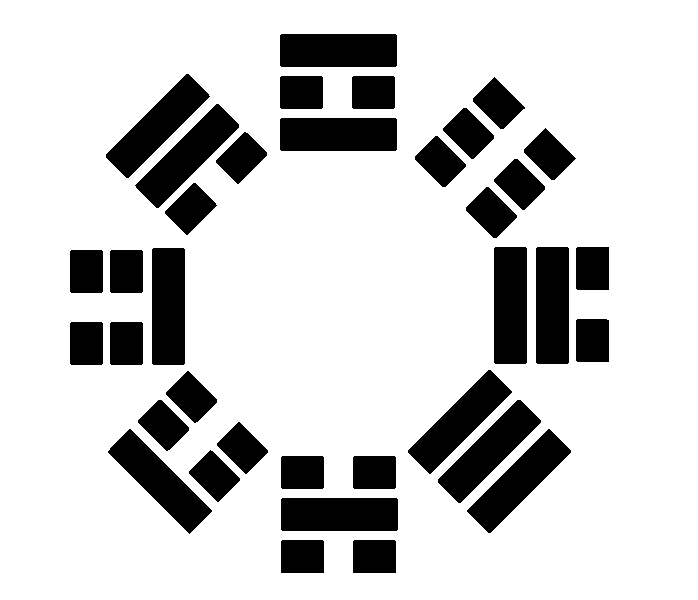 🇨🇳 China and 1 moreBagua八卦
A set of eight trigram symbols from China used in divination, cosmology, and feng shui.Tradition · Seeing and foretelling · Protection Living
🇨🇳 China and 1 moreBagua八卦
A set of eight trigram symbols from China used in divination, cosmology, and feng shui.Tradition · Seeing and foretelling · Protection Living
 🇨🇳 China and 1 moreAncestor veneration in China中國傳統宗法性宗教
Rites for dead kin who are thought to watch over the familyTradition · Protection · Speaking with spirits and the dead Living
🇨🇳 China and 1 moreAncestor veneration in China中國傳統宗法性宗教
Rites for dead kin who are thought to watch over the familyTradition · Protection · Speaking with spirits and the dead Living
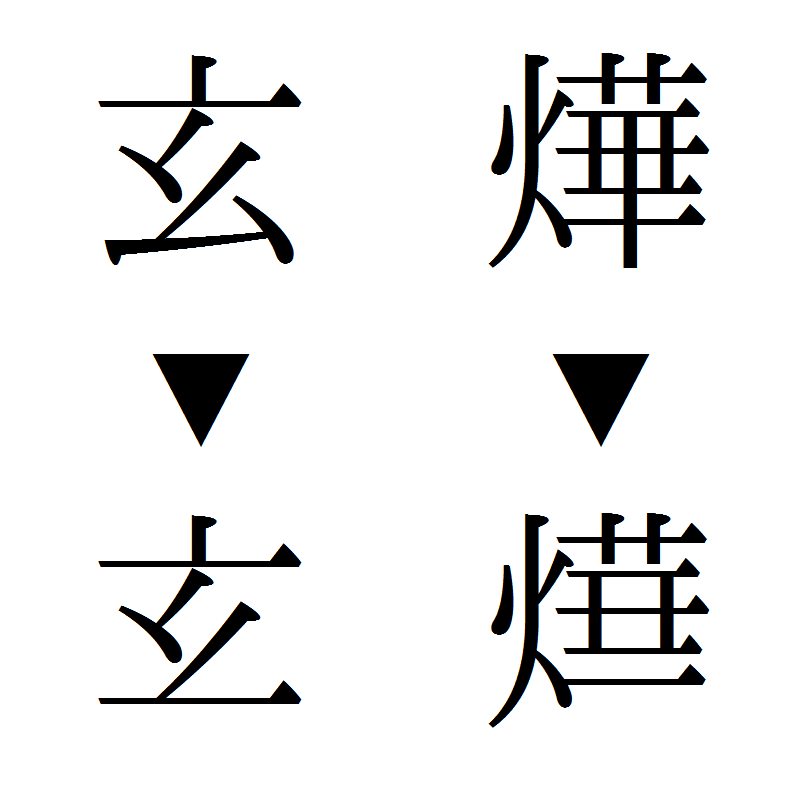 🇨🇳 China and 2 moreNaming taboo避諱
A cultural rule against speaking or writing the names of rulers and ancestors in East AsiaBelief · Protection Historical
🇨🇳 China and 2 moreNaming taboo避諱
A cultural rule against speaking or writing the names of rulers and ancestors in East AsiaBelief · Protection Historical
Related elsewhere
All belief 🇮🇶 Iraq and 4 moreAstrology
A system of divination that links human affairs to the positions of celestial bodiesTradition · Seeing and foretelling · Luck and prosperity Living
🇮🇶 Iraq and 4 moreAstrology
A system of divination that links human affairs to the positions of celestial bodiesTradition · Seeing and foretelling · Luck and prosperity Living
 🇨🇳 China and 5 moreHorseshoe
A curved plate fixed to a horse's hoof for protection, also kept as a charm for fortune.Charm · Protection · Luck and prosperity Living
🇨🇳 China and 5 moreHorseshoe
A curved plate fixed to a horse's hoof for protection, also kept as a charm for fortune.Charm · Protection · Luck and prosperity Living
 🇫🇷 FranceHoly GrailSaint Graal
A cup or stone from Arthurian legend with miraculous powersFigure · Healing · Luck and prosperity Legendary
🇫🇷 FranceHoly GrailSaint Graal
A cup or stone from Arthurian legend with miraculous powersFigure · Healing · Luck and prosperity Legendary
 🇮🇳 India and 3 morePalmistry
A divination practice that reads the lines and shapes of the hand to predict fate or characterOracle · Seeing and foretelling · Luck and prosperity Living
🇮🇳 India and 3 morePalmistry
A divination practice that reads the lines and shapes of the hand to predict fate or characterOracle · Seeing and foretelling · Luck and prosperity Living