Wonder and entertainment
Illusion, sleight of hand and the pleasure of being fooled.
Wonder and entertainment is the aim of the stage magician: to astonish an audience who knows it is being fooled. Conjuring, illusion, mentalism and street magic belong here, from the cups and balls of ancient Rome to Robert-Houdin, Houdini, Harry Kellar, P. C. Sorcar of India, Siegfried and Roy, and David Copperfield. This page covers the art, its history and its ethics, and does not reveal how any trick is done.
The art of the honest lie
A magician promises a trick and delivers astonishment. The pleasure comes from the gap between what is seen and what is known. Performers speak of misdirection, timing, patter and showmanship. Magicians also keep an informal rule not to expose methods, so that audiences can keep the pleasure and the craft keeps its livelihood. This is the most open part of the subject, in which no one is asked to believe.
Where it is performed
Magic has always had a street and a stage. In India, P. C. Sorcar Sr. (1913 to 1971) toured the world and became a national name. In China and Japan, conjuring was part of variety theatre and a distinct craft. In the Arab world and the Ottoman empire, performers worked in coffee houses and fairs. In the West, the music hall, the television special and the Las Vegas show carried the art into mass entertainment.
Who is welcome
For much of its history, the profession was dominated by men, with women as assistants, though performers such as Adelaide Herrmann broke the pattern. Racial stereotypes shaped acts: Western performers played Chinese or Indian magicians in costume, and Chung Ling Soo's disguise was a famous case. Today, magicians from many countries and women performers are widely visible. Magicians from Egypt, Lebanon, Iran and Nigeria now work on global stages and in festivals, and a few have become well known beyond their borders.
Entertainers against fraud
Houdini and James Randi spent years exposing mediums and faith healers who claimed real powers, arguing that honest conjurers protect the public. Scholars of the mind use magic to study attention, memory and belief. The boundary matters: claiming genuine supernatural power for a trick and charging for it is fraud, not entertainment. As the code puts it, the trick can be admired and enjoyed without the secret being known, and children and adults alike keep that pleasure.
Wonder and entertainment on EveryJaadu
The entries written up so far, best known first.
 🇮🇹 Italy and 4 moreTarottarocchi
A set of cards for games and divination, with roots in fifteenth-century ItalyText · Wonder and entertainment · Seeing and foretelling Living
🇮🇹 Italy and 4 moreTarottarocchi
A set of cards for games and divination, with roots in fifteenth-century ItalyText · Wonder and entertainment · Seeing and foretelling Living
 🇮🇷 Iran and 2 moreJabir ibn Hayyanجابِر بِن حَيّان
A legendary Islamic alchemist and philosopher whose writings shaped medieval magic and chemistryText · Power and authority · Wonder and entertainment Historical
🇷🇺 Russia and 3 moreNart sagaНарты кадджытæ
A collection of epic tales from the North Caucasus about a legendary group of heroes.Text · Wonder and entertainment Historical
🇮🇷 Iran and 2 moreJabir ibn Hayyanجابِر بِن حَيّان
A legendary Islamic alchemist and philosopher whose writings shaped medieval magic and chemistryText · Power and authority · Wonder and entertainment Historical
🇷🇺 Russia and 3 moreNart sagaНарты кадджытæ
A collection of epic tales from the North Caucasus about a legendary group of heroes.Text · Wonder and entertainment Historical
 🇮🇳 India and 1 moreMantraमन्त्रम्
A sacred sound or phrase repeated to focus the mind and invoke spiritual powerText · Speaking with spirits and the dead · Power and authority Living
🇮🇳 India and 1 moreMantraमन्त्रम्
A sacred sound or phrase repeated to focus the mind and invoke spiritual powerText · Speaking with spirits and the dead · Power and authority Living
 🇮🇹 Italy and 1 moreThe Fool
A tarot card of unique status, depicting a wanderer or madman outside the numbered sequence.Text · Wonder and entertainment Historical
🇮🇹 Italy and 1 moreThe Fool
A tarot card of unique status, depicting a wanderer or madman outside the numbered sequence.Text · Wonder and entertainment Historical
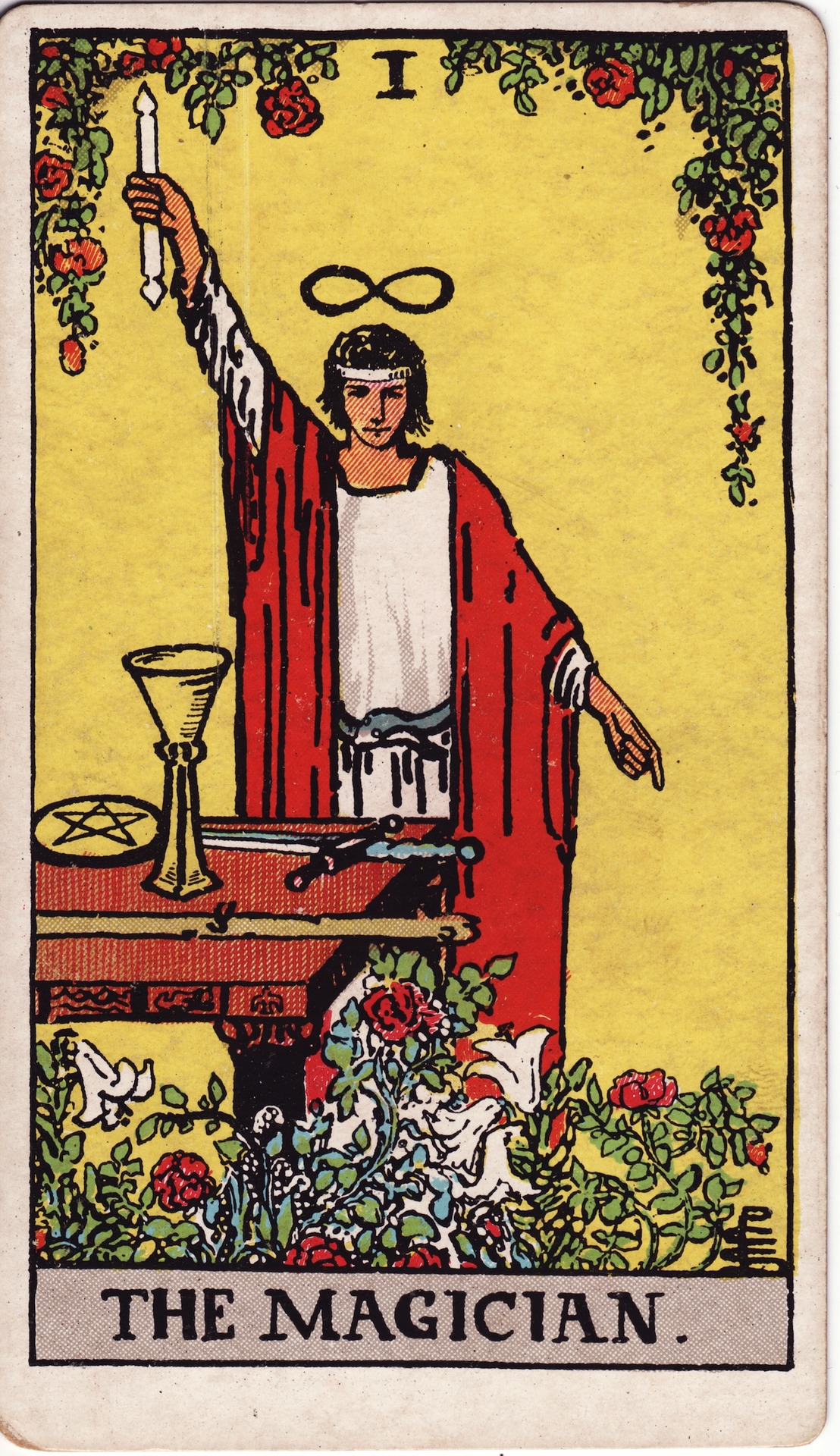 🇮🇹 ItalyThe MagicianLe Bateleur
A tarot trump symbolizing power and the link between spirit and matterText · Power and authority · Wonder and entertainment Living
🇮🇹 ItalyThe MagicianLe Bateleur
A tarot trump symbolizing power and the link between spirit and matterText · Power and authority · Wonder and entertainment Living
 🇮🇹 Italy and 1 morePietro d'Abano
A medieval physician and astrologer accused of heresy and magic.Text · Healing · Wonder and entertainment Historical
🇮🇹 Italy and 1 morePietro d'Abano
A medieval physician and astrologer accused of heresy and magic.Text · Healing · Wonder and entertainment Historical
 🇯🇵 JapanGazu Hyakki Yagyō画図百鬼夜行
A 1776 Japanese woodblock book of yōkai illustrations by Toriyama SekienText · Wonder and entertainment Historical
🇮🇹 ItalySola Busca tarot
The oldest complete 78-card tarot deck with unique illustrations and Roman numerals.Text · Wonder and entertainment Historical
🇬🇧 United Kingdom and 1 moreThirteen Treasures of the Island of BritainTri Thlws ar Ddeg Ynys Prydain
A collection of magical objects from late-medieval Welsh legendText · Wonder and entertainment Historical
🇯🇵 JapanGazu Hyakki Yagyō画図百鬼夜行
A 1776 Japanese woodblock book of yōkai illustrations by Toriyama SekienText · Wonder and entertainment Historical
🇮🇹 ItalySola Busca tarot
The oldest complete 78-card tarot deck with unique illustrations and Roman numerals.Text · Wonder and entertainment Historical
🇬🇧 United Kingdom and 1 moreThirteen Treasures of the Island of BritainTri Thlws ar Ddeg Ynys Prydain
A collection of magical objects from late-medieval Welsh legendText · Wonder and entertainment Historical
 🇬🇧 United Kingdom and 2 moreBevis of HamptonПовесть о Бове-королевиче
A medieval chivalric romance about a hero's exile and return across Europe and the Near EastText · Wonder and entertainment Historical
🇬🇧 United Kingdom and 2 moreBevis of HamptonПовесть о Бове-королевиче
A medieval chivalric romance about a hero's exile and return across Europe and the Near EastText · Wonder and entertainment Historical
 🇮🇸 Iceland and 1 moreUr (rune)
A runic character representing the aurochs or cold rain in Germanic alphabetsText · Wonder and entertainment Historical
🇮🇹 ItalyDe Umbris Idearum
A 1582 treatise by Giordano Bruno on memory, magic and philosophyText · Power and authority · Wonder and entertainment Historical
🇮🇷 IranBalaibalanباليبلن
An early constructed language from the Islamic world, likely created for sacred or poetic purposes.Text · Speaking with spirits and the dead · Wonder and entertainment Historical
🇮🇸 Iceland and 1 moreUr (rune)
A runic character representing the aurochs or cold rain in Germanic alphabetsText · Wonder and entertainment Historical
🇮🇹 ItalyDe Umbris Idearum
A 1582 treatise by Giordano Bruno on memory, magic and philosophyText · Power and authority · Wonder and entertainment Historical
🇮🇷 IranBalaibalanباليبلن
An early constructed language from the Islamic world, likely created for sacred or poetic purposes.Text · Speaking with spirits and the dead · Wonder and entertainment Historical
 🇫🇷 France and 1 moreDogme et Rituel de la Haute Magie
A foundational treatise on ritual magic by Éliphas Lévi, structured around the tarot.Text · Power and authority · Wonder and entertainment Historical
🇯🇵 JapanKyōka Hyaku Monogatari狂歌百物語
An 1853 Japanese picture book pairing yōkai illustrations with humorous kyōka poetryText · Wonder and entertainment Historical
🇫🇷 France and 1 moreDogme et Rituel de la Haute Magie
A foundational treatise on ritual magic by Éliphas Lévi, structured around the tarot.Text · Power and authority · Wonder and entertainment Historical
🇯🇵 JapanKyōka Hyaku Monogatari狂歌百物語
An 1853 Japanese picture book pairing yōkai illustrations with humorous kyōka poetryText · Wonder and entertainment Historical
 🇮🇹 ItalyGli ExperimentiGli Experimenti de la Ex.ma S.r Caterina da Furlj Matre de lo inllux.mo S.r Giouanni de Medici
A 16th-century manuscript of alchemical, medicinal, and cosmetic recipes by Caterina SforzaText · Healing · Power and authority Historical
🇮🇳 IndiaKhongjomnubi NonggarolKhongchomnupi Nongkalol
A Meitei puya with two stories of transformation and ascent to the sky.Text · Wonder and entertainment Historical
🇯🇵 JapanTosa Obake Zōshi土佐お化け草紙
An Edo-period illustrated scroll of yōkai tales from Tosa ProvinceText · Wonder and entertainment Historical
🇮🇹 ItalyGli ExperimentiGli Experimenti de la Ex.ma S.r Caterina da Furlj Matre de lo inllux.mo S.r Giouanni de Medici
A 16th-century manuscript of alchemical, medicinal, and cosmetic recipes by Caterina SforzaText · Healing · Power and authority Historical
🇮🇳 IndiaKhongjomnubi NonggarolKhongchomnupi Nongkalol
A Meitei puya with two stories of transformation and ascent to the sky.Text · Wonder and entertainment Historical
🇯🇵 JapanTosa Obake Zōshi土佐お化け草紙
An Edo-period illustrated scroll of yōkai tales from Tosa ProvinceText · Wonder and entertainment Historical
 🇩🇪 GermanyLichtenberg's Avertissement
A satirical poster exposing stage magic as deceptionText · Wonder and entertainment Historical
🇩🇪 GermanyLichtenberg's Avertissement
A satirical poster exposing stage magic as deceptionText · Wonder and entertainment Historical
Photo credits on this page
The small pictures above come from Wikimedia Commons under free licences. Some are cropped to fit.
- Gazu Hyakki Yagyō: Toriyama Sekien, Public domain, source
- Mantra: Markrosenrosen, CC BY-SA 3.0, source
- Tarot: World Web Playing Card Museum, Public domain, source
- The Fool: Johann Georg Rauch, Public domain, source
- The Magician: Pamela Colman Smith, Public domain, source
- Bevis of Hampton: Anonymous Unknown author, Public domain, source
- Dogme et Rituel de la Haute Magie: Eliphas Levi, Public domain, source
- Gli Experimenti: Mattman723, CC BY-SA 3.0, source
- Pietro d'Abano: Marco Chemello (Wikimedia Italia), CC BY-SA 4.0, source
- Lichtenberg's Avertissement: Georg Christoph Lichtenberg, Public domain, source
- Jabir ibn Hayyan: Unknown author, Public domain, source
- Ur (rune): RexCrudelissimus, CC BY-SA 4.0, source