Power and authority
Magic as kingship, priesthood and status: the sorcerer-king, the court astrologer, the rainmaker.
Magic as power and authority is the use of ritual to make or hold rank: kings with sacred duties, court astrologers, rainmakers, chiefs who are said to hold spiritual force, and priests who keep a state religion. It includes the Egyptian pharaoh, the Mongol shamans at the court of the khan, the Chinese Taoist masters, the Zulu and Shona spirit mediums, and the astrologers who advised Mughal and European rulers. This page asks how magic and politics feed each other. Where this happens, magic is less about individual wishes and more about who is allowed to speak for the unseen.
Sacred rulers
In many kingdoms the ruler was believed to hold a power linked to harvest, rain or victory. Pharaohs performed rites to keep order, and the Divine Right of kings in Europe included the royal touch, a rite by which French and English monarchs touched people with scrofula. Chinese emperors held the Mandate of Heaven, which natural omens could confirm or withdraw. The Mongol khans consulted shamans and diviners. Kings also commissioned astrologers to choose coronation dates.
Advisers and rivals
Courts employed diviners, astrologers and mages. John Dee advised Elizabeth I, and Indian and Persian kings kept court astrologers. Such advisers also faced risk: in Rome, astrologers were expelled several times, and accusations of sorcery were used to remove rivals at courts from Byzantium to Ming China. Magic offered influence to people with little formal rank. Sorcery charges were used against queens and ministers in several courts, and the fall of a favourite was often explained by a spell.
Resistance and the state
Spirit mediums have led resistance. In Zimbabwe, the spirit mediums Nehanda and Kaguvi were central to the 1896 uprising against British rule, and Nehanda was hanged in 1898. In Kenya and Tanzania, the Maji Maji rebellion of 1905 drew on a water said to protect against bullets. Colonial states responded with witchcraft ordinances, which often banned healers and protected nobody. In Africa, chiefs are often described as guardians of a land and its rain, and ruling families have held rites for the whole community.
Modern politics
Some leaders consult astrologers or healers, and political use of the occult is reported from India to Latin America. Accusations of witchcraft are used against opponents and in land disputes. Scholars read these links as part of how power is made visible and legitimate. Citizens may wish to ask who benefits when magic is used in public life. Many states now regulate healers and diviners, or use them for public health messages, which shows how much influence they still have.
Power and authority on EveryJaadu
The entries written up so far, best known first.
 🇻🇳 Vietnam and 1 moreÔng Trời
A sky god of Vietnamese folk religion, later linked to the Taoist Jade EmperorBeing · Protection · Power and authority Living
🇨🇦 Canada and 1 moreOdyssean Wicca
A Canadian Wiccan tradition focused on public priesthood and rigorous training.Tradition · Speaking with spirits and the dead · Power and authority Living
 🇪🇬 EgyptSekhem scepter
An ancient Egyptian staff symbolizing power and authorityCharm · Power and authority Historical
🇸🇦 Saudi Arabia and 2 moreBay'ahبيعة
An oath of loyalty and obedience given to a political or spiritual leader in Islamic traditionRite · Binding and oaths · Power and authority Living
 🇮🇳 India and 5 moreKaruppannaswamyகருப்பண்ணசாமி, കറുപ്പണ്ണസാമി
A fierce guardian deity worshipped as a village protector and ancestral enforcer of justice.Being · Protection · Healing Living
 🇲🇽 Mexico and 4 moreMirrors in Mesoamerican culture
Reflective stones used for divination and elite status across ancient Mexico and Central AmericaCharm · Seeing and foretelling · Power and authority Historical
 🇨🇳 ChinaQintianjian欽天監
China's state sky office, which also set lucky days and read omensTradition · Seeing and foretelling · Luck and prosperity Historical
 🇺🇸 United States and 1 moreChurch of Satan
An atheistic religious body founded in 1966 that practices ritual magicTradition · Power and authority · Change and initiation Living
🇮🇱 IsraelEphodאֵפוֹד
A priestly apron of ancient Israel, worn for ritual and used to seek answersCharm · Seeing and foretelling · Speaking with spirits and the dead Historical
 🇮🇳 India and 1 moreMahanam Sampradayaমহানাম সম্প্রদায়
A Bengali Krishnaite monastic order focused on chanting and humanitarian serviceTradition · Speaking with spirits and the dead · Power and authority Living
 🇳🇬 NigeriaIroke Ifáìrọ́kẹ́ Ifá
A carved staff used by Yoruba diviners to mark time and invoke spirits during ritual sessionsCharm · Speaking with spirits and the dead · Power and authority Living
 🇯🇵 JapanSuzu鈴
A hollow Japanese bell with inner pellets, used in Shinto rites and shrines.Charm · Protection · Speaking with spirits and the dead Living
 🇨🇳 China and 2 moreHu笏
A flat ceremonial baton used by East Asian officials and priests for ritual purposes.Charm · Power and authority · Wonder and entertainment Living
🇮🇳 IndiaRisalah Maktubaatرساله مکتوبات
A collection of Persian letters guiding disciples and rulers on spiritual and moral matters.Text · Speaking with spirits and the dead · Power and authority Historical
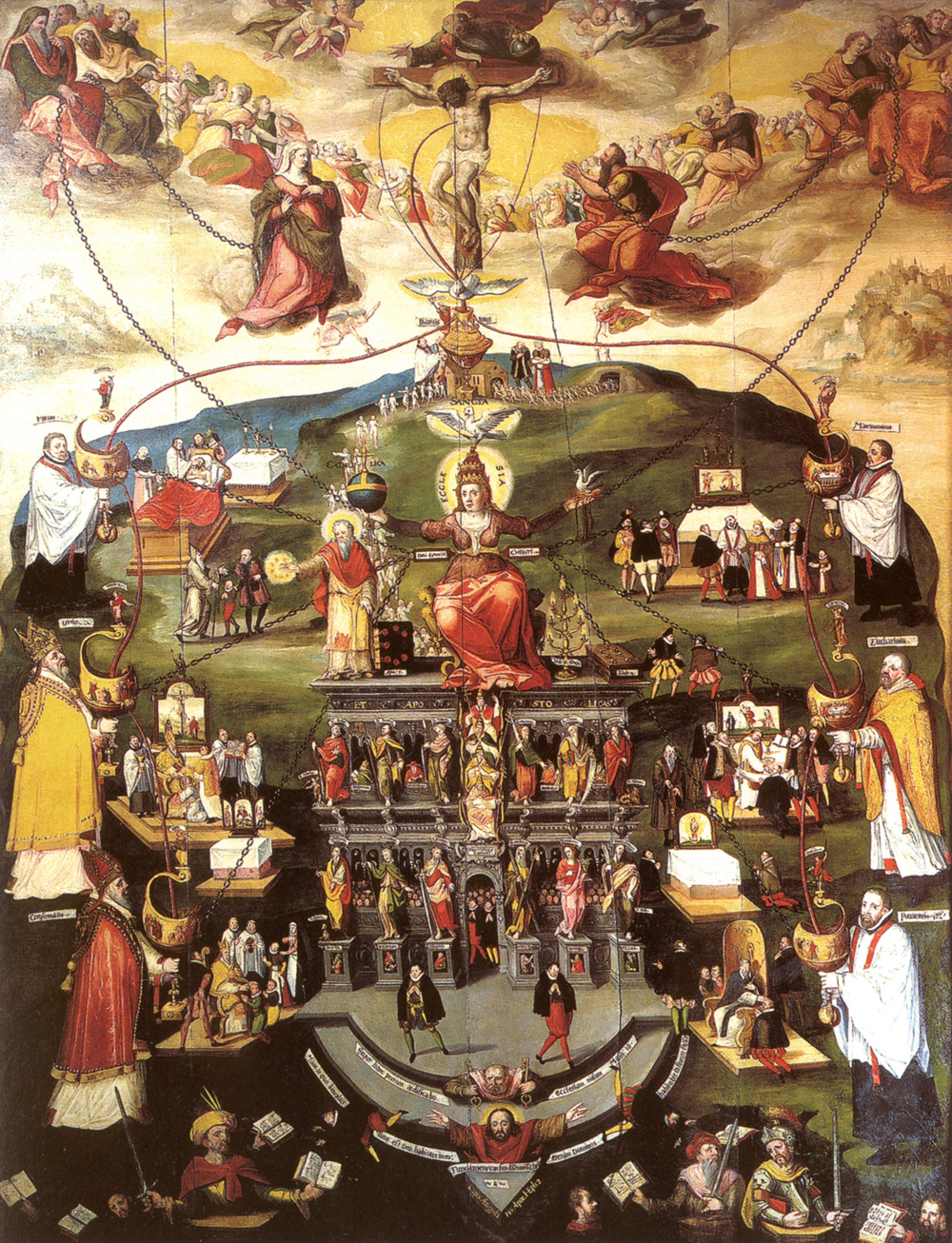 🇬🇷 GreeceSacred mysteriesμυστήριον
Secret ceremonies and divine doctrines held to exceed human reasonBelief · Speaking with spirits and the dead · Change and initiation Living
 🇲🇽 MexicoEntheogenics and the Maya
Hallucinogenic substances used by the Maya for spiritual rituals and healingTradition · Speaking with spirits and the dead · Healing Historical
 🇪🇬 EgyptMaatmꜣꜥt
An Egyptian idea of truth, law and balance, and the goddess who stands for itBelief · Power and authority Historical
 🇮🇳 India and 1 moreVarahiवाराही (Vārāhī)
A Hindu mother goddess with a sow face, worshipped in Tantric rites for protection and powerBeing · Protection · Power and authority Living
Photo credits on this page
The small pictures above come from Wikimedia Commons under free licences. Some are cropped to fit.
- Suzu: Unknown author, CC0, source
- Xtabay: Unknown author, Public domain, source
- Sacred mysteries: Johannes Hopffe, Public domain, source
- Vahana: Unknown Nepali, Public domain, source
- Church of Satan: Palnu ., CC BY-SA 3.0, source
- Mahanam Sampradaya: Neehar Haldar, CC0, source
- Maat: anonymous, Public domain, source
- Karuppannaswamy: GShas, CC0, source
- Mirrors in Mesoamerican culture: Vassil, CC0, source
- Ông Trời: Bùi Thụy Đào Nguyên, CC BY-SA 3.0, source
- Qintianjian: User:Vmenkov, CC BY-SA 3.0, source
- Iroke Ifá: OmoAyan, CC BY 4.0, source
- Sekhem scepter: Maler der Grabkammer der Nefertari, Public domain, source
- Hu: Zhangzhugang, CC BY-SA 4.0, source