Risalah Maktubaat
In its own language: رساله مکتوبات
From Persian, meaning 'Treatise of Letters'
A collection of Persian letters guiding disciples and rulers on spiritual and moral matters.
Written by the fourteenth-century Sufi saint Mir Syed Ali Hamadani, this collection of letters offers spiritual guidance and advice on governance. It serves as a key record of his influence in Kashmir and his diplomatic role between regional sultans.
- Written by Sufi saint Mir Syed Ali Hamadani in the fourteenth century.
- Composed in Persian to guide disciples and advise rulers.
- Documents Hamadani's diplomatic mediation between sultans.
- Key source for the Islamization of Kashmir.
- Part of Hamadani's broader literary output including Zakhirat-ul-Muluk.
What it is
Risalah Maktubaat is a set of letters written in Persian by Mir Syed Ali Hamadani, a Sufi master who lived in the fourteenth century. The text records his advice on spiritual life, ethical behavior, and ruling a state. It stands as a key document for understanding his influence in Kashmir and his role as a diplomat among Muslim leaders.
Where it comes from
Hamadani composed these letters while traveling through Central and South Asia during the late 1300s. He wrote them to maintain connections with followers and political figures across different regions. The collection captures his time as a missionary and scholar spreading Islamic teachings in new territories.
How it is done
The work takes the form of direct correspondence rather than a ritual manual. Hamadani sent these messages to specific recipients, including students seeking spiritual direction and kings needing counsel on administration. The letters function as a bridge between the Sufi teacher and the communities he guided.
Risalah Maktubaat, drawn and placed
- Living
- Revived
- Fading
- Historical
- Legendary
- Performed
- Lineage
- Kubrawiya Sufi order
- Timing
- Late fourteenth century
What it is for
Readers use the letters to learn about Sufi devotion and proper conduct. Rulers consult the advice to ensure their governance remains just and fair. The text aims to strengthen the bond between the spiritual leader and his followers while promoting stability in the political sphere.
Who does it
Mir Syed Ali Hamadani authored the work. He held the status of a prominent saint and scholar within the Kubrawiya Sufi order. His audience included both ordinary disciples looking for piety and high-ranking officials managing states.
Peoples and places
The text is central to the history of Kashmir, where Hamadani helped establish Islamic traditions. It also reflects the broader network of Persian-speaking scholars moving between Central Asia and the Indian subcontinent.
At a glance: who, where and when
Belief worlds
What people believe
The letters embody the teachings of the Kubrawiya order, emphasizing inner spiritual development alongside external duty. Hamadani viewed himself as a mediator between divine guidance and worldly affairs, advising rulers to align their power with moral law.
How scholars and sceptics see it
Researchers value the collection as a primary source for Hamadani’s diplomatic activities and his impact on Kashmiri society. Historians use the letters to trace the spread of Islam in the region and to study the relationship between Sufi saints and medieval sultans.
Compare and confuse
The work complements other writings by Hamadani, such as Zakhirat-ul-Muluk and Awrad-e-Fathiya. Together, these texts provide a fuller picture of his intellectual output and practical leadership.
Questions people ask about Risalah Maktubaat
What is the Risalah Maktubaat?
It is a collection of letters written in Persian by the Sufi scholar Mir Syed Ali Hamadani. The text provides advice on spiritual practices, moral conduct, and governance for his followers and political allies.
Who received these letters?
Hamadani addressed the letters to his disciples, who sought spiritual guidance, and to rulers, including the Sultan of Kashmir, offering counsel on just administration and diplomacy.
Why is this text important?
Scholars value it as a primary source for understanding Hamadani's role in spreading Islam in Kashmir. It also reveals his diplomatic efforts in mediating conflicts between regional sultans.
Good reading and sources
The facts on this page come from the Wikipedia article "Risalah Maktubaat", written by its contributors and used under the CC BY-SA 4.0 licence, and from its Wikidata record (CC0). EveryJaadu rewrote the text in its own words, with AI assistance, and compares every page with the article to make sure no passage is copied. It may be reused under the same CC BY-SA 4.0 licence with a link back.
It may contain mistakes. Names and customs differ from one community to the next, and some knowledge is closed to outsiders and left out here. This page describes belief and practice. It does not say that any of it works, it is not a how-to, and it is not medical advice. If something is wrong, tell us. Last refreshed 2026-10-10.
More from India
All the entries from India 🇳🇵 Nepal and 1 moreMatsyendranathMacchindranāth, Mīnanātha
A yogi and rain deity revered across Hindu and Buddhist traditions in South Asia.Figure · Speaking with spirits and the dead · Power and authority Living
🇳🇵 Nepal and 1 moreMatsyendranathMacchindranāth, Mīnanātha
A yogi and rain deity revered across Hindu and Buddhist traditions in South Asia.Figure · Speaking with spirits and the dead · Power and authority Living
 🇮🇳 India and 4 moreTantraतन्त्र
An esoteric yogic tradition from India focusing on ritual, mantra, and body-based spiritual practices.Tradition · Power and authority · Change and initiation Living
🇮🇳 India and 4 moreTantraतन्त्र
An esoteric yogic tradition from India focusing on ritual, mantra, and body-based spiritual practices.Tradition · Power and authority · Change and initiation Living
 🇮🇳 India and 1 moreMantraमन्त्रम्
A sacred sound or phrase repeated to focus the mind and invoke spiritual powerText · Speaking with spirits and the dead · Power and authority Living
🇮🇳 India and 1 moreMantraमन्त्रम्
A sacred sound or phrase repeated to focus the mind and invoke spiritual powerText · Speaking with spirits and the dead · Power and authority Living
 🇮🇳 IndiaAtharvavedaअथर्ववेद
The fourth Veda of Hinduism, containing spells, healing rites, and domestic rituals.Text · Protection · Healing Historical
🇮🇳 IndiaAtharvavedaअथर्ववेद
The fourth Veda of Hinduism, containing spells, healing rites, and domestic rituals.Text · Protection · Healing Historical
Related elsewhere
All text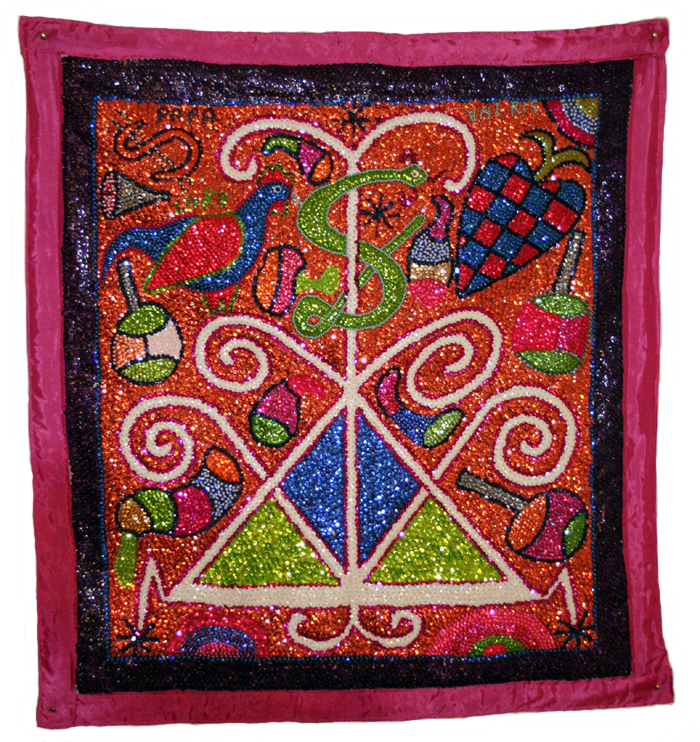 🇭🇹 Haiti and 2 moreHaitian VodouVodou
An Afro-Haitian religion blending West African traditions with Catholicism and FreemasonryTradition · Protection · Healing Living
🇭🇹 Haiti and 2 moreHaitian VodouVodou
An Afro-Haitian religion blending West African traditions with Catholicism and FreemasonryTradition · Protection · Healing Living
 🇮🇶 Iraq and 5 moreGrimoire
A textbook containing instructions for spells, rituals, and the creation of magical objects.Text · Protection · Healing Historical
🇮🇶 Iraq and 5 moreGrimoire
A textbook containing instructions for spells, rituals, and the creation of magical objects.Text · Protection · Healing Historical
 🇫🇷 France and 2 moreÉliphas Lévi
A French writer who shaped modern occult thought and ceremonial magic.Text · Power and authority · Speaking with spirits and the dead Historical
🇫🇷 France and 2 moreÉliphas Lévi
A French writer who shaped modern occult thought and ceremonial magic.Text · Power and authority · Speaking with spirits and the dead Historical