
Iroke Ifá
In its own language: ìrọ́kẹ́ Ifá
from Yoruba ìrọ́kẹ́ meaning tapper
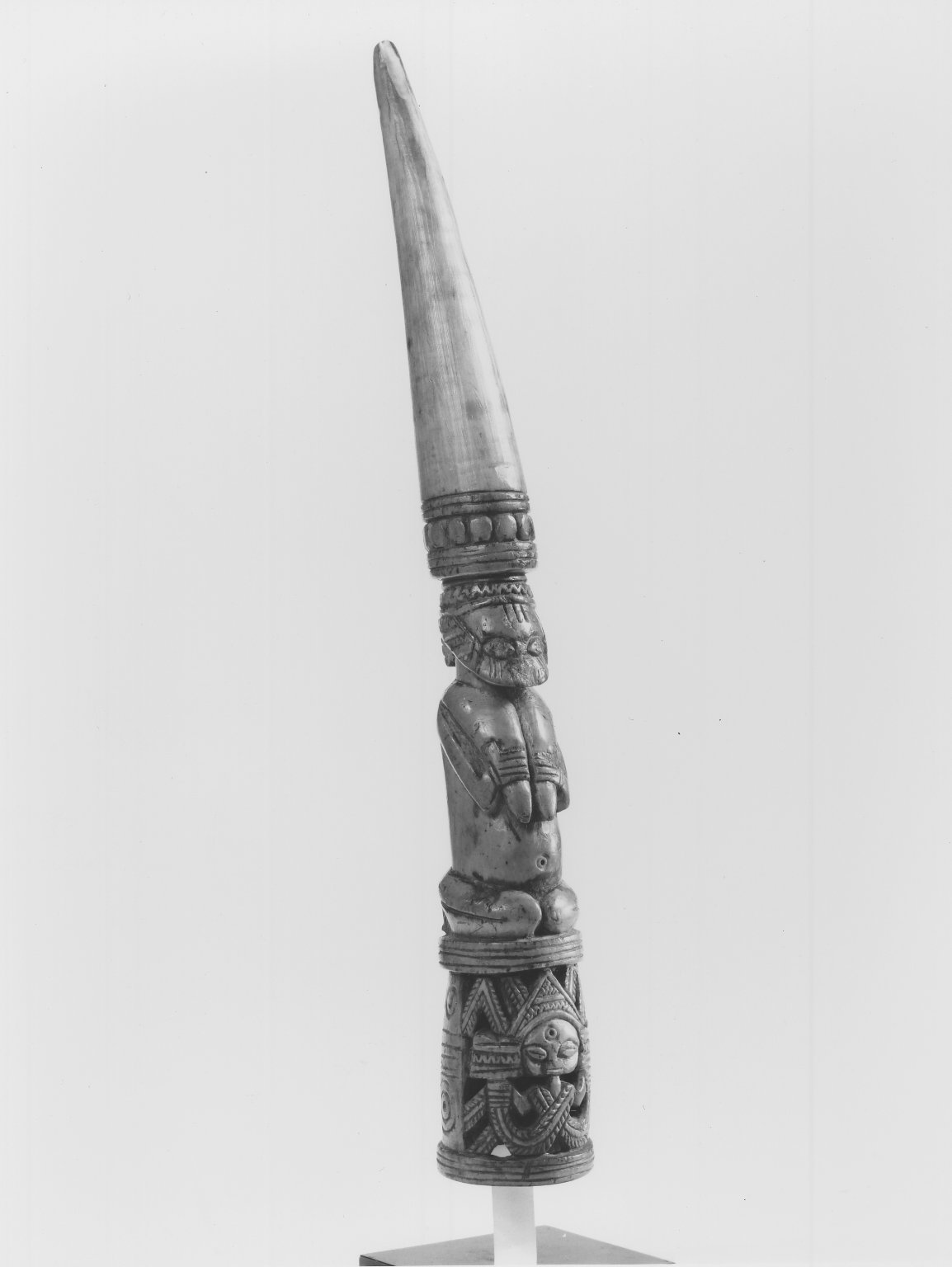
A carved staff used by Yoruba diviners to mark time and invoke spirits during ritual sessions
The Iroke Ifá is a wooden or ivory tapper held by Babaláwo priests in the Yoruba tradition. It strikes a divination board to summon Ọ̀rúnmìla and set the rhythm for oral recitations. Carved figures on its shaft represent inner destiny and spiritual authority.
- Strikes the Opon Ifá board to open sessions
- Carved figures represent inner destiny (Ori)
- Used by initiated Babaláwo priests only
- Made from wood, ivory, or rare metals
- Symbolizes Aṣẹ through bird motifs
What it is
The Iroke Ifá serves as a primary ritual tool within the Yoruba spiritual framework. It functions as a percussive instrument that bridges the physical and spiritual realms. The object allows the priest to establish contact with divine forces while maintaining the temporal structure of the ceremony. Its design incorporates symbolic carvings that reflect internal concepts of destiny and social standing. The item operates as both a functional device for sound production and a visual marker of professional status.
Where it comes from
The practice originates from the Yoruba people of West Africa. The tool has developed alongside the Ifá divination corpus over centuries. Artisans traditionally select wood or ivory for construction due to their acoustic properties. Rare examples exist in metal forms like bronze or brass. These metallic versions hold higher prestige due to material scarcity and luster. The carving styles evolved through local artistic traditions without external influence.
How it is done
The Babaláwo holds the staff and strikes its tip against the edge of the Opon Ifá board. This action produces a sharp rhythmic beat that opens the session. The sound invites Ọ̀rúnmìla and other deities to participate in the reading. The rhythm accompanies the chanting of Odù verses. The priest may also display the staff wrapped in beads to signal authority. The tapping maintains focus among participants throughout the ritual.
Tools and materials
Craftsmen carve the staff from wood, ivory, or occasionally metal. The length typically ranges between eight and twelve inches. Decorative elements include human heads or kneeling female figures. Some designs feature male hunters or warriors. A rattle bell often attaches to the base. Beads wrap around the shaft for ceremonial display. Material choice affects the acoustic resonance of the strike.
Iroke Ifá, drawn and placed
- Living
- Revived
- Fading
- Historical
- Legendary
- Performed
- Lineage
- Yoruba religion
- Timing
- at the start of divination sessions
What it is for
Diviners use the object to invoke spiritual presence at the session's beginning. It signals respect to ancestors and land owners. The staff represents the priest's right to interpret fate. It helps diagnose community or personal issues through ritual dialogue. The percussion keeps attention fixed on the spiritual exchange. It transforms the space into a sacred environment for communication.
Who does it
Only initiated Babaláwo priests handle the official ritual version. They undergo years of training to master the divination system. The staff marks their professional expertise and office. Non-initiates may possess decorative copies for display. The priest carries the item as a badge of identity. Gender roles in priesthood vary by lineage but require strict initiation.
Peoples and places
The Yoruba people maintain this tradition in Nigeria and surrounding regions. The object remains central to Ifá practice today. Different carvers produce regional variations in motif style. Urban artisans may adapt designs for modern collectors. Rural practitioners preserve older acoustic standards. The diaspora communities continue using similar tools in the Americas.
At a glance: who, where and when


What people believe
The top segment symbolizes Ori, the inner destiny head. A protrusion blocks vision, separating the visible head from the inner self. This represents Àyànmọ́, the concept of chosen fate. The kneeling figure salutes Ọ̀rúnmìla, known as Àkúnlẹ̀bọ́. Birds on some figures denote Aṣẹ, spiritual authority. The staff physically manifests the union of inner and outer self.
When it is done
The tool appears at every formal divination session. It marks the transition from ordinary time to sacred time. No specific festival requires it exclusively. Priests use it whenever consulting the Odù corpus. Life events like births or crises trigger its use. The rhythm sets the pace for all subsequent rituals.
How scholars and sceptics see it
Art historians analyze the iconography of the carvings. Rowland Abiodun notes the psychological distinction between head segments. Scholars view the staff as a cultural artifact of Yoruba philosophy. Anthropologists study its role in maintaining priestly hierarchy. Researchers examine how material choices affect ritual efficacy perceptions.
Cautions and what is closed
Uninitiated individuals should not handle the ritual staff. Misuse is considered disrespectful to the Orishas. Commercial copies lack spiritual potency. Collectors must respect the religious context. The object is not a toy or decoration. Proper storage preserves its acoustic integrity.
Compare and confuse
Similar tapping sticks appear in other African traditions. The Opon Ifá board works in tandem with the Iroke. Other Yoruba objects like Odu shells support the same system. Western divination tools lack this percussive component. The staff differs from simple walking canes by its sacred carvings.
Law and persecution
Cultural heritage laws protect authentic artifacts in Nigeria. Export restrictions apply to ivory items. Museums acquire pieces through legal channels. Pilgrims may purchase replicas abroad. Religious freedom protects the continued practice. No specific bans target the object itself.
Questions people ask about Iroke Ifá
What is the Iroke Ifá?
It is a carved staff used by Yoruba priests to tap a divination board. The sound invokes spirits and sets the rhythm for chanting. It represents the priest's authority and connects the physical world to spiritual forces.
Who uses the Iroke Ifá?
Initiated Babaláwo priests use the ritual version. They are trained experts in the Ifá system. Decorative copies may be owned by others, but only priests perform the sacred tapping rites.
What do the carvings mean?
The top segment symbolizes Ori, the inner destiny. Kneeling figures salute deities like Ọ̀rúnmìla. Birds represent spiritual authority. The design separates the visible head from the inner self, reflecting Yoruba philosophy.
What materials are used?
Wood is most common. Ivory signifies high prestige. Bronze or brass examples exist but are rare. Artisans choose materials for their resonance and workability, affecting the sound produced.
Good reading and sources
The facts on this page come from the Wikipedia article "Iroke Ifá", written by its contributors and used under the CC BY-SA 4.0 licence, and from its Wikidata record (CC0). EveryJaadu rewrote the text in its own words, with AI assistance, and compares every page with the article to make sure no passage is copied. It may be reused under the same CC BY-SA 4.0 licence with a link back.
It may contain mistakes. Names and customs differ from one community to the next, and some knowledge is closed to outsiders and left out here. This page describes belief and practice. It does not say that any of it works, it is not a how-to, and it is not medical advice. If something is wrong, tell us. Last refreshed 2026-10-11.
More from Nigeria
All the entries from Nigeria 🇳🇬 Nigeria and 2 moreOpon IfáỌpọ́n Ifá
A carved wooden tray used by Yoruba diviners to read signs and consult spirits.Charm · Seeing and foretelling · Speaking with spirits and the dead Living
🇳🇬 Nigeria and 2 moreOpon IfáỌpọ́n Ifá
A carved wooden tray used by Yoruba diviners to read signs and consult spirits.Charm · Seeing and foretelling · Speaking with spirits and the dead Living
 🇳🇬 Nigeria and 5 moreIfá
A Yoruba divination system using palm nuts to access spiritual guidanceTradition · Seeing and foretelling · Speaking with spirits and the dead Living
🇿🇦 South Africa and 5 moreMurder for body parts
The killing of people to harvest body parts for traditional medicine or the illegal organ trade.Belief · Cursing and harm · Power and authority Living
🇳🇬 Nigeria and 5 moreIfá
A Yoruba divination system using palm nuts to access spiritual guidanceTradition · Seeing and foretelling · Speaking with spirits and the dead Living
🇿🇦 South Africa and 5 moreMurder for body parts
The killing of people to harvest body parts for traditional medicine or the illegal organ trade.Belief · Cursing and harm · Power and authority Living
 🇳🇬 NigeriaOrunmilaỌ̀rúnmìlà
Yoruba deity of wisdom and the creator of the Ifá divination systemBeing · Seeing and foretelling · Speaking with spirits and the dead Living
🇳🇬 NigeriaOrunmilaỌ̀rúnmìlà
Yoruba deity of wisdom and the creator of the Ifá divination systemBeing · Seeing and foretelling · Speaking with spirits and the dead Living
Related elsewhere
All charm 🇮🇳 India and 1 moreMantraमन्त्रम्
A sacred sound or phrase repeated to focus the mind and invoke spiritual powerText · Speaking with spirits and the dead · Power and authority Living
🇮🇳 India and 1 moreMantraमन्त्रम्
A sacred sound or phrase repeated to focus the mind and invoke spiritual powerText · Speaking with spirits and the dead · Power and authority Living
 🇮🇶 Iraq and 5 moreGrimoire
A textbook containing instructions for spells, rituals, and the creation of magical objects.Text · Protection · Healing Historical
🇮🇶 Iraq and 5 moreGrimoire
A textbook containing instructions for spells, rituals, and the creation of magical objects.Text · Protection · Healing Historical
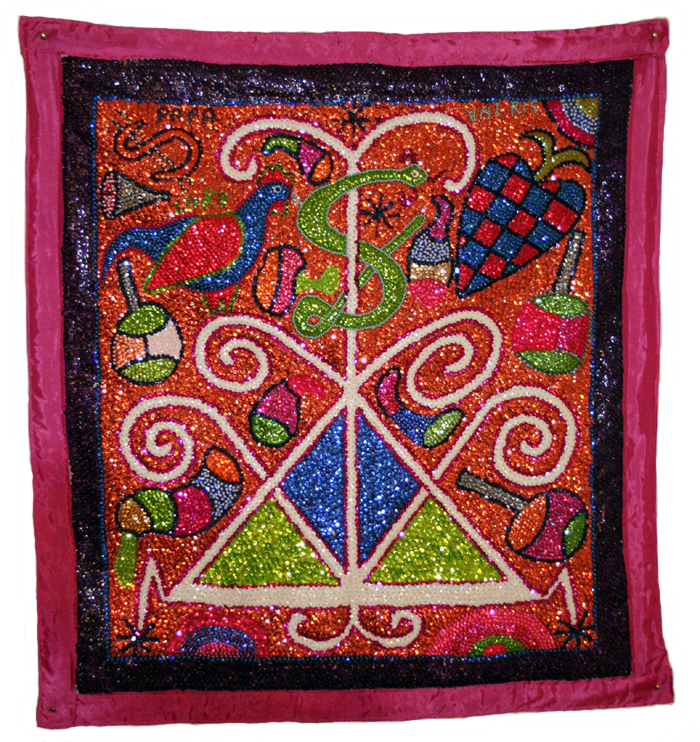 🇭🇹 Haiti and 2 moreHaitian VodouVodou
An Afro-Haitian religion blending West African traditions with Catholicism and FreemasonryTradition · Protection · Healing Living
🇭🇹 Haiti and 2 moreHaitian VodouVodou
An Afro-Haitian religion blending West African traditions with Catholicism and FreemasonryTradition · Protection · Healing Living