Charms, amulets and talismans
Made and worn things: the nazar, the hamsa, the omamori, the mojo bag and the witch bottle.
Charms, amulets and talismans are things made or chosen to carry a purpose. The blue glass nazar in Turkey, the hamsa hand across North Africa and the Middle East, the Japanese omamori, the Haitian pwen, the Italian cornicello and the Hoodoo mojo bag all belong here. They are small, portable and personal, and found on every continent. This page looks at what they are said to do and how they are made, sold and understood.
Amulet or talisman
The two words are often used loosely. An amulet is usually said to protect by what it is, such as a blue bead against the evil eye. A talisman is made or empowered for a purpose, often with writing, a name or a date. Islamic, Jewish, Taoist and Hindu traditions all have written talismans: the Taoist fu, the Jewish kame'a, the Hindu yantra and the Muslim hirz. The common thread is that something small and personal is believed to hold a purpose on behalf of its owner.
Making and keeping
Many charms are made by specialists, then blessed or sold at a temple, shrine or market. Others are made at home, such as a red thread, a knotted cord, or a horseshoe nailed over a door. Practitioners usually say a charm should be kept clean, respected and not shown off. In Japan an omamori is returned to its shrine after a year. Charm makers are often women, jewellers, scribes or temple staff, and the person who makes a charm may not be the person who blesses it.
Faith and suspicion
Religious authorities disagree on charms. Some Islamic scholars allow Quranic verses carried as a reminder and reject objects held to work by themselves. Many Christian churches have blessed medals and scapulars while condemning amulets of folk origin. Sikh teaching rejects charms altogether. Anthropologists read them as ways to hold fear and uncertainty in a form a person can carry. Interpretation is divided within religions too, so one family may treat a bead as decoration while a neighbour treats it as a serious shield.
Market and appropriation
Charms are big business. Evil-eye beads sell as fashion on every high street, and the hamsa appears as a decoration far from its homes. Fakes are common, and some sellers promise outcomes in ways that amount to fraud, particularly in expensive gemstone or lottery charm schemes. Sacred designs used as a logo can offend the community they come from. Designers have taken eyes, hands and runes as motifs, and while many communities are glad to see them shared, others ask that sacred symbols not be turned into trivia or used by brands.
Charm on EveryJaadu
The entries written up so far, best known first.
 🇮🇪 IrelandBlarney StoneCloch na Blarnan
A limestone block in an Irish castle kissed for the gift of eloquenceCharm · Power and authority Living
 🇯🇵 JapanDaruma doll達磨
A round Japanese talisman that rights itself when knocked overCharm · Luck and prosperity · Power and authority Living
 🇳🇿 New Zealand and 5 moreFace tattoo
Marks inked on the face for spiritual protection, identity, rank, and rite of passageTradition · Protection · Power and authority Living
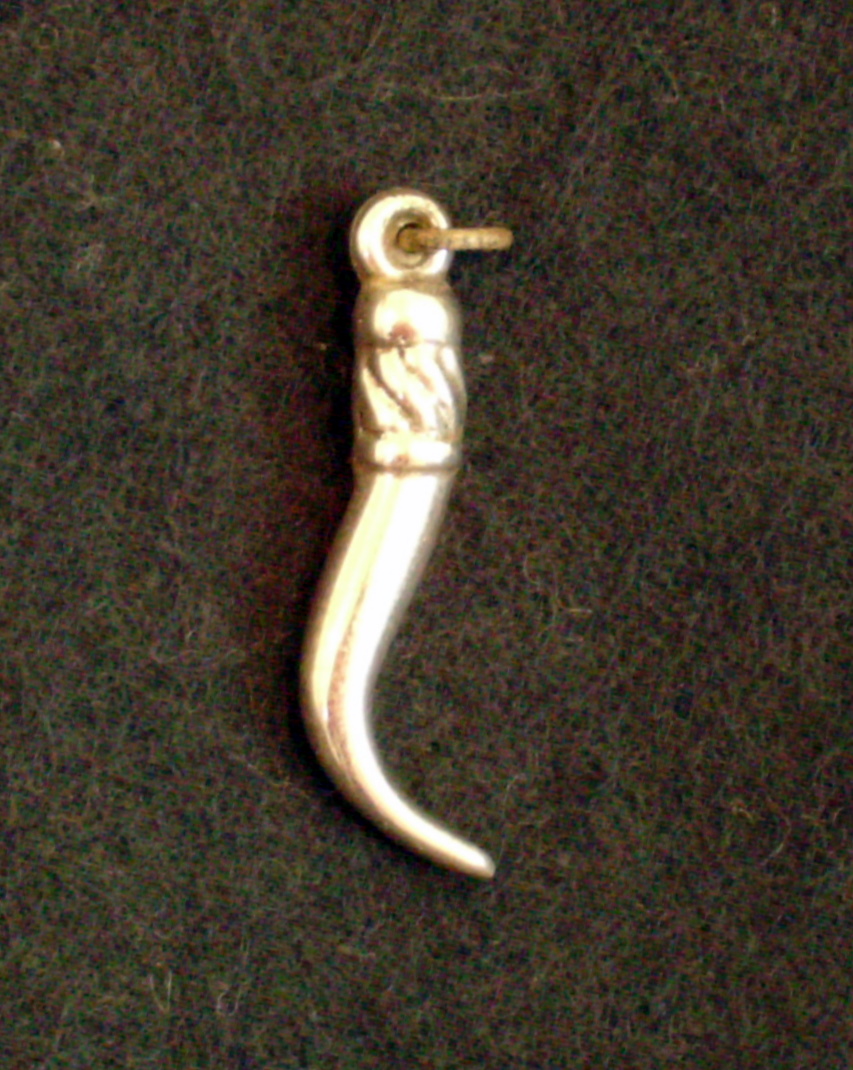 🇮🇹 ItalyCornicello
A twisted horn charm worn in Italy to ward off the evil eye and invite luck.Charm · Protection · Luck and prosperity Living
 🇲🇳 Mongolia and 2 moreWind Horseརླུང་རྟ་
An East and Central Asian symbol of the soul, luck, and vital energyBeing · Luck and prosperity · Protection Living
 🇵🇭 Philippines and 1 moreAgimatAnting-anting
A Filipino amulet or charm believed to grant protection, power, and supernatural abilities.Charm · Protection · Love and attraction Living
 🇸🇳 Senegal and 5 morePentagramπεντάγραμμον
A five-pointed star figure used across history for protection, ritual, and cosmologyCharm · Protection · Binding and oaths Living
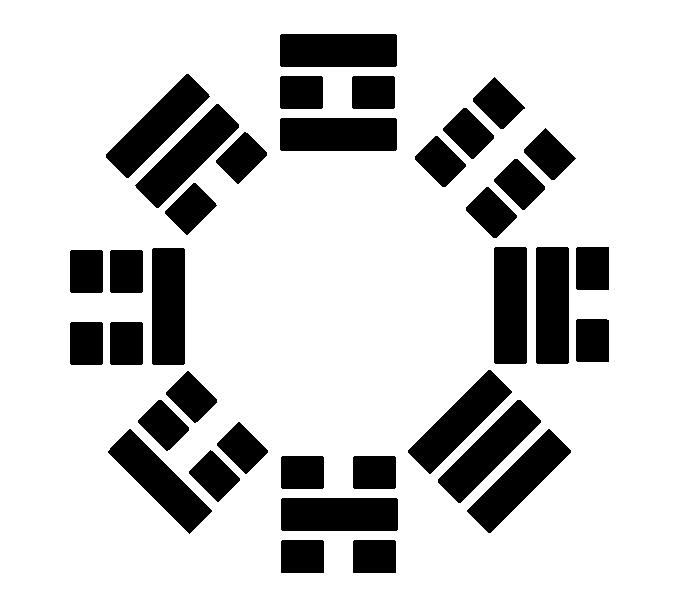 🇨🇳 China and 1 moreBagua八卦
A set of eight trigram symbols from China used in divination, philosophy, and feng shui.Tradition · Seeing and foretelling · Protection Living
 🇮🇸 IcelandIcelandic magical stavesgaldrastafir
Sigils from Icelandic grimoires believed to hold magical powerCharm · Power and authority Historical
 🇮🇹 Italy and 2 moreBulla
A round Roman amulet given to freeborn boys as a mark of status and protectionCharm · Protection · Luck and prosperity Historical
 🇯🇵 JapanFukusuke福助
A kneeling Japanese doll believed to bring wealth and honorCharm · Luck and prosperity · Power and authority Living
 🇮🇷 Iran and 1 moreDerafsh Kavianiدرفش کاویانی
A legendary royal standard of pre-Islamic Iran, later adopted as a symbol of national identity.Charm · Power and authority · Luck and prosperity Historical
 🇬🇷 GreeceLabrysλάβρυς
A double-headed axe from ancient Crete, now a symbol of lesbian feminism and neo-paganismCharm · Power and authority · Protection Living
 🇨🇳 China and 1 moreLuopan罗盘 (luó pán)
A Chinese magnetic compass with concentric rings for feng shui practiceCharm · Power and authority Living
 🇮🇶 IraqBurney Relief
A Mesopotamian terracotta plaque depicting a winged goddess with owl companions and lion mounts.Charm · Power and authority · Speaking with spirits and the dead Historical
 🇨🇳 ChinaDragon turtle龍龜 (Lóngguī)
A Chinese mythic creature with a dragon body and turtle shell, used as a Feng Shui charm.Figure · Luck and prosperity · Power and authority Living
🇮🇷 Iran and 1 moreCup of Jamshidجام جم (jām-e Jam)
A mythical Persian cup used for scrying and seeing the world's truths.Charm · Seeing and foretelling · Power and authority Legendary
 🇳🇿 New Zealand and 4 moreFeather cloak
A garment of feathers worn by royalty and gods across cultures to signal rank or enable flightCharm · Power and authority · Wonder and entertainment Historical
 🇬🇧 United Kingdom and 1 moreWitch's ladder
A knotted cord or braided string used to bind spells or cursesCharm · Cursing and harm · Power and authority Revived
 🇯🇵 JapanOkiagari-koboshi起き上がり小法師
A Japanese roly-poly doll that rights itself when knocked overCharm · Luck and prosperity · Power and authority Living
Photo credits on this page
The small pictures above come from Wikimedia Commons under free licences. Some are cropped to fit.
- Icelandic magical staves: Unknown author, Public domain, source
- Fukusuke: Nesnad, CC BY-SA 3.0, source
- Daruma doll: Crisco 1492, Public domain, source
- Bulla: Anonymous ( Category:Etruscans ) Unknown author, Public domain, source
- Apollo: Wolfgang Sauber, CC BY-SA 3.0, source
- Face tattoo: Gottfried Lindauer, Public domain, source
- Burney Relief: Unknown author, CC0, source
- Dragon turtle: Jonathan O'Donnell, CC BY 2.0, source
- Feather cloak: Lusanaherandraton, CC BY-SA 4.0, source
- Cornicello: Antonio Cavallo, Public domain, source
- Wind Horse: Clemensmarabu, CC BY-SA 3.0, source
- Agimat: FroyAgta, CC BY-SA 4.0, source
- Derafsh Kaviani: CNG Coins, CC BY-SA 3.0, source
- Pentagram: Tomruen, Attribution, source
- Bagua: TarcísioTS at Portuguese Wikipedia, Public domain, source
- Witch's ladder: Various, published by David Nutt, Public domain, source
- Okiagari-koboshi: Unknown author, CC BY-SA 3.0, source
- Luopan: Pcae18 at English Wikipedia, CC BY-SA 3.0, source
- Blarney Stone: Srleffler, Public domain, source