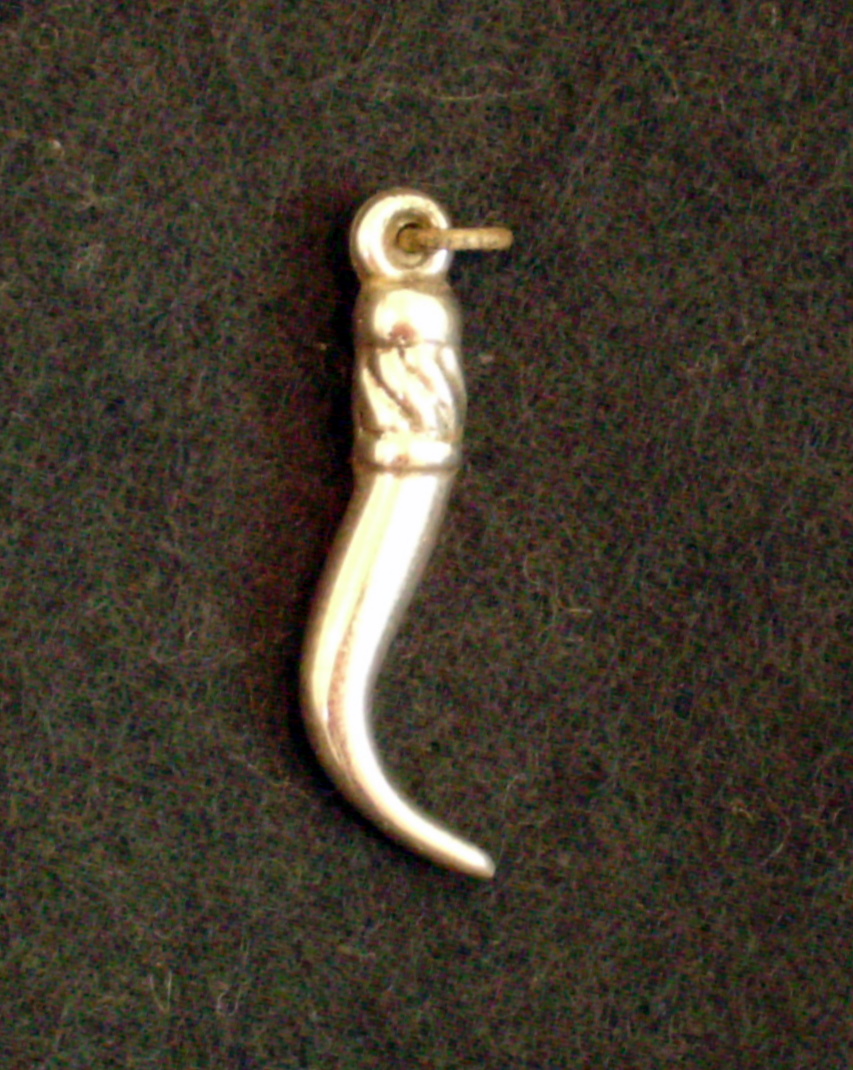
Cornicello
from Italian cornicello, meaning little horn
A twisted horn charm worn in Italy to ward off the evil eye and invite luck.
The cornicello is a traditional Italian amulet shaped like a twisted horn. It is worn to protect against the malocchio, or evil eye, and bad luck, while historically promoting fertility and virility.
- Twisted horn shape mimics eland horn for strength
- Red coral is sacred to Venus and love
- Protects against malocchio and bad luck
- Common in southern Italy and diaspora
- Also hung on car mirrors and in homes
What it is
The cornicello is an Italian talisman designed to shield the wearer from the malocchio, commonly known as the evil eye. This charm takes the form of a twisted horn, resembling a small curling spike. People wear it as jewelry or hang it in homes and vehicles. The object is believed to deflect negative glances that cause harm. Historically, it also served to encourage fertility and male strength. Its shape mimics natural horns, linking it to ancient symbols of power. The red variety often looks like a chili pepper, though this resemblance came later. The charm remains a common sight in southern regions, offering a sense of security against misfortune.
Where it comes from
The amulet likely draws inspiration from the horn of an eland, representing strength and vitality. Its twisted form predates the arrival of chili peppers in Europe. While the red color now echoes these vegetables, the horn shape itself is much older. Connections exist with Greek and Roman myths, such as Zeus giving a goat’s horn to fill with fruit. Coral used in the craft was sacred to Venus, goddess of love. Silver versions honored Luna, the moon goddess. The phallic design also references Priapus, a fertility deity. These layers show how old pagan symbols merged into local folk practice over centuries.
How it is done
Wearers typically display the cornicello on a chain around the neck. Some attach them to rearview mirrors, continuing an old habit of protecting draft horses. Families may hang them inside houses for general protection. The gesture of the mano cornuta, a hand forming a horn shape, serves a similar purpose. This hand sign is often made with a swiveling motion to ward off envy. Both the physical charm and the gesture act as barriers against harmful gazes. They are kept close to the body or in key areas of the home.
Tools and materials
Craftsmen make these charms from various materials depending on wealth and region. Red coral is highly valued and considered sacred to love deities. Gold and silver provide durable, precious alternatives. Plastic and terracotta offer affordable options for everyday use. Bone is also shaped into the characteristic spiral. The red color specifically targets the evil eye belief. The twisted structure mimics animal horns, emphasizing virility. Each material carries its own symbolic weight within the tradition.
Cornicello, drawn and placed
- Living
- Revived
- Fading
- Historical
- Legendary
- Performed
- Lineage
- Italian folk tradition
- Timing
- daily wear
What it is for
People seek the cornicello to block the malocchio, which is feared to damage health and crops. It protects nursing mothers, babies, and livestock from envy. Men historically wore it to boost virility and generative power. It brings general good fortune and safety. The charm acts as a personal guardian against unseen spiritual threats. It is especially important in communities where the evil eye is taken seriously. It offers peace of mind in daily life.
Who does it
Ordinary households wear and display the cornicello without special training. It is a popular item across southern Italy, including Calabria and Sicily. Merchants sell it to anyone seeking protection. No specific priest or shaman is required to activate it. The wearer simply trusts in its traditional power. Descendants of Italian immigrants continue this custom abroad. It functions as a cultural badge of identity and faith.
Peoples and places
The tradition is strongest in southern Italy, particularly in regions like Campania and Apulia. It appears throughout Lazio, Basilicata, and Sardinia. Northern areas like Lombardy also adopt the charm. Italians worldwide carry it as part of their heritage. The practice unites diverse groups under a shared protective symbol. It transcends strict religious boundaries, fitting into general folk belief.
At a glance: who, where and when
What people believe
The evil eye is seen as a real force that drains energy and causes harm. Envy from others can spoil milk, fruit, and human fertility. The horn shape channels positive generative forces to counter this drain. Sacred materials like coral and silver connect the wearer to divine protection. The amulet works by absorbing or deflecting malicious intent. It relies on long-standing cultural trust rather than ritual incantation.
When it is done
No specific festivals govern the wearing of the cornicello. It is used daily as a constant safeguard. Some families hang dried chili peppers alongside it during certain seasons. The charm stays with the wearer through all life stages. It is given at births or weddings as a blessing. Its use is continuous rather than periodic.
How scholars and sceptics see it
Researchers view the cornicello as a key example of Italian folk religion. Anthropologists note its links to ancient Mediterranean fertility cults. Historians trace its evolution from classical mythology to modern superstition. Skeptics see it as a psychological comfort against uncertainty. Scholars agree it reflects deep-seated cultural values about honor and envy.
Cautions and what is closed
No significant harms are associated with wearing the charm. Some may feel social pressure to conform to traditional expectations. Counterfeit items sold to tourists lack authentic materials. The belief system itself can cause anxiety if one fears the evil eye too intensely. There are no medical risks involved in wearing metal or coral.
Compare and confuse
The cornicello resembles other horn-shaped amulets found across the Mediterranean. It shares traits with the mano cornuta gesture. Similar protections exist in Spanish and Portuguese cultures. The concept of the evil eye appears globally, from Greece to India. Each culture adapts the horn symbol to local tastes and materials.
Law and persecution
The cornicello faces no legal restrictions in Italy. It is freely sold and worn without issue. Authorities do not interfere with folk traditions involving charms. No persecution has targeted its practitioners. It exists comfortably within modern secular society.
Rites that involve Cornicello
Questions people ask about Cornicello
What is a cornicello?
It is an Italian amulet shaped like a twisted horn. People wear it to protect against the evil eye and bring good luck. It is also linked to fertility and virility in traditional beliefs.
Where does the name come from?
The word comes from Italian cornicello, meaning little horn. Other names include cornetto and corno portafortuna, which means horn that brings luck.
What materials are used to make it?
Charm makers use gold, silver, red coral, plastic, bone, and terracotta. Red coral is especially prized for its connection to love and protection traditions.
Why is it red like a chili pepper?
The red color resembles a chili pepper, but the horn shape is older. Chili peppers arrived in Europe later. The color still helps ward off the evil eye in folk belief.
Good reading and sources
- Cornicello on WikipediaEncyclopedia
- More photos on Wikimedia CommonsPhotos and video
- Wikidata recordOpen data
The facts on this page come from the Wikipedia article "Cornicello", written by its contributors and used under the CC BY-SA 4.0 licence, and from its Wikidata record (CC0). EveryJaadu rewrote the text in its own words, with AI assistance, and compares every page with the article to make sure no passage is copied. It may be reused under the same CC BY-SA 4.0 licence with a link back.
It may contain mistakes. Names and customs differ from one community to the next, and some knowledge is closed to outsiders and left out here. This page describes belief and practice. It does not say that any of it works, it is not a how-to, and it is not medical advice. If something is wrong, tell us. Last refreshed 2026-10-05.
More from Italy
All the entries from Italy 🇮🇹 Italy and 5 morePrecious coral
A marine skeleton harvested for jewelry and worn as a protective charm in several culturesSubstance · Protection · Healing Living
🇮🇹 Italy and 5 morePrecious coral
A marine skeleton harvested for jewelry and worn as a protective charm in several culturesSubstance · Protection · Healing Living
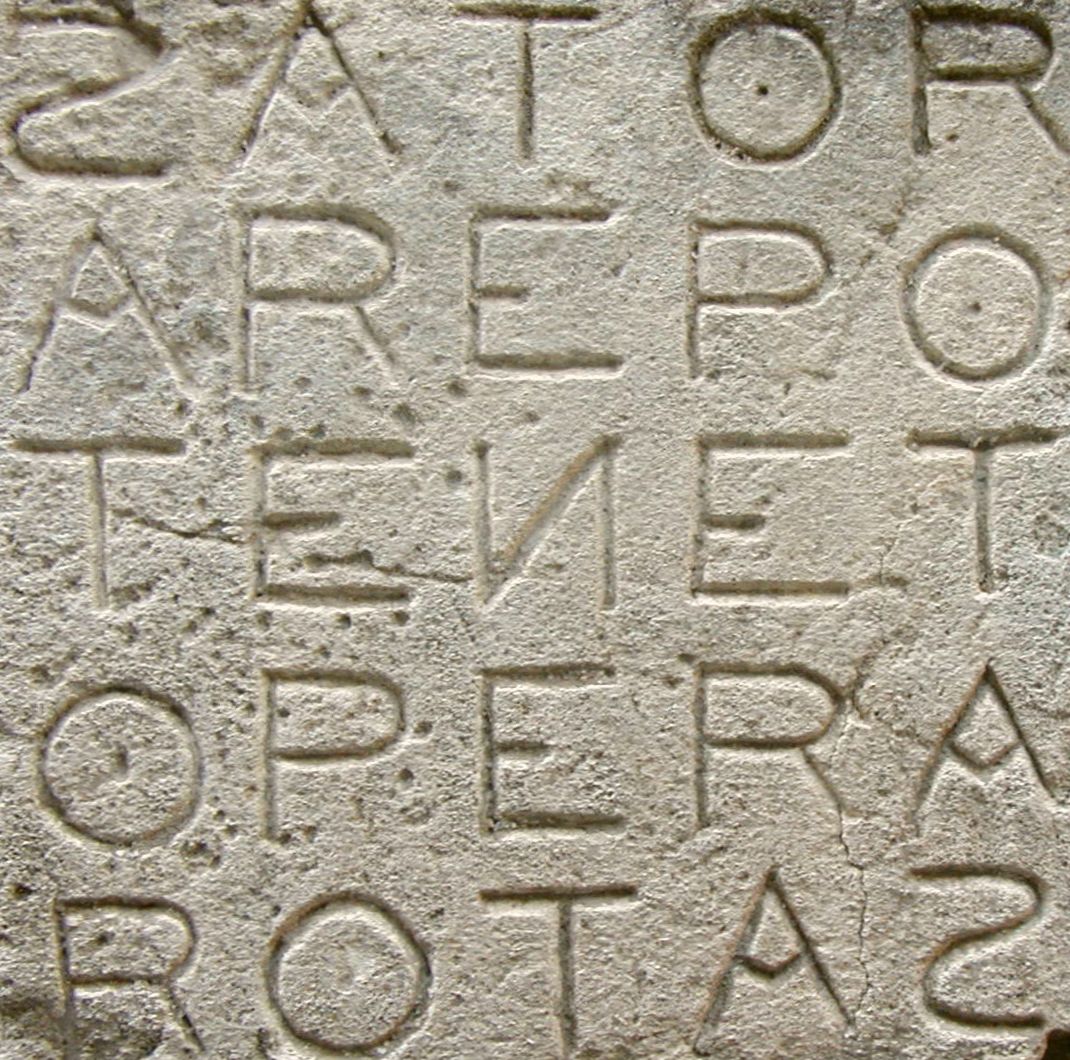 🇮🇹 Italy and 5 moreSator Square
A five-word Latin palindrome found in Roman ruins and medieval churchesCharm · Protection · Healing Historical
🇮🇹 Italy and 5 moreSator Square
A five-word Latin palindrome found in Roman ruins and medieval churchesCharm · Protection · Healing Historical
 🇮🇹 Italy and 5 moreRelic
An object or body part kept to honor a holy person and mark their connection to the divineCharm · Protection · Healing Living
🇮🇹 Italy and 5 moreRelic
An object or body part kept to honor a holy person and mark their connection to the divineCharm · Protection · Healing Living
 🇪🇬 Egypt and 3 moreEx-voto
A gift left in a shrine to mark a vow kept or a miracle receivedCharm · Protection · Healing Living
🇪🇬 Egypt and 3 moreEx-voto
A gift left in a shrine to mark a vow kept or a miracle receivedCharm · Protection · Healing Living
Related elsewhere
All charm 🇨🇳 China and 3 moreChinese dragon龍
A legendary water deity and imperial symbol in East Asian cultureBeing · Protection · Luck and prosperity Historical
🇨🇳 China and 3 moreChinese dragon龍
A legendary water deity and imperial symbol in East Asian cultureBeing · Protection · Luck and prosperity Historical
 🇰🇭 Cambodia and 3 moreSak Yantសាក់យ័ន្ត
A Southeast Asian tattoo tradition using sacred geometry for protection and powerTradition · Protection · Luck and prosperity Living
🇰🇭 Cambodia and 3 moreSak Yantសាក់យ័ន្ត
A Southeast Asian tattoo tradition using sacred geometry for protection and powerTradition · Protection · Luck and prosperity Living
 🇨🇳 China and 2 moreEight Immortals八仙
Eight legendary Taoist figures of China, each with a power and a vesselFigure · Protection · Healing Living
🇨🇳 China and 2 moreEight Immortals八仙
Eight legendary Taoist figures of China, each with a power and a vesselFigure · Protection · Healing Living
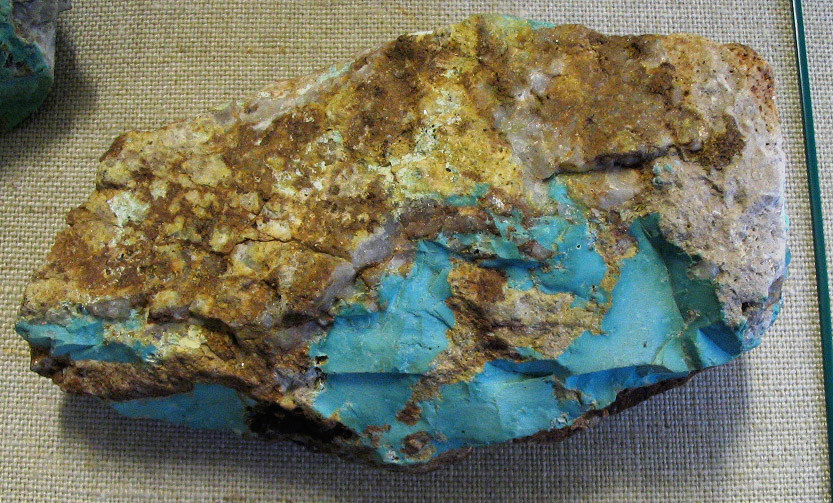 🇮🇷 Iran and 5 moreTurquoise
An opaque blue-green gemstone prized for its color since ancient timesSubstance · Protection · Luck and prosperity Living
🇮🇷 Iran and 5 moreTurquoise
An opaque blue-green gemstone prized for its color since ancient timesSubstance · Protection · Luck and prosperity Living