
Labrys
In its own language: λάβρυς
from Lydian or Carian word for 'axe', possibly linked to 'labyrinth'
A double-headed axe from ancient Crete, now a symbol of lesbian feminism and neo-paganism
The labrys is a double-bitted axe originating in Minoan Crete as a sacred religious symbol. It appears in Greek mythology and Thracian culture, and today serves as an emblem for lesbian feminism, neo-paganism, and historical political regimes.
- Originated in Minoan Crete as a sacred symbol
- Associated with female goddesses and Zeus Labraundos
- Adopted by lesbian feminists in the 1970s
- Used by Vichy France and Italian neo-fascists
- Symbol of strength and self-sufficiency in modern feminism
What it is
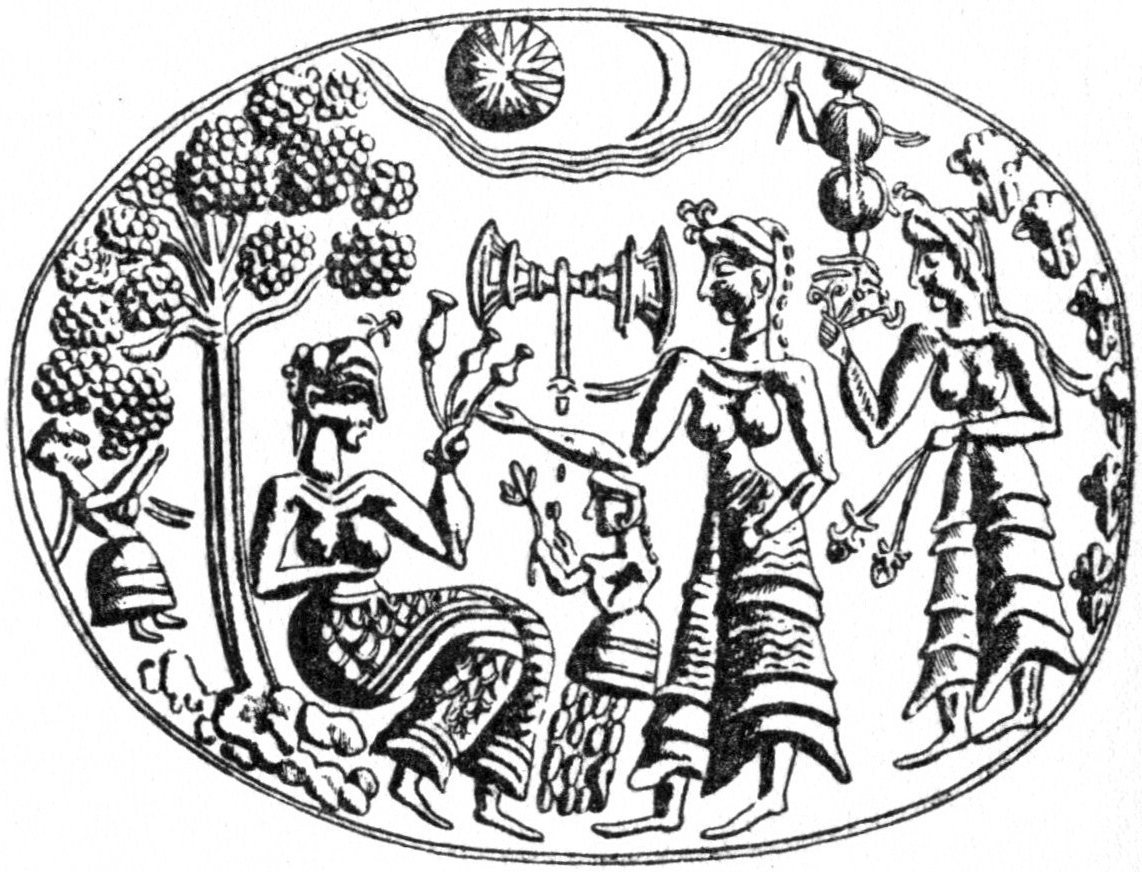
The labrys is a double-bitted axe with deep roots in ancient Mediterranean cultures. Originally a sacred object in Minoan Crete, it symbolized divine power and was associated with female deities. Over time, the symbol spread to Thracian and Greek traditions, often linked to storm gods like Zeus. In modern times, the labrys has been adopted by various groups, most notably as a symbol of lesbian feminism and neo-pagan spirituality. It represents strength, self-sufficiency, and a connection to pre-patriarchal matristic societies.
Where it comes from
The labrys traces back to the Minoan civilization of Crete, where it served as a primary religious symbol. Scholars debate its etymology, with some linking it to the Lydian word for 'axe' and others suggesting a connection to the Egyptian term for temple. The word 'labyrinth' may derive from 'labrys,' implying a 'house of the double axe.' The symbol also appears in Thracian culture, associated with the god Zalmoxis and royal authority, and in Caria, where it accompanied Zeus Labraundos.
How it is done
As a ritual object, the labrys was not used for combat but held ceremonial significance. In Minoan religion, small versions were offered as votive gifts to goddesses. Larger examples, like the Arkalochori Axe, were likely central to temple rites. Today, practitioners in neo-pagan circles use the labrys as a focal point for meditation or as an altar symbol representing feminine divine power and ancestral memory.
Tools and materials
The primary tool is the double-bitted axe itself, crafted from stone or metal. In ancient contexts, these axes were often found in caves or temples alongside other religious artifacts. Modern interpretations may incorporate the labrys into jewelry, flags, or logos, using colors like violet or black to signify lesbian identity and empowerment.
Labrys, drawn and placed
- Living
- Revived
- Fading
- Historical
- Legendary
- Performed
- Lineage
- Minoan religion, Hellenic polytheism
What it is for
Historically, the labrys was believed to channel divine power and protect sacred spaces. In Minoan belief, it represented the creative force of the earth mother. For modern lesbian feminists, the labrys symbolizes resilience, independence, and the reclaiming of female history. Neo-pagans use it to honor pre-patriarchal spiritual traditions and connect with goddess-centric worship.
Who does it
Ancient priests and priestesses of the Minoan and Thracian religions utilized the labrys in their rituals. Today, the symbol is embraced by scholars studying ancient cultures, as well as by members of the lesbian community and neo-pagan groups who identify with its meanings of strength and feminine divinity.
Peoples and places
The labrys originated with the Minoans of Crete and spread to the Thracians, Greeks, and Romans. In Greece, it remains a symbol of Hellenic polytheism. In Turkey, it is linked to the cult of Zeus at Labraunda. Modern usage is global, particularly among lesbian feminists in Europe and North America, and in neo-pagan communities worldwide.
At a glance: who, where and when
Belief worlds



What people believe
In Minoan and later Greek belief, the labrys was a conduit for divine energy, often associated with the thunderbolt and storm powers of Zeus. It was seen as a symbol of cosmic order and the authority of the gods. For neo-pagans, it represents a return to earth-centered, goddess-worshipping traditions that existed before patriarchal structures dominated.
When it is done
Modern celebrations may align with pagan sabbats or lesbian pride events, such as those organized by groups like Labrys in Kyrgyzstan or associations in Hungary.
How scholars and sceptics see it
Scholars like Arthur Evans have explored the linguistic links between 'labrys' and 'labyrinth,' though this remains debated. Linguist Robert S. P. Beekes suggests alternative origins. Anthropologists and historians study the labrys to understand the religious and political symbolism of ancient Mediterranean societies, noting its transition from a sacred object to a modern political and social emblem.
Cautions and what is closed
The labrys has been co-opted by far-right movements in the 20th century, including Vichy France and Italian neo-fascists, which complicates its modern perception. Some trans-exclusionary radical feminist groups have also used the symbol, leading to ongoing debates about its inclusivity within the broader LGBTQ+ community.
Compare and confuse
The labrys is sometimes confused with the francisque, a similar double-headed axe symbol used by Vichy France. It is distinct from single-bitted axes and war hammers, though all share a common ancestry in ancient weaponry. Its symbolic meaning differs significantly from its original religious context, now carrying strong political and social connotations.
Law and persecution
The labrys has no specific legal restrictions, but its association with far-right ideologies in the past means its public display can be controversial. In some contexts, it is protected as a cultural or religious symbol, while in others, it may be viewed with suspicion due to its historical misuse by totalitarian regimes.
Today
The labrys lives on as a vibrant symbol in multiple communities. It is widely recognized in lesbian feminism, appearing on flags and in organizations dedicated to LGBT rights. Neo-pagans continue to use it in spiritual practices, honoring its ancient roots. Museums and academic institutions preserve examples of the labrys, ensuring its historical significance is remembered.
Questions people ask about Labrys
What is a labrys?
A labrys is a double-bitted axe originating from ancient Crete. It was a sacred symbol in Minoan religion and later appeared in Greek and Thracian cultures. Today, it is best known as a symbol of lesbian feminism and neo-pagan spirituality.
Where did the labrys come from?
The labrys comes from the Minoan civilization of Crete. It was originally a religious symbol associated with female deities. The word may derive from Lydian or Carian terms for 'axe,' and it is linked to the myth of the labyrinth.
Why is the labrys a lesbian symbol?
Lesbians adopted the labrys in the 1970s as a symbol of strength, self-sufficiency, and matriarchal heritage. It represents the female spirit and is often depicted on flags and in organizations supporting LGBT rights.
Is the labrys still used today?
Yes, the labrys is used in neo-pagan religions, lesbian feminist movements, and as a cultural symbol in Greece. It also appears in historical contexts, having been used by various political regimes in the 20th century.
Good reading and sources
- Labrys on WikipediaEncyclopedia
- More photos on Wikimedia CommonsPhotos and video
- Wikidata recordOpen data
The facts on this page come from the Wikipedia article "Labrys", written by its contributors and used under the CC BY-SA 4.0 licence, and from its Wikidata record (CC0). EveryJaadu rewrote the text in its own words, with AI assistance, and compares every page with the article to make sure no passage is copied. It may be reused under the same CC BY-SA 4.0 licence with a link back.
It may contain mistakes. Names and customs differ from one community to the next, and some knowledge is closed to outsiders and left out here. This page describes belief and practice. It does not say that any of it works, it is not a how-to, and it is not medical advice. If something is wrong, tell us. Last refreshed 2026-10-13.
More from Greece
All the entries from Greece 🇮🇹 Italy and 5 moreRelic
An object or body part kept to honor a holy person and mark their connection to the divineCharm · Protection · Healing Living
🇮🇹 Italy and 5 moreRelic
An object or body part kept to honor a holy person and mark their connection to the divineCharm · Protection · Healing Living
 🇮🇪 Ireland and 5 moreCairn
A human-made stack of stones used as a marker, memorial, or religious symbol across many cultures.Tradition · Protection · Speaking with spirits and the dead Living
🇮🇪 Ireland and 5 moreCairn
A human-made stack of stones used as a marker, memorial, or religious symbol across many cultures.Tradition · Protection · Speaking with spirits and the dead Living
 🇬🇷 GreeceOrphismὈρφικά
A Greek mystery tradition based on the myth of Dionysus and the soul's journeyTradition Historical
🇬🇷 GreeceOrphismὈρφικά
A Greek mystery tradition based on the myth of Dionysus and the soul's journeyTradition Historical
 🇬🇷 Greece and 5 moreBay Laurelδάφνη
An aromatic Mediterranean plant used in cooking and as a symbol of victory and purification.Substance · Protection · Cleansing and purification Living
🇬🇷 Greece and 5 moreBay Laurelδάφνη
An aromatic Mediterranean plant used in cooking and as a symbol of victory and purification.Substance · Protection · Cleansing and purification Living
Related elsewhere
All charm 🇨🇳 China and 3 moreChinese dragon龍
A legendary water deity and imperial symbol in East Asian cultureBeing · Protection · Luck and prosperity Historical
🇨🇳 China and 3 moreChinese dragon龍
A legendary water deity and imperial symbol in East Asian cultureBeing · Protection · Luck and prosperity Historical
 🇨🇳 China and 2 moreEight Immortals八仙
Eight legendary Taoist figures of China, each with a power and a vesselFigure · Protection · Healing Living
🇨🇳 China and 2 moreEight Immortals八仙
Eight legendary Taoist figures of China, each with a power and a vesselFigure · Protection · Healing Living
 🇮🇳 IndiaTaraतारा (Sanskrit), তারা (Bengali)
A fierce Hindu goddess of protection and wisdom, central to the Mahavidya tradition.Being · Protection · Power and authority Living
🇮🇳 IndiaTaraतारा (Sanskrit), তারা (Bengali)
A fierce Hindu goddess of protection and wisdom, central to the Mahavidya tradition.Being · Protection · Power and authority Living
 🇮🇳 IndiaMangalaमंगल (Maṅgala)
A Hindu deity of Mars, war, and the planet's red lightBeing · Power and authority · Protection Living
🇮🇳 IndiaMangalaमंगल (Maṅgala)
A Hindu deity of Mars, war, and the planet's red lightBeing · Power and authority · Protection Living