🇮🇳 Magic in India
350 entries from India, best known first, across 80 places of magic.
Tantra is an esoteric yogic tradition from the Indian subcontinent, initially within Shaivism and Shaktism, later in Buddhism and Vaishnavism. It views the body as divine and uses mantras and rituals to achieve spiritual goals like liberation or supernatural power.
- Tantra means loom or weave in Sanskrit
- It began in India around the 1st millennium CE
- Mantras are central to tantric practice
- Sexual practices are rare and restricted
- Vajrayana Buddhism uses tantric ideas
Overview
Tantra developed in India around the middle of the first millennium CE. It began in Shaivism and Shaktism before spreading to Buddhism and Vaishnavism. The word means loom or weave, suggesting a system that interlaces different teachings. Practitioners see the human body as a reflection of the cosmos. They aim for union with the divine through complex cosmologies. This path is also called the Path of Mantra. It shares influences with Jainism, Taoism, and Shinto. Western views often wrongly link it to sex, but scholars say sexual practices are rare and restricted.
Practices and beliefs
Practitioners use mantras, rituals, and yoga to transform the self. Goals include siddhi, supernatural accomplishment, and kundalini ascent. Texts describe systems for worship and meditation. Deities, both male and female, are central to ritual worship. Magic, sorcery, and divination appear in these texts. The subtle body is mapped to cosmic elements. Geometric patterns called mandalas guide meditation. Initiation by a teacher is required for many advanced techniques.
Rites and charms
Rites focus on sādhanā, which includes initiation and daily practice. Puja, or ritual worship, honors deities and icons. Meditation helps awaken inner energy. Physical purification techniques cleanse the body and mind. Specific gestures and sounds assign meaning to sacred spaces. The house is swept and salt is thrown at the door in some folk contexts, though Tantra focuses more on internal transformation. These rites are said to protect against negative forces and aid spiritual progress.
Who practises
Tantrikas are adepts who follow specific tantric lineages. They undergo diksha, or initiation, to receive knowledge. Teachers guide students through complex practices. Scholars note that living traditions are often secretive. Ethnography of these groups remains scarce due to this secrecy. Practitioners view their path as a way to realize non-duality. They mix tantric elements with other religious aspects freely.
Regions and communities
Tantra spread across South and East Asia. In Tibet, it influenced Vajrayana Buddhism. Japan has Shingon Buddhism, which uses tantric ideas. China developed Esoteric Buddhism based on Indian tantras. Nepal has Newar Buddhist traditions with tantric roots. Southern Esoteric Buddhism parallels tantric ideas without direct reference. These regional variations show how the tradition adapted to local cultures while keeping core concepts.
The calendar
The text does not specify particular festivals or seasonal events for tantric rites. Practices are often tied to personal sadhana rather than public calendars. Life events may involve tantric rituals for protection or blessing. However, no detailed calendar of ceremonies is provided in the source material.
Law and the state
No information is given about legal status or persecution. The text mentions colonial-era definitions but not modern laws. Western scholarship historically labeled tantra as occult or secret. This was a construction by 19th-century Indologists. There is no mention of state treatment or witch-hunts in the provided article.
Today
Modern views often misrepresent tantra as erotic. Scholars work to correct this by studying texts and living traditions. Anthropological study is difficult due to the secretive nature of practitioners. Some researchers try to demystify the myth of secrecy. The tradition continues to influence Hindu, Buddhist, and Jain practices globally.
The facts in this overview come from the Wikipedia article "Tantra", written by its contributors and used under the CC BY-SA 4.0 licence. EveryJaadu rewrote the text in its own words, with AI assistance, and compares every page with the article to make sure no passage is copied. It may be reused under the same CC BY-SA 4.0 licence with a link back.
Places of magic in India
 🇮🇳 India and 2 moreGorakhnathगोरक्षनाथ
A Hindu yogi and saint who founded the Nath monastic order in India.Figure · Power and authority · Speaking with spirits and the dead Living
 🇮🇳 India and 1 moreTilopa
A tenth-century Buddhist tantric master who transmitted Mahamudra and the Six Yogas of Naropa.Figure · Change and initiation · Power and authority Historical
 🇮🇱 Israel and 1 moreShimon bar Yochaiשמעון בר יוחאי
A second-century sage of the Land of Israel and a central figure in Kabbalistic tradition.Figure · Power and authority Historical
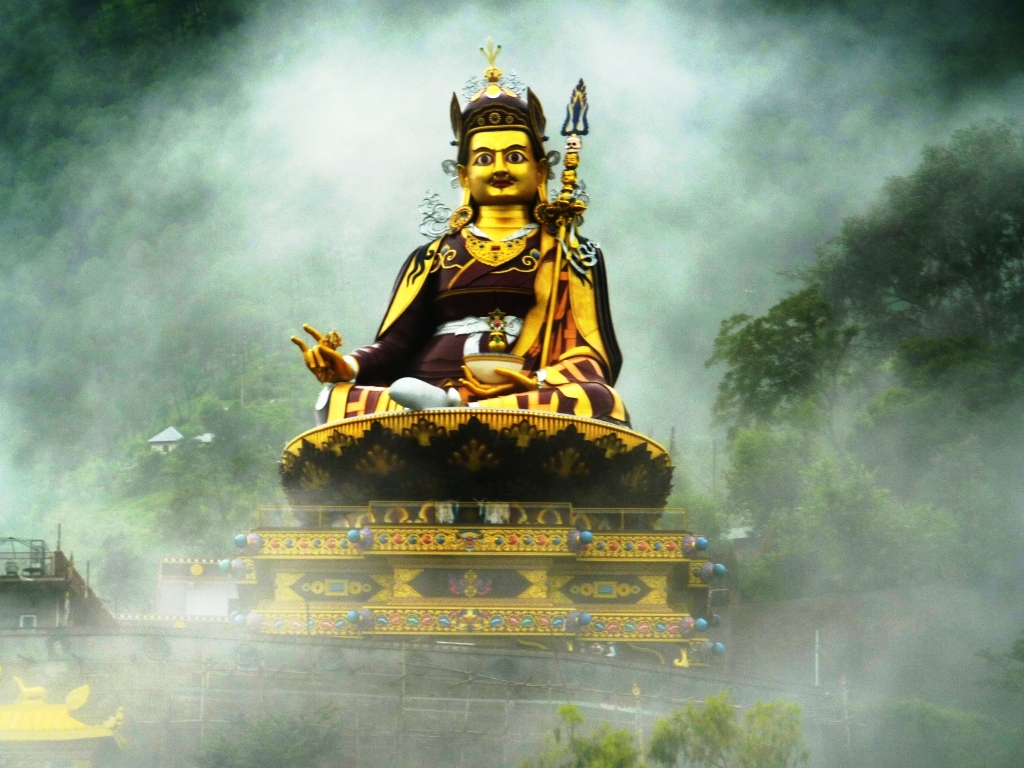 🇮🇳 India and 2 morePadmasambhavaཔདྨ་འབྱུང་གནས།
A tantric master credited with establishing Buddhism in Tibet and founding the Nyingma school.Figure · Protection · Power and authority Living
 🇪🇹 Ethiopia and 5 morePrester JohnPresbyter Ioannes
A legendary Christian king and priest said to rule a lost kingdom in the East.Figure · Power and authority Legendary
 🇳🇵 Nepal and 1 moreMatsyendranathMacchindranāth, Mīnanātha
A yogi and rain deity revered across Hindu and Buddhist traditions in South Asia.Figure · Power and authority · Wonder and entertainment Living
 🇮🇳 India and 1 moreYoginiयोगिनी
A female master of yoga and tantra, or a fierce goddess aspect worshipped in open-air shrines.Tradition · Power and authority · Protection Historical
 🇯🇵 Japan and 2 moreTamamo-no-Mae玉藻前
A nine-tailed fox spirit from Japanese legend who possessed emperors and concubines across Asia.Figure · Cursing and harm · Power and authority Legendary
 🇮🇳 India and 1 moreRavanaरावण (Rāvaṇa)
A ten-headed demon king of Lanka and a devoted follower of Shiva in Hindu tradition.Figure · Cursing and harm · Power and authority Legendary
 🇯🇵 Japan and 4 moreKṣitigarbhaक्षितिगर्भ
A bodhisattva vowed to empty the hells and guard children, shown with a staff and jewel.Being · Protection · Speaking with spirits and the dead Living
🇮🇷 Iran and 1 moreBabr-e Bayanبَبْرِ بَیان
A legendary armor worn by the Iranian hero Rostam, said to be made from a dragon's skin.Figure · Protection · Power and authority Legendary
 🇮🇳 IndiaPulimaranja Thondachan
A theyyam deity of North Malabar, born from a shapeshifter who became a leopard.Figure · Protection · Power and authority Living
 🇮🇷 Iran and 5 moreKhidrالخضر
A Qur'anic guide and saint believed to hold hidden wisdom and aid those in need.Being · Seeing and foretelling · Power and authority Living
🇮🇳 IndiaQutbقطب
A Sufi spiritual leader who acts as the unseen axis of a cosmic hierarchy.Figure · Power and authority Historical
 🇲🇲 Myanmar and 1 moreAreindamaအရိန္ဒမာ
A legendary Burmese spear linked to royal power and divine favorFigure · Power and authority Legendary
 🇮🇳 India and 2 moreAgartha
A legendary underground kingdom said to rule the world from within the EarthFigure · Power and authority Legendary
Photo credits on this page
The small pictures above come from Wikimedia Commons under free licences. Some are cropped to fit.
- Tamamo-no-Mae: ウィキ太郎 Wiki Taro, Public domain, source
- Kṣitigarbha: སངས་རྒྱས་བཅོམ་ལྡན་འདས།, Public domain, source
- Agartha: Louis Jacolliot, Public domain, source
- Shimon bar Yochai: איתי פרץ, Attribution, source
- Areindama: EmeraldRange, CC0, source
- Gorakhnath: Anandanath, CC BY-SA 4.0, source
- Yogini: Soumendra Barik, CC BY-SA 3.0, source
- Matsyendranath: Unknown author, Public domain, source
- Prester John: Diogo Homem, Public domain, source
- Ravana: Gita Press Gorakhpur, CC0, source
- Pulimaranja Thondachan: Uajith, CC BY-SA 4.0, source
- Khidr: Unknown author, Public domain, source
- Tilopa: Unknown author, Public domain, source
- Padmasambhava: John Hill, CC BY-SA 3.0, source
The weekly digest
Every Monday: seven entries you may not know, what is on the calendar this week, and one rite drawn step by step.