Qutb
In its own language: قطب
Arabic for 'axis', 'pivot', or 'pole'
A Sufi spiritual leader who acts as the unseen axis of a cosmic hierarchy.
In Sufi mysticism, the qutb is the perfect human being and supreme spiritual guide. This hidden figure serves as the necessary link between God and the world, anchoring the saintly hierarchy that sustains existence.
- The qutb is the unseen head of the Sufi saintly hierarchy.
- It means 'axis' or 'pole' in Arabic.
- Ibn Arabi described a strict cosmic structure below the qutb.
- The temporal qutb is also known as al-ghawth or the helper.
- The Qutb Minar in Delhi shares the name with this spiritual concept.
What it is
The qutb represents the pinnacle of spiritual perfection in Sufi thought. Known as the Universal Man, this individual holds a divine connection that makes them central to the faith. They act as the primary mediator between the human realm and the divine. Despite their immense authority, they remain unknown to the general public. Their presence is considered essential for the stability of the world itself.
Where it comes from
The belief relies on scriptural evidence, including hadith attributed to Ibn Mas‘ūd. These texts are used to prove the existence of such a leader. The idea developed within Persian Sufi literature, which uses metaphorical language to describe spiritual realities without contradicting Islamic teachings.
Qutb, drawn and placed
- Living
- Revived
- Fading
- Historical
- Legendary
- Performed
- Lineage
- Sufism
What it is for
The qutb provides spiritual authority and maintains the cosmic order. All beings, including secret entities and inanimate objects, are believed to pledge allegiance to them. This pledge grants the leader significant power. Only specific groups, such as certain angels and djinn under Khadir’s jurisdiction, are exempt from this requirement.
Who does it
The qutb is not chosen by popular vote but emerges as the most perfect human. They lead the saintly hierarchy from a position of hidden knowledge. The role is exclusive, with only one person holding the title at any given time across the entire cosmos.
Peoples and places
The concept is central to Sufi communities worldwide. In India, the name appears in historical titles and place names, such as the Qutb complex in Delhi. Different Sufi orders may interpret the hierarchy slightly differently, but the core idea of a single supreme guide remains consistent across traditions.
At a glance: who, where and when
What people believe
Sufis believe the qutb exists in two forms: temporal and cosmic. The temporal qutb lives on Earth as a visible leader. The cosmic qutb exists in a higher dimension, serving as the Axis of the Universe. This dual nature ensures God’s presence is felt in the world at all times. The cosmic source of power flows into the earthly leader.
How scholars and sceptics see it
Researchers note that the qutb is often located in Mecca at the Ka'ba, either physically or spiritually. This location is called their maqām. Scholars analyze the hierarchical structures proposed by figures like Ali Hujwiri and Ibn Arabi. These models detail the ranks of saints beneath the qutb, showing how spiritual power is distributed.
Compare and confuse
The qutb is sometimes confused with other religious leaders. It differs from the temporal ruler or political caliph. While similar to the concept of a mahdi in some ways, it focuses on spiritual perfection rather than eschatological salvation. The term also appears in astronomy, referring to celestial poles.
Questions people ask about Qutb
What does the word qutb mean?
It is an Arabic word meaning axis, pivot, or pole. In Sufism, it refers to the spiritual leader who anchors the world's existence.
Who is the qutb in Sufism?
The qutb is the perfect human being, or Universal Man. They are the supreme spiritual guide who mediates between God and humanity.
Is the qutb visible to everyone?
No. The qutb remains unknown to the world. Their identity is hidden, even though their presence is deemed necessary for the universe.
Where is the qutb located?
Most scholars believe the qutb is present in Mecca at the Ka'ba. This can be a physical or spiritual presence depending on the interpretation.
Good reading and sources
The facts on this page come from the Wikipedia article "Qutb", written by its contributors and used under the CC BY-SA 4.0 licence, and from its Wikidata record (CC0). EveryJaadu rewrote the text in its own words, with AI assistance, and compares every page with the article to make sure no passage is copied. It may be reused under the same CC BY-SA 4.0 licence with a link back.
It may contain mistakes. Names and customs differ from one community to the next, and some knowledge is closed to outsiders and left out here. This page describes belief and practice. It does not say that any of it works, it is not a how-to, and it is not medical advice. If something is wrong, tell us. Last refreshed 2026-10-10.
More from India
All the entries from India 🇮🇳 IndiaNaropa
An Indian Buddhist master whose teachings shaped Tibetan Vajrayana practiceFigure · Change and initiation Historical
🇮🇳 IndiaNaropa
An Indian Buddhist master whose teachings shaped Tibetan Vajrayana practiceFigure · Change and initiation Historical
 🇳🇵 Nepal and 1 moreMatsyendranathMacchindranāth, Mīnanātha
A yogi and rain deity revered across Hindu and Buddhist traditions in South Asia.Figure · Speaking with spirits and the dead · Power and authority Living
🇳🇵 Nepal and 1 moreMatsyendranathMacchindranāth, Mīnanātha
A yogi and rain deity revered across Hindu and Buddhist traditions in South Asia.Figure · Speaking with spirits and the dead · Power and authority Living
 🇮🇳 India and 2 moreGorakhnathगोरक्षनाथ
A Hindu yogi and saint who founded the Nath monastic order in India.Figure · Power and authority · Speaking with spirits and the dead Living
🇮🇳 India and 2 moreGorakhnathगोरक्षनाथ
A Hindu yogi and saint who founded the Nath monastic order in India.Figure · Power and authority · Speaking with spirits and the dead Living
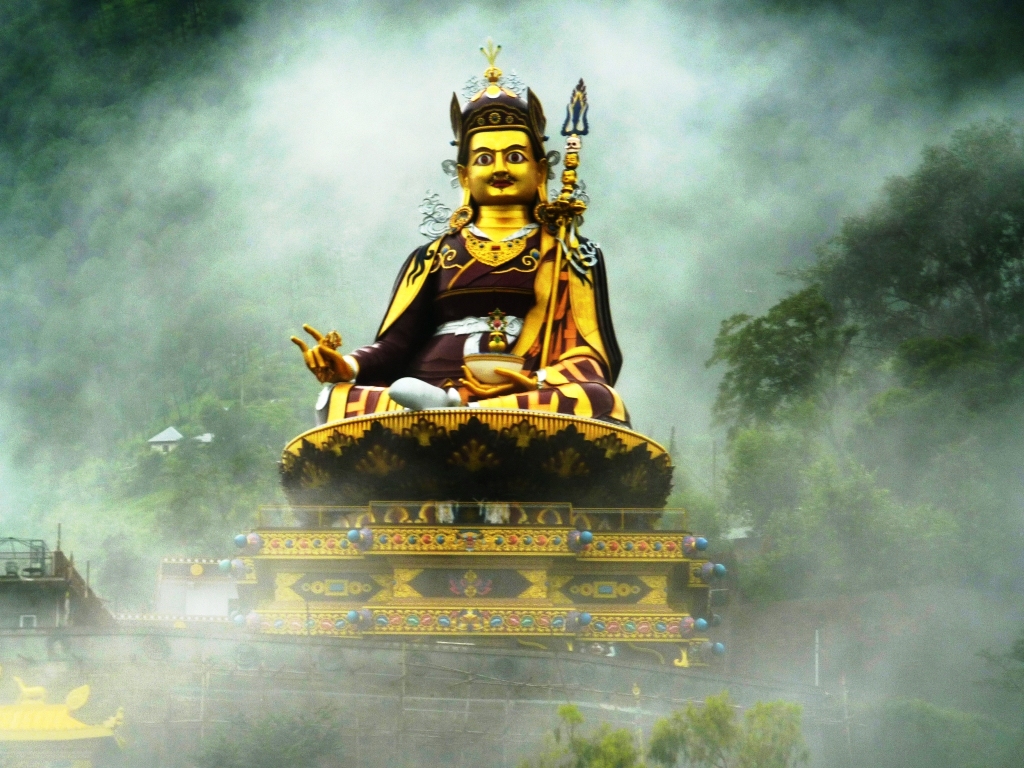 🇮🇳 India and 2 morePadmasambhavaཔདྨ་འབྱུང་གནས།
A tantric master credited with establishing Buddhism in Tibet and founding the Nyingma school.Figure · Protection · Power and authority Living
🇮🇳 India and 2 morePadmasambhavaཔདྨ་འབྱུང་གནས།
A tantric master credited with establishing Buddhism in Tibet and founding the Nyingma school.Figure · Protection · Power and authority Living
Related elsewhere
All figure 🇮🇳 India and 5 moreAstrology
A divinatory practice that reads human fate through the positions of celestial bodies.Belief · Seeing and foretelling · Luck and prosperity Living
🇮🇳 India and 5 moreAstrology
A divinatory practice that reads human fate through the positions of celestial bodies.Belief · Seeing and foretelling · Luck and prosperity Living
 🇬🇧 United Kingdom and 2 moreKing ArthurBrenin Arthur
A legendary British king and folk hero of medieval literature and Welsh mythologyFigure · Power and authority · Wonder and entertainment Legendary
🇬🇧 United Kingdom and 2 moreKing ArthurBrenin Arthur
A legendary British king and folk hero of medieval literature and Welsh mythologyFigure · Power and authority · Wonder and entertainment Legendary
 🇫🇷 FranceHoly GrailSaint Graal
A cup or stone from Arthurian tales that grants healing and eternal lifeFigure · Healing · Luck and prosperity Legendary
🇫🇷 FranceHoly GrailSaint Graal
A cup or stone from Arthurian tales that grants healing and eternal lifeFigure · Healing · Luck and prosperity Legendary
 🇨🇳 China and 3 moreChinese dragon龍
A legendary water deity and imperial symbol in East Asian cultureBeing · Protection · Luck and prosperity Historical
🇨🇳 China and 3 moreChinese dragon龍
A legendary water deity and imperial symbol in East Asian cultureBeing · Protection · Luck and prosperity Historical