🇨🇴 Magic in Colombia
10 entries from Colombia, best known first, across 1 place of magic.
Colombian folk belief draws from Spanish, African, and Indigenous roots, passed down through oral storytelling and shared across Latin America. The tradition centers on a wide array of spirits and legendary creatures tied to forests, rivers, and daily life. These figures appear in community parades and remain part of the national imagination, with some locals still reporting personal encounters.
- Parades of myths and legends appear at festivals across Colombian cities.
- The Boraro is a tree-sized forest guardian feared by the Tucano people.
- The Mohana water spirit shares traits with the Amazon pink dolphin.
- Saint Sebastian’s day marks the annual return of the Hombre Caiman.
- The Llorona ghost is said to foretell death when heard weeping.
Overview
Folk traditions in Colombia blend Spanish, African, and Indigenous threads into a living oral culture. Stories about supernatural beings travel from generation to generation and overlap with tales found throughout Latin America. Rather than focusing on formal spells or divination tools, the tradition relies on vivid characters that explain natural phenomena, warn against environmental harm, and reflect historical cross-cultural contact. Communities treat these narratives as both entertainment and moral guidance. The figures often serve as guardians of wildlife or warnings about human behavior, keeping ecological awareness alive through narrative rather than written doctrine.
Practices and beliefs
Believers speak of numerous entities that interact with the natural world. Forest guardians like the Madremonte watch over trees and punish those who destroy habitats. Water spirits such as the Mohana shift shape to lure travelers near rivers, while jungle dwellers like the Patasola guard remote trails. Some beings act as omens, with the weeping ghost known as the Llorona said to signal approaching death. Others bring misfortune to workers, appearing as storm-causing beasts or unseen cattle-scaring shapes. Communities also use simple protective gestures, like walking backward when facing certain monsters or placing animal bones near livestock shelters to ward off unwanted visitors.
Rites and charms
Public celebrations form the main stage for these stories. Towns host parades featuring costumed representations of mythical figures during major local festivals. Participants carry floats and masks that bring the creatures to life for crowds. In quieter settings, people follow traditional precautions when entering wild areas. Hunters might avoid certain paths after dark, and travelers sometimes leave offerings like tobacco to calm aggressive spirits. Simple boundary markers, such as driving wooden posts topped with skulls into the ground, are used to shield homes and pastures from unseen disturbances. These actions function as cultural habits rather than formal ceremonies.
Regions and communities
Local variations reflect Colombia’s diverse geography and ethnic groups. Coastal communities along the Pacific share tales of the Tunda, a shadowy figure linked to Afro-Colombian heritage. Indigenous Tucano speakers preserve stories of towering forest protectors with reversed feet and poisonous secretions. Rural zones near the Magdalena River feature legends of aquatic hybrids tied to fishing livelihoods. The Amazon basin connects water spirits to pink river dolphins, blending colonial names with local ecology. Urban centers adapt these regional myths into street performances, while isolated valleys maintain older versions of the same creatures.
The calendar
Seasonal and religious events provide the schedule for public displays. Major gatherings like the Barranquilla Carnival, the Cali Fair, and Medellín’s Flower Festival all include dedicated segments where costumed performers march with mythological characters. Specific dates anchor certain legends, such as the annual return of a river-transformed hunter tied to Saint Sebastian’s feast day. Life transitions rarely trigger private rituals in the recorded material, but seasonal work cycles, especially hunting and herding seasons, align with warnings about forest and mountain spirits. Festivals keep the stories visible year after year.
Today
These narratives remain active in modern Colombian life. Street parades and municipal festivals continue to showcase legendary figures, embedding them in contemporary popular culture. Many residents accept the stories as part of their shared identity, and some still report hearing voices or seeing unusual shapes in remote areas. The traditions survive through family storytelling, music recordings, and public celebrations rather than institutional teaching. Migration and urban growth have shifted some tales into digital media, though rural communities still pass them down face to face.
The facts in this overview come from the Wikipedia article "Colombian folklore", written by its contributors and used under the CC BY-SA 4.0 licence. EveryJaadu rewrote the text in its own words, with AI assistance, and compares every page with the article to make sure no passage is copied. It may be reused under the same CC BY-SA 4.0 licence with a link back.
Places of magic in Colombia
 🇲🇽 Mexico and 5 moreLa Llorona
A vengeful ghost in Hispanic American folklore who mourns drowned children near water.Figure · Cursing and harm Living
🇲🇽 Mexico and 5 moreLa Llorona
A vengeful ghost in Hispanic American folklore who mourns drowned children near water.Figure · Cursing and harm Living
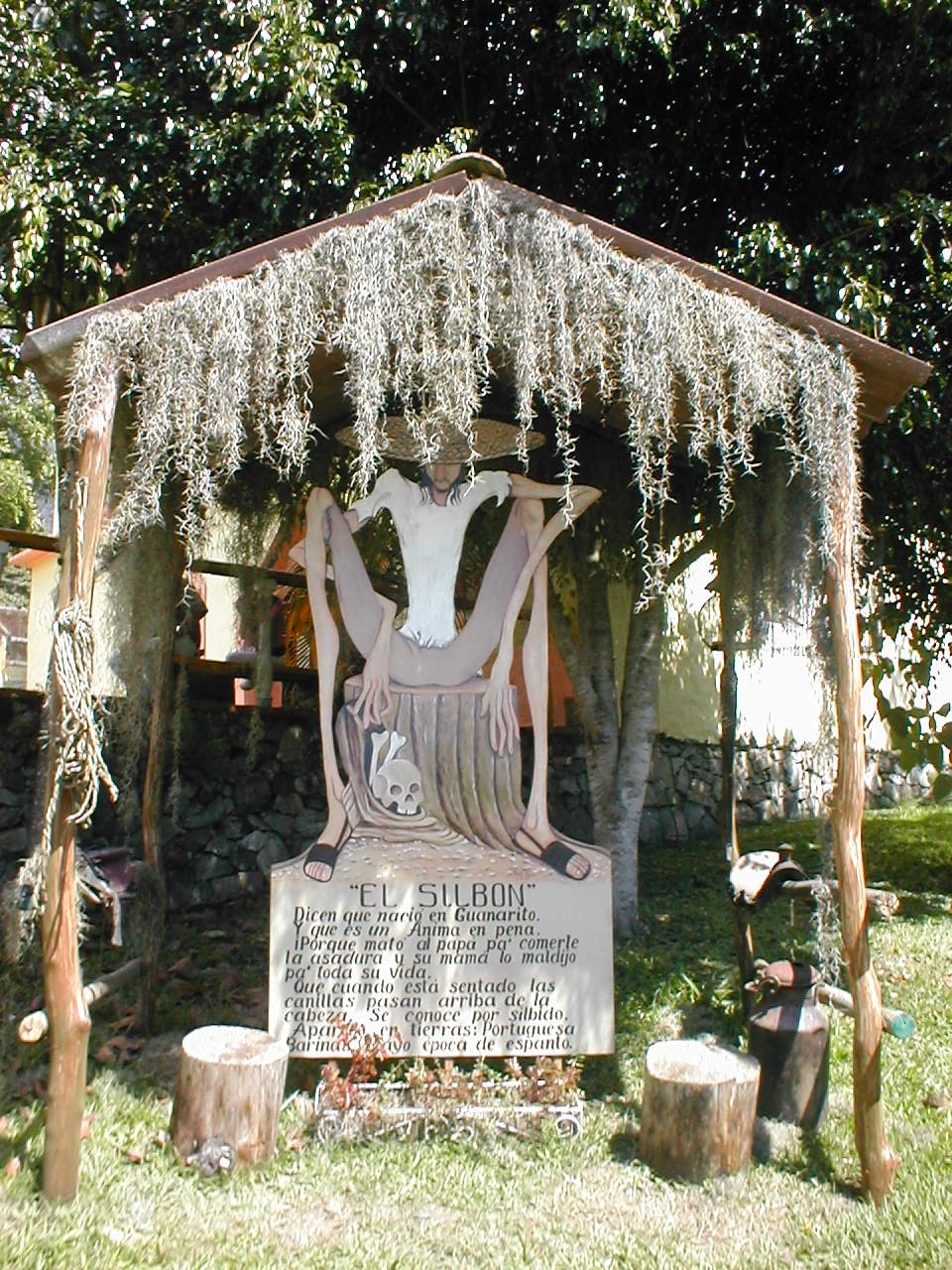 🇻🇪 Venezuela and 1 moreEl Silbón
A Venezuelan and Colombian legend of a cursed spirit who carries his father's bones.Figure · Cursing and harm · Seeing and foretelling Legendary
🇨🇴 Colombia and 1 moreTunda
A shapeshifting entity from the Pacific coast of Colombia and Ecuador that lures people into the forest.Figure · Cursing and harm Legendary
🇻🇪 Venezuela and 1 moreEl Silbón
A Venezuelan and Colombian legend of a cursed spirit who carries his father's bones.Figure · Cursing and harm · Seeing and foretelling Legendary
🇨🇴 Colombia and 1 moreTunda
A shapeshifting entity from the Pacific coast of Colombia and Ecuador that lures people into the forest.Figure · Cursing and harm Legendary
 🇧🇷 Brazil and 2 moreMapinguari
A hairy Amazonian monster with a belly mouth and backwards feetBeing · Cursing and harm Legendary
🇧🇷 Brazil and 2 moreMapinguari
A hairy Amazonian monster with a belly mouth and backwards feetBeing · Cursing and harm Legendary
 🇵🇪 Peru and 5 morePachamama
The Andean mother goddess of space-time and the earthBeing · Protection · Healing Living
🇵🇪 Peru and 5 morePachamama
The Andean mother goddess of space-time and the earthBeing · Protection · Healing Living
 🇨🇴 ColombiaColombian folklore
Beliefs and legends passed down through generations in ColombiaTradition · Wonder and entertainment Living
🇨🇴 ColombiaColombian folklore
Beliefs and legends passed down through generations in ColombiaTradition · Wonder and entertainment Living
 🇵🇪 Peru and 5 morePalo Santo
Aromatic wood used in South American ritual cleansing and folk medicineSubstance · Cleansing and purification · Healing Living
🇵🇪 Peru and 5 morePalo Santo
Aromatic wood used in South American ritual cleansing and folk medicineSubstance · Cleansing and purification · Healing Living
 🇵🇪 Peru and 1 moreViracochaWiraqucha
The supreme creator deity of the Andes, associated with the sea and civilization.Being · Power and authority · Wonder and entertainment Historical
🇵🇪 Peru and 1 moreViracochaWiraqucha
The supreme creator deity of the Andes, associated with the sea and civilization.Being · Power and authority · Wonder and entertainment Historical
 🇲🇽 Mexico and 5 moreCopal
A tree resin used as incense in Mesoamerica and varnish in EuropeSubstance · Speaking with spirits and the dead · Cleansing and purification Living
🇲🇽 Mexico and 5 moreCopal
A tree resin used as incense in Mesoamerica and varnish in EuropeSubstance · Speaking with spirits and the dead · Cleansing and purification Living
 🇩🇪 Germany and 3 moreBlack SunSchwarze Sonne
A twelve-part sig rune design from a Nazi castle, now used by extremist groups.Power and authority Historical
🇩🇪 Germany and 3 moreBlack SunSchwarze Sonne
A twelve-part sig rune design from a Nazi castle, now used by extremist groups.Power and authority Historical
Photo credits on this page
The small pictures above come from Wikimedia Commons under free licences. Some are cropped to fit.
- Mapinguari: Lauro Iyambae (@Aptix_4p0clix), CC0, source
- La Llorona: Melvin Callejas, Public domain, source
- El Silbón: María Auxiliadora Ramírez Prato, CC BY-SA 3.0, source
- Pachamama: Penarc, CC BY-SA 3.0, source
- Palo Santo: Haplochromis, CC BY-SA 3.0, source
- Viracocha: Pattych ( talk ), CC BY-SA 3.0, source
- Colombian folklore: Unknown author, Public domain, source
- Copal: Didier Descouens, CC BY-SA 4.0, source
- Black Sun: Dirk Vorderstraße, CC BY-SA 2.0, source
The weekly digest
Every Monday: seven entries you may not know, what is on the calendar this week, and one rite drawn step by step.