
Zombie walk
A public gathering where people dress as zombies to walk through city streets for entertainment or charity
A zombie walk is an organized event where participants wear costumes and stroll through urban areas. Originating in North America during the early 2000s, these gatherings have spread globally. They are often held for fun, to set records, or to support charitable causes.
- First recorded event was a prank at Gen Con in 2000
- Toronto walk grew to over 15,000 participants by 2014
- Guinness World Records certified multiple largest gatherings
- Events often raise money for food banks and charities
- Spread from North America to cities worldwide
What it is
A zombie walk is a public performance where people dress in zombie attire and move through city streets. Participants gather in urban centers to create a spectacle of shambling figures. These events range from small local gatherings to massive crowds that draw thousands of onlookers. The primary goal is entertainment, though many walks serve secondary purposes like raising money for food banks or promoting local businesses. The atmosphere is generally playful, with participants engaging in light roleplay rather than serious horror.
Where it comes from
The earliest recorded event resembling a zombie walk took place at Gen Con in Milwaukee in August 2000. Organizers created it as a prank against vampire live-action roleplayers. Another early instance occurred in Sacramento, California, in 2001 to promote a film festival. The first event explicitly called a "Zombie Walk" happened in Toronto in October 2003. These early gatherings laid the groundwork for the global phenomenon that followed.
Tools and materials
Costumes are the essential tool, typically featuring tattered clothing and makeup to simulate decay. Placards are common props, used to convey messages about charity or fictional zombie politics. Music plays a role in some walks, with participants dancing to songs like "Thriller." Organizers may provide makeup stations or coordinate with local vendors for food trucks. The visual impact relies on the collective appearance of the crowd rather than individual elaborate sets.
Zombie walk, drawn and placed
- Living
- Revived
- Fading
- Historical
- Legendary
- Performed
- Timing
- annual events or spontaneous gatherings
What it is for
While primarily for entertainment, many walks aim to raise awareness for social causes. Food banks and charities frequently partner with organizers to collect donations or funds. Some events seek to break world records for the largest gathering of zombies. Others serve as kickoffs for larger festivals or conventions. The communal aspect allows communities to come together for a shared, lighthearted experience that celebrates pop culture.
Who does it
Organizers are often fans of horror media or local community groups. Volunteers manage logistics, secure permits, and coordinate routes. Participants are everyday people who choose to dress up and join the walk. There is no formal training required; involvement is open to anyone willing to participate. Groups like The It's Alive Show in Pittsburgh help institutionalize these events into annual festivals.
Peoples and places
Zombie walks began in North America and quickly spread to other regions. Cities in Canada, such as Toronto and Vancouver, adopted the tradition early on. Events now occur across Europe, Australia, and Latin America. Each location adds local flavor, such as timing walks around Day of the Dead in Rio de Janeiro. The format remains consistent, but scale and specific themes vary by city culture and organizer vision.
At a glance: who, where and when
Who does it
Occasions


What people believe
The practice draws on popular culture depictions of zombies rather than traditional folklore or spiritual beliefs. It does not involve worship or ritual magic. The focus is on aesthetic imitation and playful engagement with horror tropes. Participants and spectators understand the event as a form of performance art or social gathering. There are no underlying metaphysical claims attached to the act of walking as a zombie.
When it is done
Many walks are annual events, often scheduled in autumn around Halloween. Some coincide with other festivals or holidays, such as Day of the Dead. Spontaneous walks can occur at any time, often triggered by local interest or convention schedules. Major cities tend to hold their events on weekends to maximize participation. The timing allows for cooler weather and longer evenings, enhancing the atmospheric effect.
Days linked to Zombie walk
Questions people ask about Zombie walk
What is a zombie walk?
It is a public gathering where people dress in zombie costumes and walk through city streets. The event is primarily for entertainment and community building, originating in North America in the early 2000s.
Where did zombie walks start?
The earliest known event was a prank at a gaming convention in Milwaukee in 2000. The first event explicitly named a zombie walk occurred in Toronto in 2003.
Why do people organize zombie walks?
They are organized for fun, to celebrate horror culture, and often to raise money for charity. Many walks aim to break world records or promote local businesses and festivals.
Are zombie walks related to religion?
No, they are not religious rituals. They are secular performances based on modern pop culture depictions of zombies. Participants engage in roleplay without spiritual intent.
Good reading and sources
- Zombie walk on WikipediaEncyclopedia
- More photos on Wikimedia CommonsPhotos and video
- Wikidata recordOpen data
The facts on this page come from the Wikipedia article "Zombie walk", written by its contributors and used under the CC BY-SA 4.0 licence, and from its Wikidata record (CC0). EveryJaadu rewrote the text in its own words, with AI assistance, and compares every page with the article to make sure no passage is copied. It may be reused under the same CC BY-SA 4.0 licence with a link back.
It may contain mistakes. Names and customs differ from one community to the next, and some knowledge is closed to outsiders and left out here. This page describes belief and practice. It does not say that any of it works, it is not a how-to, and it is not medical advice. If something is wrong, tell us. Last refreshed 2026-10-06.
More from the United States
All the entries from the United States 🇺🇸 United States and 2 moreDavenport brothers
A pair of American stage magicians who performed spirit cabinet illusions in the late nineteenth century.Illusion · Wonder and entertainment · Speaking with spirits and the dead Historical
🇺🇸 United States and 2 moreDavenport brothers
A pair of American stage magicians who performed spirit cabinet illusions in the late nineteenth century.Illusion · Wonder and entertainment · Speaking with spirits and the dead Historical
 🇺🇸 United StatesSociety of American Magicians
A global professional group for magicians that preserves the art and ethics of stage illusionIllusion · Wonder and entertainment Living
🇺🇸 United States and 1 moreHorace Goldin
A stage magician known for his fast style and the sawing illusion.Illusion · Wonder and entertainment Historical
🇨🇦 Canada and 1 moreInternational Brotherhood of Magicians
A global organization for professional and amateur magicians founded in 1922.Illusion · Wonder and entertainment Living
🇺🇸 United StatesSociety of American Magicians
A global professional group for magicians that preserves the art and ethics of stage illusionIllusion · Wonder and entertainment Living
🇺🇸 United States and 1 moreHorace Goldin
A stage magician known for his fast style and the sawing illusion.Illusion · Wonder and entertainment Historical
🇨🇦 Canada and 1 moreInternational Brotherhood of Magicians
A global organization for professional and amateur magicians founded in 1922.Illusion · Wonder and entertainment Living
Related elsewhere
All illusion 🇯🇵 Japan and 2 moreTanabataたなばた (七夕)
A Japanese celebration of star-crossed lovers and written wishesTradition · Luck and prosperity · Wonder and entertainment Living
🇯🇵 Japan and 2 moreTanabataたなばた (七夕)
A Japanese celebration of star-crossed lovers and written wishesTradition · Luck and prosperity · Wonder and entertainment Living
 🇮🇪 Ireland and 5 moreCairn
A human-made stack of stones used as a marker, memorial, or religious symbol across many cultures.Tradition · Protection · Speaking with spirits and the dead Living
🇮🇪 Ireland and 5 moreCairn
A human-made stack of stones used as a marker, memorial, or religious symbol across many cultures.Tradition · Protection · Speaking with spirits and the dead Living
 🇷🇺 Russia and 3 moreFirebird
A glowing bird of Slavic folklore that brings both fortune and peril to those who seek itFigure · Wonder and entertainment · Luck and prosperity Legendary
🇷🇺 Russia and 3 moreFirebird
A glowing bird of Slavic folklore that brings both fortune and peril to those who seek itFigure · Wonder and entertainment · Luck and prosperity Legendary
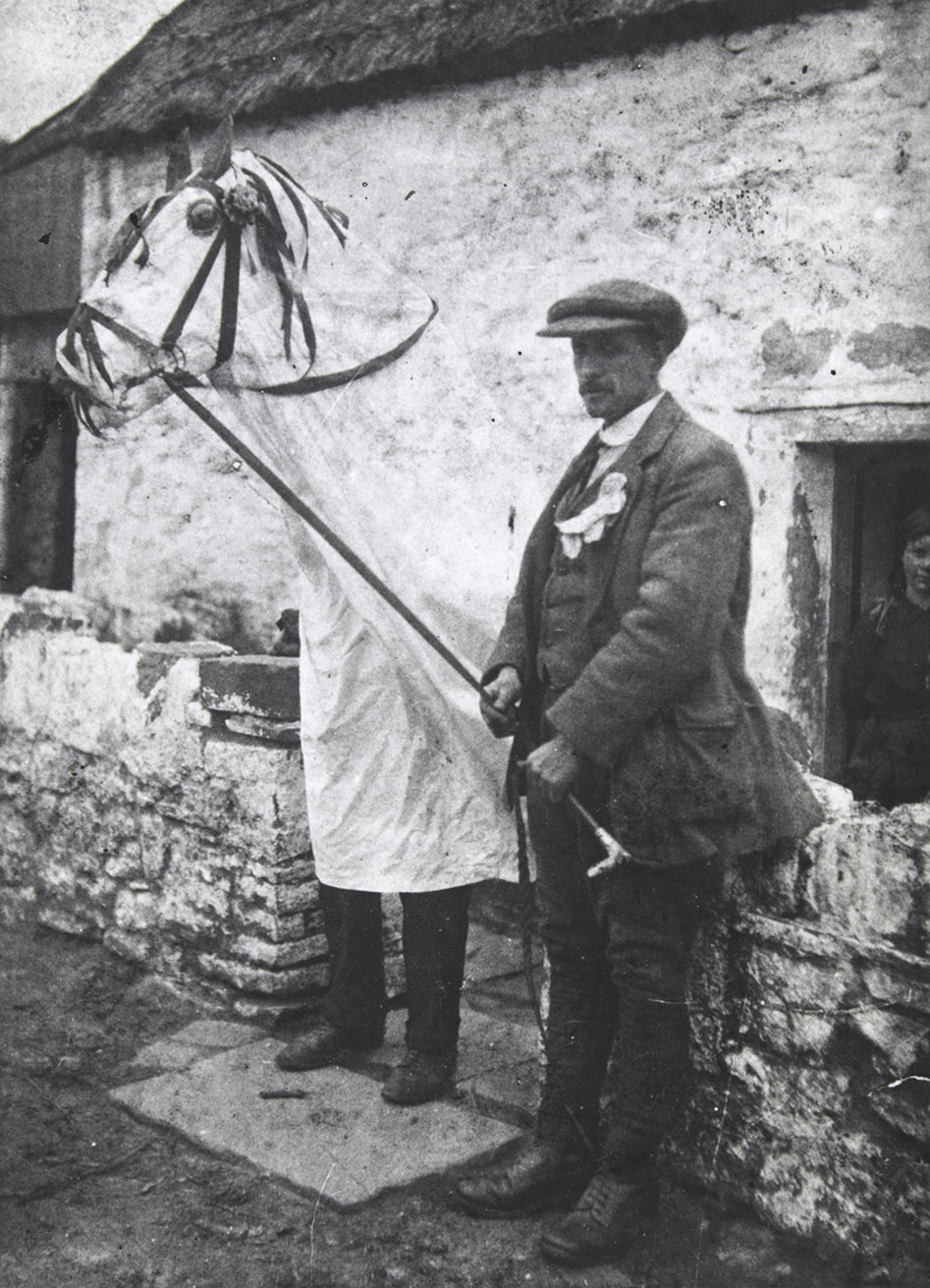 🇬🇧 United KingdomMari LwydY Fari Lwyd
A Welsh winter custom featuring a horse skull carried through villages for song and hospitality.Rite · Luck and prosperity · Wonder and entertainment Revived
🇬🇧 United KingdomMari LwydY Fari Lwyd
A Welsh winter custom featuring a horse skull carried through villages for song and hospitality.Rite · Luck and prosperity · Wonder and entertainment Revived