Druk
In its own language: འབྲུག
from Standard Tibetan འབྲུག (Druk), meaning thunder dragon
A mythical thunder dragon from Tibetan and Bhutanese tradition
The druk is a thunder dragon in Tibetan and Bhutanese mythology. It serves as the national symbol of Bhutan, appearing on its flag and in royal titles.
- The druk means thunder dragon in Standard Tibetan.
- It appears on the flag of Bhutan holding jewels.
- Tsangpa Gyare named his monastery after a storm he saw as an omen.
- Bhutan is called Druk Yul, the Land of the Thunder Dragon.
- The Grand Lama once wore a hat with thunder dragons on it.
What it is
The druk is a thunder dragon found in the mythology of Tibet and Bhutan. It holds a central place in Bhutanese culture as a national emblem. The creature appears on the national flag, clutching jewels that represent wealth. It also features in official titles, such as Druk Gyalpo for the kings. The country itself is known as Druk Yul, or Land of the Thunder Dragon.
Where it comes from
Traditional accounts link the druk to the Drukpa Lineage, a sect originating in Tibet. When Tsangpa Gyare began building Ralung Monastery, a violent storm occurred. He interpreted the thunder as the roar of a dragon. This omen led him to name the monastery Drug-Ralung. His followers became known as the Drugpa, or Those of the Thunder. The sect later established monasteries in what is now Bhutan.
Tools and materials
The druk is depicted holding jewels on the flag of Bhutan. These jewels symbolize wealth and prosperity. Historically, the Grand Lama of Bhutan wore a hat adorned with thunder dragons to signify the origins of the Drukpa sect.
Druk, drawn and placed
- Living
- Revived
- Fading
- Historical
- Legendary
- Performed
- Lineage
- Drukpa Lineage
What it is for
The druk serves as a symbol of power and authority. It represents the divine connection between the land and its spiritual leaders. The presence of the dragon signifies the protection and sovereignty of the kingdom.
Who does it
Scholars study the druk as a key figure in regional mythology. In the past, religious leaders like the Grand Lama used imagery of the dragon to denote their lineage. The symbol is maintained by the state rather than individual practitioners.
Peoples and places
The druk is primarily associated with Tibetan and Bhutanese peoples. In Bhutan, the symbol is deeply integrated into national identity. The term Druk Yul was used by both Tibetans and Bhutanese to describe the region after the spread of the Drukpa Lineage.
At a glance: who, where and when
What people believe
The belief centers on the thunder being the voice of the dragon. This natural phenomenon was seen as a sacred sign. The dragon embodies the spiritual strength of the Drukpa sect and the land it inhabits.
How scholars and sceptics see it
Historical records note the adoption of the druk by the Drukpa Lineage. The transition from a religious symbol to a national emblem is documented through political changes in Bhutan.
Compare and confuse
The druk is often compared to other Asian dragons, such as the Chinese or Japanese dragon. However, it is distinct in its specific association with thunder and the Drukpa lineage.
Law and persecution
The druk is protected as a national symbol. It is featured on the flag and in official government titles, reflecting its legal and cultural status in Bhutan.
Questions people ask about Druk
What does the word druk mean?
The word druk comes from Standard Tibetan and translates to thunder dragon.
Where is the druk found?
The druk is a mythological creature from Tibetan and Bhutanese traditions.
Why is the druk important to Bhutan?
It is the national symbol of Bhutan, appearing on the flag and in royal titles.
Good reading and sources
- Druk on WikipediaEncyclopedia
- More photos on Wikimedia CommonsPhotos and video
- Wikidata recordOpen data
The facts on this page come from the Wikipedia article "Druk", written by its contributors and used under the CC BY-SA 4.0 licence, and from its Wikidata record (CC0). EveryJaadu rewrote the text in its own words, with AI assistance, and compares every page with the article to make sure no passage is copied. It may be reused under the same CC BY-SA 4.0 licence with a link back.
It may contain mistakes. Names and customs differ from one community to the next, and some knowledge is closed to outsiders and left out here. This page describes belief and practice. It does not say that any of it works, it is not a how-to, and it is not medical advice. If something is wrong, tell us. Last refreshed 2026-10-06.
More from Bhutan
All the entries from Bhutan 🇮🇳 India and 5 moreShakta pithasशाक्त पीठ (Śākta Pīṭha)
Sacred shrines in Shaktism marking where parts of the goddess Sati fell to earth.Tradition · Speaking with spirits and the dead · Power and authority Living
🇮🇳 India and 5 moreShakta pithasशाक्त पीठ (Śākta Pīṭha)
Sacred shrines in Shaktism marking where parts of the goddess Sati fell to earth.Tradition · Speaking with spirits and the dead · Power and authority Living
 🇮🇳 India and 4 moreDzi beadགཟི། (gzi)
An agate amulet worn in the Himalayas for protection against the evil eye.Charm · Protection · Speaking with spirits and the dead Living
🇮🇳 India and 4 moreDzi beadགཟི། (gzi)
An agate amulet worn in the Himalayas for protection against the evil eye.Charm · Protection · Speaking with spirits and the dead Living
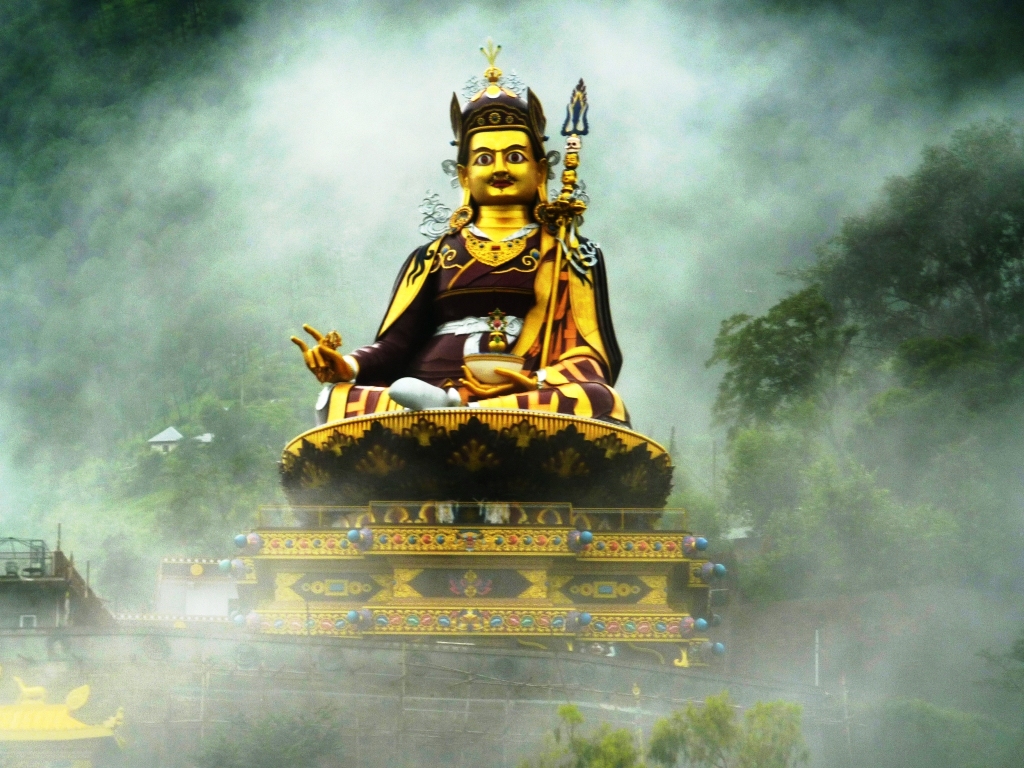 🇮🇳 India and 2 morePadmasambhavaཔདྨ་འབྱུང་གནས།
A tantric master credited with establishing Buddhism in Tibet and founding the Nyingma school.Figure · Protection · Power and authority Living
🇮🇳 India and 2 morePadmasambhavaཔདྨ་འབྱུང་གནས།
A tantric master credited with establishing Buddhism in Tibet and founding the Nyingma school.Figure · Protection · Power and authority Living
 🇮🇳 India and 4 moreBonབོན།
The indigenous religion of Tibet and the Himalayas, preserving ancient rituals alongside Buddhist teachings.Tradition · Protection · Speaking with spirits and the dead Living
🇮🇳 India and 4 moreBonབོན།
The indigenous religion of Tibet and the Himalayas, preserving ancient rituals alongside Buddhist teachings.Tradition · Protection · Speaking with spirits and the dead Living
Related elsewhere
All being 🇮🇳 India and 5 moreAstrology
A divinatory practice that reads human fate through the positions of celestial bodies.Belief · Seeing and foretelling · Luck and prosperity Living
🇮🇳 India and 5 moreAstrology
A divinatory practice that reads human fate through the positions of celestial bodies.Belief · Seeing and foretelling · Luck and prosperity Living
 🇬🇧 United Kingdom and 2 moreKing ArthurBrenin Arthur
A legendary British king and folk hero of medieval literature and Welsh mythologyFigure · Power and authority · Wonder and entertainment Legendary
🇬🇧 United Kingdom and 2 moreKing ArthurBrenin Arthur
A legendary British king and folk hero of medieval literature and Welsh mythologyFigure · Power and authority · Wonder and entertainment Legendary
 🇫🇷 FranceHoly GrailSaint Graal
A cup or stone from Arthurian tales that grants healing and eternal lifeFigure · Healing · Luck and prosperity Legendary
🇫🇷 FranceHoly GrailSaint Graal
A cup or stone from Arthurian tales that grants healing and eternal lifeFigure · Healing · Luck and prosperity Legendary
 🇨🇳 China and 3 moreChinese dragon龍
A legendary water deity and imperial symbol in East Asian cultureBeing · Protection · Luck and prosperity Historical
🇨🇳 China and 3 moreChinese dragon龍
A legendary water deity and imperial symbol in East Asian cultureBeing · Protection · Luck and prosperity Historical