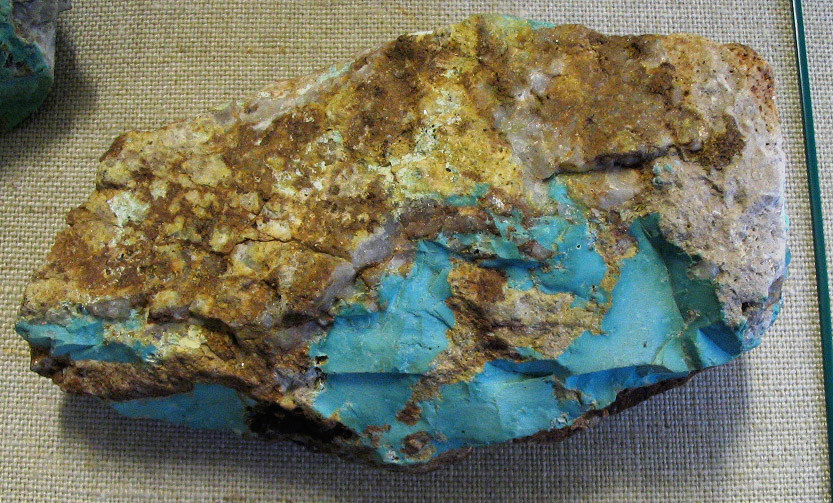
Turquoise
from Old French turquois, meaning Turkish
An opaque blue-green gemstone prized for its color since ancient times
Turquoise is an opaque mineral valued as a gemstone for thousands of years. It forms in arid regions where copper deposits interact with the surface environment.
- Hydrous phosphate of copper and aluminium
- Name derives from Old French for Turkish
- Mined in Iran for over two thousand years
- Used by Egyptians since the First Dynasty
- Devalued by treatments and imitations
What it is
Turquoise is an opaque mineral that ranges from sky blue to green. It is a hydrous phosphate of copper and aluminium. The stone has been used as a gem for millennia because of its unique hue. Finer grades are rare and highly valued.
Where it comes from
The name comes from Old French for Turkish. This is because the stone reached Europe through Ottoman traders. The mines were actually in Persia. Ancient Greeks called it callais. Aztecs knew it as chalchihuitl. Scientific names like kalaite fell out of use by the nineteenth century.
How it is done
Turquoise forms when rainwater percolates through copper-rich rock. The water dissolves copper sulfides and reacts with aluminum minerals. This process happens at low temperatures in arid climates. Deposits fill veins in volcanic rock or sediment.
Tools and materials
The mineral contains copper which gives it blue color. Iron impurities create green shades. It has a waxy luster and a hardness of five to six on the Mohs scale. It is often found in massive or nodular forms rather than crystals.
Turquoise, drawn and placed
- Living
- Revived
- Fading
- Historical
- Legendary
- Performed
- Lineage
- phosphate mineral group
What it is for
People have prized turquoise for its beauty and rarity. In Iran, the intense blue symbolized heaven on earth. Native Americans mined it for tools and ornaments. Egyptians used it in jewelry and amulets. Its value lies in its color and durability.
Who does it
Mining is often small-scale and seasonal. Workers use hand tools in remote areas. Historically, royal courts squandered accumulated dust. Modern operations face high costs and regulations. Some mines have closed due to economic shifts.
Peoples and places
Persians mined near Nishapur for two thousand years. Egyptians worked the Sinai Peninsula since the First Dynasty. Native Americans in the Southwest used stone tools. The Aztecs valued it deeply. Different regions produce stones with distinct colors and qualities.
At a glance: who, where and when
Who does it
Belief worlds


What people believe
The stone's color was linked to spiritual concepts. In Iranian architecture, domes were covered in turquoise to represent the sky. Egyptians associated it with deities like Hathor. The stone's stability and brightness made it a powerful symbol.
When it is done
Mining often follows seasonal patterns due to weather risks. Flash floods threaten miners in the rainy season. Collapse of mine walls is a constant danger. Operations pause during harsh conditions.
How scholars and sceptics see it
Mineralogists study its triclinic crystal structure. X-ray diffraction reveals its composition. Researchers note its variability in hardness and porosity. The relationship between copper content and color is well documented.
Cautions and what is closed
Treatments, imitations, and synthetics have devalued the market. Low-grade stone is friable and unsuitable for jewelry. Mining poses physical risks like flooding and collapse. Fraudulent goods are common.
Compare and confuse
Chrysocolla is a similar mineral but softer. Odontolite is fossil bone altered by phosphate minerals. Turquoise is distinguished by its greater hardness and specific chemical formula.
Law and persecution
Federal regulations affect modern mining operations. Some famous mines have ceased production due to costs. Historical sites are depleted. Legal frameworks govern current extraction efforts.
Today
Arizona is a major producer by value. Sleeping Beauty Mine closed in 2012. Kingman Mine still operates. Bedouin peoples quarry Sinai deposits sporadically. The market includes treated and synthetic stones.
Questions people ask about Turquoise
What is turquoise?
It is an opaque blue-green mineral. It is a hydrous phosphate of copper and aluminium. The stone has been valued as a gem for millennia.
Where does the name come from?
The word comes from Old French turquois. It means Turkish because the stone reached Europe via Ottoman traders from Persian mines.
Why is Iranian turquoise special?
Persian turquoise from Nishapur sets the quality standard. Its robin egg blue color is highly prized. It has been mined there for two thousand years.
How is turquoise formed?
Rainwater percolates through copper-rich rock. It dissolves copper sulfides and reacts with aluminum minerals. This creates deposits in arid climates.
Is turquoise always natural?
No. Treatments, imitations, and synthetics are common. These have devalued the market for natural stones. Buyers must be cautious.
Good reading and sources
- Encyclopaedia BritannicaArticle
- How turquoise became synonymous with New MexicoNational Geographic, Article
- Turquoise on WikipediaEncyclopedia
- More photos on Wikimedia CommonsPhotos and video
- Wikidata recordOpen data
The facts on this page come from the Wikipedia article "Turquoise", written by its contributors and used under the CC BY-SA 4.0 licence, and from its Wikidata record (CC0). EveryJaadu rewrote the text in its own words, with AI assistance, and compares every page with the article to make sure no passage is copied. It may be reused under the same CC BY-SA 4.0 licence with a link back.
It may contain mistakes. Names and customs differ from one community to the next, and some knowledge is closed to outsiders and left out here. This page describes belief and practice. It does not say that any of it works, it is not a how-to, and it is not medical advice. If something is wrong, tell us. Last refreshed 2026-10-05.
More from Iran
All the entries from Iran 🇲🇦 Morocco and 5 moreWild rueاسپند
A desert plant whose seeds hold psychoactive alkaloids and serve as incense in the Middle East.Substance · Protection · Speaking with spirits and the dead Living
🇮🇷 Iran and 2 moreHaoma
A divine plant and spirit in Zoroastrianism, linked to healing and ancient rituals.Substance · Healing · Speaking with spirits and the dead Living
🇲🇦 Morocco and 5 moreWild rueاسپند
A desert plant whose seeds hold psychoactive alkaloids and serve as incense in the Middle East.Substance · Protection · Speaking with spirits and the dead Living
🇮🇷 Iran and 2 moreHaoma
A divine plant and spirit in Zoroastrianism, linked to healing and ancient rituals.Substance · Healing · Speaking with spirits and the dead Living
 🇮🇷 Iran and 5 moreMagi
Priests of Zoroastrianism and the figures who inspired the word for magicTradition · Seeing and foretelling · Power and authority Living
🇮🇷 Iran and 5 moreMagi
Priests of Zoroastrianism and the figures who inspired the word for magicTradition · Seeing and foretelling · Power and authority Living
 🇮🇷 Iran and 1 moreJinnجِنّ
Supernatural beings in Islamic and pre-Islamic Arabian belief, created from smokeless fire.Being · Protection · Cursing and harm Living
🇮🇷 Iran and 1 moreJinnجِنّ
Supernatural beings in Islamic and pre-Islamic Arabian belief, created from smokeless fire.Being · Protection · Cursing and harm Living
Related elsewhere
All substance 🇨🇳 China and 3 moreChinese dragon龍
A legendary water deity and imperial symbol in East Asian cultureBeing · Protection · Luck and prosperity Historical
🇨🇳 China and 3 moreChinese dragon龍
A legendary water deity and imperial symbol in East Asian cultureBeing · Protection · Luck and prosperity Historical
 🇨🇳 China and 2 moreEight Immortals八仙
Eight legendary Taoist figures of China, each with a power and a vesselFigure · Protection · Healing Living
🇨🇳 China and 2 moreEight Immortals八仙
Eight legendary Taoist figures of China, each with a power and a vesselFigure · Protection · Healing Living
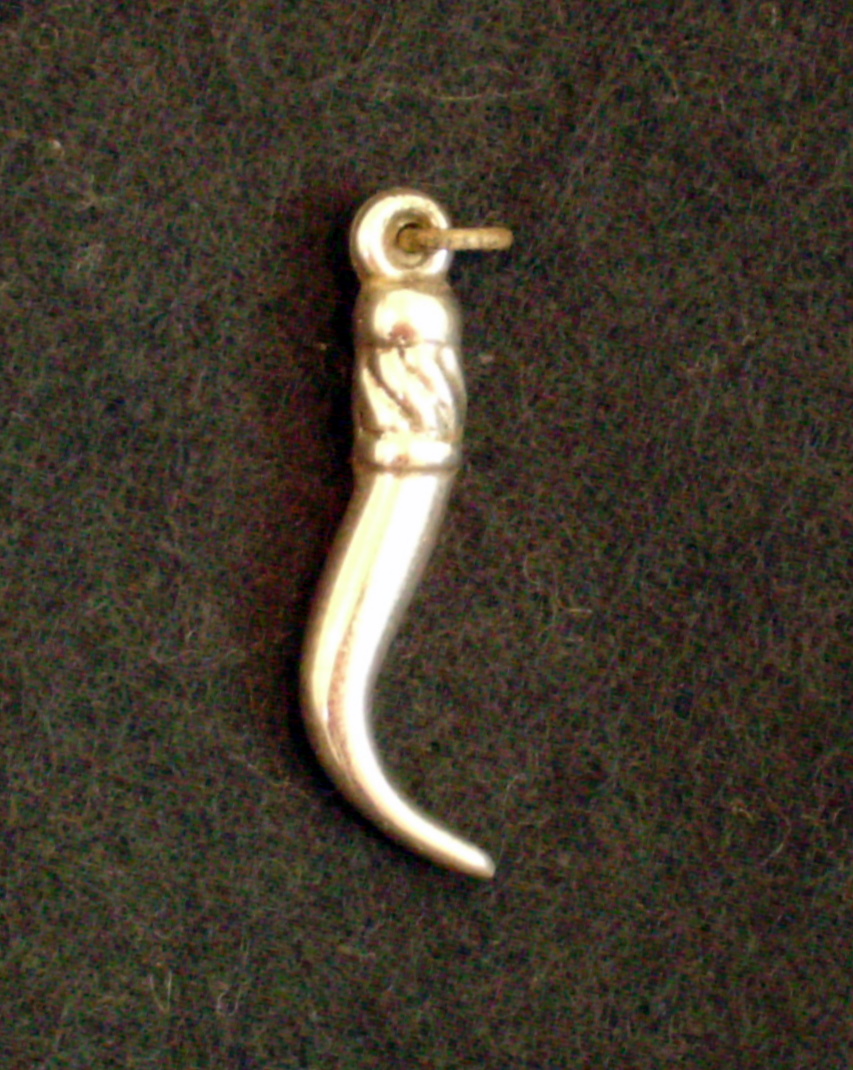 🇮🇹 ItalyCornicello
A twisted horn charm worn in Italy to ward off the evil eye and invite luck.Charm · Protection · Luck and prosperity Living
🇮🇹 ItalyCornicello
A twisted horn charm worn in Italy to ward off the evil eye and invite luck.Charm · Protection · Luck and prosperity Living
 🇫🇷 France and 5 moreYule log
A large wooden log burned in the hearth during winter festivals across Europe and North America.Tradition · Protection · Luck and prosperity Living
🇫🇷 France and 5 moreYule log
A large wooden log burned in the hearth during winter festivals across Europe and North America.Tradition · Protection · Luck and prosperity Living