![This teapot is an example of Yixing [I-hsing] ware and is glazed with a blue-brown transmutation. Peaches of immortality, which ripen only once in a thousand years, grow in the garden of the queen mother of the West, acc](https://thumb.wikimedia.org/wikipedia/commons/thumb/a/a1/Chinese_-_Teapot_in_the_Form_of_Two_Peaches_-_Walters_491045.jpg/1280px-Chinese_-_Teapot_in_the_Form_of_Two_Peaches_-_Walters_491045.jpg)
Peaches of Immortality
In its own language: 仙桃
Legendary Chinese fruits said to grant eternal life to deities and mortals
In Chinese myth, the Peaches of Immortality grow in heavenly orchards and grant eternal youth or long life to whoever tastes them. They are associated with the Queen Mother of the West and appear widely in art and folklore.
- In Chinese myth, divine peaches ripen over thousands of years to grant deities eternal life.
- The Queen Mother of the West hosts celestial banquets where immortals feast on the sacred fruits.
- In Journey to the West, Sun Wukong secretly eats the heavenly peaches to gain supernatural power.
- Pastries shaped like peaches are traditionally prepared for birthdays in China to wish for a long life.
What it is
The Peaches of Immortality are legendary fruits in Chinese mythology that confer everlasting life and youth upon those who eat them. According to tradition, these sacred fruits grow in heavenly orchards tended by divine figures. Immortals and deities consume them during grand feasts to sustain their eternal existence. In broader Chinese culture, the fruit serves as a powerful emblem of long life, health, and good fortune. Images of the peaches regularly appear across traditional paintings, statues, and folklore, often alongside cranes, deer, and revered Daoist immortals who carry them as tokens of endless vitality.
Where it comes from
Tales featuring these divine peaches appear in classical Chinese literature and imperial records. Early narrative collections, such as the chronicles detailing Emperor Wu of the Han dynasty, describe divine visits from the Queen Mother of the West. In these accounts, the goddess presents the emperor with rare peaches from her orchards. When the ruler expresses interest in planting the remaining seeds, the goddess explains that the heavenly trees take thousands of years to produce fruit. Other legendary retellings describe her offering him seven such fruits, emphasizing their extreme rarity and supernatural growing cycles.
Peaches of Immortality, drawn and placed
- Living
- Revived
- Fading
- Historical
- Legendary
- Performed
- Lineage
- Chinese mythology and Taoist lore
At a glance: who, where and when
Peoples
Belief worlds

What people believe
Mythology holds that the Jade Emperor and his consort, the Queen Mother of the West, sustain the pantheon through extravagant celestial banquets. In these stories, the orchard trees require thousands of years just to sprout foliage and ripen fruit.
Today
The symbolism of the longevity peach remains widespread in modern Chinese celebrations. Because of its enduring ties to health and long life, stylized peach imagery or peach-shaped buns regularly adorn festive cakes and baked goods served during birthdays. Sculptures, hanging scrolls, and folk art continue to depict figures such as the Old Man of the South Pole and the Eight Immortals bearing the fruit, preserving the motif across contemporary decorative culture.
Questions people ask about Peaches of Immortality
What are the Peaches of Immortality?
They are legendary fruits from Chinese mythology that grant long life, youth, and immortality to whoever consumes them. They grow in divine orchards and are shared among heavenly deities during grand banquets.
Where do the Peaches of Immortality come from?
They originate in Chinese folklore and Daoist tradition, most notably associated with the orchard of the Queen Mother of the West and tales of the Han dynasty imperial court.
What role do the peaches play in Journey to the West?
The mischievous monkey hero Sun Wukong is assigned to guard the heavenly orchard. He eats the magical fruits himself, gaining ageless life and magical strength before disrupting the heavenly feast.
How are these mythical peaches remembered today?
The peach remains an enduring Chinese emblem of longevity. People frequently use peach designs and special peach-shaped pastries during birthday festivities to symbolize wishes for good health and an extended life.
Good reading and sources
- Peaches of Immortality on WikipediaEncyclopedia
- More photos on Wikimedia CommonsPhotos and video
- Wikidata recordOpen data
The facts on this page come from the Wikipedia article "Peaches of Immortality", written by its contributors and used under the CC BY-SA 4.0 licence, and from its Wikidata record (CC0). EveryJaadu rewrote the text in its own words, with AI assistance, and compares every page with the article to make sure no passage is copied. It may be reused under the same CC BY-SA 4.0 licence with a link back.
It may contain mistakes. Names and customs differ from one community to the next, and some knowledge is closed to outsiders and left out here. This page describes belief and practice. It does not say that any of it works, it is not a how-to, and it is not medical advice. If something is wrong, tell us. Last refreshed 2026-10-06.
More from China
All the entries from China 🇨🇳 China and 1 moreBagua八卦
A set of eight trigram symbols from China used in divination, cosmology, and feng shui.Tradition · Seeing and foretelling · Protection Living
🇨🇳 China and 1 moreBagua八卦
A set of eight trigram symbols from China used in divination, cosmology, and feng shui.Tradition · Seeing and foretelling · Protection Living
 🇨🇳 China and 1 moreAncestor veneration in China中國傳統宗法性宗教
Rites for dead kin who are thought to watch over the familyTradition · Protection · Speaking with spirits and the dead Living
🇨🇳 China and 1 moreAncestor veneration in China中國傳統宗法性宗教
Rites for dead kin who are thought to watch over the familyTradition · Protection · Speaking with spirits and the dead Living
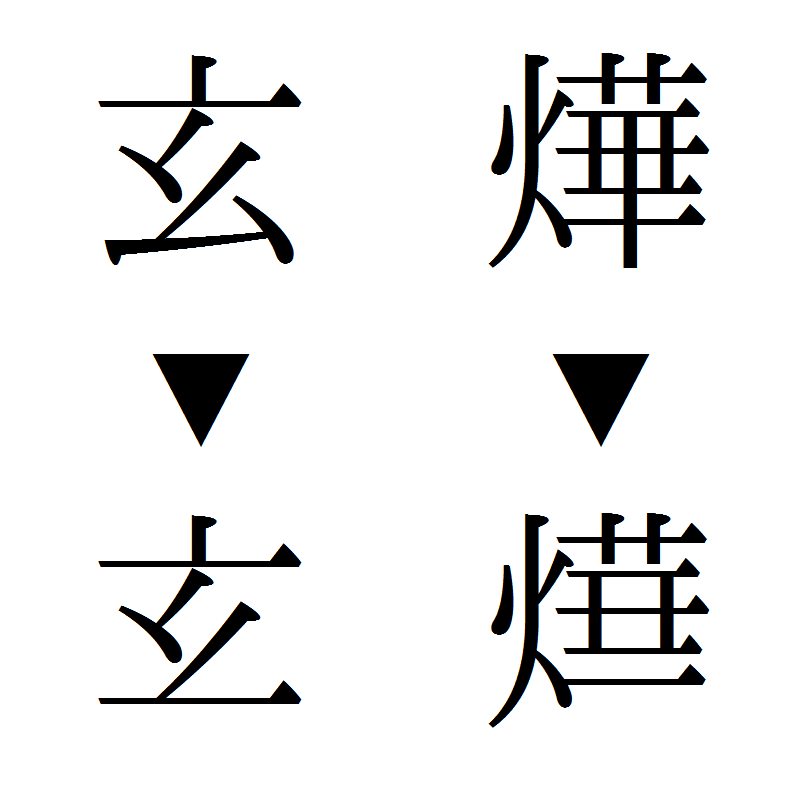 🇨🇳 China and 2 moreNaming taboo避諱
A cultural rule against speaking or writing the names of rulers and ancestors in East AsiaBelief · Protection Historical
🇨🇳 China and 2 moreNaming taboo避諱
A cultural rule against speaking or writing the names of rulers and ancestors in East AsiaBelief · Protection Historical
Related elsewhere
All substance 🇮🇳 India and 5 moreAstrology
A divinatory practice that reads human fate through the positions of celestial bodies.Belief · Seeing and foretelling · Luck and prosperity Living
🇮🇳 India and 5 moreAstrology
A divinatory practice that reads human fate through the positions of celestial bodies.Belief · Seeing and foretelling · Luck and prosperity Living
 🇷🇸 Serbia and 5 moreVampire
An undead creature from folklore that feeds on the blood or life force of the livingBeing · Cursing and harm · Luck and prosperity Legendary
🇷🇸 Serbia and 5 moreVampire
An undead creature from folklore that feeds on the blood or life force of the livingBeing · Cursing and harm · Luck and prosperity Legendary
 🇪🇬 EgyptCurse
A spoken wish for misfortune to befall a person or placeBelief · Cursing and harm · Luck and prosperity Historical
🇪🇬 EgyptCurse
A spoken wish for misfortune to befall a person or placeBelief · Cursing and harm · Luck and prosperity Historical
 🇧🇪 Belgium and 2 moreHorseshoe
A metal shoe for a horse's hoof and a talisman of good fortuneCharm · Protection · Luck and prosperity Living
🇧🇪 Belgium and 2 moreHorseshoe
A metal shoe for a horse's hoof and a talisman of good fortuneCharm · Protection · Luck and prosperity Living