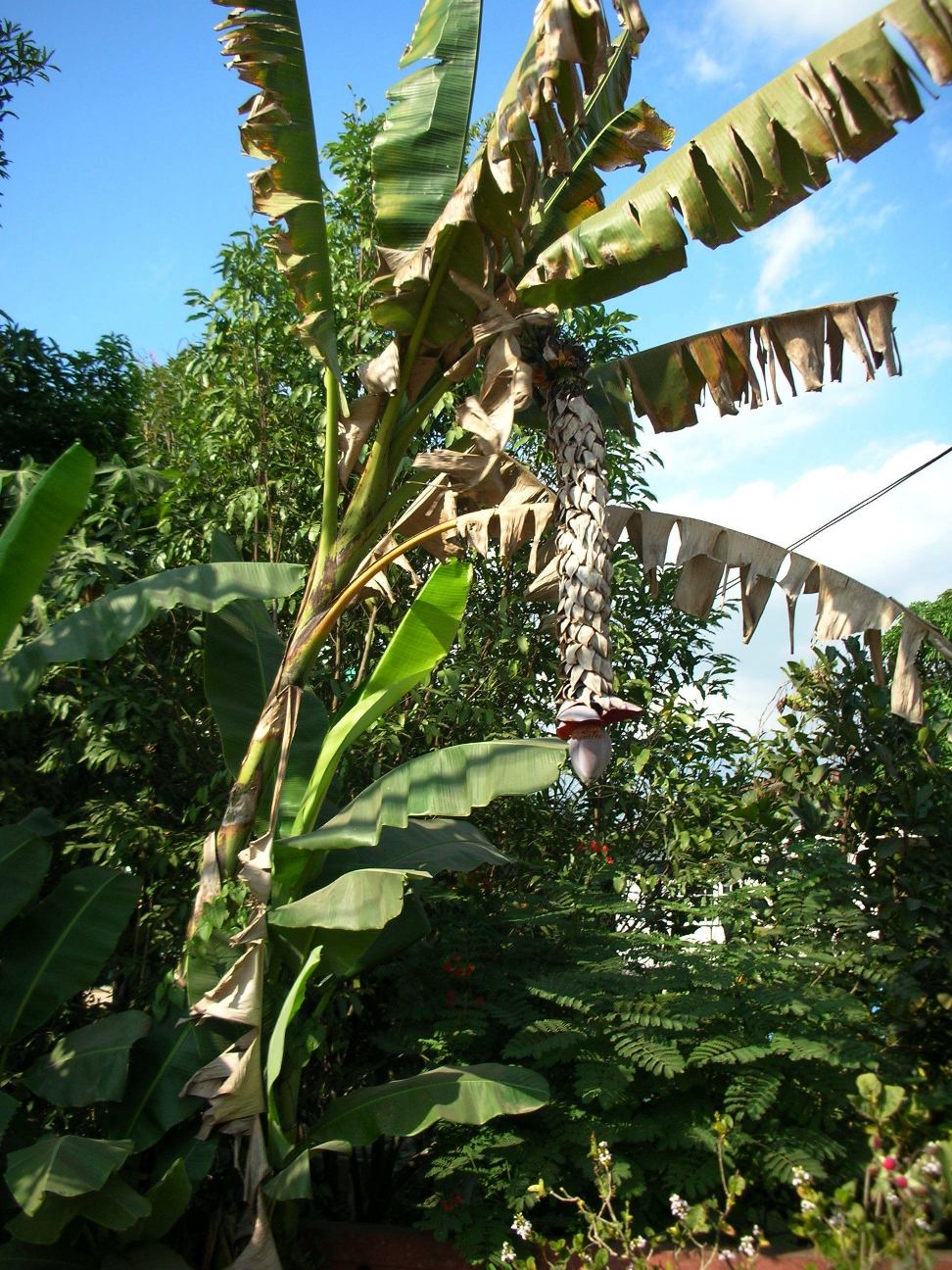
Nang Tani
In its own language: นางตานี
from Thai nang (lady) and tani (the tree name)
A female spirit said to inhabit wild banana trees in Southeast Asian folklore.
Nang Tani is a ghost from Thai tradition who appears as a young woman among wild banana clumps. Similar spirits exist in Lao and Cambodian lore, where they are viewed as tree fairies or tutelary deities.
- Nang Tani haunts wild banana trees in Thai folklore.
- She appears as a young woman with green skin and red lips.
- Offerings of sweets and cloth are tied to her trees.
- Similar spirits exist in Laos and Cambodia.
- She is featured in Thai films and comic books.
What it is
Nang Tani is a female spirit found in Thai folklore, often described as a beautiful young woman with a greenish complexion. She is believed to haunt clumps of wild banana trees, known locally as Kluai Tani. Her appearance includes black, untied hair and red lips, while her feet hover slightly above the ground. This figure belongs to a broader category of tree-related fairies called Nang Mai, or 'Lady of the Wood.' Similar entities are recognized in neighboring Laos and Cambodia, reflecting a shared regional belief in nature spirits that inhabit specific plants.
Where it comes from
The spirit originates from the oral traditions of Thailand, where she is linked to the Musa acuminata species. The name derives from the local term for the wild banana tree. While legends vary, she is generally considered a benevolent entity rather than a malevolent one. Some stories suggest she may harm men who have wronged women, but she is more commonly seen as gentle. Her origins are tied to the natural environment, specifically the outskirts of villages where these wild trees grow near cultivated fields.
How it is done
People show respect to Nang Tani by making offerings at the base of the banana trees she inhabits. These offerings typically include sweets, incense sticks, and flowers. It is also common practice to tie lengths of colored satin or silk cloth around the tree trunk. Cutting down a tree associated with her is considered a bad omen. People generally avoid planting these wild bananas near their homes due to the spirit's presence, preferring them to remain on the village edges or roadside.
Tools and materials
The primary tool for interacting with Nang Tani is the wild banana tree itself, which serves as her physical anchor. Offerings consist of simple items like sweets and incense. Colored satin cloth is used as a binding or respectful gesture when tied to the trunk. Amulets featuring her image are also popular objects, worn for protection or luck. These amulets come in various shapes and sizes, serving as portable representations of the spirit.
Nang Tani, drawn and placed
- Living
- Revived
- Fading
- Historical
- Legendary
- Performed
- Lineage
- Nang Mai tree spirits
- Timing
- full moon nights
What it is for
The practice of honoring Nang Tani is intended to maintain harmony with the local environment and its spirits. Offerings are made to ensure good fortune and to avoid bad omens associated with disturbing her habitat. Some individuals wear amulets of Nang Tani for protection or to attract luck. The spirit is also said to be benevolent enough to give food to passing Buddhist monks, indicating a role in supporting religious figures within the community.
Who does it
The practices surrounding Nang Tani are carried out by ordinary households and villagers living near wild banana clumps. There is no specialized priesthood required; any resident can make an offering or tie a cloth to the tree. The belief is widespread across rural areas in Thailand, Laos, and Cambodia. Women and men alike participate in these customs, though the spirit is specifically female. The knowledge is passed down through family and community tradition rather than formal schooling.
Peoples and places
Nang Tani is primarily a Thai figure, but similar spirits exist in Lao and Cambodian folklore. In Thailand, she is deeply embedded in popular culture, appearing in films, comics, and advertisements. The Lao and Cambodian versions share traits with the Thai Nang Mai group. The Japanese Bashōnosei is a distant relative, appearing as a face in banana leaves. This distribution shows how tree spirits are adapted across different Southeast Asian cultures with local names and slight variations in legend.
At a glance: who, where and when
Who does it
Belief worlds
Occasions
What people believe
The worldview behind Nang Tani involves a belief in animism, where natural objects like trees house spirits. These spirits are part of the everyday landscape and require respect. The spirit is not worshipped as a god but acknowledged as a powerful presence. Her connection to the wild banana tree, which has inedible fruit but useful leaves, ties her to both the practical and spiritual aspects of rural life. The hovering feet and green skin symbolize her detachment from human norms and her integration into the plant world.
When it is done
Nang Tani is most visible on full moon nights, according to legend. However, the offerings and tying of cloth are daily or ongoing practices rather than tied to specific festivals. The spirit is present whenever people encounter wild banana trees, particularly those on village outskirts. There are no specific holy days dedicated solely to her, but her presence is felt during daily interactions with the environment and through the continuous care of the trees.
Questions people ask about Nang Tani
What is Nang Tani?
Nang Tani is a female spirit from Thai folklore who lives in wild banana trees. She is depicted as a young woman with green skin and is part of the Nang Mai group of tree fairies found in Southeast Asia.
Where does Nang Tani live?
She inhabits clumps of wild banana trees, known as Kluai Tani, typically found on village outskirts or road edges. These trees are distinct from cultivated varieties and have inedible fruit.
How do people honor Nang Tani?
Villagers make offerings of sweets, incense, and flowers at the tree base. They also tie colored satin cloth around the trunk to show respect and avoid bad omens associated with cutting the tree.
Is Nang Tani dangerous?
She is mostly considered benevolent and gentle. While some legends say she may harm men who wrong women, she is generally seen as a protective spirit who even feeds Buddhist monks.
Good reading and sources
The facts on this page come from the Wikipedia article "Nang Tani", written by its contributors and used under the CC BY-SA 4.0 licence, and from its Wikidata record (CC0). EveryJaadu rewrote the text in its own words, with AI assistance, and compares every page with the article to make sure no passage is copied. It may be reused under the same CC BY-SA 4.0 licence with a link back.
It may contain mistakes. Names and customs differ from one community to the next, and some knowledge is closed to outsiders and left out here. This page describes belief and practice. It does not say that any of it works, it is not a how-to, and it is not medical advice. If something is wrong, tell us. Last refreshed 2026-10-06.
More from Thailand
All the entries from Thailand 🇲🇾 Malaysia and 5 morePenanggalan
A floating head with trailing organs from Malay folklore, said to hunt pregnant women and newborns.Being · Cursing and harm Legendary
🇮🇩 Indonesia and 3 moreToyoltuyul
An undead infant spirit in Southeast Asian folklore, invoked for theft and fortune.Being · Luck and prosperity · Cursing and harm Living
🇲🇾 Malaysia and 5 morePenanggalan
A floating head with trailing organs from Malay folklore, said to hunt pregnant women and newborns.Being · Cursing and harm Legendary
🇮🇩 Indonesia and 3 moreToyoltuyul
An undead infant spirit in Southeast Asian folklore, invoked for theft and fortune.Being · Luck and prosperity · Cursing and harm Living
 🇹🇭 Thailand and 5 moreKrasueกระสือ
A floating head with trailing organs from Southeast Asian folkloreBeing · Cursing and harm Living
🇹🇭 Thailand and 5 moreKrasueกระสือ
A floating head with trailing organs from Southeast Asian folkloreBeing · Cursing and harm Living
 🇲🇲 Myanmar and 5 moreChintheခြင်္သေ့
A stylized lion statue that guards Buddhist temples in Myanmar and across Asia.Being · Protection Living
🇲🇲 Myanmar and 5 moreChintheခြင်္သေ့
A stylized lion statue that guards Buddhist temples in Myanmar and across Asia.Being · Protection Living
Related elsewhere
All being 🇧🇪 Belgium and 2 moreHorseshoe
A metal shoe for a horse's hoof and a talisman of good fortuneCharm · Protection · Luck and prosperity Living
🇧🇪 Belgium and 2 moreHorseshoe
A metal shoe for a horse's hoof and a talisman of good fortuneCharm · Protection · Luck and prosperity Living
 🇪🇬 Egypt and 3 moreAmulet
A portable object worn or carried to ward off harm and invite fortuneCharm · Protection · Luck and prosperity Living
🇪🇬 Egypt and 3 moreAmulet
A portable object worn or carried to ward off harm and invite fortuneCharm · Protection · Luck and prosperity Living
 🇨🇳 China and 3 moreChinese dragon龍
A legendary water deity and imperial symbol in East Asian cultureBeing · Protection · Luck and prosperity Historical
🇨🇳 China and 4 moreKitchen God灶君
The Chinese hearth deity who reports domestic conduct to the Jade EmperorBeing · Protection · Luck and prosperity Living
🇨🇳 China and 3 moreChinese dragon龍
A legendary water deity and imperial symbol in East Asian cultureBeing · Protection · Luck and prosperity Historical
🇨🇳 China and 4 moreKitchen God灶君
The Chinese hearth deity who reports domestic conduct to the Jade EmperorBeing · Protection · Luck and prosperity Living