
Maasai religion is a traditional system centered on Enkai, the supreme creator who controls rain and drought. Practiced by the Maasai in Kenya and Tanzania, it links community life, cattle herding, and nature to divine will through rituals led by Laibon priests.
- Enkai is the androgynous creator god of the Maasai
- Laiboni serve as priests, diviners, and healers
- Cattle are sacred gifts central to rituals and wealth
- Ol Doinyo Lengai is the sacred mountain of God
- Dead bodies are left exposed to avoid harming the land
What it is
Maasai religion forms the spiritual core of the Maasai people, a semi-nomadic group living in northern Tanzania and southern Kenya. The faith centers on Enkai, also known as Ngai or Engai, viewed as the sole creator of the sky, earth, animals, and humans. This deity is seen as androgynous, holding both male and female traits. Beliefs are deeply tied to the natural world, with weather patterns like rain or drought interpreted as direct messages from the divine. The religion guides daily conduct, community bonds, and relationships with livestock, which are considered sacred gifts. It remains a living practice for many, though some individuals now blend these traditions with Christianity or Islam.
Where it comes from
The origins of Maasai religion are rooted in the ancestral traditions of the Maasai people. Instead, the belief system evolved alongside their semi-nomadic lifestyle across the East African region. The concept of Enkai as the supreme being appears to be an ancient feature of their cultural identity. Stories about the dual nature of the god, such as the tale of the famine where Black and Red Engai disagreed over rain, serve to explain natural phenomena and moral lessons. These narratives have been passed down through generations, maintaining continuity with the past while adapting to contemporary changes.
How it is done
Rituals are overseen by Laiboni, who act as intermediaries between the people and Enkai. These high priests and diviners lead ceremonies that may include sacrifices and libations. Healing practices combine spiritual guidance with knowledge of local medicinal plants. Life cycle events mark key transitions: marriages involve blessings and the exchange of cattle; births are welcomed with naming ceremonies; and deaths are handled by leaving bodies exposed rather than burying them, to avoid harming the land. Women play a central role in maintaining household rituals and teaching younger generations about spiritual symbols and values through crafts like beadwork.
Tools and materials
Cattle are the most significant material element, serving as food, shelter materials, and currency for social alliances. They are essential in marriage negotiations and blessings. Medicinal plants are used by healers for physical and spiritual recovery. Beadwork created by women conveys detailed information about age, marital status, and clan affiliation. The mountain Ol Doinyo Lengai, meaning 'Mountain of God,' serves as a sacred geographical marker associated with the divine presence.
Maasai religion, drawn and placed
- Living
- Revived
- Fading
- Historical
- Legendary
- Performed
- Lineage
- Maasai ethnic tradition
- Timing
- life stages and weather events
What it is for
The religion aims to maintain harmony between the community, the environment, and the divine. Enkai is believed to control fertility, rainfall, and hardship. Rituals seek to secure protection, health, and prosperity. Marriage rituals strengthen family ties and ensure lineage continuation. Healing practices address both bodily ailments and spiritual imbalance. The exposure of dead bodies reflects a belief that burial could damage the earth, emphasizing respect for the land over concern for an afterlife. Legacy and moral impact within the living community are prioritized.
Who does it
Laiboni, or Laibon, are the primary religious specialists. They serve as prophets, diviners, and healers, bridging the gap between the human and divine realms. Their training involves deep knowledge of spiritual matters and herbal medicine. Men typically hold this role, though women manage domestic spiritual education. Elders bless marriages, ensuring they align with divine wishes. Warriors, known as Moran, protect the herds, which are central to religious life. The community relies on these figures for guidance during crises, celebrations, and daily decisions.
Peoples and places
The Maasai people inhabit parts of Kenya and Tanzania. Their religion is specific to this ethnic group, though neighboring communities may share similar concepts of a creator god. Within Maasai society, the belief system unifies diverse clans under a common cosmology. The duality of Enkai, Black Engai for rain and blessing, Red Engai for drought and lightning, reflects the environmental realities of the region. While some Maasai have adopted other religions, many continue to practice traditional rites, often blending them with external faiths. The preservation of language, cattle herding, and ritual keeps the tradition alive.
At a glance: who, where and when
Peoples
Belief worlds
What people believe
Central to Maasai spirituality is Enkai, the singular creator who embodies both masculine and feminine principles. Enkai is not distant but actively involved in human affairs, sending rain or drought as signs of approval or displeasure. The mountain Ol Doinyo Lengai is regarded as the primordial dwelling of the deity. The universe is structured around a balance between humanity, nature, and the divine. Moral behavior is expected to maintain this balance. The afterlife is not a focus; instead, a person’s value lies in their contribution to the community and their legacy. Spirits or ancestors are not prominently featured in the provided texts, with emphasis placed on the living relationship with Enkai.
When it is done
Rituals are tied to life events rather than fixed annual festivals. Marriages occur after men complete their warrior stage. Births are marked by naming ceremonies. Deaths trigger immediate disposal rituals. Weather events like storms or droughts are interpreted as divine responses, prompting communal reflection or prayer.
How scholars and sceptics see it
Anthropologists study Maasai religion as a complex system linking ecology, social structure, and spirituality. Researchers note how cattle herding shapes religious values and community organization. Scholars analyze the role of Laiboni as both political and spiritual leaders. Oral literature, including myths and stories, is examined to understand cosmological views. Some works explore how misfortune is interpreted within this framework. The adaptation of traditional beliefs alongside Christianity and Islam is also a subject of academic interest, highlighting resilience and syncretism.
Cautions and what is closed
Land loss and restricted grazing areas threaten the cattle-based lifestyle that underpins the religion. Modern pressures challenge traditional practices. However, the shift toward other religions may lead to a decline in traditional knowledge transmission. Health risks are mitigated by traditional healers using plant-based remedies, though modern medical systems coexist. The exclusion of burial practices is based on spiritual beliefs about land purity, not health hazards.
Compare and confuse
Maasai religion shares features with other Nilotic and East African indigenous traditions, particularly the concept of a supreme creator god. The term 'Engai' is specific to the Maasai, while 'Enkai' is a variant spelling. Neighboring groups may have different names for their creator deities. Unlike some African diasporic religions, there is no strong emphasis on ancestor veneration in the provided texts. The dual aspect of the god (Black and Red) is unique in its association with weather patterns rather than moral duality.
Law and persecution
The practice exists within the national frameworks of Kenya and Tanzania. Land rights issues affect the ability to maintain traditional lifestyles, indirectly impacting religious expression.
Questions people ask about Maasai religion
What is the main deity in Maasai religion?
The main deity is Enkai, also called Ngai or Engai. He is viewed as the supreme creator of all things, including the sky, earth, and cattle. Enkai is believed to be androgynous, holding both male and female qualities.
Where is the sacred mountain located?
The sacred mountain, Ol Doinyo Lengai, is located in northern Tanzania. It is considered the primordial dwelling place of Enkai, the god of the Maasai religion.
What do the black and red aspects of Enkai represent?
Black Engai represents rain, fertility, and blessing. Red Engai represents drought, hardship, and lightning. These are two expressions of the same divine power, not separate gods.
Who performs healing and rituals?
Laiboni, or Laibon, are the high priests and diviners. They intercede with Enkai, lead ceremonies, and provide healing using spiritual guidance and medicinal plants.
How are death rituals conducted?
Maasai do not bury the dead. Bodies are left exposed in the open. This practice is based on the belief that burying bodies could harm the land, focusing instead on the deceased's legacy in the community.
Good reading and sources
The facts on this page come from the Wikipedia article "Maasai religion", written by its contributors and used under the CC BY-SA 4.0 licence, and from its Wikidata record (CC0). EveryJaadu rewrote the text in its own words, with AI assistance, and compares every page with the article to make sure no passage is copied. It may be reused under the same CC BY-SA 4.0 licence with a link back.
It may contain mistakes. Names and customs differ from one community to the next, and some knowledge is closed to outsiders and left out here. This page describes belief and practice. It does not say that any of it works, it is not a how-to, and it is not medical advice. If something is wrong, tell us. Last refreshed 2026-10-06.
More from Kenya
All the entries from Kenya 🇿🇦 South Africa and 5 moreTraditional healers of Southern Africa
Practitioners who blend herbal medicine with ancestral divination in Southern AfricaTradition · Healing · Protection Living
🇿🇦 South Africa and 5 moreTraditional healers of Southern Africa
Practitioners who blend herbal medicine with ancestral divination in Southern AfricaTradition · Healing · Protection Living
 🇰🇪 Kenya and 5 moreLegio Maria
A Kenyan church blending Catholic rites with beliefs in a Black Christ and visionary apparitionsTradition · Protection · Healing Living
🇰🇪 Kenya and 5 moreLegio Maria
A Kenyan church blending Catholic rites with beliefs in a Black Christ and visionary apparitionsTradition · Protection · Healing Living
 🇪🇬 Egypt and 5 moreAfrican divination
Methods used across the continent to understand present realities and predict future events.Oracle · Seeing and foretelling · Healing Living
🇿🇦 South Africa and 4 moreModern witch-hunts
Contemporary violence against people accused of using magic to cause harmBelief · Cursing and harm Living
🇪🇬 Egypt and 5 moreAfrican divination
Methods used across the continent to understand present realities and predict future events.Oracle · Seeing and foretelling · Healing Living
🇿🇦 South Africa and 4 moreModern witch-hunts
Contemporary violence against people accused of using magic to cause harmBelief · Cursing and harm Living
Related elsewhere
All tradition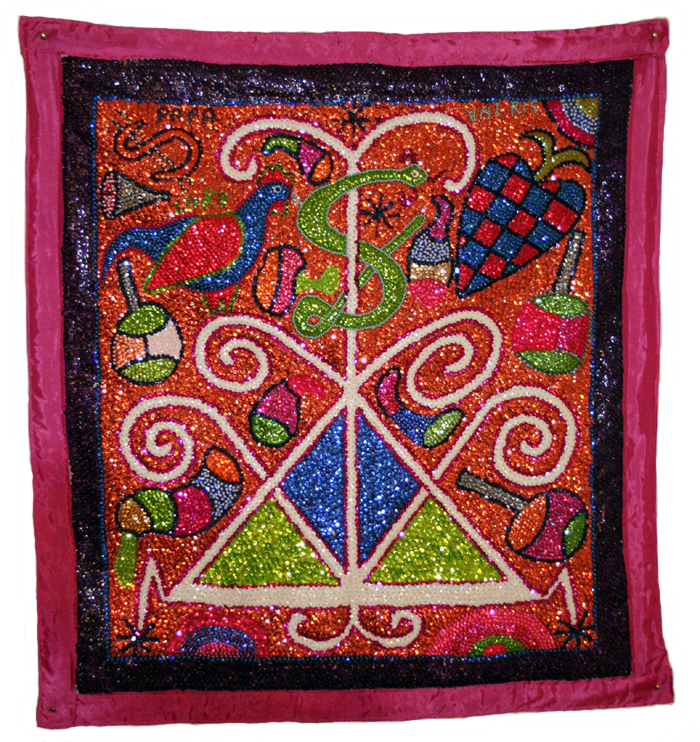 🇭🇹 Haiti and 2 moreHaitian VodouVodou
An Afro-Haitian religion blending West African traditions with Catholicism and FreemasonryTradition · Protection · Healing Living
🇭🇹 Haiti and 2 moreHaitian VodouVodou
An Afro-Haitian religion blending West African traditions with Catholicism and FreemasonryTradition · Protection · Healing Living
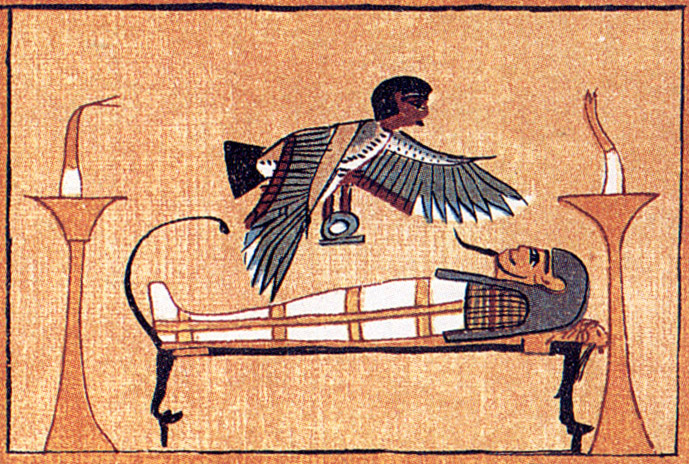 🇸🇪 Sweden and 1 moreSoul flight
A trance practice where the spirit leaves the body to visit other realmsRite · Healing · Seeing and foretelling Historical
🇸🇪 Sweden and 1 moreSoul flight
A trance practice where the spirit leaves the body to visit other realmsRite · Healing · Seeing and foretelling Historical
 🇮🇶 Iraq and 5 moreGrimoire
A textbook containing instructions for spells, rituals, and the creation of magical objects.Text · Protection · Healing Historical
🇮🇶 Iraq and 5 moreGrimoire
A textbook containing instructions for spells, rituals, and the creation of magical objects.Text · Protection · Healing Historical
 🇮🇹 Italy and 5 moreRelic
An object or body part kept to honor a holy person and mark their connection to the divineCharm · Protection · Healing Living
🇮🇹 Italy and 5 moreRelic
An object or body part kept to honor a holy person and mark their connection to the divineCharm · Protection · Healing Living