Leprechaun
In its own language: lucharachán / leipreachán / luchorpán
from Old Irish luchorpán or lupracán, meaning small body
A solitary Irish fairy known for mischief and shoe-making
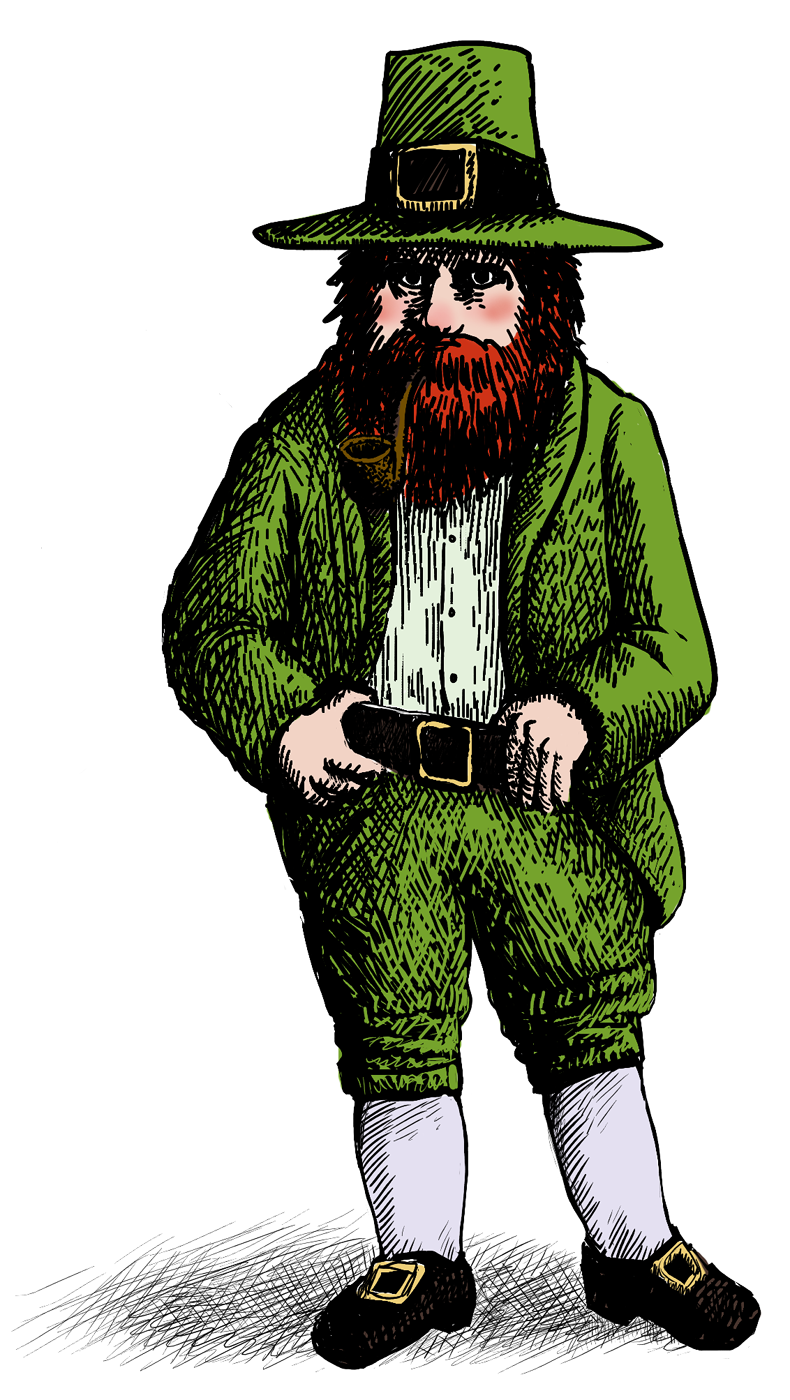
The leprechaun is a diminutive supernatural being in Irish folklore, often classed as a type of solitary fairy. They are traditionally depicted as little bearded men who make shoes and play practical jokes on humans.
- Word derives from Old Irish luchorpán
- First English use in 1604 by Thomas Dekker
- Traditionally wears red, not green
- Solitary fairy distinct from Aos Sí
- Shoemaker hiding gold at rainbow's end
What it is
A leprechaun is a small supernatural creature from Irish folklore. Some writers classify it as a solitary fairy. It is usually shown as a tiny bearded man wearing a coat and hat. These beings are known for playing practical jokes. In later stories, they became famous as shoemakers. They are said to hide a pot of gold at the end of a rainbow. This image differs from earlier myths where they rarely appeared.
Where it comes from
The word comes from Old Irish luchorpán or lupracán. It passed through Middle Irish forms like luchrapán. The first English use was in 1604 by Thomas Dekker. Scholars suggest roots meaning small body. Another theory links it to Roman festivals. Folk etymology connects it to half-brogue because of shoe work. Early texts mention lúchorpáin dragging King Fergus into the sea. These spirits granted wishes for their release.
How it is done
Humans try to catch a leprechaun to demand wealth. The creature is solitary and makes shoes. People believe catching him forces him to give up treasure. He is not always a professional cobbler. He might mend his own worn-out shoes. Capturing him requires caution. He is distinct from other fairies who might harm children. He only engages in minor mischief.
Tools and materials
Traditional dress includes a red jacket and breeches. A cocked hat sits on his head. Buckled shoes complete the outfit. Elizabethan ruffs and lace frills appear in some accounts. Regional variations exist. Western coats may have frieze overcoats. Northern versions wear military red coats. Tipperary figures carry swords as wands. Monaghan types wear swallow-tailed coats. Modern images show green hats and toadstools.
Leprechaun, drawn and placed
- Living
- Revived
- Fading
- Historical
- Legendary
- Performed
- Lineage
- Irish mythology
What it is for
The leprechaun represents folklore entertainment. People seek them for hidden treasure. Wealth supposedly comes from ancient buried crocks. He is seen as neither wholly good nor evil. His son of an evil spirit lineage explains this mix. He provides stories of mischief and magic. He serves as a cultural symbol in tourism and politics.
Who does it
Scholars and folklorists study these beings. William Butler Yeats classified them as solitary fairies. D. R. McAnally wrote detailed accounts in 1888. John O'Hanlon provided earlier classifications. Diarmuid Ó Giolláin compares them to dwarfs. Writers adapt them for wider audiences. No specific ritual practitioners are named.
Peoples and places
The leprechaun belongs to Irish tradition. Variants exist across different regions. Logherymen appear in the north. Lurigadawne come from Tipperary. Luricawne are found in Kerry. Cluricawne reside in Monaghan. The image spread to the United States via immigrants. American culture associates them with St. Patrick's Day.
At a glance: who, where and when
Peoples
Belief worlds
What people believe
They are part of the Aos Sí world but distinct. Unlike trooping fairies, they live alone. They do not kidnap children like other sidhe. Their wealth lies in buried treasure. They enjoy pranks rather than malice. Some view them as degenerate fairies. Others see them as sprites or pigmy-like entities.
When it is done
No specific festivals or holy days are tied to them. They appear in general folklore tales. St. Patrick's Day celebrations in America feature them. Tourism marketing uses their image year-round. Political satire references them occasionally.
How scholars and sceptics see it
Yeats influenced modern perception through revivalist movements. McAnally documented regional differences in dress. Ó Giolláin notes confusion with clurichauns. Scholars distinguish them from Teutonic dwarfs. Critics argue popular images stem from anti-Irish caricatures. Disney films altered traditional depictions significantly.
Cautions and what is closed
Popular media often distorts original folklore. Stereotypes may offend Irish heritage. Economic terms borrow the name ironically. No physical danger is associated with the myth itself. Outsiders should respect cultural origins.
Compare and confuse
Similar creatures include the clurichaun and far darrig. The clurichaun is a drinking leprechaun. Both are solitary spirits. European dwarfs share traits but differ in origin. Household familiars are sometimes compared. The term appears in Celtic music and sports mascots.
Questions people ask about Leprechaun
What is a leprechaun?
A leprechaun is a small supernatural being in Irish folklore. It is often called a solitary fairy. It appears as a bearded man who makes shoes and plays jokes.
Where does the word come from?
The word comes from Old Irish luchorpán. It means small body. It entered English in 1604. Folk etymology links it to half-brogue due to shoe work.
What do they look like?
They wear red jackets and cocked hats. Buckled shoes and ruffs are common. Modern images show green hats. Regional styles vary across Ireland.
Why are they associated with gold?
They are said to guard buried treasure. This wealth comes from ancient war-time crocks. Catching one forces him to reveal the location.
Good reading and sources
- Encyclopaedia BritannicaArticle
- Leprechaun 'is not a native Irish word' new dictionary revealsBBC, Article
- Leprechaun on WikipediaEncyclopedia
- More photos on Wikimedia CommonsPhotos and video
- Wikidata recordOpen data
The facts on this page come from the Wikipedia article "Leprechaun", written by its contributors and used under the CC BY-SA 4.0 licence, and from its Wikidata record (CC0). EveryJaadu rewrote the text in its own words, with AI assistance, and compares every page with the article to make sure no passage is copied. It may be reused under the same CC BY-SA 4.0 licence with a link back.
It may contain mistakes. Names and customs differ from one community to the next, and some knowledge is closed to outsiders and left out here. This page describes belief and practice. It does not say that any of it works, it is not a how-to, and it is not medical advice. If something is wrong, tell us. Last refreshed 2026-10-05.
More from Ireland
All the entries from Ireland 🇬🇧 United Kingdom and 1 moreEach-uisge
A fierce water spirit of the Scottish Highlands and Irish shores that takes the form of a horse.Being · Cursing and harm Legendary
🇮🇪 IrelandFetch
A spectral double of a living person, seen as an omen of death or long life.Being · Seeing and foretelling Historical
🇬🇧 United Kingdom and 1 moreFuath
A class of malevolent water spirits in Scottish and Irish folkloreBeing · Cursing and harm Legendary
🇬🇧 United Kingdom and 1 moreEach-uisge
A fierce water spirit of the Scottish Highlands and Irish shores that takes the form of a horse.Being · Cursing and harm Legendary
🇮🇪 IrelandFetch
A spectral double of a living person, seen as an omen of death or long life.Being · Seeing and foretelling Historical
🇬🇧 United Kingdom and 1 moreFuath
A class of malevolent water spirits in Scottish and Irish folkloreBeing · Cursing and harm Legendary
 🇬🇧 United Kingdom and 1 moreBlue men of the Minchna fir ghorma
Mythical blue-skinned spirits of the Scottish strait who challenge sailors to poetry contestsBeing · Cursing and harm · Wonder and entertainment Legendary
🇬🇧 United Kingdom and 1 moreBlue men of the Minchna fir ghorma
Mythical blue-skinned spirits of the Scottish strait who challenge sailors to poetry contestsBeing · Cursing and harm · Wonder and entertainment Legendary
Related elsewhere
All being 🇪🇬 Egypt and 1 moreSphinx
A mythical hybrid with a human head and lion body, serving as guardian or riddler in Egyptian and Greek traditions.Being · Protection · Wonder and entertainment Legendary
🇪🇬 EgyptDjedi
A fictional magician from the Westcar Papyrus who resurrects animals and foretells a king's lineage.Figure · Seeing and foretelling · Wonder and entertainment Legendary
🇨🇱 ChileChilean mythology
The myths and legends of Chile, blending indigenous roots with colonial influences.Tradition · Wonder and entertainment Living
🇷🇺 Russia and 3 moreNart sagaНарты кадджытæ
A collection of epic tales from the North Caucasus about a legendary group of heroes.Text · Wonder and entertainment Historical
🇪🇬 Egypt and 1 moreSphinx
A mythical hybrid with a human head and lion body, serving as guardian or riddler in Egyptian and Greek traditions.Being · Protection · Wonder and entertainment Legendary
🇪🇬 EgyptDjedi
A fictional magician from the Westcar Papyrus who resurrects animals and foretells a king's lineage.Figure · Seeing and foretelling · Wonder and entertainment Legendary
🇨🇱 ChileChilean mythology
The myths and legends of Chile, blending indigenous roots with colonial influences.Tradition · Wonder and entertainment Living
🇷🇺 Russia and 3 moreNart sagaНарты кадджытæ
A collection of epic tales from the North Caucasus about a legendary group of heroes.Text · Wonder and entertainment Historical