
Befana
Likely from the Greek word for appearance or surface, linked to the Feast of Epiphany
An Italian witch-like figure who delivers gifts on Epiphany Eve
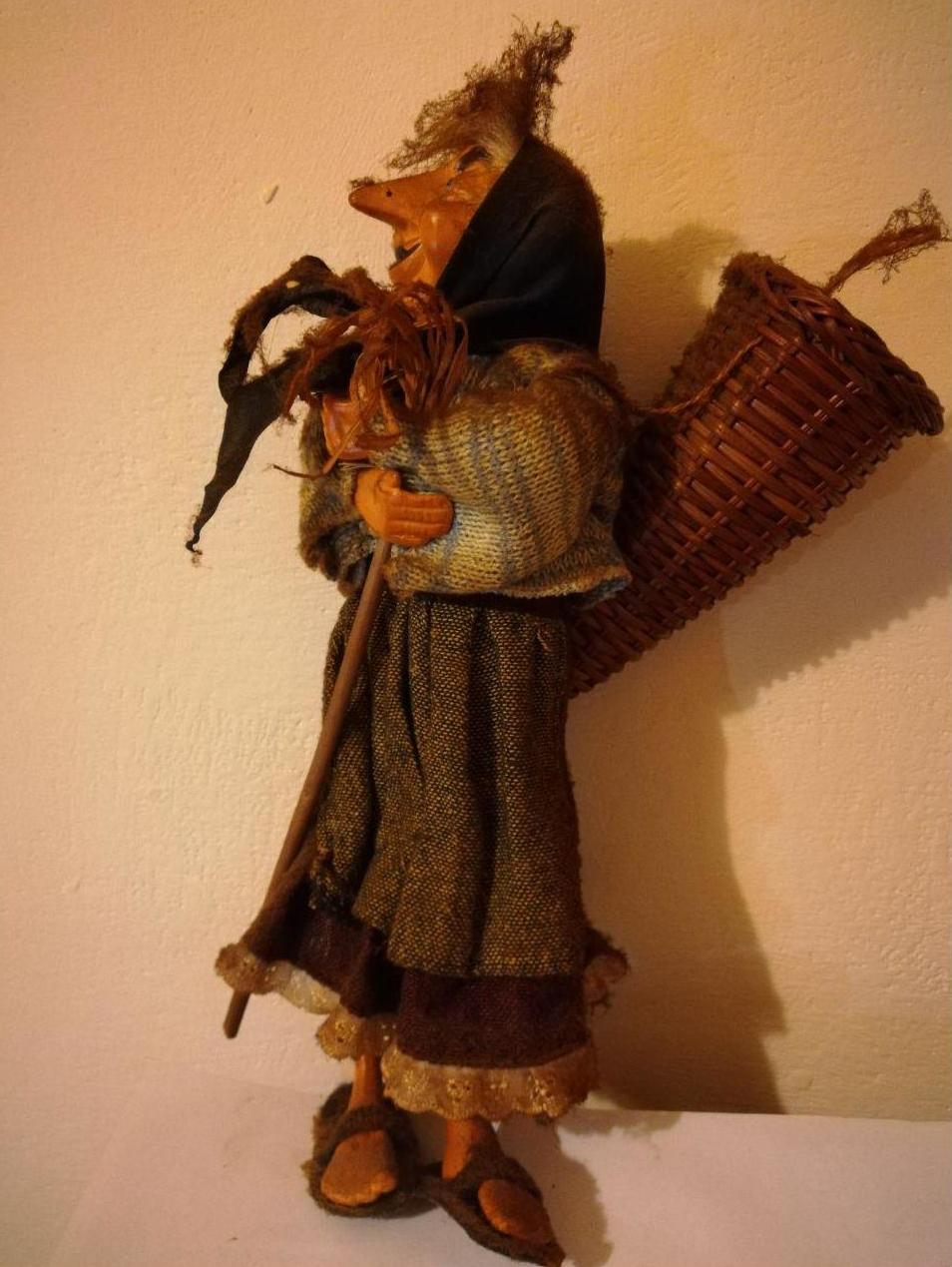
The Befana is a folk character in Italy who brings presents to children on the night of January 5. She is an old woman who flies on a broom and enters homes through chimneys. The tradition blends older pagan customs with Christian stories about the Three Wise Men.
- She delivers gifts on the night of January 5
- She flies on a broomstick through chimneys
- Good children get candy and toys
- Naughty children receive coal
- Her name links to the Feast of Epiphany
What it is
The Befana is a central figure in Italian folk culture, appearing as an old woman with magical traits. She resembles a witch but acts as a gift-giver similar to Santa Claus. People believe she visits homes on the night before Epiphany to reward good children with sweets and toys. Naughty children receive pieces of coal. She is a complex symbol that mixes fear and affection, often described as grandmotherly yet wild. Her presence marks the end of the Christmas season and the start of Carnival festivities across the country.
Where it comes from
Scholars have long debated where the Befana comes from. Some think she started as a pre-Christian goddess or spirit connected to winter rituals. Others suggest she is a medieval invention created to personify the Feast of Epiphany. There are also theories linking her name to ancient Roman festivals like Saturnalia or offerings to a goddess named Strenia. The character likely evolved by mixing these older pagan ideas with later Christian stories, creating a unique blend of beliefs over many centuries.
How it is done
On the evening of January 5, the Befana is said to fly through the air on her broomstick. She enters houses through chimneys because she is covered in soot from her travels. Children leave out treats for her, such as food or drink, in exchange for gifts. In some rural areas, groups of men called befanotti go door-to-door singing songs and performing skits. They collect food and money from households while entertaining the residents with local tunes and jokes related to the festival.
Tools and materials
She carries a large sack or basket filled with gifts. These items typically include candies, fruits, and small toys for well-behaved children. For those who have been mischievous, she leaves lumps of coal or dark-colored sweets. She uses a broom to sweep floors inside homes and to travel through the sky. Her appearance includes rags, a headscarf, and a face stained black with soot from the chimneys she navigates.
Befana, drawn and placed
- Living
- Revived
- Fading
- Historical
- Legendary
- Performed
- Lineage
- Italian folklore
- Timing
- night of January 5
What it is for
The main goal of the Befana is to distribute rewards based on a child's behavior during the year. Good deeds are celebrated with desirable treats, while bad behavior results in coal. This system teaches moral lessons within the family context. The tradition also serves to mark the transition from winter to spring. It encourages generosity among neighbors during the mumming customs and helps communities celebrate the end of the holiday season together.
Who does it
The Befana herself is a fictional character played by parents or community members during celebrations. In traditional mumming, adult men known as befanotti perform songs and acts. These performers were historically often the poorest members of the village. They use their performances to request food and hospitality from wealthier families. The role requires knowledge of local dialects and songs specific to each region.
Peoples and places
The Befana is primarily associated with Italy, where she is a national cultural icon. Variations of her name exist across different regions, such as Vecchia in Pavia or Stria in Mantua. Similar figures appear in other European cultures, like the German Perchta. The custom spreads through diaspora communities, with mentions of the tradition in places like Canada and the United States. Each local area has its own specific songs and names for the character.
At a glance: who, where and when
Who does it
Peoples
Belief worlds
Occasions


What people believe
Christian legend claims the Befana was a housekeeper who helped the Three Wise Men find the Baby Jesus. She initially stayed behind to clean but later regretted missing the journey. She now searches endlessly for the Christ Child, leaving gifts for all children in hopes of finding him. This story explains her benevolent nature despite her witch-like appearance. It frames her actions as an act of eternal devotion and maternal care.
When it is done
The celebration happens on Epiphany Eve, the night of January 5. This date marks the end of the Twelve Days of Christmas. The following day, January 6, is Epiphany itself. The events trigger the beginning of the Carnival season. In some regions, effigies of the Befana are burnt in bonfires to conclude the festivities. The timing aligns with winter solstice traditions and new year celebrations.
Questions people ask about Befana
Who is the Befana?
The Befana is an Italian folk character who looks like an old witch. She brings gifts to children on the night of January 5. She is loved and feared by kids across Italy.
Where does the Befana come from?
Her origins are unclear. Scholars suggest she combines pre-Christian winter spirits with Christian stories. Her name likely relates to the Feast of Epiphany or ancient Roman festivals.
What does the Befana bring?
She fills stockings with sweets and toys for good children. Bad children receive lumps of coal. She leaves these gifts while families sleep on Epiphany Eve.
How does she enter homes?
She flies on a broomstick and enters through chimneys. This makes her face and clothes black with soot. Children must not watch her arrive or she might punish them.
Good reading and sources
- Befana on WikipediaEncyclopedia
- More photos on Wikimedia CommonsPhotos and video
- Wikidata recordOpen data
The facts on this page come from the Wikipedia article "Befana", written by its contributors and used under the CC BY-SA 4.0 licence, and from its Wikidata record (CC0). EveryJaadu rewrote the text in its own words, with AI assistance, and compares every page with the article to make sure no passage is copied. It may be reused under the same CC BY-SA 4.0 licence with a link back.
It may contain mistakes. Names and customs differ from one community to the next, and some knowledge is closed to outsiders and left out here. This page describes belief and practice. It does not say that any of it works, it is not a how-to, and it is not medical advice. If something is wrong, tell us. Last refreshed 2026-10-06.
More from Italy
All the entries from Italy 🇮🇹 Italy and 5 moreTarottarocchi
A set of playing cards used for games and divinationTradition · Seeing and foretelling · Luck and prosperity Living
🇮🇹 Italy and 5 moreTarottarocchi
A set of playing cards used for games and divinationTradition · Seeing and foretelling · Luck and prosperity Living
 🇩🇪 Germany and 5 moreWitch trials in the Holy Roman Empire
A wave of executions across Central Europe between the fifteenth and eighteenth centuries.Belief · Cursing and harm Historical
🇩🇪 Germany and 5 moreWitch trials in the Holy Roman Empire
A wave of executions across Central Europe between the fifteenth and eighteenth centuries.Belief · Cursing and harm Historical
 🇮🇹 ItalyCumaean SibylSibylla Cumana
The priestess of the Apollonian oracle at Cumae, famous in Roman legend for her prophetic books and underworld guidance.Figure · Seeing and foretelling · Speaking with spirits and the dead Legendary
🇮🇹 ItalyCumaean SibylSibylla Cumana
The priestess of the Apollonian oracle at Cumae, famous in Roman legend for her prophetic books and underworld guidance.Figure · Seeing and foretelling · Speaking with spirits and the dead Legendary
 🇫🇷 France and 1 moreNostradamus
A French astrologer and physician known for a book of poetic propheciesText · Seeing and foretelling · Power and authority Historical
🇫🇷 France and 1 moreNostradamus
A French astrologer and physician known for a book of poetic propheciesText · Seeing and foretelling · Power and authority Historical
Related elsewhere
All figure 🇪🇬 EgyptSham Ennessimشم النسيم
An Egyptian spring holiday marked by picnics, colored eggs, and salted fishTradition · Luck and prosperity · Wonder and entertainment Living
🇪🇬 EgyptSham Ennessimشم النسيم
An Egyptian spring holiday marked by picnics, colored eggs, and salted fishTradition · Luck and prosperity · Wonder and entertainment Living
 🇯🇵 Japan and 2 moreTanabataたなばた (七夕)
A Japanese celebration of star-crossed lovers and written wishesTradition · Luck and prosperity · Wonder and entertainment Living
🇯🇵 Japan and 2 moreTanabataたなばた (七夕)
A Japanese celebration of star-crossed lovers and written wishesTradition · Luck and prosperity · Wonder and entertainment Living
 🇮🇳 India and 5 moreSnake charming
A street performance using a gourd flute to make snakes swayIllusion · Wonder and entertainment · Luck and prosperity Fading
🇮🇳 India and 5 moreSnake charming
A street performance using a gourd flute to make snakes swayIllusion · Wonder and entertainment · Luck and prosperity Fading
 🇯🇵 JapanKitsunebi狐火
Atmospheric ghost lights in Japanese folklore, often linked to foxes and natural phenomena.Belief · Wonder and entertainment · Luck and prosperity Historical
🇯🇵 JapanKitsunebi狐火
Atmospheric ghost lights in Japanese folklore, often linked to foxes and natural phenomena.Belief · Wonder and entertainment · Luck and prosperity Historical