
Sham Ennessim
In its own language: شم النسيم
from Arabic Sham Ennesim, meaning Smelling in the Zephyrs
An Egyptian spring holiday marked by picnics, colored eggs, and salted fish
Sham Ennessim is a public holiday in Egypt that celebrates the arrival of spring. It is observed on Easter Monday by Egyptians across all religious backgrounds. The day is defined by outdoor gatherings and the consumption of specific traditional foods.
- Official public holiday in Egypt falling on Easter Monday
- Celebrated by Egyptians of all religious backgrounds
- Features fesikh, a fermented grey mullet, as a staple dish
- Involves dyeing and eating boiled eggs as a spring tradition
- Roots likely trace back to ancient Egyptian harvest festivals
What it is
Sham Ennessim serves as an annual marker for the start of spring within Egyptian culture. It functions as an official public holiday where citizens pause their regular duties to engage in seasonal festivities. The celebration is notable for its inclusive nature, drawing participation from individuals of various faiths who share in common customs. Rather than focusing on theological doctrine, the event emphasizes communal leisure and the enjoyment of natural surroundings. Families and friends gather together to mark the seasonal shift, creating a shared cultural experience that transcends individual religious boundaries.
Where it comes from
The precise historical roots of the festival are not fully documented, though it is widely believed to have origins stretching back to ancient Egypt. Some scholars suggest the name derives from Shemu, the ancient harvest season, indicating a continuity of practices over four millennia. During medieval periods under Fatimid, Ayyubid, and Mamluk rule, the holiday remained a prominent feature of public life. The state often incorporated these celebrations into official ceremonies, maintaining the tradition even as religious landscapes shifted. This persistence highlights the deep integration of seasonal rites into the fabric of Egyptian society long before the advent of later monotheistic religions.
How it is done
Participants typically spend the entire day outdoors, seeking fresh air and open spaces. Common destinations include public parks, riverbanks along the Nile, and local zoos. The central activity involves communal picnicking, where groups gather to eat and socialize. A key ritual involves dyeing hard-boiled eggs in bright colors, which are then eaten or given as gifts. In historical contexts, people also wrote wishes on eggshells and hung them from trees, believing the morning sun would help manifest those desires. These activities transform ordinary public areas into sites of seasonal renewal and community bonding.
Tools and materials
The culinary elements of the festival carry significant symbolic weight. Fesikh, a fermented and dried grey mullet, is the most iconic dish, despite its strong aroma. It is traditionally served alongside lettuce, green onions, and lupin beans. Lettuce was historically linked to fertility and the god Min, while onions were venerated in antiquity and used in embalming rituals. Eggs represent cosmic creation beliefs found in ancient mythology. These ingredients are not merely sustenance but serve as tangible connections to ancestral agricultural cycles and mythological concepts of rebirth.
Sham Ennessim, drawn and placed
- Living
- Revived
- Fading
- Historical
- Legendary
- Performed
- Lineage
- Ancient Egyptian seasonal rites
- Timing
- on Easter Monday
What it is for
The primary intent of Sham Ennessim is to welcome the spring season and celebrate the agricultural cycle. It provides a designated time for relaxation and connection with nature after the winter months. The consumption of specific foods is believed to bring health and good fortune, rooted in ancient protective and fertility traditions. For many, the act of smelling the spring air is thought to have beneficial effects on well-being. The holiday also reinforces social cohesion, allowing communities to reaffirm shared cultural identity through collective participation in established seasonal customs.
Who does it
The celebration is primarily conducted by households and extended families rather than specialized religious officials. Any Egyptian can participate, regardless of gender or social status, making it a truly democratic cultural event. Historically, women played a significant role in preparing the festive foods and arranging the outdoor gatherings. In rural areas, community members work together to maintain the vivid expressions of these traditions. The lack of formal clerical oversight allows the practice to remain flexible and deeply embedded in everyday family life, adapting slightly across different regions while retaining core elements.
Peoples and places
Sham Ennessim is uniquely characterized by its cross-religious observance among Egyptians. Both Muslim and Christian populations participate in the same secular customs, reflecting a shared national heritage. While Christians may link certain foods like fish and eggs to resurrection themes, Muslims observe the day largely as a cultural spring festival. This dual engagement suggests the holiday predates current religious divisions, originating instead from ancient pagan rites that were absorbed into the broader cultural consciousness. The uniformity of customs across different religious groups underscores the holiday's role as a unifying national tradition.
At a glance: who, where and when
Who does it
Peoples
Belief worlds
Occasions

What people believe
Underlying the festivities are ancient cosmological beliefs regarding renewal and creation. The egg symbolizes the universe emerging from a cosmic source, a concept prevalent in early Egyptian thought. The preference for northern winds reflects a belief in the purifying and life-giving qualities of the zephyrs. Historical accounts indicate that smelling the spring air was thought to confer physical benefits, linking environmental conditions directly to human vitality. These beliefs persist as cultural habits, even if the original theological frameworks have faded, leaving behind a worldview that honors the cyclical nature of time and the power of seasonal transitions.
When it is done
The holiday falls on Easter Monday, determined by the Coptic Orthodox calculation of Easter. This fixed positioning ensures the celebration always occurs in the spring, aligning with the agricultural calendar. Historically, some observers linked the date to the Khamaseen season, a period of hot winds, though this association varies. The timing allows Egyptians to step away from daily routines during a pleasant part of the year. The annual recurrence creates a predictable rhythm in the social calendar, marking the definitive end of winter and the beginning of outdoor activities and longer days.
How scholars and sceptics see it
Researchers note the complex interplay between ancient pagan traditions and later religious identities in Egypt. Anthropologists highlight how the festival demonstrates cultural resilience, surviving regime changes and religious conversions. Historians point out that medieval states actively promoted the holiday to foster public unity. Scholars debate whether Muslim participation stems from independent retention of pre-Islamic customs or adoption from Coptic neighbors. Ethnographic studies reveal that rural communities preserve more elaborate versions of these traditions compared to urban centers, offering insights into the evolution of folk practices over centuries.
Cautions and what is closed
The consumption of fesikh carries health risks due to its fermentation process, requiring careful preparation to avoid spoilage. Public gatherings can lead to overcrowding and sanitation challenges in popular picnic spots. There are no significant legal restrictions or persecution associated with the holiday; it is fully protected and encouraged by the state. However, the strong odor of the fish can be off-putting to some visitors, and the reliance on wild-caught mullet raises occasional ecological concerns. The holiday remains a safe, regulated public event focused on leisure and cultural expression.
Compare and confuse
Sham Ennessim shares thematic similarities with other spring festivals like Nowruz and Holi, emphasizing renewal and communal feasting. Unlike religious holidays tied strictly to doctrinal events, it functions more like a secular national day. It differs from purely Christian Easter observances by its focus on outdoor picnics and specific ancient foods rather than church services. The inclusion of salted fish and lupin beans distinguishes it from neighboring Mediterranean spring celebrations, anchoring it firmly in Egyptian agricultural history and local taste preferences.
Questions people ask about Sham Ennessim
What is Sham Ennessim?
It is an Egyptian public holiday celebrating the arrival of spring. It is observed on Easter Monday and involves outdoor picnics, eating traditional foods, and dyeing eggs.
Who celebrates this festival?
Egyptians of all religions celebrate it. It is a cross-religious tradition where Muslims, Christians, and others share common customs, reflecting a shared national heritage.
What food is essential for the holiday?
Fesikh, a fermented and dried grey mullet, is the most iconic dish. It is typically eaten with lettuce, green onions, and lupin beans.
Why are eggs dyed?
Dyeing boiled eggs is a widespread tradition believed to originate in ancient Egypt. Eggs symbolize cosmic creation and renewal, and they are eaten or exchanged as gifts.
Good reading and sources
- Sham Ennessim on WikipediaEncyclopedia
- More photos on Wikimedia CommonsPhotos and video
- Wikidata recordOpen data
The facts on this page come from the Wikipedia article "Sham Ennessim", written by its contributors and used under the CC BY-SA 4.0 licence, and from its Wikidata record (CC0). EveryJaadu rewrote the text in its own words, with AI assistance, and compares every page with the article to make sure no passage is copied. It may be reused under the same CC BY-SA 4.0 licence with a link back.
It may contain mistakes. Names and customs differ from one community to the next, and some knowledge is closed to outsiders and left out here. This page describes belief and practice. It does not say that any of it works, it is not a how-to, and it is not medical advice. If something is wrong, tell us. Last refreshed 2026-10-05.
More from Egypt
All the entries from Egypt 🇩🇿 Algeria and 1 moreAhmad al-Buniأحمد البوني المالكي
A medieval Sufi scholar known for works on letter mysticism and talismansText · Power and authority · Seeing and foretelling Historical
🇩🇿 Algeria and 1 moreAhmad al-Buniأحمد البوني المالكي
A medieval Sufi scholar known for works on letter mysticism and talismansText · Power and authority · Seeing and foretelling Historical
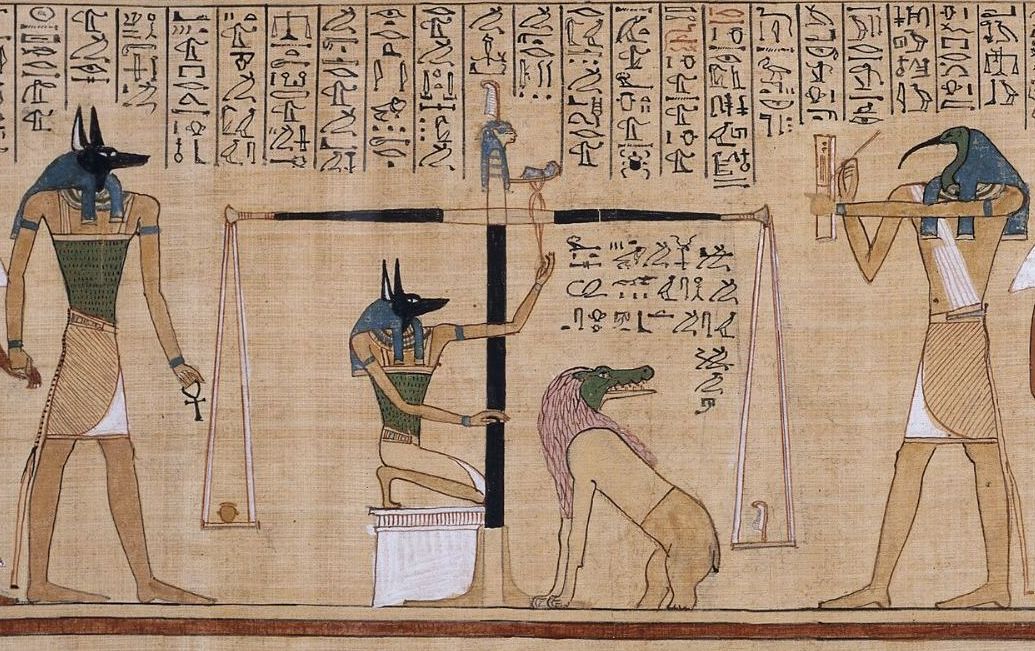 🇪🇬 EgyptAncient Egyptian afterlife beliefs
A system of rituals and texts guiding the soul through the underworld to eternal rebirthTradition · Protection · Speaking with spirits and the dead Historical
🇪🇬 EgyptAncient Egyptian afterlife beliefs
A system of rituals and texts guiding the soul through the underworld to eternal rebirthTradition · Protection · Speaking with spirits and the dead Historical
 🇱🇾 Libya and 4 moreTraditional Berber religionAmazigh religion
Ancient beliefs of Northwest Africa centered on celestial bodies, caves, and ancestors.Tradition · Speaking with spirits and the dead · Luck and prosperity Historical
🇱🇾 Libya and 4 moreTraditional Berber religionAmazigh religion
Ancient beliefs of Northwest Africa centered on celestial bodies, caves, and ancestors.Tradition · Speaking with spirits and the dead · Luck and prosperity Historical
 🇪🇬 Egypt and 1 moreAncient Egyptian religion
Polytheistic worship, divine kingship, and funerary rites along the NileTradition · Protection · Speaking with spirits and the dead Historical
🇪🇬 Egypt and 1 moreAncient Egyptian religion
Polytheistic worship, divine kingship, and funerary rites along the NileTradition · Protection · Speaking with spirits and the dead Historical
Related elsewhere
All tradition 🇯🇵 Japan and 2 moreTanabataたなばた (七夕)
A Japanese celebration of star-crossed lovers and written wishesTradition · Luck and prosperity · Wonder and entertainment Living
🇯🇵 Japan and 2 moreTanabataたなばた (七夕)
A Japanese celebration of star-crossed lovers and written wishesTradition · Luck and prosperity · Wonder and entertainment Living
 🇮🇪 Ireland and 5 moreCairn
A human-made stack of stones used as a marker, memorial, or religious symbol across many cultures.Tradition · Protection · Speaking with spirits and the dead Living
🇮🇪 Ireland and 5 moreCairn
A human-made stack of stones used as a marker, memorial, or religious symbol across many cultures.Tradition · Protection · Speaking with spirits and the dead Living
 🇷🇺 Russia and 3 moreFirebird
A glowing bird of Slavic folklore that brings both fortune and peril to those who seek itFigure · Wonder and entertainment · Luck and prosperity Legendary
🇷🇺 Russia and 3 moreFirebird
A glowing bird of Slavic folklore that brings both fortune and peril to those who seek itFigure · Wonder and entertainment · Luck and prosperity Legendary
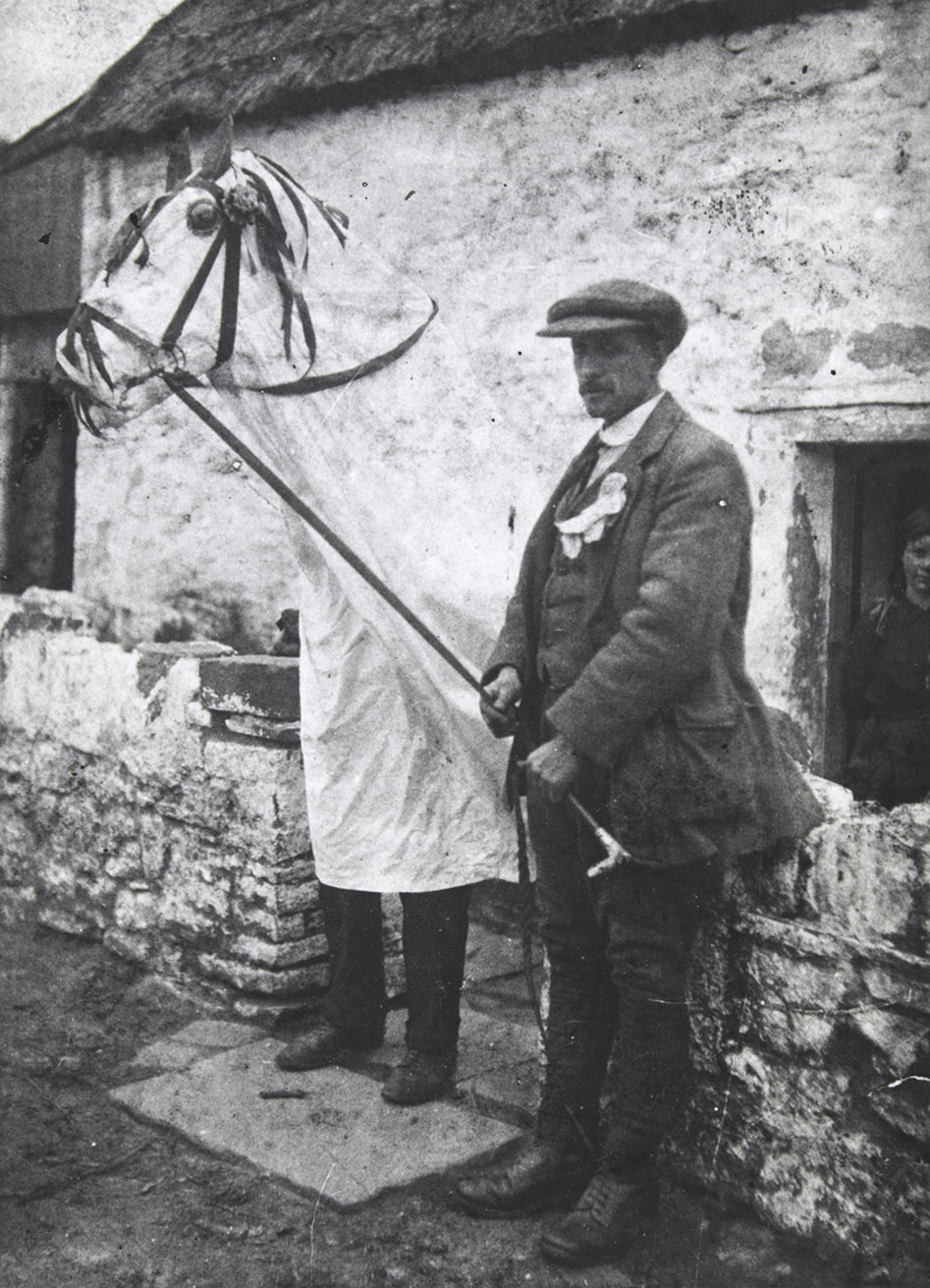 🇬🇧 United KingdomMari LwydY Fari Lwyd
A Welsh winter custom featuring a horse skull carried through villages for song and hospitality.Rite · Luck and prosperity · Wonder and entertainment Revived
🇬🇧 United KingdomMari LwydY Fari Lwyd
A Welsh winter custom featuring a horse skull carried through villages for song and hospitality.Rite · Luck and prosperity · Wonder and entertainment Revived