Abada
possibly from Malay badak or Arabic Abida
A two-horned mythical beast from Central African and Southeast Asian lore
The Abada is a legendary creature described in Kongo mythology as a small donkey-like animal with two crooked horns. It appears in Indonesian and Tartar tales as well, often linked to healing powers or shy female traits.
- Has two crooked horns that harden when threatened
- Horns are believed to cure poison and disease
- Appears during illness or when travelers are lost
- Known as Nillekma or Arase in some traditions
- Described as female and shy in Indonesian myths
What it is
The Abada is a mythical animal found in the folklore of several cultures. In Kongo tradition, it resembles a small donkey with a boar's tail. Its most distinct feature is a pair of soft, crooked horns that harden when the creature feels threatened. Unlike the single-horned unicorn, this beast has two curved spikes. The creature is said to bring good fortune when it appears during times of trouble. Other traditions describe it differently, sometimes as a shy female being. Scholars note its presence across different mythologies, showing how stories travel and change.
Where it comes from
The name likely comes from Malay or Arabic roots. In Malay, 'badak' refers to rhinoceroses or hippos. In Arabic, 'Abida' means wild animal. Portuguese explorers in the seventeenth century used 'Abadas' for rhinos but also recorded local names for strange beasts. Missionaries like Cavazzi da Montecucco claimed locals called the creature Abada. Later writers tried to distinguish it from European unicorns based on horn shape and virtue.
Tools and materials
The creature's main tool is its pair of crooked horns. These are believed to act as antidotes against poison and disease. Some tales say hunters kill male Abadas to use their skin as protective shields. The horns soften when the animal sleeps or relaxes. They become rigid only when the beast senses danger. This physical trait links the animal to both vulnerability and defense.
Abada, drawn and placed
- Living
- Revived
- Fading
- Historical
- Legendary
- Performed
- Lineage
- Central African and Southeast Asian folklore
- Timing
- during hardship or illness
What it is for
People view the Abada as a sign of hope. It is said to appear when travelers are lost or when someone falls seriously ill. Its arrival marks a shift toward good luck. The horns are sought after for their supposed ability to cure sickness. Hunters may seek the skin for protection. The creature serves as a supernatural comfort in difficult moments.
Who does it
No specific group practices rituals with the Abada today. It exists primarily in stories and historical accounts. Early European missionaries and scholars documented these beliefs. They recorded local names and physical descriptions. Modern researchers study these texts to understand cultural exchanges. The creature remains a subject of interest for those studying comparative mythology.
Peoples and places
The Kongo people tell stories of the donkey-like beast with healing horns. Indonesian, Malay, and Tartar myths also feature an Abada. In these regions, the creature is often portrayed as female and shy. The variations show how a single name can attach to very different animals. Each culture adapts the legend to fit its own worldview and needs.
At a glance: who, where and when
Peoples
Occasions
What people believe
The belief centers on the power of the horns. They are thought to neutralize poison and heal disease. The creature itself is seen as a harbinger of safety. When it shows up, it signals that help is near. The softness of the horns represents peace. Their hardness represents readiness to fight. This duality makes the beast a symbol of balanced strength.
How scholars and sceptics see it
Historians trace the word to linguistic roots in Malay and Arabic. They note how Portuguese traders confused rhinos with mythical beasts. Father Balthazar Tellez wrote about distinguishing the Abada from painted unicorns. He noted the difference in horn structure and magical properties. Scholars see these accounts as examples of colonial misunderstanding mixed with genuine local lore.
Compare and confuse
The Abada is often compared to the European unicorn. Both are magical beasts associated with purity and healing. However, the Abada has two horns instead of one. It is also smaller and more animal-like. Some sources link it to rhinoceroses due to the name similarity. Others see it as a unique entity in African and Asian folklore.
Questions people ask about Abada
What does the Abada look like?
It is described as the size of a small donkey with a boar's tail. It has two soft, crooked horns that harden when the creature feels threatened.
Where does the name come from?
The word may come from the Malay 'badak' for rhino or hippo, or the Arabic 'Abida' for wild animal. Portuguese explorers also used similar terms.
What are the horns used for?
The horns are believed to act as antidotes against poison and disease. Some hunters also sought the skin to make protective shields.
Is the Abada always the same creature?
No. In Kongo lore, it is a donkey-like beast. In Indonesian and Tartar tales, it is often a shy female creature. The name travels across cultures.
Good reading and sources
The facts on this page come from the Wikipedia article "Abada (unicorn)", written by its contributors and used under the CC BY-SA 4.0 licence, and from its Wikidata record (CC0). EveryJaadu rewrote the text in its own words, with AI assistance, and compares every page with the article to make sure no passage is copied. It may be reused under the same CC BY-SA 4.0 licence with a link back.
It may contain mistakes. Names and customs differ from one community to the next, and some knowledge is closed to outsiders and left out here. This page describes belief and practice. It does not say that any of it works, it is not a how-to, and it is not medical advice. If something is wrong, tell us. Last refreshed 2026-10-06.
More from Indonesia
All the entries from Indonesia 🇮🇳 India and 4 moreShivaशिव
A principal Hindu deity of destruction and yoga, worshipped across South and Southeast AsiaBeing · Power and authority · Change and initiation Living
🇮🇳 India and 4 moreShivaशिव
A principal Hindu deity of destruction and yoga, worshipped across South and Southeast AsiaBeing · Power and authority · Change and initiation Living
 🇮🇳 India and 2 moreSuryaसूर्य
The sun as a Hindu deity and the source of light and knowledgeBeing · Power and authority · Healing Historical
🇮🇳 India and 2 moreSuryaसूर्य
The sun as a Hindu deity and the source of light and knowledgeBeing · Power and authority · Healing Historical
 🇮🇳 India and 5 moreKartikeyaKārttikeya
Hindu god of war and victory, son of Shiva and ParvatiBeing · Power and authority · Protection Living
🇮🇳 India and 5 moreKartikeyaKārttikeya
Hindu god of war and victory, son of Shiva and ParvatiBeing · Power and authority · Protection Living
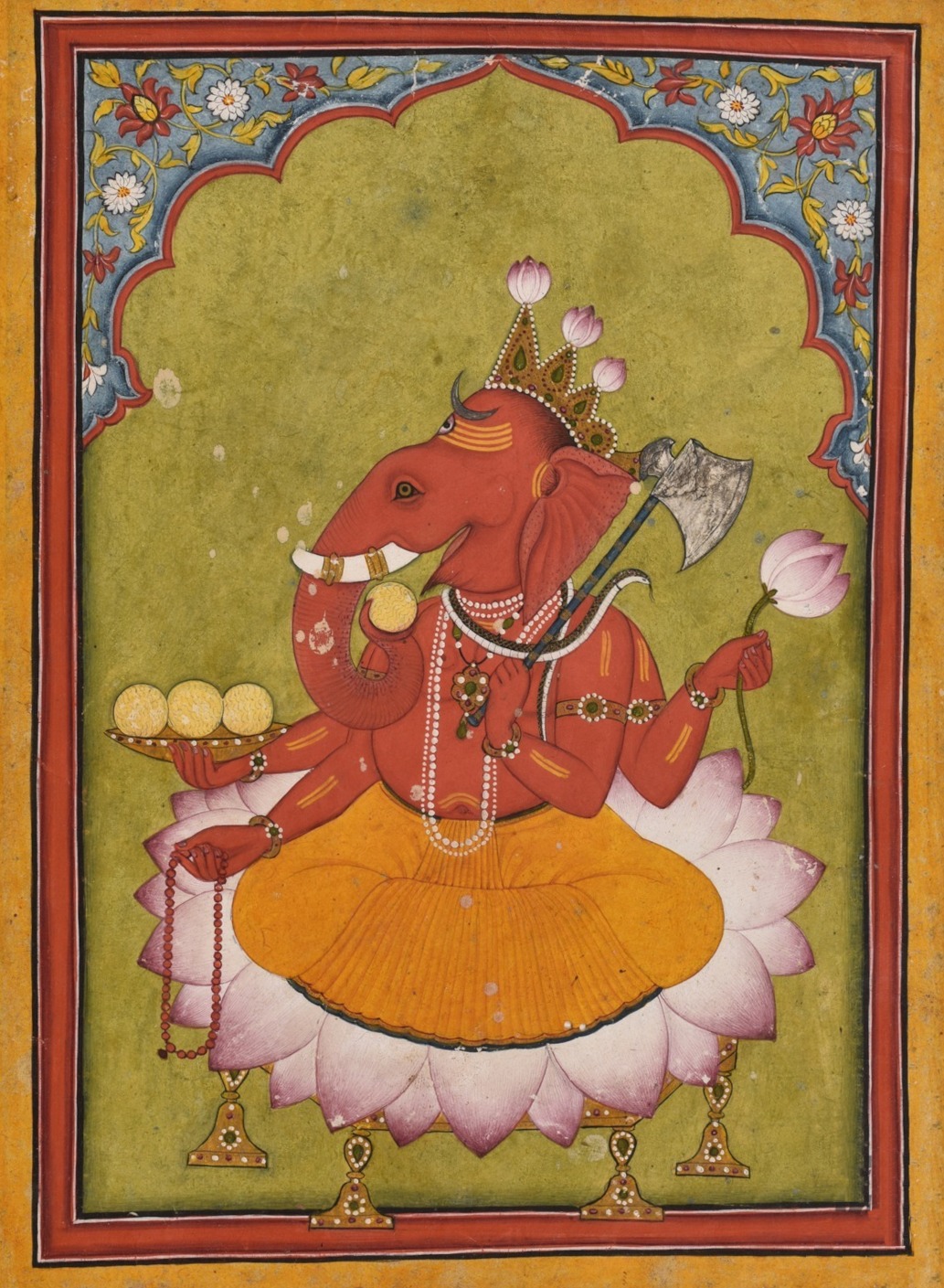 🇮🇳 India and 5 moreGaneshaगणेश (Gaṇeśa)
An elephant-headed Hindu deity worshipped as the remover of obstacles and patron of wisdom.Being · Protection · Luck and prosperity Living
🇮🇳 India and 5 moreGaneshaगणेश (Gaṇeśa)
An elephant-headed Hindu deity worshipped as the remover of obstacles and patron of wisdom.Being · Protection · Luck and prosperity Living
Related elsewhere
All being 🇫🇷 FranceHoly GrailSaint Graal
A cup or stone from Arthurian tales that grants healing and eternal lifeFigure · Healing · Luck and prosperity Legendary
🇫🇷 FranceHoly GrailSaint Graal
A cup or stone from Arthurian tales that grants healing and eternal lifeFigure · Healing · Luck and prosperity Legendary
 🇨🇳 China and 2 moreEight Immortals八仙
Eight legendary Taoist figures of China, each with a power and a vesselFigure · Protection · Healing Living
🇨🇳 China and 2 moreEight Immortals八仙
Eight legendary Taoist figures of China, each with a power and a vesselFigure · Protection · Healing Living
 🇹🇭 Thailand and 3 moreThai Buddha amuletsพระเครื่อง (phrakhrueang)
Sacred Buddhist images and relics worn for protection, merit, and fortune in Thailand.Charm · Protection · Luck and prosperity Living
🇹🇭 Thailand and 3 moreThai Buddha amuletsพระเครื่อง (phrakhrueang)
Sacred Buddhist images and relics worn for protection, merit, and fortune in Thailand.Charm · Protection · Luck and prosperity Living
 🇨🇳 China and 5 moreGuanyin觀音 (Guānyīn)
The Bodhisattva of compassion, worshipped across East Asia as a listener to human sufferingBeing · Protection · Healing Living
🇨🇳 China and 5 moreGuanyin觀音 (Guānyīn)
The Bodhisattva of compassion, worshipped across East Asia as a listener to human sufferingBeing · Protection · Healing Living