🇬🇾 Magic in Guyana
9 entries from Guyana, best known first.
Obeah is a set of African-derived spiritual practices found in the former British Caribbean colonies, blending West African traditions with European and South Asian influences. It functions primarily as a system of individual healing, protection, and justice rather than a communal religion, often coexisting with Christianity or Hinduism.
- Obeah blends West African roots with European and South Asian influences.
- It focuses on individual healing and protection rather than communal worship.
- Colonial laws criminalized the practice from the 1760s onward.
- Practitioners often use titles like scientist or doctor instead of Obeahman.
- Spiritual forces are viewed as neutral powers usable for good or harm.
Overview
This tradition emerged from the forced migration of West Africans to the Caribbean between the sixteenth and nineteenth centuries. Enslaved people adapted their rituals for survival, protection, and resistance against colonial masters. The practice absorbed elements from British folk magic, Christianity, and later Hinduism and Islam brought by indentured laborers. Colonial authorities labeled these activities Obeah to suppress them, creating a legal stigma that persists today. Unlike organized faiths such as Vodou or Santería, it lacks a unified liturgy or community worship structure. Instead, it operates through private consultations focused on practical outcomes.
Practices and beliefs
Practitioners offer services like herbal healing, charm making, and divination. Clients seek help for love, lost items, legal troubles, or protection from harm. Some specialists use poisons or objects intended to cause injury or death. Spiritual forces are invoked but not worshipped as deities. These entities are seen as morally neutral powers that can be directed for good or ill. Red colors are sometimes used to ward off malevolent spirits known as duppies. The work involves manipulating unseen energies to achieve specific client goals.
Rites and charms
Rituals are tailored to individual needs rather than following fixed ceremonies. A practitioner might prepare herbal mixtures, create talismans, or perform specific actions to attract luck or repel enemies. Cursing involves crafting objects or substances believed to inflict harm. Healing rites often combine plant-based remedies with spiritual invocation. There is no public ritual space; interactions happen privately between the specialist and the seeker. The focus is on direct intervention in daily life problems through supernatural means.
Who practises
Specialists are known as Obeahmen or Obeahwomen, though many prefer titles like scientist, doctor, or professor. They are chosen through perceived innate ability or apprenticeship rather than formal ordination. Clients pay for services ranging from fortune-telling to protective charms. Practitioners are highly regarded for their knowledge of herbs and spirits but face social stigma due to historical criminalization. Many operate discreetly to avoid legal trouble or community disapproval. Their authority rests on their perceived power to influence events and communicate with spirits.
Regions and communities
The term applies across Jamaica, Trinidad, Barbados, Guyana, Suriname, and other former British Caribbean territories. Variations exist based on local history and demographic makeup. In Suriname, Maroon communities view the concept more neutrally as spiritual power. In other areas, it is strongly associated with sorcery and witchcraft. South Asian influences are stronger in Guyana and Trinidad, where some practitioners also serve as Hindu priests. The practice has spread to North America and the UK through migration.
The calendar
There are no fixed seasonal festivals or communal calendar events for Obeah. Activities occur whenever a client requires assistance. Life events like illness, legal disputes, or relationship issues trigger consultations. The timing of rituals depends on the specific goal and the practitioner's judgment. There are no designated holy days or annual celebrations unique to this tradition. Practice is driven by immediate need rather than cyclical religious observance.
Law and the state
Laws prohibiting Obeah were introduced by British colonial governments in the eighteenth century. These statutes framed the practice as fraud or witchcraft to control enslaved populations. Such laws remained in place after independence, maintaining the criminal status of many traditional activities. Since the 1980s, activists have campaigned to repeal these restrictions under religious freedom arguments. Despite efforts, Obeah remains illegal in several jurisdictions and is widely condemned by evangelical groups.
Today
Modern practitioners continue to navigate legal bans and social prejudice. Migration has spread the practice beyond the Caribbean to Europe and North America. Some individuals openly identify with the tradition while others maintain secrecy. Campaigns for decriminalization persist, seeking recognition as a legitimate spiritual path. The practice adapts to contemporary contexts while retaining its core focus on individual spiritual service and protection.
The facts in this overview come from the Wikipedia article "Obeah", written by its contributors and used under the CC BY-SA 4.0 licence. EveryJaadu rewrote the text in its own words, with AI assistance, and compares every page with the article to make sure no passage is copied. It may be reused under the same CC BY-SA 4.0 licence with a link back.
 🇧🇷 Brazil and 2 moreCurupira
A backwards-footed forest guardian from Brazilian indigenous myth who punishes loggers and misleads travelers.Being · Protection · Cursing and harm Legendary
🇧🇷 Brazil and 2 moreCurupira
A backwards-footed forest guardian from Brazilian indigenous myth who punishes loggers and misleads travelers.Being · Protection · Cursing and harm Legendary
 🇯🇲 Jamaica and 5 moreObeah
A Caribbean tradition of ritual healing and spell-casting with African rootsTradition · Protection · Healing Living
🇯🇲 Jamaica and 5 moreObeah
A Caribbean tradition of ritual healing and spell-casting with African rootsTradition · Protection · Healing Living
 🇮🇳 India and 6 moreChurel
A female revenant of South Asian folklore, feared for luring men awayBeing · Cursing and harm Legendary
🇮🇳 India and 6 moreChurel
A female revenant of South Asian folklore, feared for luring men awayBeing · Cursing and harm Legendary
 🇳🇬 Nigeria and 2 moreOdinaniỌdịnanị
The traditional belief system of the Igbo people in NigeriaTradition · Protection · Speaking with spirits and the dead Living
🇹🇹 Trinidad and Tobago and 5 moreSoucouyant
A shape-shifting vampire spirit of Caribbean folklore that sheds its skin to fly as a fireballBeing · Cursing and harm Living
🇳🇬 Nigeria and 2 moreOdinaniỌdịnanị
The traditional belief system of the Igbo people in NigeriaTradition · Protection · Speaking with spirits and the dead Living
🇹🇹 Trinidad and Tobago and 5 moreSoucouyant
A shape-shifting vampire spirit of Caribbean folklore that sheds its skin to fly as a fireballBeing · Cursing and harm Living
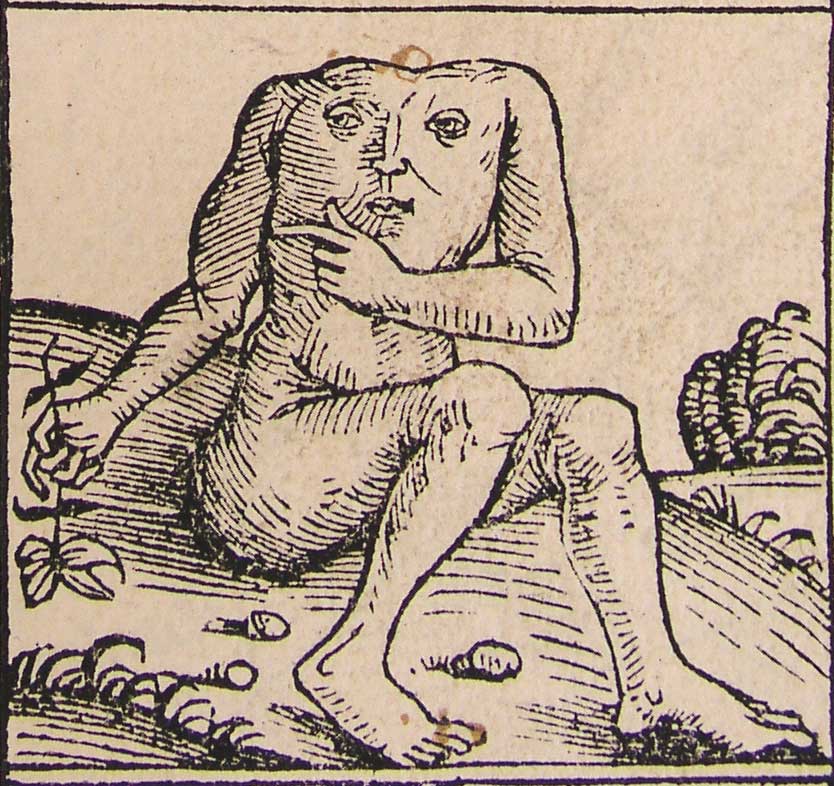 🇱🇾 Libya and 4 moreHeadless men
A legendary race of people described as lacking heads or having facial features on their chest.Being · Wonder and entertainment Legendary
🇱🇾 Libya and 4 moreHeadless men
A legendary race of people described as lacking heads or having facial features on their chest.Being · Wonder and entertainment Legendary
 🇵🇾 Paraguay and 2 moreKurupiCurupí
A Guaraní forest spirit known for his elongated phallus and role as a protector or abductor.Being · Protection · Cursing and harm Legendary
🇧🇧 Barbados and 2 moreObeah and Wanga
A Caribbean folk magic tradition and a Haitian charm packet, referenced in Western occult texts.Tradition · Power and authority · Cursing and harm Living
🇬🇾 Guyana and 1 moreBaccoo
A half-wood spirit from Guyanese and Surinamese folklore that serves as a mercenary or a haunting presence.Being · Cursing and harm · Speaking with spirits and the dead Legendary
🇵🇾 Paraguay and 2 moreKurupiCurupí
A Guaraní forest spirit known for his elongated phallus and role as a protector or abductor.Being · Protection · Cursing and harm Legendary
🇧🇧 Barbados and 2 moreObeah and Wanga
A Caribbean folk magic tradition and a Haitian charm packet, referenced in Western occult texts.Tradition · Power and authority · Cursing and harm Living
🇬🇾 Guyana and 1 moreBaccoo
A half-wood spirit from Guyanese and Surinamese folklore that serves as a mercenary or a haunting presence.Being · Cursing and harm · Speaking with spirits and the dead Legendary
Photo credits on this page
The small pictures above come from Wikimedia Commons under free licences. Some are cropped to fit.
- Curupira: Sturm, CC BY-SA 4.0, source
- Churel: Joe Mabel, CC BY-SA 3.0, source
- Odinani: Northcote Whitridge Thomas, Public domain, source
- Headless men: Hartmann Schedel (1440-1514), Public domain, source
- Kurupi: FrankOWeaver, CC BY-SA 3.0, source
The weekly digest
Every Monday: seven entries you may not know, what is on the calendar this week, and one rite drawn step by step.