Indigenous and shamanic: magic in this belief world
Ceremony, healing and spirit knowledge of Indigenous peoples; some of it closed to outsiders and described here only as far as its people share it.
Indigenous and shamanic traditions are the ceremony, healing and spirit knowledge of peoples from the Arctic to the Amazon, Australia, the Pacific and Africa. They are not one religion, and each community has its own names, laws and stories. Some knowledge is closed to outsiders by the community's own rule, and this guide describes it only as far as the people concerned share it. Terms such as Indigenous and shamanic can hide great variety, so the guide gives each people its own entry wherever it can.
Many peoples, many practices
Examples include the Sami noaidi, Mongolian and Siberian shamans, the Navajo and Lakota ceremonial systems, Amazonian plant healers, Andean offerings to Pachamama, Maori tohunga, Hawaiian kahuna and Aboriginal Dreaming law. Each is rooted in land, kinship and responsibility. Many peoples hold that knowledge belongs to the people and place it came from, and cannot be taken or sold. Elders say that these practices were given to a community and cannot be separated from its language, land and obligations, so that they function differently in the hands of outsiders.
Closed and open knowledge
A great deal is restricted by gender, age, initiation or clan. Some Aboriginal ceremonies, parts of Pueblo and Hopi religion, and many African initiation societies are not for outsiders, and describing them in detail would break the community's law. Visitors should ask before attending, photographing or recording, and accept a refusal. Where this guide is silent on a detail, that is deliberate. In many communities, healers and ceremonial leaders are chosen by calling, family and long training, and they do not advertise.
Suppression and recovery
Colonisers banned ceremonies, as in the United States, where the Plains Sun Dance and the Pacific Northwest potlatch were outlawed. Canada banned the potlatch from 1885 to 1951. Missionaries called practice devil worship and removed children to boarding schools. The American Indian Religious Freedom Act of 1978 recognised rights in US law, and revival and language movements continue. Colonial law in Australia, the United States, Canada, New Zealand, Brazil and elsewhere sought to end such practice, and some communities lost part of their ceremonial knowledge as a result.
Appropriation and respect
Sweat lodges run by outsiders have caused deaths, notably in Arizona in 2009. Sacred plants are sold as products, and costume and names are taken for branding. Indigenous leaders ask for consent, credit and benefit-sharing. Some Indigenous writers prefer to speak of religion, law or medicine, not magic, and this guide follows their lead where it can. Ask first and give back: those are the rules most communities state, and the guide asks readers to follow them.
Indigenous and shamanic on EveryJaadu
The entries written up so far, best known first.
 🇮🇪 Ireland and 5 moreCairn
A human-made stack of stones used as a marker, memorial, or religious symbol across many cultures.Tradition · Protection · Speaking with spirits and the dead Living
🇮🇪 Ireland and 5 moreCairn
A human-made stack of stones used as a marker, memorial, or religious symbol across many cultures.Tradition · Protection · Speaking with spirits and the dead Living
 🇷🇸 Serbia and 3 moreSerbian folkloreСрпски фолклор
The folk traditions and epic poetry of the Serbs, blending pre-Christian customs with Orthodox faith.Tradition · Speaking with spirits and the dead · Power and authority Living
🇷🇸 Serbia and 3 moreSerbian folkloreСрпски фолклор
The folk traditions and epic poetry of the Serbs, blending pre-Christian customs with Orthodox faith.Tradition · Speaking with spirits and the dead · Power and authority Living
 🇪🇬 Egypt and 2 moreLibation
The ritual pouring of liquid as an offering to spirits or the deadRite · Speaking with spirits and the dead · Protection Living
🇪🇬 Egypt and 2 moreLibation
The ritual pouring of liquid as an offering to spirits or the deadRite · Speaking with spirits and the dead · Protection Living
 🇬🇷 GreeceKykeonκυκεών
An Ancient Greek ritual drink linked to the Eleusinian Mysteries and peasant lifeSubstance · Speaking with spirits and the dead · Wonder and entertainment Historical
🇬🇷 GreeceKykeonκυκεών
An Ancient Greek ritual drink linked to the Eleusinian Mysteries and peasant lifeSubstance · Speaking with spirits and the dead · Wonder and entertainment Historical
 🇮🇪 IrelandLia Fáil
A standing stone at the Hill of Tara used for royal inaugurations in Irish legendCharm · Power and authority Historical
🇮🇪 IrelandLia Fáil
A standing stone at the Hill of Tara used for royal inaugurations in Irish legendCharm · Power and authority Historical
 🇬🇧 United Kingdom and 3 moreRowancaorann
A Northern Hemisphere tree believed to ward off witches and protect travellers.Substance · Protection · Speaking with spirits and the dead Living
🇬🇧 United Kingdom and 3 moreRowancaorann
A Northern Hemisphere tree believed to ward off witches and protect travellers.Substance · Protection · Speaking with spirits and the dead Living
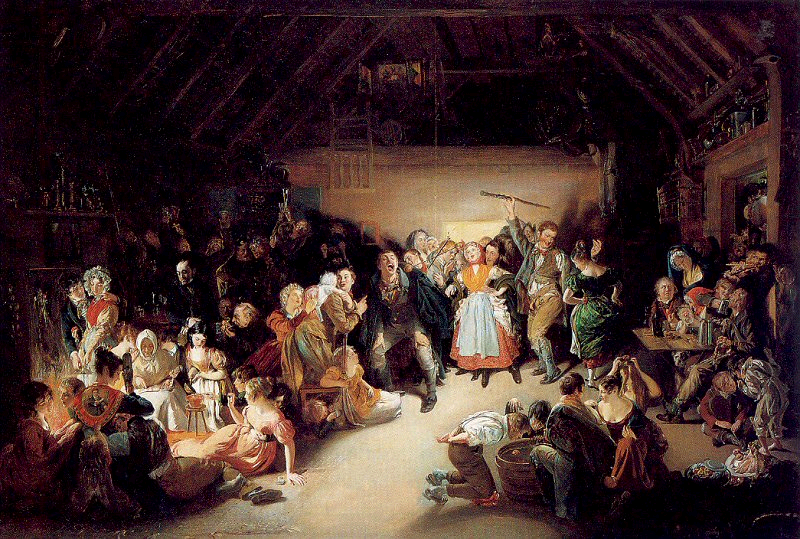 🇮🇪 Ireland and 1 moreSamhain
A Gaelic festival marking the end of harvest and the start of winter, observed on November 1st.Tradition · Protection · Speaking with spirits and the dead Living
🇮🇪 Ireland and 1 moreSamhain
A Gaelic festival marking the end of harvest and the start of winter, observed on November 1st.Tradition · Protection · Speaking with spirits and the dead Living
 🇱🇻 Latvia and 1 moreLatvian mythology
A collection of myths about gods, spirits, and the afterlife from the Baltic region.Tradition · Speaking with spirits and the dead · Power and authority Living
🇱🇻 Latvia and 1 moreLatvian mythology
A collection of myths about gods, spirits, and the afterlife from the Baltic region.Tradition · Speaking with spirits and the dead · Power and authority Living
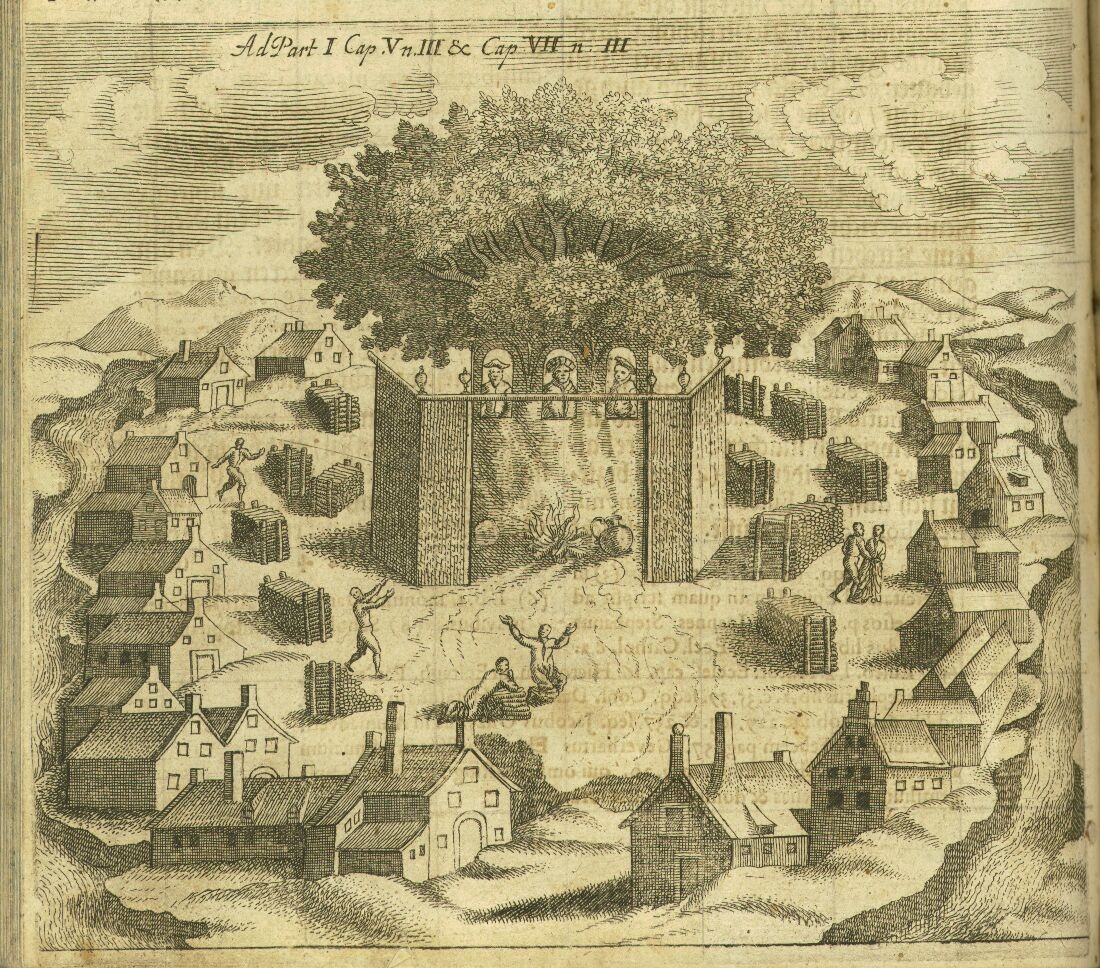 🇱🇹 Lithuania and 1 moreLithuanian mythologyLietuvių mitologija
The ancient polytheistic beliefs of the Baltic people, preserved in folklore and early chroniclesTradition · Speaking with spirits and the dead · Luck and prosperity Historical
🇱🇹 Lithuania and 1 moreLithuanian mythologyLietuvių mitologija
The ancient polytheistic beliefs of the Baltic people, preserved in folklore and early chroniclesTradition · Speaking with spirits and the dead · Luck and prosperity Historical
 🇮🇪 Ireland and 1 moreAos Sí
Supernatural beings of Irish and Scottish folklore, said to dwell in mounds and influence the human world.Being · Protection · Cursing and harm Living
🇮🇪 Ireland and 1 moreAos Sí
Supernatural beings of Irish and Scottish folklore, said to dwell in mounds and influence the human world.Being · Protection · Cursing and harm Living
 🇬🇷 Greece and 5 moreCrossroads (folklore)
A junction between worlds where spirits are met and deals are madeBelief · Speaking with spirits and the dead · Cursing and harm Living
🇬🇷 Greece and 5 moreCrossroads (folklore)
A junction between worlds where spirits are met and deals are madeBelief · Speaking with spirits and the dead · Cursing and harm Living
 🇷🇺 Russia and 2 moreDomovoyДомовой
A household spirit in Slavic folklore that guards the family and home.Being · Protection · Seeing and foretelling Historical
🇷🇺 Russia and 2 moreDomovoyДомовой
A household spirit in Slavic folklore that guards the family and home.Being · Protection · Seeing and foretelling Historical
 🇳🇴 NorwaySami religion
The animist and polytheistic beliefs of the Sámi people across northern ScandinaviaTradition · Protection · Luck and prosperity Historical
🇳🇴 NorwaySami religion
The animist and polytheistic beliefs of the Sámi people across northern ScandinaviaTradition · Protection · Luck and prosperity Historical
 🇮🇪 Ireland and 5 moreHoly well
A water source revered for healing and ritual across pagan and Christian traditionsTradition · Healing · Speaking with spirits and the dead Living
🇮🇪 Ireland and 5 moreHoly well
A water source revered for healing and ritual across pagan and Christian traditionsTradition · Healing · Speaking with spirits and the dead Living
 🇫🇷 FranceCurse of Vibia
A damaged Oscan lead tablet invoking underworld forces against a named man and his kinCharm · Cursing and harm Historical
🇫🇷 FranceCurse of Vibia
A damaged Oscan lead tablet invoking underworld forces against a named man and his kinCharm · Cursing and harm Historical
 🇬🇷 Greece and 4 moreTutelary deity
A guardian spirit or god assigned to protect a specific place, person, or group.Being · Protection Living
🇬🇷 Greece and 4 moreTutelary deity
A guardian spirit or god assigned to protect a specific place, person, or group.Being · Protection Living
 🇯🇵 Japan and 4 moreHousehold deity
A spirit or minor god believed to guard a home and its family members.Being · Protection · Speaking with spirits and the dead Historical
🇷🇺 RussiaAiyАйыы (Ayıı)
Benevolent spirits of the Upper World in Yakut mythologyBeing · Speaking with spirits and the dead · Power and authority Living
🇯🇵 Japan and 4 moreHousehold deity
A spirit or minor god believed to guard a home and its family members.Being · Protection · Speaking with spirits and the dead Historical
🇷🇺 RussiaAiyАйыы (Ayıı)
Benevolent spirits of the Upper World in Yakut mythologyBeing · Speaking with spirits and the dead · Power and authority Living
Photo credits on this page
The small pictures above come from Wikimedia Commons under free licences. Some are cropped to fit.
- Curse of Vibia: Franz Bücheler, Public domain, source
- Libation: Arkady Zarubin ( Аркадий Зарубин ), CC BY-SA 3.0, source
- Kykeon: Marsyas, CC BY-SA 2.5, source
- Lia Fáil: August Schwerdfeger, CC BY 4.0, source
- Rowan: Taken by me, Jonik , on August 25, 2004., CC BY-SA 2.0, source
- Samhain: Daniel Maclise, Public domain, source
- Brownie: Unknown author, CC BY-SA 2.5, source
- Latvian mythology: Dezidor, CC BY 3.0, source
- Lithuanian mythology: Prussian historian Christophorus Hartknoch (1644-1687), Public domain, source
- Sámi drum: Zouavman Le Zouave, CC BY-SA 3.0, source
- Crossroads (folklore): MiddleOfAfrica, CC BY-SA 4.0, source
- Domovoy: Ivan Bilibin, Public domain, source
- Household deity: Claus Ableiter, CC BY-SA 3.0, source
- Holy well: The Speckled Bird, CC BY-SA 4.0, source
- Cairn: Andrew Bossi, CC BY-SA 2.5, source
- Serbian folklore: Uroš Predić, Public domain, source
- Aos Sí: AE [George William Russell] (1867-1935), CC BY 4.0, source