
Libation
from Latin libatio, meaning an act of pouring
The ritual pouring of liquid as an offering to spirits or the dead
A libation is a ceremony where liquid is poured out for deities, ancestors, or the deceased. This practice appears in ancient Egypt, Greece, and Rome, and remains active in African and Andean traditions today.
- Originated in upper Nile Valley around 4000 BCE
- Greek spondē involved pouring wine into phiales
- Roman Liber Pater was god of libations
- Andean challa offers chicha to Pachamama
- Ghanaian elders pour palm wine for ancestors
What it is
A libation serves as a ceremonial offering through the pouring of liquids. It functions as a gesture of respect toward deities, sacred ancestors, or the deceased. This act bridges the physical world with the spiritual realm. The practice is found across many cultures, from ancient civilizations to modern communities. It is a fundamental component of religious life in various regions. The liquid acts as a gift that sustains or honors the recipient.
Where it comes from
Evidence suggests this custom began in the upper Nile Valley before spreading globally. In Egypt, it dates back to the Predynastic period around four thousand BCE. Greek practices emerged during the Bronze Age, deeply embedded in daily piety. Roman rituals followed similar patterns, emphasizing duty and reverence. The tradition likely evolved alongside early agricultural societies that valued harvest offerings.
How it is done
Practitioners pour liquids from vessels like jugs or bowls onto altars or into the earth. In Greece, wine mixed with water was common, poured into shallow bowls called phiales. Romans often used unmixed wine or perfumed oil. In Africa, elders pour palm wine while invoking ancestors. Andean peoples sprinkle chicha onto the ground before drinking. The act is usually accompanied by prayer or silence.
Tools and materials
Common substances include wine, beer, water, milk, olive oil, and honey. Specialized vessels such as the patera or oinochoē are used in Mediterranean rites. In Ghana, corn flour mixtures may accompany water. The choice of liquid often reflects local agriculture and availability. Vessels are frequently decorated to distinguish them from everyday use.
Libation, drawn and placed
- Living
- Revived
- Fading
- Historical
- Legendary
- Performed
- Lineage
- ancient religious practice
- Timing
- at meals, funerals, and daily prayers
What it is for
The primary goal is to honor gods, ancestors, or the dead. It seeks to purify sacred spaces or sustain the vital essence of beings. Libations mark important life events like births, weddings, and funerals. They also conclude agreements or treaties in ancient contexts. The act reinforces community bonds and spiritual connection.
Who does it
Elders typically lead ceremonies in African traditions, invoking ancestors publicly. Priests performed libations in Egyptian temples and Roman state rituals. Households conducted daily offerings in Greek homes. Any individual could participate in symposium rituals. Training involved learning specific prayers and vessel handling techniques.
Peoples and places
Ancient Egyptians viewed libations as essential for sustaining the ka. Greeks integrated them into daily life and philosophical concepts of piety. Romans associated them with pietas and funeral rites. Ghanaians use them to invite ancestors to communal events. Quechua and Aymara peoples offer chicha to Pachamama, the Earth Mother.
At a glance: who, where and when


What people believe
Liquids carry spiritual energy that nourishes invisible realms. Ancestors are believed to consume the essence of the offering. Pouring creates a covenant between humans and gods. In Greece, the verb for pouring also meant to make a pact. The act acknowledges dependence on divine forces for survival and order.
When it is done
Libations occur at meals, festivals, and funerals. Greeks performed them morning and evening. Romans offered them during Parentalia to honor the dead. Andean communities do challa before eating. In Ghana, they appear during Asafotu and Homowo festivals. Weekly grave visits were once common in Lower Nubia.
Rites that involve Libation
Questions people ask about Libation
What is a libation?
It is a ritual pouring of liquid as an offering to deities, ancestors, or the dead. This practice appears in ancient Egypt, Greece, and Rome, and remains active in African and Andean traditions today.
Why do people perform libations?
To honor spirits, purify spaces, or sustain ancestral essences. It reinforces community bonds and acknowledges dependence on divine forces for survival and order within their belief systems.
What liquids are used?
Wine, water, beer, milk, olive oil, and honey are common. The choice depends on local agriculture. In Greece, mixed wine was typical; in Africa, palm wine is frequent.
Where did the custom start?
Evidence points to the upper Nile Valley in Egypt, dating to the Predynastic period. It spread to Greece, Rome, and eventually the Americas and other regions through cultural exchange.
Good reading and sources
- Encyclopaedia BritannicaArticle
- Ancient Mesopotamian Beliefs in the AfterlifeWorld History Encyclopedia, Article
- Libation on WikipediaEncyclopedia
- More photos on Wikimedia CommonsPhotos and video
- Wikidata recordOpen data
The facts on this page come from the Wikipedia article "Libation", written by its contributors and used under the CC BY-SA 4.0 licence, and from its Wikidata record (CC0). EveryJaadu rewrote the text in its own words, with AI assistance, and compares every page with the article to make sure no passage is copied. It may be reused under the same CC BY-SA 4.0 licence with a link back.
It may contain mistakes. Names and customs differ from one community to the next, and some knowledge is closed to outsiders and left out here. This page describes belief and practice. It does not say that any of it works, it is not a how-to, and it is not medical advice. If something is wrong, tell us. Last refreshed 2026-10-05.
More from Egypt
All the entries from Egypt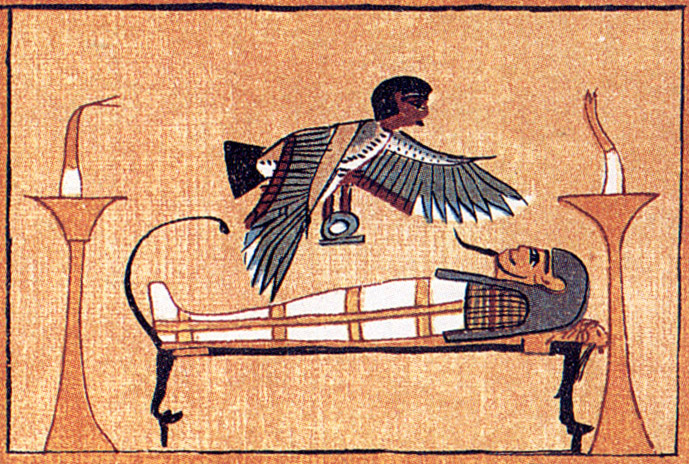 🇸🇪 Sweden and 1 moreSoul flight
A trance practice where the spirit leaves the body to visit other realmsRite · Healing · Seeing and foretelling Historical
🇸🇪 Sweden and 1 moreSoul flight
A trance practice where the spirit leaves the body to visit other realmsRite · Healing · Seeing and foretelling Historical
 🇬🇧 United Kingdom and 5 moreAleister Crowley
English occultist and founder of the religion of ThelemaText · Power and authority · Change and initiation Living
🇬🇧 United Kingdom and 5 moreAleister Crowley
English occultist and founder of the religion of ThelemaText · Power and authority · Change and initiation Living
 🇪🇪 Estonia and 5 moreSoul dualism
A belief that a person contains two or more distinct kinds of soulsBelief · Healing · Speaking with spirits and the dead Historical
🇪🇪 Estonia and 5 moreSoul dualism
A belief that a person contains two or more distinct kinds of soulsBelief · Healing · Speaking with spirits and the dead Historical
 🇪🇬 EgyptCurse
A spoken wish for misfortune to befall a person or placeBelief · Cursing and harm · Luck and prosperity Historical
🇪🇬 EgyptCurse
A spoken wish for misfortune to befall a person or placeBelief · Cursing and harm · Luck and prosperity Historical
Related elsewhere
All rite 🇮🇳 India and 1 moreRangoliरंगोली
Floor art made with coloured powders and flowers to welcome guests and deitiesTradition · Protection · Luck and prosperity Living
🇮🇳 India and 1 moreRangoliरंगोली
Floor art made with coloured powders and flowers to welcome guests and deitiesTradition · Protection · Luck and prosperity Living
 🇮🇳 India and 1 moreNavagrahaनवग्रह
A group of nine celestial deities in Hinduism that govern fate and astrologyTradition · Protection · Luck and prosperity Living
🇮🇳 India and 1 moreNavagrahaनवग्रह
A group of nine celestial deities in Hinduism that govern fate and astrologyTradition · Protection · Luck and prosperity Living
 🇮🇳 IndiaBhuta KolaBhūta Kōla
A Tulu folk dance and ritual where spirits are channelled into human performersTradition · Protection · Speaking with spirits and the dead Living
🇮🇳 IndiaBhuta KolaBhūta Kōla
A Tulu folk dance and ritual where spirits are channelled into human performersTradition · Protection · Speaking with spirits and the dead Living
 🇯🇵 JapanShinto shrine神社 (jinja)
A structure housing kami deities within the Shinto tradition of JapanTradition · Protection · Speaking with spirits and the dead Living
🇯🇵 JapanShinto shrine神社 (jinja)
A structure housing kami deities within the Shinto tradition of JapanTradition · Protection · Speaking with spirits and the dead Living