
Spirit possession
A global belief that spirits or demons can take control of a person's body and mind
Spirit possession is a widespread concept found across many cultures and religions. It describes an altered state where a human body is controlled by external entities such as ghosts, deities, or demons. The experience may be voluntary or involuntary and is viewed as either beneficial or harmful depending on the context.
- 74% of 488 societies studied believed in spirit possession
- Catholic exorcism requires bishop approval and medical checks
- King James I wrote about demonic influence in 1597
- Possession can be voluntary or involuntary depending on culture
- Jesus cast out demons in New Testament accounts
What it is
This concept describes a condition where a human being is believed to be taken over by an outside force. These forces are often identified as spirits, ghosts, demons, angels, or gods. The takeover changes the person's behavior and consciousness. People around the world hold this view in various forms. Some see it as a gift from a deity, while others fear it as a curse from evil entities. The experience is sometimes used as proof that spiritual beings exist. It is not limited to one region but appears in societies across the globe.
Where it comes from
The idea has deep roots in ancient texts and oral traditions. In Christianity, it traces back to biblical accounts of Jesus casting out demons. Jewish tradition also contains stories of demonic influence. Hindu and Buddhist texts describe similar encounters with supernatural beings. African and Native American cultures have long-standing beliefs about spirit contact. A 1969 study noted that 74% of surveyed societies reported belief in these phenomena. This suggests the concept is ancient and nearly universal, though interpretations vary widely.
How it is done
Methods for dealing with possession depend on the religious tradition. Christians often use prayer, blessings, and formal exorcisms led by priests. Catholic rituals require bishop approval and medical checks first. Anglican and Baptist groups may use deliverance ministries. Some traditions view possession as voluntary submission to dark powers. Others see it as an involuntary attack. Healing practices might include fasting, holy water, or specific prayers. In some cases, the possessed person is isolated or monitored until the spirit leaves.
Tools and materials
Tools vary by faith. Catholics use holy water, relics, and sacred images. Exorcists may recite specific Latin rites. Protestants often rely on prayer and the name of Jesus. Some traditions use herbs or wax to ward off evil. In medieval Europe, households were sprinkled with holy water. Objects like crosses or amulets are common protective symbols. Medical tools are also involved in modern Catholic practice to rule out illness. No single tool is used everywhere; each culture has its own set of items.
Spirit possession, drawn and placed
- Living
- Revived
- Fading
- Historical
- Legendary
- Performed
What it is for
People seek help when they believe someone is possessed. The goal is usually to remove the unwanted spirit and restore health. In some cases, possession is sought to gain power or insight. Religious leaders act as intermediaries to negotiate with spirits. Families may request intervention to protect their loved ones. The purpose can be protective, healing, or punitive. Some view it as a way to cleanse a community of evil influences. Others see it as a necessary step in spiritual warfare.
Who does it
Practitioners include priests, pastors, shamans, and healers. In Catholicism, only trained exorcists under a bishop can perform major rites. Protestant ministers may lead deliverance services. Indigenous healers often work with local spirits. Scholars study these practices as cultural phenomena. Gender roles vary; some traditions allow women to be mediums, while others restrict them. Status depends on religious authority. Practitioners must often prove their legitimacy through successful outcomes.
Peoples and places
This belief spans many groups. Hindus in India report deity possession. Muslims in Africa and Asia discuss jinn influence. Jews in historical contexts feared demonic attacks. Christians worldwide engage in exorcism debates. Native Americans have diverse views on spirit contact. Southeast Asian cultures blend animism with Buddhism or Islam. Haitian Vodou sees possession as divine communication. Each group interprets the signs differently. Some welcome the spirit, while others fight it. Cultural context determines whether the event is celebrated or feared.
At a glance: who, where and when

What people believe
Underlying this belief is a worldview where the spiritual and physical worlds interact. Spirits are seen as real agents with power over humans. Good spirits bring blessings; bad spirits cause harm. Humans can be vulnerable to these forces. Free will plays a role; some believe people invite spirits through sin or curiosity. Others see possession as random attack. The balance between divine protection and spiritual danger is central. Many traditions teach that prayer and ritual can restore order.
When it is done
There are no fixed calendar dates for possession itself. However, rituals to prevent or cure it may align with festivals. Christian holidays like Easter or Christmas might involve special prayers. Harvest festivals in some cultures include spirit appeasement. Life events like birth or death can trigger concerns about spiritual vulnerability. There is no universal schedule; timing depends on individual need or community crisis.
How scholars and sceptics see it
Anthropologists view possession as a cultural expression of distress or social change. Psychologists sometimes link it to dissociative states or mental illness. Skeptics argue it is a myth used to explain unexplained behavior. Historians note how colonial powers labeled indigenous practices as demonic. Studies show high global prevalence, especially in Pacific cultures. Researchers debate whether it is a genuine spiritual experience or a psychological phenomenon. No consensus exists on its nature.
Cautions and what is closed
Misdiagnosis is a serious risk. Mental illnesses are often mistaken for possession. Medical evaluation is required before religious intervention. Fraudulent healers may exploit fearful families. Legal issues arise when exorcisms cause harm or delay treatment. Some communities face persecution for practicing spirit rites. Closed knowledge systems restrict outsider access to certain rituals. Violence can occur during intense rituals. Caution is advised to protect both the possessed and the practitioners.
Compare and confuse
Spirit possession is often confused with trance or meditation. In trance, the person remains in control; in possession, they do not. Shamanic journeying is voluntary; possession is often not. Different cultures use different terms: jinn in Islam, nats in Burma, or loa in Vodou. The core idea of external control is similar, but the entities and responses vary. Western Christianity focuses on demons; Eastern traditions may focus on ancestors or gods.
Rites that involve Spirit possession
Questions people ask about Spirit possession
What is spirit possession?
It is a belief that a spirit, demon, or deity can take control of a person's body and mind, changing their behavior and consciousness. This happens in many cultures worldwide.
Where does this belief come from?
It appears in ancient religious texts like the Bible and Hindu scriptures, as well as in indigenous traditions across Africa, Asia, and the Americas. A 1969 study found it in most surveyed societies.
Is it always harmful?
No. In some traditions, like Haitian Vodou, possession is seen as a blessing where a god speaks through a person. In others, like Christian demonology, it is viewed as a malicious attack.
How is it treated?
Methods vary. Christians use prayer and exorcism. Catholics require medical exams first. Indigenous healers may use rituals to negotiate with spirits. Treatment depends on the religious context.
Good reading and sources
The facts on this page come from the Wikipedia article "Spirit possession", written by its contributors and used under the CC BY-SA 4.0 licence, and from its Wikidata record (CC0). EveryJaadu rewrote the text in its own words, with AI assistance, and compares every page with the article to make sure no passage is copied. It may be reused under the same CC BY-SA 4.0 licence with a link back.
It may contain mistakes. Names and customs differ from one community to the next, and some knowledge is closed to outsiders and left out here. This page describes belief and practice. It does not say that any of it works, it is not a how-to, and it is not medical advice. If something is wrong, tell us. Last refreshed 2026-10-05.
More from India
All the entries from India 🇮🇳 IndiaChakraचक्र
Meditation points in the subtle body used in Hindu and Buddhist yogaTradition · Speaking with spirits and the dead · Change and initiation Living
🇮🇳 IndiaChakraचक्र
Meditation points in the subtle body used in Hindu and Buddhist yogaTradition · Speaking with spirits and the dead · Change and initiation Living
 🇮🇳 India and 1 moreMantraमन्त्रम्
A sacred sound or phrase repeated to focus the mind and invoke spiritual powerText · Speaking with spirits and the dead · Power and authority Living
🇮🇳 India and 1 moreMantraमन्त्रम्
A sacred sound or phrase repeated to focus the mind and invoke spiritual powerText · Speaking with spirits and the dead · Power and authority Living
 🇮🇳 India and 5 moreKolamகோலம்
A daily geometric floor drawing made with rice flour at the home entrance in South IndiaTradition · Protection · Luck and prosperity Living
🇮🇳 IndiaPanchagavya
A fermented mixture of five cow products used in Hindu rituals and Ayurvedic traditions.Substance · Cleansing and purification · Healing Living
🇮🇳 India and 5 moreKolamகோலம்
A daily geometric floor drawing made with rice flour at the home entrance in South IndiaTradition · Protection · Luck and prosperity Living
🇮🇳 IndiaPanchagavya
A fermented mixture of five cow products used in Hindu rituals and Ayurvedic traditions.Substance · Cleansing and purification · Healing Living
Related elsewhere
All belief 🇮🇸 Iceland and 2 moreSeiðr
A Norse magic of fate and spirit, practiced by seers and sorcerers in the Viking Age.Tradition · Seeing and foretelling · Cursing and harm Revived
🇮🇸 Iceland and 2 moreSeiðr
A Norse magic of fate and spirit, practiced by seers and sorcerers in the Viking Age.Tradition · Seeing and foretelling · Cursing and harm Revived
 🇿🇦 South AfricaSympathetic magic
A magical principle based on imitation and contact to influence the worldTradition · Protection · Healing Historical
🇿🇦 South AfricaSympathetic magic
A magical principle based on imitation and contact to influence the worldTradition · Protection · Healing Historical
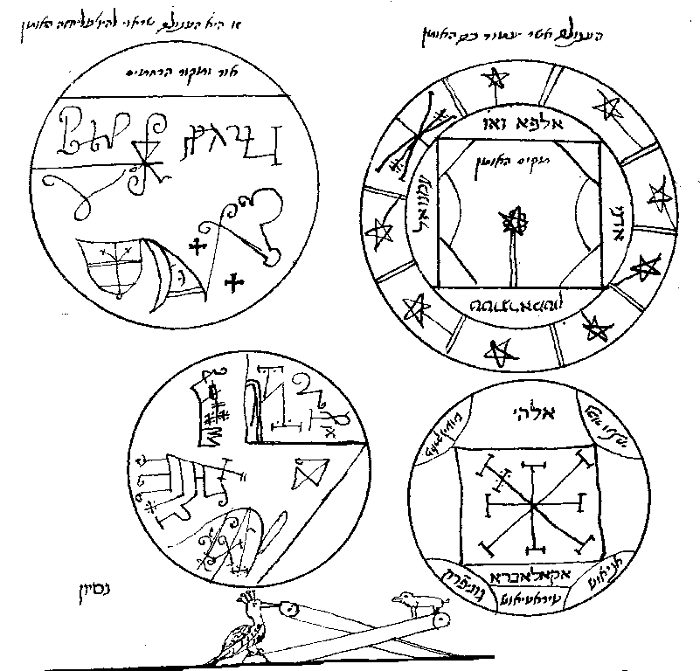 🇮🇹 Italy and 2 moreKey of SolomonClavicula Salomonis
A Renaissance grimoire attributed to King Solomon, detailing ritual preparations and invocations.Text · Cursing and harm · Love and attraction Historical
🇿🇦 South Africa and 5 moreMurder for body parts
The killing of people to harvest body parts for traditional medicine or the illegal organ trade.Belief · Cursing and harm · Power and authority Living
🇮🇹 Italy and 2 moreKey of SolomonClavicula Salomonis
A Renaissance grimoire attributed to King Solomon, detailing ritual preparations and invocations.Text · Cursing and harm · Love and attraction Historical
🇿🇦 South Africa and 5 moreMurder for body parts
The killing of people to harvest body parts for traditional medicine or the illegal organ trade.Belief · Cursing and harm · Power and authority Living