
Siberian shamanism
from the Evenk word saman, borrowed into Russian
The spirit-journey practices of North Asian peoples and their linguistic relatives
A religio-cultural system followed by many ethnic groups in Siberia, where practitioners journey to the spirit world for healing and guidance. The term originates from Evenk words for a ritual specialist, though local names vary widely across language families.
- The word shaman comes from the Evenk term saman.
- Buryat shamans are called böö, from Proto-Turkic bögü.
- Nganasan seances were recorded on film in the 1970s.
- Drum overlays often symbolize shamanic rebirth.
- Hungarian folklore preserves ancient shamanic motifs.
What it is
Shamanism in Siberia is a diverse set of religio-cultural practices found among the many ethnic groups of North Asia. Researchers often call this region the heartland of the tradition. It involves specialists who enter altered states to interact with spirits. These journeys are used to heal illness, retrieve lost souls, or communicate with the unseen world. The practice is not a single unified religion but a collection of traditions shared across different cultures and language families.
Where it comes from
The concept of shamanism was largely shaped by classical ethnographers recording Siberian sources. The English word comes from the Evenk term saman. Other groups use different roots: the Buryat use böö, derived from Proto-Turkic bögü meaning sage. Uralic speakers use terms like noaidi. The etymology suggests deep historical links between Siberian peoples and those who migrated west, such as the Hungarians.
How it is done
Practitioners conduct spirit-journeys, often reenacting dreams where they rescued a client's soul. Seances involve specific songs and music that mimic natural sounds like birds or wolves. In some cultures, shamans imitate animal noises to represent helping spirits. Women may accompany these rites by making reindeer calf sounds to encourage fertility. The practice varies greatly, with some shamans using drums or specific crowns for different spiritual realms.
Tools and materials
Tools include drums, sometimes featuring two transoms or skeleton-like overlays symbolizing rebirth. Shamans wear dresses and headdresses decorated with effigies of human organs or bones. Music is a primary tool, utilizing overtone singing and onomatopoeia. Specific items like three different crowns might be used for the upper world, the underworld, or childbirth rituals.
Siberian shamanism, drawn and placed
- Living
- Revived
- Fading
- Historical
- Legendary
- Performed
- Lineage
- Siberian indigenous religions
- Timing
- during healing seances and after the polar night
What it is for
The main intent is healing through soul retrieval during crises. Shamans also contact the dead or spirits of the upper and lower worlds. Some rites aim to provide fertility, such as when women imitate reindeer sounds. Others seek luck or protection through communication with animal helper spirits like the polar bear or loon.
Who does it
Shamans can be male or female, though female forms often share a common linguistic root. Training is not always formal; some traditions suggest women practiced earlier than men. Specialists are distinguished by their function, such as curing versus performing sacral rites. Status varies, with some shamans associated with specific animals like deer or bears.
Peoples and places
The tradition spans Uralic, Samoyedic, Turkic, and Tungusic peoples. Nganasans and Nenets kept living traditions into the twentieth century. Buryats and Soyots show influences from Mongol and Turkic neighbors. Hungarian folklore retains remnants of ancient shamanic motifs despite migration. The Ket people maintained practices until the mid-twentieth century, sharing features with Turkic and Mongolic groups.
At a glance: who, where and when
Who does it
Belief worlds
Occasions


What people believe
Beliefs center on the spirit world and the shaman's ability to travel between realms. Skeleton symbolism on clothing represents shamanic rebirth or the bones of helper animals. Spirits are believed to inhabit natural elements and animals. The hearth goddess Etügen is linked to female shamanic roots. Journeys allow the practitioner to navigate the sky and underwater worlds simultaneously.
When it is done
Rites occur during life crises, healing needs, and seasonal events. The clean tent rite is held after the polar night and includes sacrifices. Some practices are tied to childbirth or fertility cycles. Daily life interactions with spirits also guide routine activities for households.
How scholars and sceptics see it
Ethnographers like Diószegi Vilmos and Mihály Hoppál compared Siberian records with Hungarian and other Uralic folklore. They trace linguistic and mythological connections across vast distances. Researchers note the decline of authentic practice due to language shifts and isolation ending. Film recordings from the 1970s preserved last known Nganasan seances.
Cautions and what is closed
Many languages and traditions have become extinct or fading due to migration and assimilation. Authentic knowledge is disappearing as older practitioners pass away without successors. Some communities have shifted to Islam or Buddhism, blending or replacing old ways. Outsiders rarely access closed or initiatory details of these sacred rites.
Compare and confuse
Siberian shamanism shares features with Sami noaidi practices in Europe, such as joik singing. It relates to Turkic and Mongolic traditions through cultural exchange. Hungarian folklore preserves distant echoes of these Siberian roots. Inuit throat singing uses similar sound mimesis but serves different social purposes.
Law and persecution
However, historical suppression occurred as Christianity and state policies spread. Many practices were driven underground or forgotten as communities modernized.
Today
Living traditions persist among isolated groups like the Nganasans, though numbers are small. Folklore retains fragments of songs and rhymes in Hungary and among Ugrian peoples. Scholars continue to record remaining memories and paraphernalia before these histories vanish completely.
Questions people ask about Siberian shamanism
What does the word shaman mean?
It derives from the Evenk word saman. Other groups use different terms like böö or noaidi, reflecting diverse linguistic roots across Siberia.
Where did Siberian shamanism originate?
Siberia is considered the heartland. Linguistic evidence links it to Proto-Uralic and Proto-Turkic roots, spreading across North Asia.
How do shamans heal patients?
They perform spirit-journeys to retrieve lost souls. Seances involve mimicking animal sounds and using drums to communicate with helping spirits.
Is shamanism still practiced today?
Yes, but it is fading. Isolated groups like the Nganasans maintained it recently, while others survive only in folklore or scholarly records.
Good reading and sources
The facts on this page come from the Wikipedia article "Shamanism in Siberia", written by its contributors and used under the CC BY-SA 4.0 licence, and from its Wikidata record (CC0). EveryJaadu rewrote the text in its own words, with AI assistance, and compares every page with the article to make sure no passage is copied. It may be reused under the same CC BY-SA 4.0 licence with a link back.
It may contain mistakes. Names and customs differ from one community to the next, and some knowledge is closed to outsiders and left out here. This page describes belief and practice. It does not say that any of it works, it is not a how-to, and it is not medical advice. If something is wrong, tell us. Last refreshed 2026-10-05.
More from Russia
All the entries from Russia 🇲🇳 Mongolia and 2 moreMongolian shamanismBöö mörgöl
The animistic and shamanic ethnic religion of the Mongol peoples, centered on sky worship and ancestral spirits.Tradition · Protection · Healing Living
🇲🇳 Mongolia and 2 moreMongolian shamanismBöö mörgöl
The animistic and shamanic ethnic religion of the Mongol peoples, centered on sky worship and ancestral spirits.Tradition · Protection · Healing Living
 🇷🇺 RussiaReindeer in Siberian shamanism
The role of reindeer as spirit helpers, ritual tools, and burial vehicles in the shamanic traditions of Northern AsiaTradition · Healing · Speaking with spirits and the dead Living
🇷🇺 RussiaReindeer in Siberian shamanism
The role of reindeer as spirit helpers, ritual tools, and burial vehicles in the shamanic traditions of Northern AsiaTradition · Healing · Speaking with spirits and the dead Living
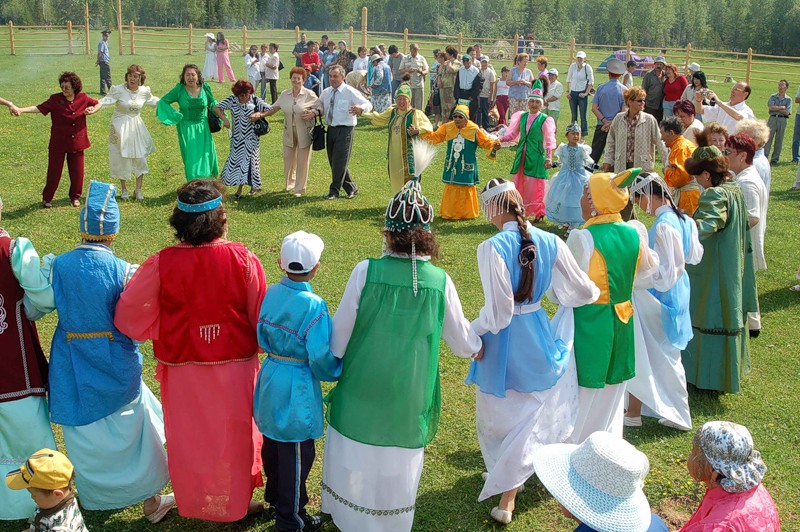 🇷🇺 RussiaYhyakhЫһыах
A summer solstice festival of the Sakha people marking the new year and nature's returnTradition · Luck and prosperity · Speaking with spirits and the dead Living
🇲🇳 Mongolia and 1 moreYellow shamanismШар бөө
A Mongolian and Siberian shamanic tradition blended with Buddhist ritualsTradition · Speaking with spirits and the dead · Protection Historical
🇷🇺 RussiaYhyakhЫһыах
A summer solstice festival of the Sakha people marking the new year and nature's returnTradition · Luck and prosperity · Speaking with spirits and the dead Living
🇲🇳 Mongolia and 1 moreYellow shamanismШар бөө
A Mongolian and Siberian shamanic tradition blended with Buddhist ritualsTradition · Speaking with spirits and the dead · Protection Historical
Related elsewhere
All tradition 🇰🇷 South Korea and 3 moreKorean shamanism무속
A Korean folk religion centered on ritual specialists who mediate between humans and spiritsTradition · Protection · Healing Living
🇰🇷 South Korea and 3 moreKorean shamanism무속
A Korean folk religion centered on ritual specialists who mediate between humans and spiritsTradition · Protection · Healing Living
 🇵🇪 Peru and 5 morePachamama
The Andean mother goddess of space-time and the earthBeing · Protection · Healing Living
🇵🇪 Peru and 5 morePachamama
The Andean mother goddess of space-time and the earthBeing · Protection · Healing Living
 🇰🇷 South Korea and 1 moreKorean shamanismKorean shamanism (Korean: Korean shamanism)
A traditional practice of ritual specialists who mediate between the human and spirit worlds.Tradition · Healing · Protection Living
🇰🇷 South Korea and 1 moreKorean shamanismKorean shamanism (Korean: Korean shamanism)
A traditional practice of ritual specialists who mediate between the human and spirit worlds.Tradition · Healing · Protection Living
 🇵🇪 Peru and 1 moreApu
Sacred mountain spirits in Andean tradition that protect communities and control natural resourcesBeing · Protection · Healing Living
🇵🇪 Peru and 1 moreApu
Sacred mountain spirits in Andean tradition that protect communities and control natural resourcesBeing · Protection · Healing Living