
Werejaguar
from Old English were, meaning man, and jaguar, by analogy with werewolf
A supernatural figure from Olmec art, blending human and jaguar traits.
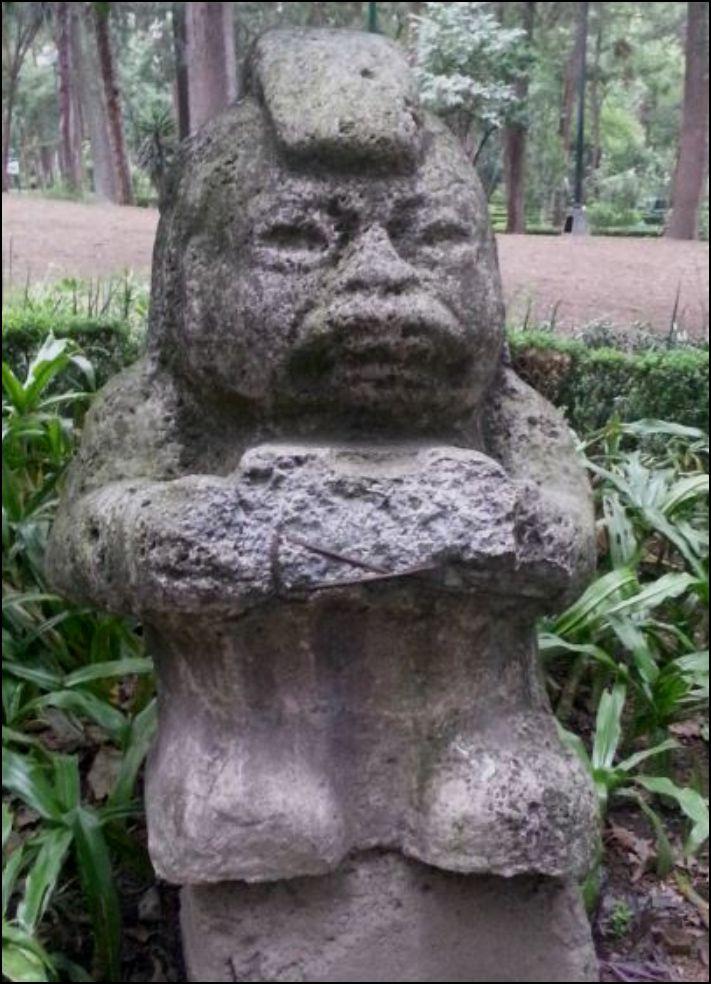
The werejaguar is a mythical entity from the ancient Olmec civilization of Mexico. It appears as a motif in art and sculpture, often linked to rain and shamanic transformation. Scholars debate whether it represents a deity, a genetic condition, or an animal like a toad.
- Characterized by almond eyes, cleft head, and downturned mouth.
- Originally considered the primary Olmec deity, now seen as one of many.
- Matthew Stirling proposed a human-jaguar mating myth origin.
- Peter Furst suggested it represents a native toad or harpy eagle.
- Used as household gods or spirit helpers by shamans.
What it is
The werejaguar is a supernatural being and artistic motif from the Olmec culture of ancient Mexico. It is characterized by almond-shaped eyes, a cleft head, and a downturned mouth with toothless gums. Originally thought to be the primary deity of the Olmecs, it is now viewed as one of many supernatural figures. The term combines the Old English word for man with jaguar, mirroring the structure of werewolf. It serves as a key element in understanding Olmec iconography and religious beliefs.
Where it comes from
Scholars have debated the origin of the werejaguar motif for decades. Matthew Stirling proposed that it stemmed from a myth involving mating between a jaguar and a woman. This idea gained support but faced challenges from later research. Other theories suggest the features represent genetic conditions like spina bifida or Down syndrome, which might have been seen as divine signs among elites. Some researchers argue the motif actually depicts a toad or a harpy eagle, both powerful animals in Mesoamerican culture.
Tools and materials
The werejaguar appears in various materials, including small greenstone figurines, basalt statues, and large altars. These objects were likely used as household gods or spirit helpers for priests and shamans. Two-dimensional images were incised on greenstone celts and painted on pottery. The motifs often include specific attributes like headbands, headdresses, earbars, and crossed-bars icons on the chest.
Werejaguar, drawn and placed
- Living
- Revived
- Fading
- Historical
- Legendary
- Performed
- Lineage
- Olmec mythology
What it is for
The werejaguar is associated with rain, power, and spiritual transformation. It may have represented authority for ruling elites, validating their leadership through jaguar symbolism. Shamans might have used werejaguar figurines as familiars to aid in rituals and transformative acts. The figure also connects to broader themes of fertility and regeneration, particularly in interpretations linking it to toads or eagles.
Who does it
Shamans and priests in Olmec society likely interacted with werejaguar figures as spirit helpers. These practitioners would have used the artifacts in rituals to seek guidance or power. The elite class may have employed jaguar imagery to reinforce their status and divine connection. There is no evidence of widespread public practice; the focus remains on specialized roles within the community.
Peoples and places
The werejaguar is central to Olmec mythology and art. The Olmecs inhabited regions of ancient Mexico, where jaguars were revered as apex predators. Later Mesoamerican cultures adopted similar shape-shifting concepts, such as naguals. The motif reflects the importance of feline symbolism in the Americas, linking power, nature, and the supernatural across different societies.
At a glance: who, where and when
Peoples

What people believe
The werejaguar embodies a blend of human and animal traits, symbolizing transformation and hidden power. It may represent a rain deity, connecting weather patterns to spiritual forces. Interpretations vary: some see it as a literal hybrid, others as a representation of natural phenomena or biological conditions. The figure underscores the Olmec worldview, where boundaries between humans, animals, and spirits were fluid.
How scholars and sceptics see it
Academics have offered diverse explanations for the werejaguar. Early scholars favored the human-jaguar copulation myth. Later researchers questioned this, proposing alternatives like genetic defects or animal analogues. Peter David Joralemon identified multiple Olmec supernaturals, reducing the werejaguar's dominance. Whitney Davis suggested battle conquest rather than sexual union. Peter Furst argued for toad or eagle representations, highlighting ceremonial and hallucinogenic properties.
Compare and confuse
The werejaguar is related to later Mesoamerican shape-shifters like naguals. It shares traits with other therianthropic figures, such as werewolves and skin-walkers. However, its specific iconography and cultural context are unique to the Olmec civilization. The term itself is a modern construct, derived from European linguistic patterns applied to Mesoamerican art.
Questions people ask about Werejaguar
What is a werejaguar?
It is a mythical figure from Olmec art, combining human and jaguar features. It appears in sculptures and carvings, often linked to rain and spiritual power.
Where does the term come from?
The name blends Old English were (man) with jaguar, modeled after werewolf. It describes a supernatural entity in ancient Mexican mythology.
Why do scholars disagree on its meaning?
Explanations range from a mating myth to genetic conditions or animal symbols. No single theory fully accounts for all artistic representations.
How was it used in Olmec society?
Figurines served as household gods or shamanic helpers. Elite leaders may have used jaguar imagery to validate their authority and divine status.
Good reading and sources
The facts on this page come from the Wikipedia article "Werejaguar", written by its contributors and used under the CC BY-SA 4.0 licence, and from its Wikidata record (CC0). EveryJaadu rewrote the text in its own words, with AI assistance, and compares every page with the article to make sure no passage is copied. It may be reused under the same CC BY-SA 4.0 licence with a link back.
It may contain mistakes. Names and customs differ from one community to the next, and some knowledge is closed to outsiders and left out here. This page describes belief and practice. It does not say that any of it works, it is not a how-to, and it is not medical advice. If something is wrong, tell us. Last refreshed 2026-10-06.
More from Mexico
All the entries from Mexico 🇲🇽 Mexico and 2 moreAluxaluxo'ob
A small Maya spirit believed to guard fields and cause mischief if offended.Being · Protection · Luck and prosperity Living
🇲🇽 Mexico and 2 moreAluxaluxo'ob
A small Maya spirit believed to guard fields and cause mischief if offended.Being · Protection · Luck and prosperity Living
 🇲🇽 MexicoChaneque
Mexican folklore sprites that guard nature and homesBeing · Protection · Cursing and harm Legendary
🇲🇽 MexicoChaneque
Mexican folklore sprites that guard nature and homesBeing · Protection · Cursing and harm Legendary
 🇵🇷 Puerto Rico and 5 moreChupacabrachupacabras
A legendary creature said to drain livestock of blood, emerging from Puerto Rico in the mid-1990sBeing · Cursing and harm Legendary
🇵🇷 Puerto Rico and 5 moreChupacabrachupacabras
A legendary creature said to drain livestock of blood, emerging from Puerto Rico in the mid-1990sBeing · Cursing and harm Legendary
 🇲🇽 Mexico and 5 moreSihuanaba
A shapeshifting spirit that lures men with beauty before revealing a monstrous faceBeing · Cursing and harm Legendary
🇲🇽 Mexico and 5 moreSihuanaba
A shapeshifting spirit that lures men with beauty before revealing a monstrous faceBeing · Cursing and harm Legendary
Related elsewhere
All being 🇺🇸 United States and 1 moreMedicine wheel
Circular stone formations built by Indigenous peoples of North America for ceremony and astronomy.Tradition · Speaking with spirits and the dead · Power and authority Living
🇺🇸 United States and 1 moreMedicine wheel
Circular stone formations built by Indigenous peoples of North America for ceremony and astronomy.Tradition · Speaking with spirits and the dead · Power and authority Living
 🇮🇶 Iraq and 5 moreGrimoire
A textbook containing instructions for spells, rituals, and the creation of magical objects.Text · Protection · Healing Historical
🇳🇴 NorwayEsbat
A monthly Wiccan ritual held at the full or new moon for worship and community.Rite · Speaking with spirits and the dead · Love and attraction Living
🇮🇶 Iraq and 5 moreGrimoire
A textbook containing instructions for spells, rituals, and the creation of magical objects.Text · Protection · Healing Historical
🇳🇴 NorwayEsbat
A monthly Wiccan ritual held at the full or new moon for worship and community.Rite · Speaking with spirits and the dead · Love and attraction Living