
Ancient Mesopotamian religion
The polytheistic beliefs and practices of Sumer, Akkad, Assyria and Babylonia from 6000 BC to 500 AD
A long-standing system of worship in ancient West Asia that evolved from nature reverence into a structured pantheon. It held that gods controlled the cosmos and required human service, shaping politics, law and daily life for millennia.
- Polytheistic worship evolved from nature reverence to structured pantheon
- Kings served as stewards of gods, linking politics and religion
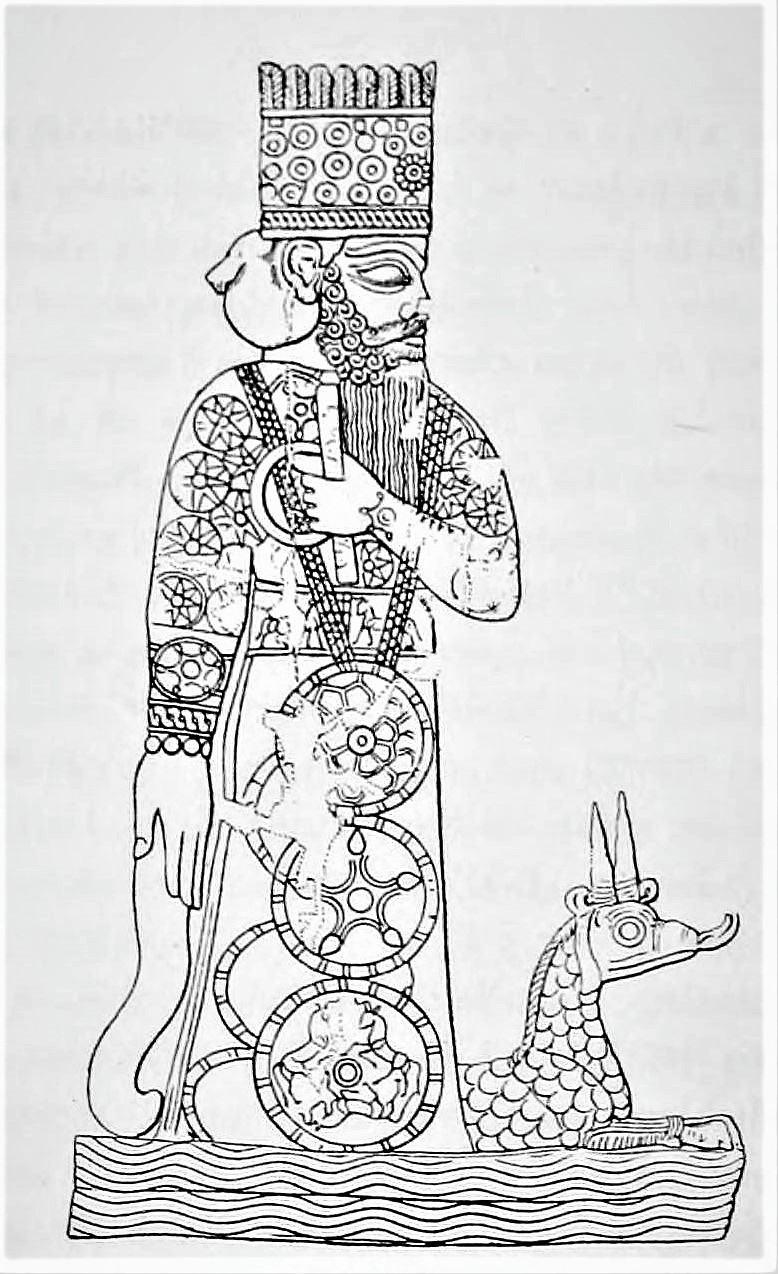
- Enuma Elish describes Marduk creating cosmos from Tiamat's body
- Deities possessed melammu, a terrifying brightness inspiring awe
- Religion persisted for millennia, adapting to political changes
What it is
This tradition covered the spiritual lives of civilizations in ancient Mesopotamia, including Sumer, Akkad, Assyria and Babylonia. It spanned from roughly 6000 BC to 500 AD. The belief system was polytheistic, recognizing many gods who were often linked to specific cities or natural forces. Over time, it became more structured, with certain deities rising above others. People viewed these gods as powerful beings who demanded respect and obedience rather than simple affection. The religion shaped how society was organized, influencing laws, governance and daily routines across the region.
Where it comes from
Early religious thought likely began in the sixth millennium BC when permanent settlements formed due to better irrigation. Written records appear around 3500 BC, showing worship of nature forces. Sumerians worshipped mother goddesses like Ninhursag early on. By the third millennium BC, these forces became personified gods. The Akkadians later merged their beliefs with Sumerian ones, creating a shared cultural and religious landscape that adapted over thousands of years without major external influence.
How it is done
Worship involved maintaining temples and performing rituals to keep the gods pleased. Kings acted as chief servants to the gods, ensuring divine favor through priestly reassurance. Citizens often carried names dedicated to specific deities. The religion did not rely on secret mysteries but on public observance and civic duty. Rituals reinforced the link between the divine and the political structure, with rulers serving as intermediaries who upheld cosmic order through correct ceremonial practice.
Tools and materials
Cuneiform writing preserved myths like the Enuma Elish, which described creation. Statues and temple structures served as homes for the gods. The melammu, a terrifying brightness surrounding deities, signified their power. Sacred objects and inscriptions marked holy sites. Priests used these tools to maintain the connection between the human world and the divine realm, ensuring that the gods received the sustenance and attention they required.
Ancient Mesopotamian religion, drawn and placed
- Living
- Revived
- Fading
- Historical
- Legendary
- Performed
- Lineage
- Mesopotamian mythology
What it is for
People sought to understand their place in a cosmos created by gods like Marduk. They aimed to secure divine protection and political legitimacy. Rulers needed the gods' approval to justify their authority. Ordinary citizens found meaning through personal devotion and city-specific patronage. The religion provided a framework for explaining natural events, social hierarchy and the origins of humanity, offering stability in a complex ancient world.
Who does it
Priests served as high officials, especially in Assyria where the king was considered the steward of Ashur. Elders and assemblies shared power with rulers in early periods. Household members maintained personal piety through name-giving and local worship. Scholars and scribes recorded theological lists and myths. The priesthood held significant influence, advising kings and managing temple economies, while ordinary people participated in civic religious duties tied to their city-states.
Peoples and places
Sumerians established early urban centers and invented writing. Akkadians unified the region under Sargon and blended their pantheon with Sumerian beliefs. Assyrians centered their empire around Ashur, promoting henotheism where one god dominated. Babylonians elevated Marduk to supremacy. These groups influenced each other deeply, creating a coherent religious tradition that persisted despite political changes. Later periods saw revival under Parthian rule before Christianity and Islam transformed the region.
At a glance: who, where and when
Belief worlds
Occasions


What people believe
The cosmos was divided into layers, with gods dwelling in higher heavens. Creation myths described gods like Marduk defeating chaos monsters to shape the world. Deities were anthropomorphic, needing food and drink, yet immortal and all-knowing. They possessed melammu, a radiant aura inspiring awe. The religion was henotheistic, allowing different cities to elevate their patron gods while acknowledging others. Gods were seen as masters to be obeyed, forming a hierarchical family structure that mirrored human society.
When it is done
Daily life revolved around temple activities and civic festivals. The eponym year system in Assyria marked time through annually elected officials. Religious cycles aligned with agricultural seasons and royal ceremonies. Specific days honored particular gods, though detailed calendars are less documented than political histories. Festivals reinforced community identity and divine favor, with processions and offerings marking important moments in the religious year.
How scholars and sceptics see it
Historians reconstruct cosmology from texts like the Enuma Elish and cuneiform tablets. Scholars note the shift from nature worship to structured polytheism. Anthropologists study how religion supported political oligarchies and monarchies. Researchers analyze syncretism between Sumerian and Akkadian deities. Modern understanding relies on archaeological finds and literary remains, revealing a religion that was practical, civic-minded and deeply integrated into statecraft and daily existence.
Cautions and what is closed
The religion declined gradually with foreign conquests and the spread of Christianity. It was not suppressed by force but faded as new faiths took hold. The tradition left behind rich textual and architectural remains that continue to inform modern understanding of ancient West Asian spirituality.
Compare and confuse
This tradition shares features with other ancient Near Eastern religions, such as polytheism and city-patron deities. It differs from later monotheistic faiths by embracing multiple gods with distinct roles. The concept of divine mandate influenced neighboring cultures. Syncretism with Egyptian and Persian beliefs occurred during imperial periods. The tradition is distinct from Greek or Roman religion, though both share Indo-European roots in some mythological elements.
Law and persecution
Religion was intertwined with state law. Kings ruled by divine mandate, and priests interpreted religious will. Legal codes reflected religious values, emphasizing order and obedience to gods. There were no separate secular laws; justice was seen as a divine gift. Persecution did not target this religion internally, but it faced decline due to political shifts and the rise of Christianity. The tradition survived in pockets until fully replaced by new faiths.
Questions people ask about Ancient Mesopotamian religion
What is Ancient Mesopotamian religion?
It is the polytheistic belief system of Sumer, Akkad, Assyria and Babylonia, spanning from 6000 BC to 500 AD. It viewed gods as powerful beings controlling nature and society, requiring human service and temple worship to maintain cosmic order.
Where did it originate?
It originated in ancient Mesopotamia, primarily in what is now Iraq and Syria. Early roots lie in sixth millennium BC settlements, with written evidence appearing around 3500 BC. The Sumerians and Akkadians developed its core traditions.
Who were the main gods?
Major deities included Enlil, Enki, Ishtar, Ashur and Marduk. Each was associated with specific cities or functions. Gods were anthropomorphic, needing food and drink, yet immortal and possessing melammu, a radiant aura that inspired fear and respect.
How did it influence politics?
Rulers claimed divine mandate, acting as chief servants to gods like Ashur. Kings were not gods but high priests who ensured divine favor. This linkage justified absolute authority and integrated religious ritual with state governance and legal codes.
Good reading and sources
- Encyclopaedia BritannicaArticle
- The Mesopotamian Pantheon: The Ancient Gods and Goddesses of the Near EastWorld History Encyclopedia, Article
- Ancient Mesopotamian religion on WikipediaEncyclopedia
- More photos on Wikimedia CommonsPhotos and video
- Wikidata recordOpen data
The facts on this page come from the Wikipedia article "Ancient Mesopotamian religion", written by its contributors and used under the CC BY-SA 4.0 licence, and from its Wikidata record (CC0). EveryJaadu rewrote the text in its own words, with AI assistance, and compares every page with the article to make sure no passage is copied. It may be reused under the same CC BY-SA 4.0 licence with a link back.
It may contain mistakes. Names and customs differ from one community to the next, and some knowledge is closed to outsiders and left out here. This page describes belief and practice. It does not say that any of it works, it is not a how-to, and it is not medical advice. If something is wrong, tell us. Last refreshed 2026-10-06.
More from Iraq
All the entries from Iraq 🇮🇷 Iran and 7 moreNowruzنوروز
A spring equinox festival marking the new year across Persianate culturesTradition · Luck and prosperity · Cleansing and purification Living
🇮🇷 Iran and 7 moreNowruzنوروز
A spring equinox festival marking the new year across Persianate culturesTradition · Luck and prosperity · Cleansing and purification Living
 🇮🇷 Iran and 5 moreMagi
Priests of Zoroastrianism and the figures who inspired the word for magicTradition · Seeing and foretelling · Power and authority Living
🇮🇷 Iran and 5 moreMagi
Priests of Zoroastrianism and the figures who inspired the word for magicTradition · Seeing and foretelling · Power and authority Living
 🇮🇶 IraqBabylonian astrology
The first organized system of celestial divination in the ancient Near EastTradition · Protection · Seeing and foretelling Historical
🇮🇶 IraqBabylonian astrology
The first organized system of celestial divination in the ancient Near EastTradition · Protection · Seeing and foretelling Historical
 🇮🇶 Iraq and 5 moreLove magic
Rituals and spells used to attract, preserve, or end romantic relationships across many cultures.Tradition · Love and attraction · Cursing and harm Historical
🇮🇶 Iraq and 5 moreLove magic
Rituals and spells used to attract, preserve, or end romantic relationships across many cultures.Tradition · Love and attraction · Cursing and harm Historical
Related elsewhere
All tradition 🇪🇬 Egypt and 4 moreAnimal sacrifice
The ritual killing of livestock or wild animals as an offering to deitiesRite · Speaking with spirits and the dead · Power and authority Historical
🇪🇬 Egypt and 4 moreAnimal sacrifice
The ritual killing of livestock or wild animals as an offering to deitiesRite · Speaking with spirits and the dead · Power and authority Historical
 🇮🇶 Iraq and 5 moreGrimoire
A textbook containing instructions for spells, rituals, and the creation of magical objects.Text · Protection · Healing Historical
🇮🇶 Iraq and 5 moreGrimoire
A textbook containing instructions for spells, rituals, and the creation of magical objects.Text · Protection · Healing Historical
 🇮🇳 India and 1 moreMantraमन्त्रम्
A sacred sound or phrase repeated to focus the mind and invoke spiritual powerText · Speaking with spirits and the dead · Power and authority Living
🇮🇳 India and 1 moreMantraमन्त्रम्
A sacred sound or phrase repeated to focus the mind and invoke spiritual powerText · Speaking with spirits and the dead · Power and authority Living