Sixth and Seventh Books of Moses
Claims descent from lost books of the Hebrew Bible attributed to Moses
A grimoire claiming to reveal the hidden spells of Moses for controlling spirits and nature
An 18th-century German text attributed to Moses that claims to contain lost biblical magic. It spread through cheap print to African American hoodoo, Caribbean obeah, and West African spiritual movements.
- Published by Johann Scheible in 1849 in Stuttgart
- Central text in Jamaican Obeah and Rastafari
- Used extensively in African American Hoodoo
- Contains pseudo-Hebrew seals and incantations
- Borrows heavily from Agrippa and Key of Solomon
What it is
The Sixth and Seventh Books of Moses is a magical text published in the mid-nineteenth century. It presents itself as two lost volumes of the Hebrew Bible. The work claims to teach the secret arts used by Moses to perform miracles. It includes seals and incantations for summoning spirits or controlling natural forces. Scholars identify it as a European grimoire rather than an ancient scripture. It belongs to a school of occult literature that mixes biblical figures with medieval magic.
Where it comes from
The text first appeared as pamphlets in Germany during the eighteenth century. It gained wide attention when Johann Scheible included it in his series Das Kloster in 1849. The content draws heavily from earlier works like the Key of Solomon and Agrippa’s writings. The claimed origin is considered spurious by historians.
How it is done
Users employ drawn symbols known as seals alongside spoken words. Each seal is paired with an incantation intended to activate its power. The text describes rituals for contacting the dead or commanding angels. Practitioners recite specific names of God or psalms to achieve results. The methods focus on invoking authority through biblical figures.
Tools and materials
The primary tools are printed pages containing diagrams and text. The diagrams feature stylized symbols surrounded by pseudo-Hebrew script. Some letters appear to be Latin or derived from other alphabets. Users rely on the physical book as a source of authority and instruction. No special physical objects beyond the text itself are required.
Sixth and Seventh Books of Moses, drawn and placed
- Living
- Revived
- Fading
- Historical
- Legendary
- Performed
- Lineage
- European grimoire tradition
What it is for
Readers seek protection, health, and control over events. The text promises powers to influence weather or people. It is used to summon spirits or communicate with ancestors. Practitioners also use it for healing and good fortune. The intent ranges from daily household needs to complex spiritual commands.
Who does it
The text was popular among rural folk magicians in Europe and America. In the United States, it became central to African American hoodoo practice. Root doctors and home practitioners purchased copies through mail order. In Jamaica, it influenced obeah and Rastafari movements. West African spiritualists also adopted its methods.
Peoples and places
German immigrants brought early versions to Pennsylvania. The text spread widely among African Americans in the nineteenth century. It took root in the Caribbean, particularly in Jamaica. In West Africa, educated Africans used it as a form of western magic. Scandinavian readers compiled similar texts under the name Black Bible.
At a glance: who, where and when
Who does it
Belief worlds
What people believe
The text asserts that Moses received these secrets directly from God. It claims the knowledge passed down through priests and scholars. Users believe the seals hold inherent power regardless of their origin. The work appeals to those who value biblical authority in magic. It bridges Christian theology with folk sorcery practices.
When it is done
The text does not prescribe specific festival dates for use. It is consulted whenever a practitioner requires assistance. Rituals can be performed at any time based on personal need. There are no lunar or seasonal requirements mentioned in the standard editions.
How scholars and sceptics see it
Historians view the text as a product of the Enlightenment era. Owen Davies traces its circulation from German pamphlets to global markets. Folklorists note its significant impact on African diaspora religions. Researchers confirm that the content borrows from existing grimoires. The pseudepigraphic nature is widely accepted in academic circles.
Cautions and what is closed
Some users consider the text more dangerous than standard folk books. It contains formulas associated with black magic and conjuring. The warnings within the text suggest severe consequences for misuse.
Compare and confuse
It is often confused with authentic biblical apocrypha. The text resembles the Key of Solomon and Petit Albert. In Scandinavia, it is grouped with other occult compilations. The Eighth Book of Moses is a separate Greek papyrus. Modern hoodoo texts sometimes reference it alongside Solomon's keys.
Questions people ask about Sixth and Seventh Books of Moses
Is this a real book from the Bible?
No. It is a nineteenth-century European grimoire. It claims to be lost biblical text but is actually a compilation of later magic spells. Scholars agree it was written by unknown authors in the 1700s or 1800s.
Where did this text originate?
It began as German pamphlets in the eighteenth century. It became famous after being printed in Das Kloster in 1849. It then spread to the United States and the Caribbean via cheap print.
Who uses this book today?
It is historically significant in Hoodoo and Obeah traditions. Many root doctors and spiritualists in the US and Caribbean referenced it. It remains a key part of folk magic history in Anglophone regions.
What kind of magic does it teach?
It teaches spells for controlling spirits, weather, and people. It includes seals for summoning angels or the dead. The magic is framed around biblical figures like Moses and Solomon.
Good reading and sources
The facts on this page come from the Wikipedia article "Sixth and Seventh Books of Moses", written by its contributors and used under the CC BY-SA 4.0 licence, and from its Wikidata record (CC0). EveryJaadu rewrote the text in its own words, with AI assistance, and compares every page with the article to make sure no passage is copied. It may be reused under the same CC BY-SA 4.0 licence with a link back.
It may contain mistakes. Names and customs differ from one community to the next, and some knowledge is closed to outsiders and left out here. This page describes belief and practice. It does not say that any of it works, it is not a how-to, and it is not medical advice. If something is wrong, tell us. Last refreshed 2026-10-05.
More from Germany
All the entries from Germany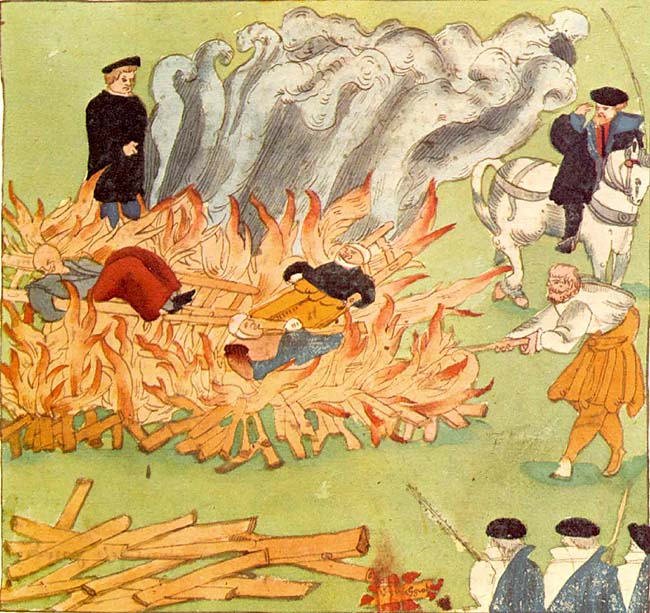 🇩🇪 GermanyMalleus Maleficarum
A 15th-century manual on witchcraft written by Heinrich KramerText · Cursing and harm · Binding and oaths Historical
🇩🇪 GermanyMalleus Maleficarum
A 15th-century manual on witchcraft written by Heinrich KramerText · Cursing and harm · Binding and oaths Historical
 🇬🇧 United Kingdom and 5 moreAleister Crowley
English occultist and founder of the religion of ThelemaText · Power and authority · Change and initiation Living
🇬🇧 United Kingdom and 5 moreAleister Crowley
English occultist and founder of the religion of ThelemaText · Power and authority · Change and initiation Living
 🇸🇪 Sweden and 4 moreEmanuel Swedenborg
An 18th-century Swedish scientist who became a mystic and claimed to visit the afterlife.Text · Speaking with spirits and the dead · Change and initiation Living
🇸🇪 Sweden and 4 moreEmanuel Swedenborg
An 18th-century Swedish scientist who became a mystic and claimed to visit the afterlife.Text · Speaking with spirits and the dead · Change and initiation Living
Related elsewhere
All text 🇮🇳 India and 1 moreNavagrahaनवग्रह
A group of nine celestial deities in Hinduism that govern fate and astrologyTradition · Protection · Luck and prosperity Living
🇮🇳 India and 1 moreNavagrahaनवग्रह
A group of nine celestial deities in Hinduism that govern fate and astrologyTradition · Protection · Luck and prosperity Living
 🇿🇦 South AfricaSympathetic magic
A magical principle based on imitation and contact to influence the worldTradition · Protection · Healing Historical
🇿🇦 South AfricaSympathetic magic
A magical principle based on imitation and contact to influence the worldTradition · Protection · Healing Historical
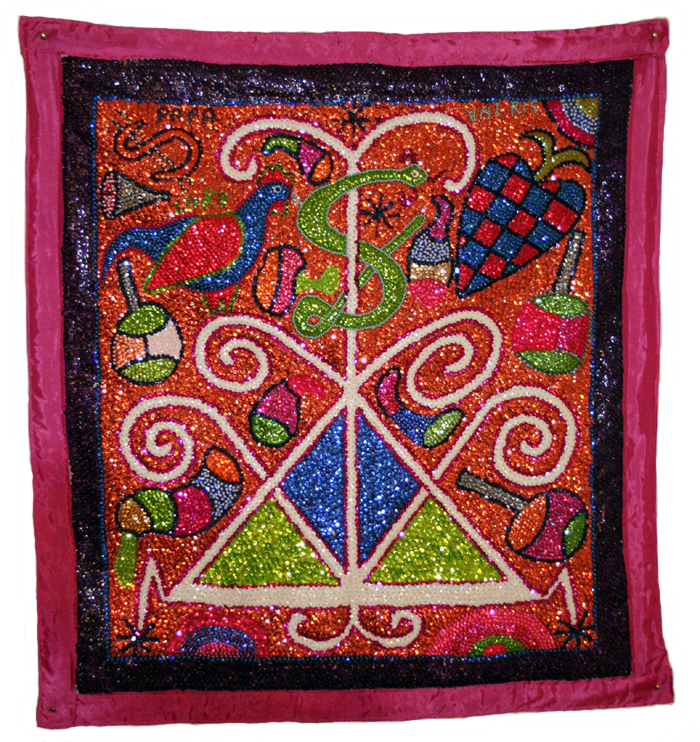 🇭🇹 Haiti and 2 moreHaitian VodouVodou
An Afro-Haitian religion blending West African traditions with Catholicism and FreemasonryTradition · Protection · Healing Living
🇭🇹 Haiti and 2 moreHaitian VodouVodou
An Afro-Haitian religion blending West African traditions with Catholicism and FreemasonryTradition · Protection · Healing Living
 🇳🇵 Nepal and 1 moreMani stone
Carved stones inscribed with Buddhist mantras, placed as offerings along paths in the Himalayas.Charm · Protection · Speaking with spirits and the dead Living
🇳🇵 Nepal and 1 moreMani stone
Carved stones inscribed with Buddhist mantras, placed as offerings along paths in the Himalayas.Charm · Protection · Speaking with spirits and the dead Living