
Talisman
from Arabic tilasm, via French, from Greek telesma meaning 'completion' or 'rite'
An object believed to channel specific forces for protection, healing, or influence.
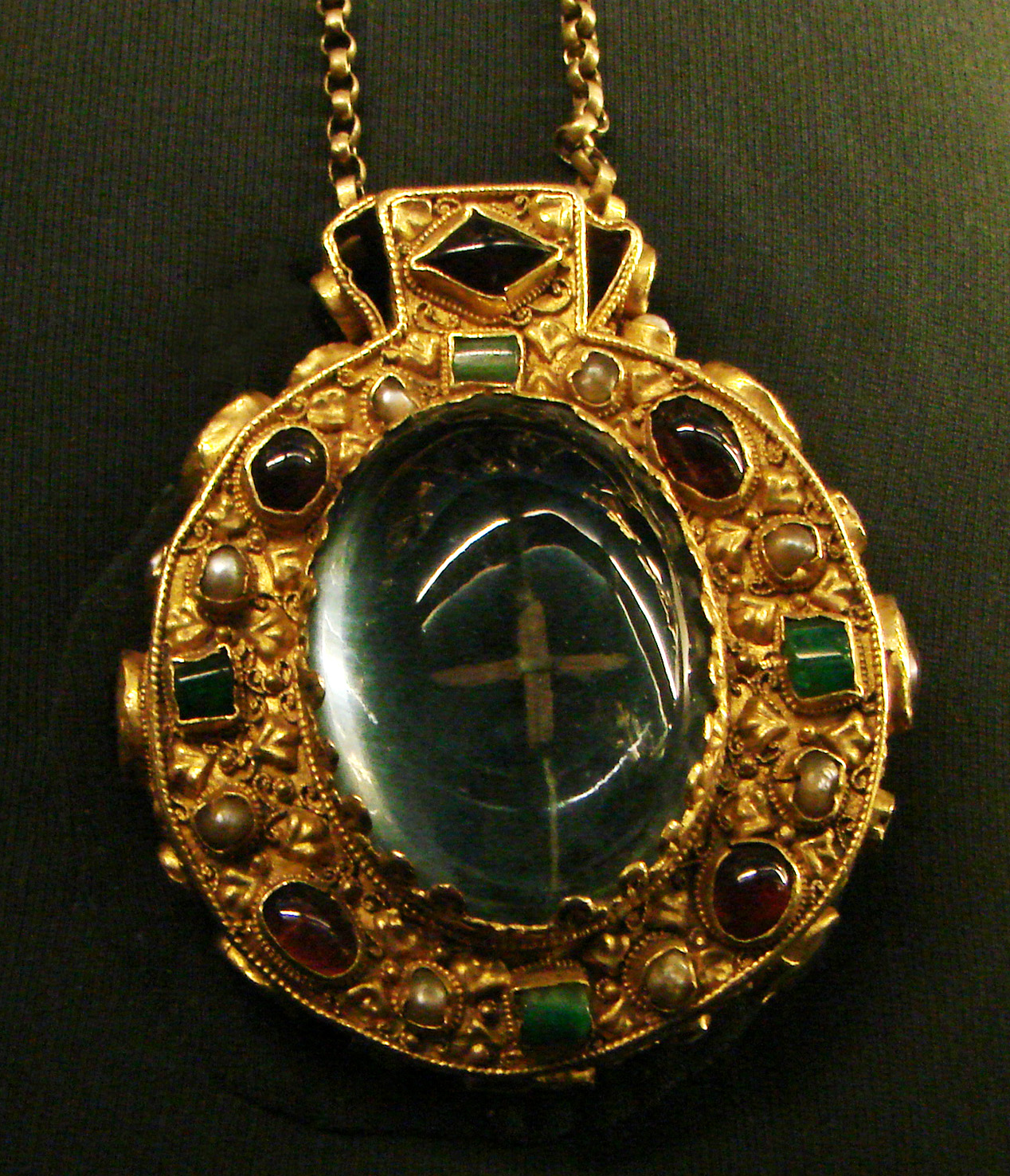
A talisman is a physical object ascribed with magical or religious powers. It is used across many civilizations to bring good fortune, protect against harm, or aid in specific goals like fertility or legal victory.
- Word comes from Arabic tilasm and Greek telesma
- Used in Islam, Christianity, Hinduism, and Buddhism
- Thabit ibn Qurra linked them to astronomy
- Seal of Solomon represents spirit over matter
- Medieval physicians prescribed them for conception
What it is
A talisman is an object believed to hold magical or religious power. It is designed to protect the wearer, heal ailments, or bring good luck. While often carried on the person, it can also be fixed into buildings. The term is closely linked to amulets, though some traditions distinguish them by function: amulets ward off evil, while talismans attract positive force.
Where it comes from
The word comes from the Arabic tilasm, which traces back to the Greek telesma, meaning completion or rite. Talismans have been used in many ancient civilizations. They are connected to astrological, scientific, and religious practices. Modern New Age theories have added new layers to their preparation and use.
How it is done
Preparation varies by culture. In Islamic tradition, makers must choose auspicious celestial moments and maintain focus. Materials like lead, gold, or silver are selected based on the intended effect. Parchment slips with Quranic verses are rolled inside objects. In medieval Europe, physicians prescribed writing words on parchment to hang around the neck during intercourse to ensure conception.
Tools and materials
Common tools include metals like iron, bronze, and gold. Parchment or cloth is purified with substances like musk, ambergris, and camphor. Inscriptions often feature Quranic verses, names of prophets, or sigils. Celestial bodies and astrological signs guide the timing and design of the object.
Talisman, drawn and placed
- Living
- Revived
- Fading
- Historical
- Legendary
- Performed
- Lineage
- Esotericism and magic
What it is for
Talismans serve many roles. They provide divine protection against disease and the evil eye. They are used to aid fertility, help crop production, or win legal battles. Some are made to earn love from a specific person. Others act as conduits for barakah, or blessing, when filled with water or worn as armor.
Who does it
Practitioners range from household members making simple charms to scholars and mathematicians. In the Islamic world, experts like Thabit ibn Qurra studied the science of talismans alongside astronomy. Medieval European physicians also prescribed them. Makers must avoid distractions and doubts to ensure efficacy.
Peoples and places
Talismans appear in Egypt, India, China, Israel, Japan, and Syria. The Seal of Solomon is used in Hindu, Christian, and Jewish contexts. Ottoman flags depicted the sword Zulfiqar as a protective symbol. Qizhilbash warriors invoked prayers on their talismans. Swastikas found in Buddhist caves show widespread ancient use.
At a glance: who, where and when


What people believe
Belief systems vary. In Islam, talismans channel divine protection despite religious discouragement of magic. Hermetic texts speak of harnessing spiritual forces called ruhaniyyat. The Seal of Solomon represents the victory of spirit over matter. Triangles symbolize elements and virtues, linking the physical object to cosmic order.
When it is done
Timing is crucial in many traditions. Makers wait for specific astrological events or planetary positions. For example, a ruby stone might be carved on a Thursday when Mars is in Scorpio. Birth horoscopes can influence the creation process. Rituals may require purification over three consecutive nights.
How scholars and sceptics see it
Scholars note that talismans were part of medical practice in medieval Europe. Physicians like Gilbertus prescribed them for conception. However, they were rarely a first choice due to Galenic medical standards. Historians trace the evolution of talismanic theory from ancient times to modern New Age interpretations.
Cautions and what is closed
Some traditions view talismans with caution. Magic is discouraged in Islam, yet talismans remain popular. Skeptics may view them as superstition. There is no evidence Egyptians used swastikas despite claims. Misuse or doubt by the maker can render a talisman powerless according to traditional beliefs.
Compare and confuse
Talismans are often confused with amulets. Both protect, but talismans are said to attract good fortune while amulets repel evil. The Seal of Solomon overlaps with other religious symbols like the Cross or Yodh. Swastikas share space with other ancient geometric symbols found globally.
Law and persecution
Legal status varies. In some regions, magic is discouraged by religion, yet talismans are widely used. Their use spans both popular and elite levels in societies like the Islamic world.
Today
Talismans continue to exist in modern contexts. New Age practitioners integrate colors, scents, and personal verses into their designs. Historical examples like talismanic shirts survive in museums. The Seal of Solomon remains a recognizable symbol in various cultural and religious contexts.
Questions people ask about Talisman
What is a talisman?
It is an object believed to hold magical or religious power. It is used to protect, heal, or bring good fortune to its owner.
Where does the word come from?
It comes from the Arabic tilasm, which derives from the Greek telesma, meaning completion or religious rite.
How is it different from an amulet?
While both are protective, amulets are said to ward off evil, whereas talismans are believed to attract positive energy or good luck.
Who makes them?
They are made by household members, scholars, or religious specialists. Makers must follow specific rituals and timing to ensure effectiveness.
Good reading and sources
- Talisman on WikipediaEncyclopedia
- More photos on Wikimedia CommonsPhotos and video
- Wikidata recordOpen data
The facts on this page come from the Wikipedia article "Talisman", written by its contributors and used under the CC BY-SA 4.0 licence, and from its Wikidata record (CC0). EveryJaadu rewrote the text in its own words, with AI assistance, and compares every page with the article to make sure no passage is copied. It may be reused under the same CC BY-SA 4.0 licence with a link back.
It may contain mistakes. Names and customs differ from one community to the next, and some knowledge is closed to outsiders and left out here. This page describes belief and practice. It does not say that any of it works, it is not a how-to, and it is not medical advice. If something is wrong, tell us. Last refreshed 2026-10-05.
More from Egypt
All the entries from Egypt 🇪🇬 Egypt and 3 moreAmulet
A portable object worn or carried to ward off harm and invite fortuneCharm · Protection · Luck and prosperity Living
🇪🇬 Egypt and 3 moreAmulet
A portable object worn or carried to ward off harm and invite fortuneCharm · Protection · Luck and prosperity Living
 🇪🇬 EgyptAbraxasἈβράξας
A Gnostic archon and the name on ancient protective gemstonesBeing · Protection Historical
🇪🇬 EgyptAbraxasἈβράξας
A Gnostic archon and the name on ancient protective gemstonesBeing · Protection Historical
 🇮🇱 Israel and 5 moreTefillinתְּפִלִּין
Black leather boxes containing Torah scrolls, worn by Jewish men during weekday prayers.Charm · Speaking with spirits and the dead · Protection Living
🇮🇱 Israel and 5 moreTefillinתְּפִלִּין
Black leather boxes containing Torah scrolls, worn by Jewish men during weekday prayers.Charm · Speaking with spirits and the dead · Protection Living
 🇮🇳 India and 5 moreAstrology
A divinatory practice that reads human fate through the positions of celestial bodies.Belief · Seeing and foretelling · Luck and prosperity Living
🇮🇳 India and 5 moreAstrology
A divinatory practice that reads human fate through the positions of celestial bodies.Belief · Seeing and foretelling · Luck and prosperity Living
Related elsewhere
All charm 🇦🇷 Argentina and 2 moreSan La Muerte
A skeletal folk saint venerated in South America for protection and favorsTradition · Protection · Healing Living
🇦🇷 Argentina and 5 moreGauchito Gil
A folk saint from Argentina who protects the poor and outcastsBeing · Protection · Healing Living
🇦🇷 Argentina and 2 moreSan La Muerte
A skeletal folk saint venerated in South America for protection and favorsTradition · Protection · Healing Living
🇦🇷 Argentina and 5 moreGauchito Gil
A folk saint from Argentina who protects the poor and outcastsBeing · Protection · Healing Living
 🇺🇸 United States and 5 moreMojo bag
A cloth pouch holding charms for protection, luck, or love in the Hoodoo tradition.Charm · Protection · Healing Living
🇺🇸 United States and 5 moreMojo bag
A cloth pouch holding charms for protection, luck, or love in the Hoodoo tradition.Charm · Protection · Healing Living
 🇨🇳 China and 2 moreEight Immortals八仙
Eight legendary Taoist figures of China, each with a power and a vesselFigure · Protection · Healing Living
🇨🇳 China and 2 moreEight Immortals八仙
Eight legendary Taoist figures of China, each with a power and a vesselFigure · Protection · Healing Living