
Tefillin
In its own language: תְּפִלִּין
from Hebrew tefillah meaning prayer or attachment; English phylactery derives from Greek for safeguard or amulet
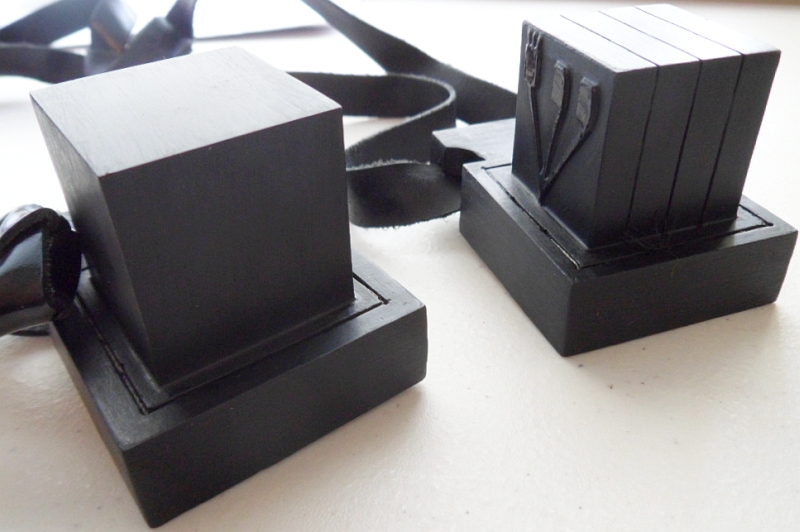
Black leather boxes containing Torah scrolls, worn by Jewish men during weekday prayers.
Tefillin are small black leather containers holding parchment scrolls with biblical verses. They are worn on the arm and head by adult Jewish men during weekday morning services as a physical sign of devotion and remembrance of the Exodus from Egypt.
- Two black leather boxes hold Torah scrolls
- Worn on arm and head during weekday prayers
- Knots form Hebrew letters spelling a divine name
- Scribes write scrolls using special ink and scripts
- Historically worn all day, now removed after morning services
What it is
Tefillin consist of two sets of small black leather boxes connected to straps. One set rests on the upper arm while the other sits on the forehead. Inside these boxes are parchment scrolls inscribed with specific verses from the Torah. The practice serves as a tangible reminder of divine commandments and historical liberation. While historically worn throughout the day, most practitioners now remove them after morning prayers. The items are considered sacred objects within Jewish law, requiring careful handling and specific construction methods to maintain their ritual validity.
Where it comes from
The requirement to wear these items appears four times in the Torah, often linked to the Exodus narrative. Early Jewish communities interpreted these texts literally, wearing physical versions by the first century CE, as evidenced by archaeological finds at Qumran. Karaite Judaism, however, views these biblical references metaphorically rather than as instructions for physical objects. The specific details of manufacture and placement were developed through oral traditions and later codified in legal texts like the Talmud and Mishnah. The term totafot appears in scripture without clear definition, leading to various scholarly interpretations of its original meaning.
How it is done
Practitioners place the arm box on the non-dominant upper arm, wrapping the strap around the forearm and hand. The head box is positioned between the eyes, resting on the hairline. The straps are tied into specific knots that resemble Hebrew letters. These knots, along with a letter molded onto the head box, form a divine name. The wearer recites blessings before donning the items. The process requires precise alignment and intentionality, transforming the act of dressing into a focused spiritual exercise that connects the individual to ancient traditions.
Tools and materials
The boxes are crafted from a single piece of animal hide, forming a cubical shape with compartments for scrolls. Black leather straps pass through the base to secure the items. Parchment scrolls contain handwritten biblical passages in specific Hebrew scripts. Scribes use special ink to write these texts, following strict rules about letter formation and spacing. Any error in writing invalidates the scroll. The materials must meet halakhic standards, ensuring the objects remain ritually pure and suitable for religious use.
Tefillin, drawn and placed
- Living
- Revived
- Fading
- Historical
- Legendary
- Performed
- Lineage
- Judaism
- Timing
- weekday mornings
What it is for
The primary intent is to fulfill biblical commands and serve as a constant reminder of the Exodus from Egypt. Maimonides noted that wearing tefillin fosters modesty and discourages idle talk. Some scholars suggest the items also function as protective charms against negative forces. Placing the arm box near the heart and the head box above the brain symbolizes dedicating one's entire being to divine service. The practice aims to elevate spiritual awareness and subjugate worldly desires through physical engagement with sacred text.
Who does it
Traditionally, only adult men wear tefillin in Orthodox and Conservative communities. Women are exempt from this time-bound commandment in Jewish law, though some Reform groups allow all adults to participate. The items are prepared by trained scribes who follow intricate manufacturing rules. Practitioners must ensure the objects are kosher, meaning they meet all legal requirements. The role involves both personal devotion and communal responsibility, as improper preparation renders the items unusable for religious observance.
Peoples and places
Jewish communities worldwide observe this practice, with variations in script styles and stringency levels. Ashkenazi Jews typically use Beis Yosef script, while Hasidim prefer Arizal style. Sephardic communities often utilize Velish script. Yemenite Jews have distinct traditions regarding strap length and knotting. Historical records show the practice spread across regions including Spain, France, and Germany, adapting to local customs while maintaining core requirements. The diversity reflects how different groups interpret halakhic details over centuries.
At a glance: who, where and when
Who does it
Belief worlds
Occasions



What people believe
The practice embodies the belief that physical actions can connect individuals to spiritual truths. Wearing tefillin is seen as an act of obedience to divine will, reinforcing the covenant between God and the Jewish people. The items are viewed as conduits for holiness, protecting wearers from negative influences. Some traditions hold that the objects possess life-extending properties or ward off demons. The emphasis on precise construction reflects the belief that material accuracy supports spiritual integrity, making the physical object a vessel for divine presence.
When it is done
Tefillin are worn on weekdays during morning services, excluding Sabbaths and festivals. This schedule aligns with the biblical instruction to keep the sign constantly, interpreted as applying only when regular work occurs. The exclusion of holy days emphasizes that these times already possess inherent sanctity, rendering additional physical symbols unnecessary. The routine creates a rhythm of devotion, marking ordinary days with specific acts of remembrance and commitment.
How scholars and sceptics see it
Researchers analyze tefillin as examples of invented traditions responding to cultural pressures. Some view them as Jewish alternatives to Greek amulets, serving apotropaic functions. Historians note the evolution from simple bands to complex boxed structures over centuries. Linguists debate the etymology of terms like totafot, considering connections to Arabic roots meaning encirclement. Anthropologists study how the practice reinforces community identity and gender roles within Jewish society. Skeptics question the literal interpretation of biblical commands, suggesting metaphorical readings may be more accurate.
Cautions and what is closed
Improperly prepared tefillin are considered invalid for religious use, requiring expert verification. The construction involves hundreds of detailed rules that must be followed precisely. Errors in writing or manufacturing can render the items unusable. Communities take great care to ensure authenticity, avoiding mass-produced items that might lack ritual validity. The strictness reflects the high stakes of religious compliance, where mistakes could invalidate the practice entirely.
Compare and confuse
Tefillin share similarities with other Jewish ritual objects like mezuzot and tallit, all involving physical engagement with sacred text. Unlike amulets, which are often carried for protection, tefillin are worn during specific prayers. The Greek term phylactery originally meant safeguard, linking the practice to broader Mediterranean magical traditions. However, Jewish law explicitly distinguishes tefillin from generic charms, emphasizing their role as commandment fulfillment rather than mere talismans.
Law and persecution
Jewish law governs every aspect of tefillin preparation and use. Halakhic authorities dictate materials, construction methods, and wearing procedures. Disputes exist regarding gender participation, with traditional communities restricting use to men. Modern movements debate these restrictions, reflecting evolving interpretations of religious obligation. Legal texts provide extensive guidance, ensuring consistency across diverse communities. Violations of these laws can result in the items being deemed unfit for religious purposes.
Questions people ask about Tefillin
What are tefillin?
Tefillin are small black leather boxes containing parchment scrolls with Torah verses. They are worn on the arm and head by Jewish men during weekday morning prayers as a physical sign of devotion and remembrance of the Exodus from Egypt.
Who wears tefillin?
Traditionally, adult Jewish men wear tefillin in Orthodox and Conservative communities. Women are exempt from this commandment in Jewish law, though some Reform groups allow all adults to participate regardless of gender.
Why are they called phylacteries?
The English word phylactery comes from Ancient Greek, meaning safeguard or amulet. It entered European languages through the New Testament. The Hebrew term tefillin means prayer or attachment, reflecting their purpose as reminders of divine connection.
How are tefillin made?
Boxes are crafted from a single piece of animal hide, forming compartments for scrolls. Scribes write biblical passages on parchment using special ink and specific Hebrew scripts. Strict rules govern every detail to ensure ritual validity.
Good reading and sources
- Tefillin on WikipediaEncyclopedia
- More photos on Wikimedia CommonsPhotos and video
- Wikidata recordOpen data
The facts on this page come from the Wikipedia article "Tefillin", written by its contributors and used under the CC BY-SA 4.0 licence, and from its Wikidata record (CC0). EveryJaadu rewrote the text in its own words, with AI assistance, and compares every page with the article to make sure no passage is copied. It may be reused under the same CC BY-SA 4.0 licence with a link back.
It may contain mistakes. Names and customs differ from one community to the next, and some knowledge is closed to outsiders and left out here. This page describes belief and practice. It does not say that any of it works, it is not a how-to, and it is not medical advice. If something is wrong, tell us. Last refreshed 2026-10-05.
More from Israel
All the entries from Israel 🇮🇱 IsraelRed stringחוט השני
A scarlet wool bracelet worn to ward off the evil eye and bring good luckCharm · Protection · Luck and prosperity Living
🇮🇱 IsraelRed stringחוט השני
A scarlet wool bracelet worn to ward off the evil eye and bring good luckCharm · Protection · Luck and prosperity Living
 🇪🇬 Egypt and 5 moreTalisman
An object believed to channel specific forces for protection, healing, or influence.Charm · Protection · Healing Historical
🇪🇬 Egypt and 5 moreTalisman
An object believed to channel specific forces for protection, healing, or influence.Charm · Protection · Healing Historical
 🇸🇾 Syria and 5 moreBaetyl
A sacred stone, often a meteorite, believed to house a deity in ancient Near Eastern and Mediterranean traditions.Charm · Power and authority · Speaking with spirits and the dead Historical
🇸🇾 Syria and 5 moreBaetyl
A sacred stone, often a meteorite, believed to house a deity in ancient Near Eastern and Mediterranean traditions.Charm · Power and authority · Speaking with spirits and the dead Historical
 🇮🇱 Israel and 2 moreMezuzahמְזוּזָה
A scroll of Torah verses placed in a case on Jewish doorpostsCharm · Protection · Speaking with spirits and the dead Living
🇮🇱 Israel and 2 moreMezuzahמְזוּזָה
A scroll of Torah verses placed in a case on Jewish doorpostsCharm · Protection · Speaking with spirits and the dead Living
Related elsewhere
All charm 🇪🇸 Spain and 5 moreSt John's Eve
A Christian vigil marked by bonfires and plant gathering on the summer solstice eveRite · Protection · Speaking with spirits and the dead Living
🇳🇿 New ZealandKarakia
Māori recitations used for spiritual guidance, protection, and formal greetingsTradition · Protection · Speaking with spirits and the dead Living
🇪🇸 Spain and 5 moreSt John's Eve
A Christian vigil marked by bonfires and plant gathering on the summer solstice eveRite · Protection · Speaking with spirits and the dead Living
🇳🇿 New ZealandKarakia
Māori recitations used for spiritual guidance, protection, and formal greetingsTradition · Protection · Speaking with spirits and the dead Living
 🇮🇳 India and 2 moreHomaहोम
A fire ritual found across Asian religions where offerings are burned as a votive exchange with the divine.Rite · Protection · Speaking with spirits and the dead Living
🇨🇳 China and 4 moreKitchen God灶君
The Chinese hearth deity who reports domestic conduct to the Jade EmperorBeing · Protection · Luck and prosperity Living
🇮🇳 India and 2 moreHomaहोम
A fire ritual found across Asian religions where offerings are burned as a votive exchange with the divine.Rite · Protection · Speaking with spirits and the dead Living
🇨🇳 China and 4 moreKitchen God灶君
The Chinese hearth deity who reports domestic conduct to the Jade EmperorBeing · Protection · Luck and prosperity Living