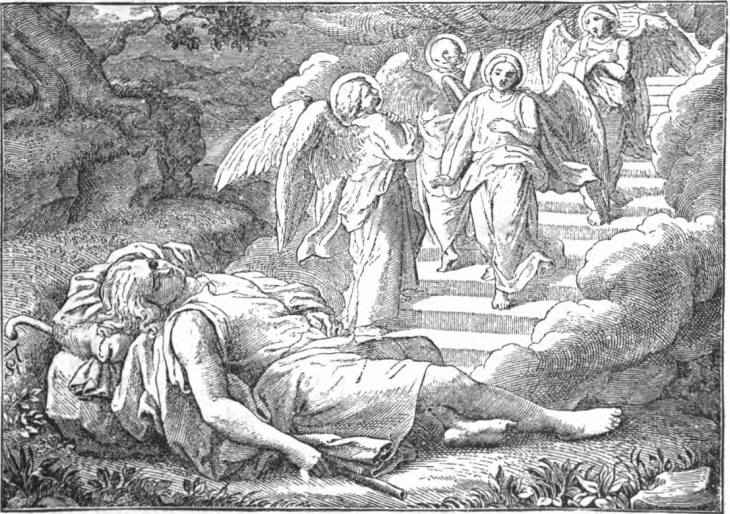
Stone of Jacob
from the name of the biblical patriarch Jacob
A biblical stone linked to a patriarch's vision and later claimed by Scottish coronation lore
The Stone of Jacob is the pillow-stone used by the biblical figure Jacob at Bethel, where he dreamed of a ladder to heaven. Later traditions identify it with the Stone of Scone, used in Scottish royal ceremonies.
- Jacob used a stone as a pillow at Bethel
- He consecrated it after a vision of heaven
- Scottish legends link it to the Stone of Scone
- British Israelism claims royal descent from David
- Stone moved to Perth in 2020
What it is
The Stone of Jacob is a rock mentioned in the Book of Genesis. It served as a pillow for the patriarch Jacob during his journey. He consecrated this stone after dreaming of a stairway reaching heaven. The site became known as Bethel, meaning House of God. Later folklore claims this same stone is the Stone of Scone. This link connects biblical history with Scottish royal tradition.
Where it comes from
The stone originates in the biblical account of Jacob fleeing his brother Esau. He rested at Luz and used a local stone. After his vision, he set it up as a pillar. Scottish legends later identified this object with the Stone of Scone. These stories suggest the stone was brought to Ireland by Jeremiah. It then moved to Scotland for use in coronations.
Tools and materials
The primary tool is the stone itself. In the biblical text, Jacob uses it as a pillow. He also consecrates it as a sacred marker. Later traditions associate it with the Stone of Scone. This stone was used in coronation ceremonies. The Latin name saxum Jacobi appears in historical records.
Stone of Jacob, drawn and placed
- Living
- Revived
- Fading
- Historical
- Legendary
- Performed
- Lineage
- Biblical narrative and British Israelism
What it is for
The stone serves as a memorial to a divine encounter. Jacob vowed to God upon waking from his dream. It represents the connection between earth and heaven. In Scottish tradition, it symbolizes royal authority. British Israelism views it as proof of royal lineage from King David.
Who does it
Scholars study the biblical text and historical claims. The practice involves religious veneration in Jewish tradition. Scottish folklore attributes the stone to ancient kings. Writers like John Speed documented its ceremonial use. Modern scholars analyze the link between these traditions.
Peoples and places
The Israelites are central to the original story. Jacob is the key figure in the biblical narrative. Scottish people adopted the legend for their own history. Irish tradition is mentioned in some versions of the tale. British Israelists claim the stone for their belief system.
At a glance: who, where and when

What people believe
The stone is believed to mark a house of God. Jacob saw angels ascending and descending on a stairway. God promised land and descendants to his offspring. The stone acts as a witness to this covenant. In Scotland, it is seen as a symbol of sovereignty.
How scholars and sceptics see it
Historians examine the biblical account of Jacob. They note the transition from Luz to Bethel. Scholars study the legends linking the stones. Some question the historical accuracy of the Scottish claim. British Israelism is analyzed as a belief system rather than fact.
Compare and confuse
The Stone of Jacob is often confused with the Stone of Scone. Both are linked to leadership and divine favor. The biblical stone marks a personal spiritual experience. The Scottish stone marks public royal ceremonies. The Latin name saxum Jacobi bridges these two contexts.
Law and persecution
The Stone of Scone was held at Westminster Abbey. It was relocated to Perth in 2020. The Scottish Government announced this move. The stone remains a subject of cultural and legal interest. Its status reflects ongoing debates about heritage.
Questions people ask about Stone of Jacob
What is the Stone of Jacob?
It is the stone Jacob used as a pillow in Genesis. He consecrated it after dreaming of a ladder to heaven. Later tradition identifies it with the Stone of Scone.
Where did Jacob find the stone?
Jacob found it at a place called Luz. He rested there while fleeing his brother Esau. He later renamed the place Bethel, meaning House of God.
How is it connected to Scotland?
Scottish folklore claims the stone is the Stone of Scone. Legends say it was brought by Jeremiah. It was used in Scottish coronations until 1996.
What is British Israelism?
It is a belief that the British royal family descends from King David. Followers see the Stone of Jacob as evidence of this lineage through the Stone of Scone.
Good reading and sources
The facts on this page come from the Wikipedia article "Stone of Jacob", written by its contributors and used under the CC BY-SA 4.0 licence, and from its Wikidata record (CC0). EveryJaadu rewrote the text in its own words, with AI assistance, and compares every page with the article to make sure no passage is copied. It may be reused under the same CC BY-SA 4.0 licence with a link back.
It may contain mistakes. Names and customs differ from one community to the next, and some knowledge is closed to outsiders and left out here. This page describes belief and practice. It does not say that any of it works, it is not a how-to, and it is not medical advice. If something is wrong, tell us. Last refreshed 2026-10-13.
More from Israel
All the entries from Israel 🇬🇧 United Kingdom and 4 moreCorn dolly
A woven straw figure made from the last sheaf of a European harvest to house the crop spirit.Tradition · Protection · Speaking with spirits and the dead Revived
🇬🇧 United Kingdom and 4 moreCorn dolly
A woven straw figure made from the last sheaf of a European harvest to house the crop spirit.Tradition · Protection · Speaking with spirits and the dead Revived
 🇩🇪 Germany and 5 moreYellow badgeJudenstern
A marked garment worn by Jews under laws of distinction and humiliation across centuries.Charm · Cursing and harm Historical
🇩🇪 Germany and 5 moreYellow badgeJudenstern
A marked garment worn by Jews under laws of distinction and humiliation across centuries.Charm · Cursing and harm Historical
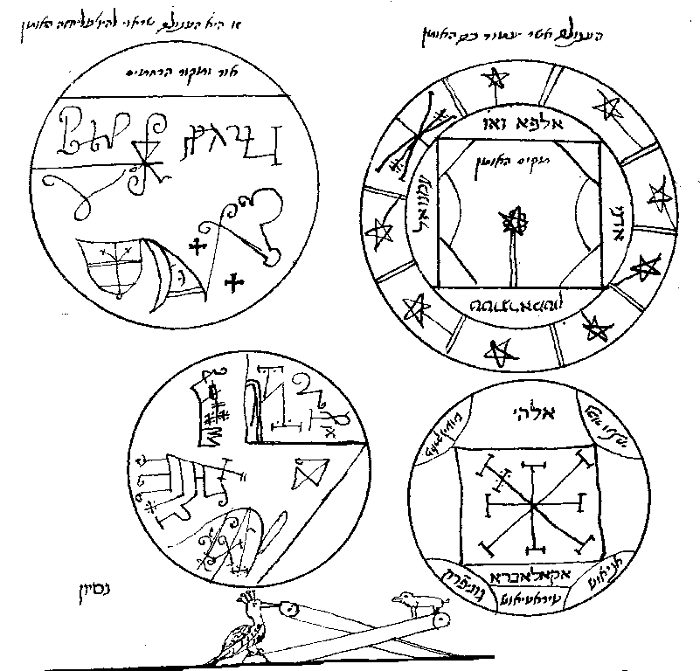 🇮🇹 Italy and 2 moreKey of SolomonClavicula Salomonis
A Renaissance grimoire attributed to King Solomon, detailing ritual preparations and invocations.Text · Cursing and harm · Love and attraction Historical
🇮🇹 Italy and 2 moreKey of SolomonClavicula Salomonis
A Renaissance grimoire attributed to King Solomon, detailing ritual preparations and invocations.Text · Cursing and harm · Love and attraction Historical
 🇮🇪 Ireland and 5 moreBonfire
A large outdoor fire used in seasonal festivals and religious feasts across many culturesRite · Cleansing and purification · Speaking with spirits and the dead Living
🇮🇪 Ireland and 5 moreBonfire
A large outdoor fire used in seasonal festivals and religious feasts across many culturesRite · Cleansing and purification · Speaking with spirits and the dead Living
Related elsewhere
All charm 🇮🇶 Iraq and 4 moreAstrology
A system of divination that links human affairs to the positions of celestial bodiesTradition · Seeing and foretelling · Luck and prosperity Living
🇮🇶 Iraq and 4 moreAstrology
A system of divination that links human affairs to the positions of celestial bodiesTradition · Seeing and foretelling · Luck and prosperity Living
 🇺🇸 United States and 5 moreSatanism
A modern set of beliefs using the figure of Satan as a symbol or deity.Tradition · Power and authority · Cursing and harm Living
🇺🇸 United States and 5 moreSatanism
A modern set of beliefs using the figure of Satan as a symbol or deity.Tradition · Power and authority · Cursing and harm Living
 🇨🇳 China and 3 moreChinese dragon龍
A legendary water deity and imperial symbol in East Asian cultureBeing · Protection · Luck and prosperity Historical
🇨🇳 China and 3 moreChinese dragon龍
A legendary water deity and imperial symbol in East Asian cultureBeing · Protection · Luck and prosperity Historical
 🇮🇳 IndiaTaraतारा (Sanskrit), তারা (Bengali)
A fierce Hindu goddess of protection and wisdom, central to the Mahavidya tradition.Being · Protection · Power and authority Living
🇮🇳 IndiaTaraतारा (Sanskrit), তারা (Bengali)
A fierce Hindu goddess of protection and wisdom, central to the Mahavidya tradition.Being · Protection · Power and authority Living