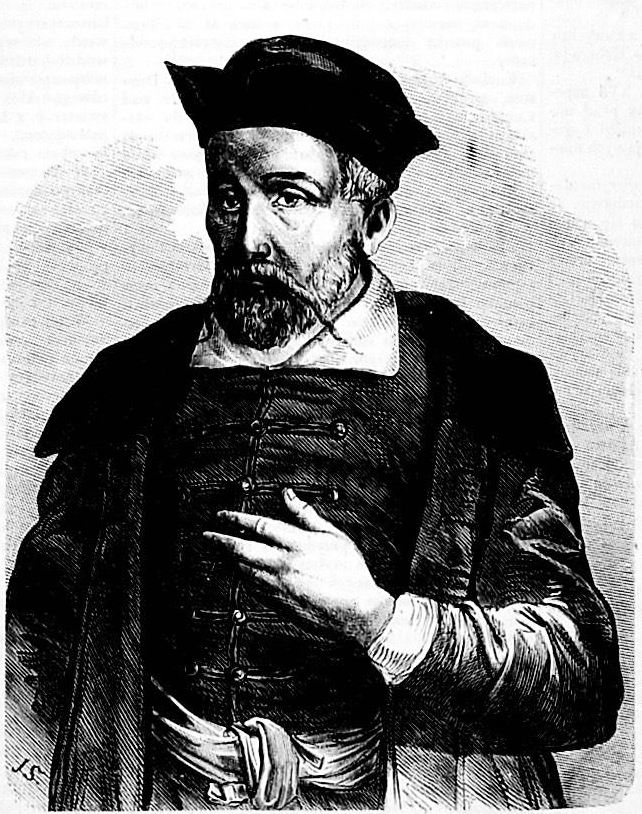
Michael Sendivogius
In its own language: Michał Sędziwój
A Polish alchemist who discovered oxygen and wrote on the 'food of life'
Michael Sendivogius was a Polish alchemist, physician, and philosopher active in the late sixteenth and early seventeenth centuries. He is best known for identifying oxygen as a distinct component of air and for his influential writings on alchemical theory.
- Discovered oxygen 170 years before Scheele
- Called the gas the 'food of life'
- Worked at the court of Rudolf II in Prague
- Published 'New Chemical Light' in 1604
- Influenced Isaac Newton's reading
What it is
Michael Sendivogius was a central figure in European alchemy during the late Renaissance. He worked as a physician, philosopher, and experimentalist. He is most famous for his discovery that air contains a specific life-sustaining gas, which he called the 'food of life.' This substance was later identified by science as oxygen. His theories placed this element at the center of a universal schema, influencing how natural philosophers understood matter and transformation.
Where it comes from
Sendivogius was born in 1566 into a noble Polish family belonging to the Clan of Ostoja. He studied at several major European universities, including Vienna, Leipzig, and Cambridge. His career flourished under royal patronage. He spent significant time at the court of Emperor Rudolf II in Prague, a hub for alchemists and scientists. Later, he returned to Poland, where King Sigismund III Vasa supported his chemical experiments. The political instability of the Thirty Years' War eventually curtailed the funding for such speculative arts, leading to his decline in prominence.
How it is done
His practice involved laboratory experimentation with chemicals and minerals. He developed methods for purifying and creating various acids and metals. A key part of his work was heating nitre, also known as saltpetre, to release a gas. He observed that this gas supported combustion and respiration more effectively than ordinary air. He documented these findings in treatises that combined practical laboratory notes with philosophical speculation about the nature of matter and the universe.
Tools and materials
The primary materials in his work were nitre (saltpetre), various acids, and metals. He used laboratory apparatus to heat and distill these substances. His tools were standard for early modern alchemy, focused on the purification of substances and the extraction of their essential spirits or principles through physical processes.
Michael Sendivogius, drawn and placed
- Living
- Revived
- Fading
- Historical
- Legendary
- Performed
- Lineage
- Alchemy
What it is for
Sendivogius sought to understand the fundamental principles of nature. His alchemical work aimed at the transmutation of metals and the discovery of the philosopher's stone, though his scientific contributions were more grounded in observation. He intended to reveal the hidden structure of the universe through the study of the 'food of life.' His writings were also meant to guide other alchemists and scholars in their own investigations into the secrets of matter and health.
Who does it
He was a trained physician and a nobleman, which gave him access to royal courts and educational institutions. He learned from prominent figures of his time, including John Dee and Edward Kelley. His status allowed him to secure funding from kings and emperors. He operated within a network of international scholars and mystics. His role was that of a researcher and writer, producing texts that were widely read and translated across Europe for over a century.
Peoples and places
Sendivogius is primarily associated with Poland and Bohemia (now the Czech Republic). In Poland, he was celebrated by the king but criticized by conservative nobles for his expensive experiments. In Bohemia, he found a receptive audience at the court of Rudolf II, which was known for its openness to esoteric studies. His work reflects the cosmopolitan nature of early modern alchemy, which crossed national borders and connected scholars from different cultural backgrounds.
At a glance: who, where and when
Who does it
Peoples

What people believe
His worldview was rooted in Hermetic philosophy and Paracelsian medicine. He believed that the universe was governed by spiritual principles that could be accessed through chemical operations. The 'food of life' was not just a physical gas but a vital principle connecting all living things. He proposed that understanding this principle was key to unlocking the secrets of nature, including the potential for healing and the transformation of base metals into gold.
When it is done
His active period spanned the late sixteenth and early seventeenth centuries. Key moments include his time at Rudolf II's court in the 1590s and his return to Poland around 1600. His major work, 'New Chemical Light,' was published in 1604. His career declined after the outbreak of the Thirty Years' War in 1618, which shifted royal patronage away from alchemy toward military financing.
How scholars and sceptics see it
Historians view Sendivogius as a pivotal figure in the transition from alchemy to chemistry. Scholars note that he discovered oxygen nearly two centuries before Carl Wilhelm Scheele. His work is studied for its blend of empirical observation and metaphysical speculation. Researchers highlight his influence on later thinkers, including Isaac Newton, who read his books. His legacy is seen as a bridge between medieval mysticism and modern scientific method.
Cautions and what is closed
His experiments required significant financial resources, which led to criticism from those who viewed alchemy as a waste of money. The political climate changed drastically with the Thirty Years' War, making it difficult for alchemists to maintain patronage. There are no records of personal harm from his experiments, but the field itself faced increasing skepticism and suppression as scientific rigor grew. His later years were marked by relative obscurity compared to his earlier fame.
Compare and confuse
Sendivogius is often compared to other alchemists of the Rudolfine court, such as Edward Kelley and John Dee, with whom he had connections. His concept of the 'food of life' differs from the traditional focus on the philosopher's stone, emphasizing a gaseous principle rather than a solid elixir. His work is sometimes linked to Rosicrucian ideas, reflecting the broader interest in secret knowledge and spiritual renewal during his time.
Law and persecution
There is no specific legal persecution recorded against Sendivogius himself. However, the broader context of alchemy saw varying degrees of tolerance and suspicion. While some rulers like Sigismund III Vasa and Rudolf II actively supported alchemists, others viewed them with distrust. The shift in political priorities during the Thirty Years' War effectively ended the era of state-sponsored alchemical research, leaving practitioners without official protection or funding.
Questions people ask about Michael Sendivogius
Who was Michael Sendivogius?
He was a Polish alchemist, physician, and philosopher born in 1566. He is known for discovering oxygen and writing influential texts on alchemical theory during the late Renaissance.
What did he discover about air?
He found that air is not a single substance but contains a life-giving gas. He called this the 'food of life' and identified it as the gas released when heating nitre, now known as oxygen.
Where did he work?
He worked in Poland and Bohemia (now the Czech Republic). He was supported by King Sigismund III Vasa in Poland and Emperor Rudolf II in Prague, both centers of alchemical study.
Why is he important to science?
He identified oxygen nearly two centuries before it was formally recognized by modern science.
Good reading and sources
- Michael Sendivogius on WikipediaEncyclopedia
- More photos on Wikimedia CommonsPhotos and video
- Wikidata recordOpen data
The facts on this page come from the Wikipedia article "Michael Sendivogius", written by its contributors and used under the CC BY-SA 4.0 licence, and from its Wikidata record (CC0). EveryJaadu rewrote the text in its own words, with AI assistance, and compares every page with the article to make sure no passage is copied. It may be reused under the same CC BY-SA 4.0 licence with a link back.
It may contain mistakes. Names and customs differ from one community to the next, and some knowledge is closed to outsiders and left out here. This page describes belief and practice. It does not say that any of it works, it is not a how-to, and it is not medical advice. If something is wrong, tell us. Last refreshed 2026-10-05.
More from Poland
All the entries from Poland 🇷🇺 Russia and 5 moreSlavic religion
The pre-Christian beliefs of the Slavic peoples before their conversion to Christianity.Tradition · Protection · Healing Revived
🇷🇺 Russia and 5 moreSlavic religion
The pre-Christian beliefs of the Slavic peoples before their conversion to Christianity.Tradition · Protection · Healing Revived
 🇷🇺 Russia and 7 moreSlavic Native FaithРодноверие
A modern polytheistic movement drawing on Slavic folklore, romanticism, and global spiritual traditions.Tradition · Speaking with spirits and the dead · Power and authority Living
🇷🇺 Russia and 7 moreSlavic Native FaithРодноверие
A modern polytheistic movement drawing on Slavic folklore, romanticism, and global spiritual traditions.Tradition · Speaking with spirits and the dead · Power and authority Living
 🇩🇪 Germany and 5 moreStraw bearStrohbär
A carnival figure wrapped in straw that visits homes for gifts and marks the turning of seasons.Tradition · Luck and prosperity · Cursing and harm Living
🇩🇪 Germany and 5 moreStraw bearStrohbär
A carnival figure wrapped in straw that visits homes for gifts and marks the turning of seasons.Tradition · Luck and prosperity · Cursing and harm Living
 🇬🇧 United Kingdom and 1 moreJohn Dee
An English scholar and advisor to Elizabeth I who pursued angelic communication through scrying.Tradition · Speaking with spirits and the dead · Seeing and foretelling Historical
🇬🇧 United Kingdom and 1 moreJohn Dee
An English scholar and advisor to Elizabeth I who pursued angelic communication through scrying.Tradition · Speaking with spirits and the dead · Seeing and foretelling Historical
Related elsewhere
All text 🇪🇬 Egypt and 5 moreHermetica
A collection of ancient texts attributed to Hermes Trismegistus, covering magic, alchemy and philosophy.Text · Seeing and foretelling · Change and initiation Historical
🇨🇳 China and 3 moreQi氣 / 气
A vital force in Chinese philosophy and medicine, believed to flow through all living things.Substance · Healing · Power and authority Living
🇪🇬 Egypt and 5 moreHermetica
A collection of ancient texts attributed to Hermes Trismegistus, covering magic, alchemy and philosophy.Text · Seeing and foretelling · Change and initiation Historical
🇨🇳 China and 3 moreQi氣 / 气
A vital force in Chinese philosophy and medicine, believed to flow through all living things.Substance · Healing · Power and authority Living
 🇮🇳 India and 4 moreTantraतन्त्र
An esoteric yogic tradition from India focusing on ritual, mantra, and body-based spiritual practices.Tradition · Power and authority · Change and initiation Living
🇮🇳 India and 4 moreTantraतन्त्र
An esoteric yogic tradition from India focusing on ritual, mantra, and body-based spiritual practices.Tradition · Power and authority · Change and initiation Living
 🇮🇳 India and 4 moreShivaशिव
A principal Hindu deity of destruction and yoga, worshipped across South and Southeast AsiaBeing · Power and authority · Change and initiation Living
🇮🇳 India and 4 moreShivaशिव
A principal Hindu deity of destruction and yoga, worshipped across South and Southeast AsiaBeing · Power and authority · Change and initiation Living