
Ahmad al-Buni
In its own language: أحمد البوني المالكي
A medieval Sufi scholar known for works on letter mysticism and talismans
Ahmad al-Buni was a thirteenth-century mathematician, philosopher, and Sufi master from North Africa who wrote extensively on the esoteric power of letters. He is best known for the Shams al-Ma'arif, a foundational text on talismans and divination in the Islamic world.
- Died in 1225 CE
- Wrote on Ilm al-huruf
- Constructed magic squares
- Influenced Yoruba healers
- Associated with Shams al-Ma'arif
What it is
Ahmad al-Buni was a prominent figure in medieval Islamic scholarship, recognized as a Sufi master, mathematician, and philosopher. His work focused on Ilm al-huruf, the study of the esoteric values of Arabic letters. He also explored sihr, often translated as sorcery, though practitioners preferred terms like Ilm al-hikmah (Knowledge of Wisdom) or Ruhaniyat (Spirituality). His writings established him as a key authority on theurgy and esoteric arts within the Muslim world.
Where it comes from
Born in Buna, located in the Almohad Caliphate, which is now Annaba in Algeria, al-Buni later moved to Ayyubid Egypt. There, he studied under several eminent Sufi masters of his era. He was a contemporary of the famous philosopher Ibn Arabi. While his life remains somewhat obscure, his intellectual output during the early thirteenth century shaped subsequent developments in Islamic occultism and spiritual practice.
How it is done
Al-Buni’s methods involved complex mathematical constructions, particularly magic squares. He demonstrated how to build these grids using a bordering technique, sometimes incorporating letters from the ninety-nine names of God. His texts provided structured rituals for invoking divine powers, utilizing specific letter combinations and talismanic diagrams to achieve spiritual or protective effects.
Tools and materials
The primary tools in al-Buni’s system were letters and numbers. He utilized magic squares and Latin squares as frameworks for spiritual operations. The ninety-nine names of God served as essential components for constructing these squares and for recitation practices. Talismans written with these specific configurations were central to his teachings on protection and divination.
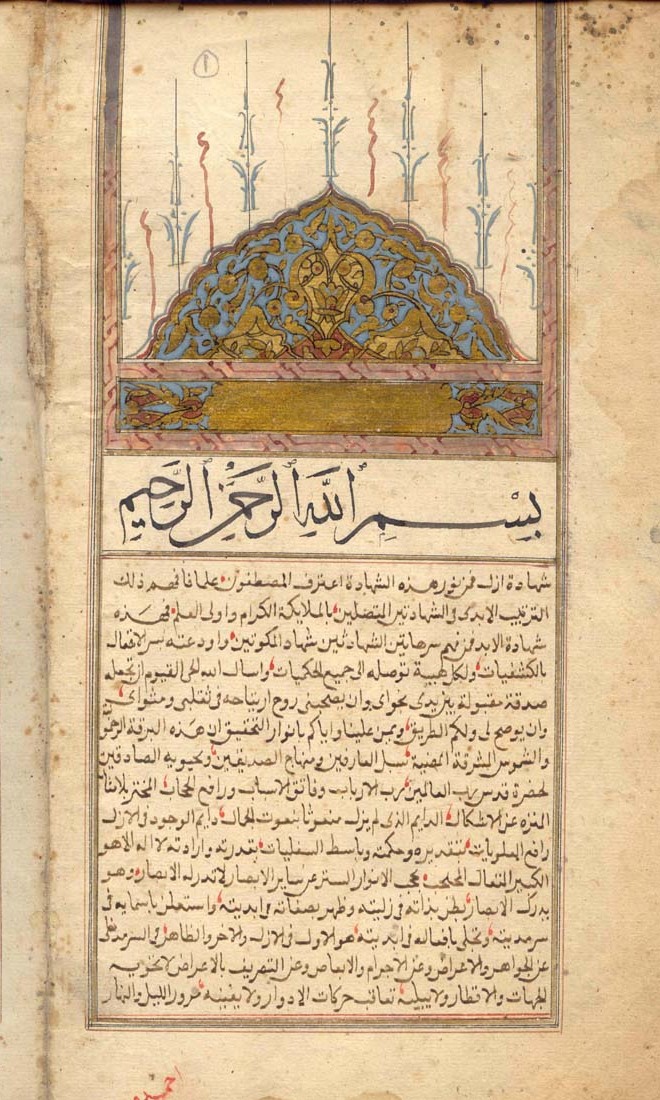
Ahmad al-Buni, drawn and placed
- Living
- Revived
- Fading
- Historical
- Legendary
- Performed
- Lineage
- Islamic Sufism and Ilm al-Huruf
What it is for
His works were used for protection, divination, and accessing spiritual power. Practitioners sought to understand the hidden connections between language, mathematics, and the divine. The Shams al-Ma'arif became a reference for those seeking to harness these forces, offering methods for spiritual elevation and safeguarding against harm through established ritual formulas.
Who does it
Al-Buni himself was a scholar and Sufi initiate. His influence extended to various communities, including Yoruba Muslim healers in Nigeria, who still reference his works on traditional healing. His status as a respected master allowed his texts to circulate widely among educated elites.
Peoples and places
While born in Algeria and active in Egypt, his influence spread across the Muslim world. His texts are referenced by scholars and practitioners in Iran, Mali, Niger, and Nigeria. The durability of his work suggests a broad appeal across different regions, adapting to local interpretations while maintaining core principles of letter mysticism and theurgical practice.
At a glance: who, where and when
Who does it
Peoples
Belief worlds

What people believe
The underlying belief system posits that letters possess inherent spiritual power. By arranging them according to precise mathematical rules, one can align with divine attributes. This approach, known as Ilm al-simiyah, views the universe as structured by sacred geometry and language. Success in these practices depends on correct execution and spiritual purity.
How scholars and sceptics see it
Modern scholars analyze al-Buni’s contributions to the history of science and religion. Denis MacEoin noted potential indirect influences on later movements like Bábism. Researchers examine his role in mapping boundaries between magic and science. His work is studied for its intersection of theology, mathematics, and esoteric philosophy, providing insight into medieval Islamic intellectual culture.
Cautions and what is closed
Authorship of the most famous text attributed to him, the Shams al-Ma'arif, has been questioned by historians. Many manuscripts circulating under his name may be later compilations or simplified excerpts. Scholars caution against assuming all content in these texts originates directly from al-Buni, noting the tendency for later authors to attribute works to established masters.
Compare and confuse
Al-Buni’s work is often compared to other Islamic esoteric traditions focusing on letter mysticism. His emphasis on magic squares parallels broader trends in medieval mathematics and occultism. Unlike purely ceremonial magicians, he integrated rigorous academic training with spiritual practice, distinguishing his approach from folk sorcery.
Questions people ask about Ahmad al-Buni
Who was Ahmad al-Buni?
He was a thirteenth-century Sufi scholar, mathematician, and philosopher from North Africa known for his work on letter mysticism and talismans.
What is his most famous book?
He is associated with the Shams al-Ma'arif, a major text on talismans and divination, though historians debate whether he actually wrote it.
What did he study?
He focused on Ilm al-huruf, the esoteric value of letters, and used mathematics, such as magic squares, to explore spiritual concepts.
Where was he from?
He was born in Buna, in modern-day Algeria, and later lived and studied in Egypt under prominent Sufi masters.
Good reading and sources
- Ahmad al-Buni on WikipediaEncyclopedia
- More photos on Wikimedia CommonsPhotos and video
- Wikidata recordOpen data
The facts on this page come from the Wikipedia article "Ahmad al-Buni", written by its contributors and used under the CC BY-SA 4.0 licence, and from its Wikidata record (CC0). EveryJaadu rewrote the text in its own words, with AI assistance, and compares every page with the article to make sure no passage is copied. It may be reused under the same CC BY-SA 4.0 licence with a link back.
It may contain mistakes. Names and customs differ from one community to the next, and some knowledge is closed to outsiders and left out here. This page describes belief and practice. It does not say that any of it works, it is not a how-to, and it is not medical advice. If something is wrong, tell us. Last refreshed 2026-10-05.
More from Algeria
All the entries from Algeria 🇱🇾 Libya and 4 moreTraditional Berber religionAmazigh religion
Ancient beliefs of Northwest Africa centered on celestial bodies, caves, and ancestors.Tradition · Speaking with spirits and the dead · Luck and prosperity Historical
🇱🇾 Libya and 4 moreTraditional Berber religionAmazigh religion
Ancient beliefs of Northwest Africa centered on celestial bodies, caves, and ancestors.Tradition · Speaking with spirits and the dead · Luck and prosperity Historical
 🇪🇬 Egypt and 5 moreHamsaخمسة
A palm-shaped amulet used across North Africa and the Middle East to ward off harm.Charm · Protection · Luck and prosperity Living
🇪🇬 Egypt and 5 moreHamsaخمسة
A palm-shaped amulet used across North Africa and the Middle East to ward off harm.Charm · Protection · Luck and prosperity Living
 🇸🇳 Senegal and 5 moreMaraboutmurābiṭ
A Muslim religious leader and teacher in West Africa, often linked to Sufi brotherhoods.Tradition · Protection · Speaking with spirits and the dead Living
🇸🇳 Senegal and 5 moreMaraboutmurābiṭ
A Muslim religious leader and teacher in West Africa, often linked to Sufi brotherhoods.Tradition · Protection · Speaking with spirits and the dead Living
 🇫🇷 France and 5 moreJean Eugène Robert-HoudinJean-Eugène Robert-Houdin
A French clockmaker who elevated stage magic into a refined theatrical art.Illusion · Wonder and entertainment Historical
🇫🇷 France and 5 moreJean Eugène Robert-HoudinJean-Eugène Robert-Houdin
A French clockmaker who elevated stage magic into a refined theatrical art.Illusion · Wonder and entertainment Historical
Related elsewhere
All text 🇬🇷 Greece and 2 moreMagic in the Greco-Roman world
Private supernatural practices in ancient Greece and Rome, distinct from public state religion.Tradition · Protection · Cursing and harm Historical
🇬🇷 Greece and 2 moreMagic in the Greco-Roman world
Private supernatural practices in ancient Greece and Rome, distinct from public state religion.Tradition · Protection · Cursing and harm Historical
 🇳🇬 Nigeria and 5 moreIfá
A Yoruba divination system using palm nuts to access spiritual guidanceTradition · Seeing and foretelling · Speaking with spirits and the dead Living
🇳🇬 Nigeria and 5 moreIfá
A Yoruba divination system using palm nuts to access spiritual guidanceTradition · Seeing and foretelling · Speaking with spirits and the dead Living
 🇮🇶 IraqBabylonian astrology
The first organized system of celestial divination in the ancient Near EastTradition · Protection · Seeing and foretelling Historical
🇮🇶 IraqBabylonian astrology
The first organized system of celestial divination in the ancient Near EastTradition · Protection · Seeing and foretelling Historical