
Santa Muerte
In its own language: Nuestra Señora de la Santa Muerte
from Spanish, meaning 'Holy Death' or 'Saint Death'
A female skeletal folk saint in Mexico and the Americas, worshipped for protection, healing, and safe passage.
Santa Muerte is a personification of death and a folk-Catholic saint venerated primarily in Mexico, Central America, and the United States. Devotees seek her aid for healing, prosperity, and protection from violence, viewing her as a compassionate guide to the afterlife rather than an agent of harm.
- Santa Muerte is a female skeletal folk saint in Mexican folk Catholicism.
- Her following grew to an estimated 12 million by 2016-2017.
- She is venerated for healing, protection, and safe passage to the afterlife.
- The Catholic Church and Evangelicals condemn her worship.
- Origins link to Aztec goddess Mictēcacihuātl and 18th-century practices.
What it is
Santa Muerte is a folk-Catholic saint and a personification of death, recognized as a female deity within Mexican folk Catholicism and neo-paganism. She appears as a skeletal figure clad in robes, holding items like a scythe and a globe. Devotees view her as a powerful intercessor who offers healing, financial stability, and safe passage to the afterlife. Unlike other Latin American death saints, she is distinctly female, a trait emphasized by her attire and hair. Her worship represents a new religious movement that has grown rapidly since the early twenty-first century, attracting millions across the Americas despite official condemnation from established churches.
Where it comes from
The veneration of Santa Muerte likely stems from pre-Columbian beliefs, particularly the Aztec goddess Mictēcacihuātl, whose worship diminished but persisted after the Spanish conquest. Historical records from the eighteenth century and the Spanish Inquisition mention skeletal figures addressed as Santa Muerte. The modern public visibility of the saint began in the nineteen forties in working-class neighborhoods of Mexico City. A significant shift occurred in two thousand one when Enriqueta Romero founded a public shrine in Mexico City, moving worship from private homes to public spaces. This period marked the transition from a clandestine occult practice to a widespread popular devotion.
How it is done
Rituals are typically performed privately in home altars, though public shrines now exist. Devotees offer prayers, candles, and gifts to request specific favors. The color of the saint’s robe varies according to the petition; white is common for purity, while black may be used for protection against enemies. Offerings often include food, drinks, and cigarettes. Prayers are recited for health, safety, and justice. The rituals emphasize a personal relationship with the saint, who is seen as a motherly figure. Public celebrations occur on feast days, involving processions and communal gatherings at major shrines.
Tools and materials
Iconography features a female skeleton holding a scythe and a globe. The scythe symbolizes the cutting of negative energies and the inevitability of death, while the globe represents dominion over the earth. Other tools include scales for justice, an hourglass for time and patience, an oil lamp for wisdom, and an owl for navigation through darkness. The robe’s color changes based on the devotee’s needs. Artists depict her in various styles, reflecting local interpretations. These objects serve as visual anchors for the saint’s attributes and powers.
Santa Muerte, drawn and placed
- Living
- Revived
- Fading
- Historical
- Legendary
- Performed
- Lineage
- Mexican folk Catholicism
- Timing
- daily prayers and during crises
What it is for
Devotees seek Santa Muerte for protection against violence, witchcraft, and illness. She is invoked for prosperity, love, and fertility, challenging the notion that she only deals with death. Followers believe she ensures a safe journey to the afterlife and shows compassion to the dying. Many turn to her during crises, such as legal troubles or health emergencies. Her reputation for performing miracles drives her popularity. She is viewed as a just judge who rewards faith and punishes injustice, offering hope to those marginalized by society.
Who does it
Worship spans social classes, though it is prominent in working-class communities. Historically, practitioners kept their devotion secret due to stigma. Today, followers range from ordinary households to individuals seeking spiritual guidance. The saint’s role as a mother figure appeals to many. Training is informal, passed down through community practice. Gender does not restrict participation, though women often lead home rituals. Scholars note the movement’s rapid growth, driven by personal testimonies of miraculous interventions.
Peoples and places
Santa Muerte is central to Mexican folk Catholicism, with strong followings in Central America and the United States. Immigrants have spread the devotion to cities with large Latino populations. Similar male counterparts exist, such as San La Muerte in Argentina and Paraguay. In Guatemala, Rey Pascual shares thematic similarities. The practice varies by region, with local adaptations in iconography and ritual. Despite its Mexican origins, it has become a transnational phenomenon, uniting diverse groups under a shared reverence for death as a natural part of life.
At a glance: who, where and when
Who does it
Belief worlds
Occasions



What people believe
The worldview behind Santa Muerte merges Indigenous concepts of death with Catholic elements. Death is not seen as an end but as a transition, interconnected with life. This non-dualistic perspective contrasts with Western views that treat life and death as opposites. Devotees believe Santa Muerte possesses supernatural powers to influence worldly affairs. She is jealous of other deities and demands exclusive loyalty. The belief system emphasizes reciprocity: offerings are made in exchange for protection and favor. This framework provides comfort and agency in uncertain times.
When it is done
Major observances include August 15 and the Day of the Dead on November 2. Shrines celebrate their founding dates with public events. Daily prayers are common, integrating the saint into routine life. The Day of the Dead involves cemetery visits, singing, and offerings to deceased relatives. These occasions blend commemoration with active veneration of Santa Muerte. Seasonal festivals may also incorporate her imagery, linking her to broader cultural themes of mortality and renewal.
How scholars and sceptics see it
Anthropologists and historians study Santa Muerte as a new religious movement and a product of syncretism. Scholars like R. Andrew Chesnut highlight its rapid growth and social significance. Kate Kingsbury challenges interpretations that reduce the saint to death personification, arguing instead for a view of life and death as mutually constitutive. Researchers note the movement’s appeal to marginalized groups and its resilience against persecution. Academic work focuses on ethnographic data, archival records, and the socio-political context of the devotion.
Cautions and what is closed
The Catholic Church and Evangelical denominations condemn Santa Muerte worship, leading to social stigma and occasional violence. Shrines have been desecrated, and followers face discrimination. Law enforcement has linked the saint to criminal gangs, though most devotees are civilians. Legal risks arise in regions where the practice is suppressed. Fraudulent healers may exploit believers’ desperation. Closed knowledge exists within certain initiatory circles, limiting outsider access. The movement’s controversial status requires discretion for many practitioners.
Compare and confuse
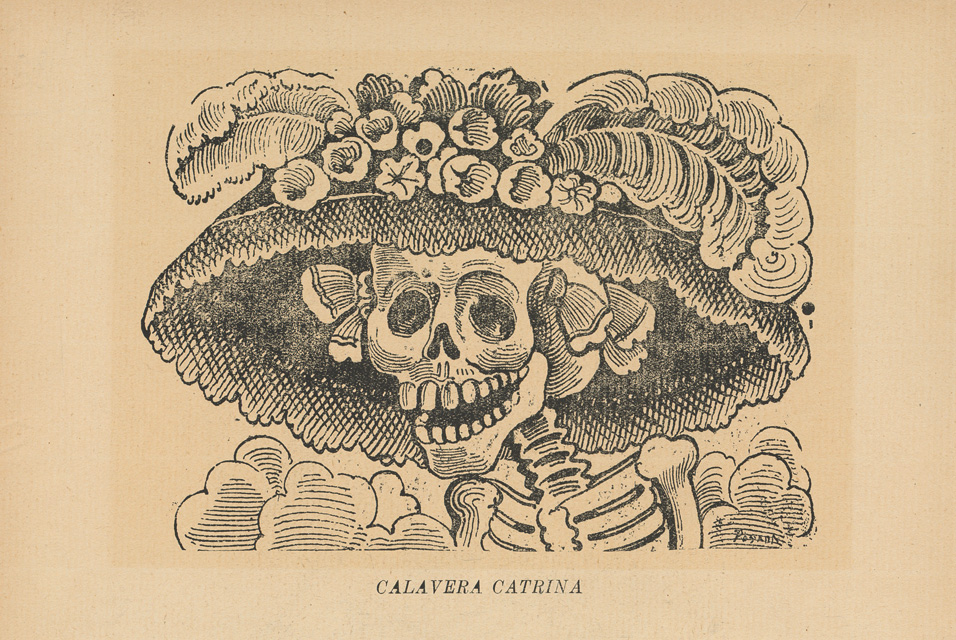
Santa Muerte is often confused with Halloween imagery or generic death cults, but it is rooted in Mexican folk religion. It differs from San La Muerte, a male counterpart in South America. While Day of the Dead focuses on ancestors, Santa Muerte worship involves direct petitions to the saint. The Catrina figure, created by José Guadalupe Posada, influenced artistic depictions but lacks religious significance. Comparisons to other death deities highlight unique aspects of the Mexican tradition, such as the emphasis on justice and protection.
Days linked to Santa Muerte
Questions people ask about Santa Muerte
Who is Santa Muerte?
Santa Muerte is a folk-Catholic saint and personification of death in Mexico and the Americas. Devotees view her as a female skeletal figure who offers protection, healing, and safe passage to the afterlife, rather than an agent of harm.
Where does the worship originate?
The practice likely stems from pre-Columbian beliefs, including the Aztec goddess Mictēcacihuātl. It persisted through the colonial era and became publicly visible in the early twenty-first century, particularly after Enriqueta Romero founded a shrine in Mexico City in 2001.
What do devotees ask for?
Followers pray for healing, prosperity, justice, and protection from violence and witchcraft. They also seek her aid in matters of love and fertility, viewing her as a compassionate guide who ensures a peaceful transition to the afterlife.
Is Santa Muerte associated with crime?
While media often links her to criminal gangs, most devotees are ordinary citizens seeking spiritual support. The association arose from high-profile arrests in the late nineteen nineties, but the majority of worshippers use her for protection and health, not illegal activities.
Good reading and sources
- Vatican declares Mexican Death Saint blasphemousBBC, Article
- Library of Congress CatalogLibrary of Congress, Article
- Santa Muerte: The rise of Mexico’s death 'saint'BBC, Article
The facts on this page come from the Wikipedia article "Santa Muerte", written by its contributors and used under the CC BY-SA 4.0 licence, and from its Wikidata record (CC0). EveryJaadu rewrote the text in its own words, with AI assistance, and compares every page with the article to make sure no passage is copied. It may be reused under the same CC BY-SA 4.0 licence with a link back.
It may contain mistakes. Names and customs differ from one community to the next, and some knowledge is closed to outsiders and left out here. This page describes belief and practice. It does not say that any of it works, it is not a how-to, and it is not medical advice. If something is wrong, tell us. Last refreshed 2026-10-06.
More from Mexico
All the entries from Mexico 🇲🇽 Mexico and 3 moreCurandero
A folk healer in Latin America and the United States who blends indigenous and Catholic traditions.Tradition · Healing · Protection Living
🇲🇽 Mexico and 3 moreCurandero
A folk healer in Latin America and the United States who blends indigenous and Catholic traditions.Tradition · Healing · Protection Living
 🇲🇽 Mexico and 5 moreWitchcraft in Latin AmericaBrujería
A syncretic blend of Indigenous, African, and European magical practices across Latin AmericaTradition · Protection · Healing Living
🇲🇽 Mexico and 5 moreWitchcraft in Latin AmericaBrujería
A syncretic blend of Indigenous, African, and European magical practices across Latin AmericaTradition · Protection · Healing Living
 🇨🇺 Cuba and 2 moreSanteríaRegla de Ocha
An Afro-Cuban religion blending Yoruba beliefs with Catholicism and SpiritismTradition · Protection · Healing Living
🇨🇺 Cuba and 2 moreSanteríaRegla de Ocha
An Afro-Cuban religion blending Yoruba beliefs with Catholicism and SpiritismTradition · Protection · Healing Living
 🇲🇽 Mexico and 5 moreDay of the DeadDía de los Muertos
A Mexican holiday honoring the dead with altars, food, and humor during Allhallowtide.Tradition · Speaking with spirits and the dead · Luck and prosperity Living
🇲🇽 Mexico and 5 moreDay of the DeadDía de los Muertos
A Mexican holiday honoring the dead with altars, food, and humor during Allhallowtide.Tradition · Speaking with spirits and the dead · Luck and prosperity Living
Related elsewhere
All tradition 🇨🇳 China and 5 moreGuanyin觀音 (Guānyīn)
The Bodhisattva of compassion, worshipped across East Asia as a listener to human sufferingBeing · Protection · Healing Living
🇨🇳 China and 5 moreGuanyin觀音 (Guānyīn)
The Bodhisattva of compassion, worshipped across East Asia as a listener to human sufferingBeing · Protection · Healing Living
 🇨🇳 China and 2 moreEight Immortals八仙
Eight legendary Taoist figures of China, each with a power and a vesselFigure · Protection · Healing Living
🇨🇳 China and 2 moreEight Immortals八仙
Eight legendary Taoist figures of China, each with a power and a vesselFigure · Protection · Healing Living
 🇹🇭 Thailand and 3 moreThai Buddha amuletsพระเครื่อง (phrakhrueang)
Sacred Buddhist images and relics worn for protection, merit, and fortune in Thailand.Charm · Protection · Luck and prosperity Living
🇹🇭 Thailand and 3 moreThai Buddha amuletsพระเครื่อง (phrakhrueang)
Sacred Buddhist images and relics worn for protection, merit, and fortune in Thailand.Charm · Protection · Luck and prosperity Living
 🇮🇹 Italy and 5 morePrecious coral
A marine skeleton harvested for jewelry and worn as a protective charm in several culturesSubstance · Protection · Healing Living
🇮🇹 Italy and 5 morePrecious coral
A marine skeleton harvested for jewelry and worn as a protective charm in several culturesSubstance · Protection · Healing Living