
Sámi drum
In its own language: goavddis
from Northern Sámi goavddis
A ceremonial instrument used by Sámi noaidi for trance and divination
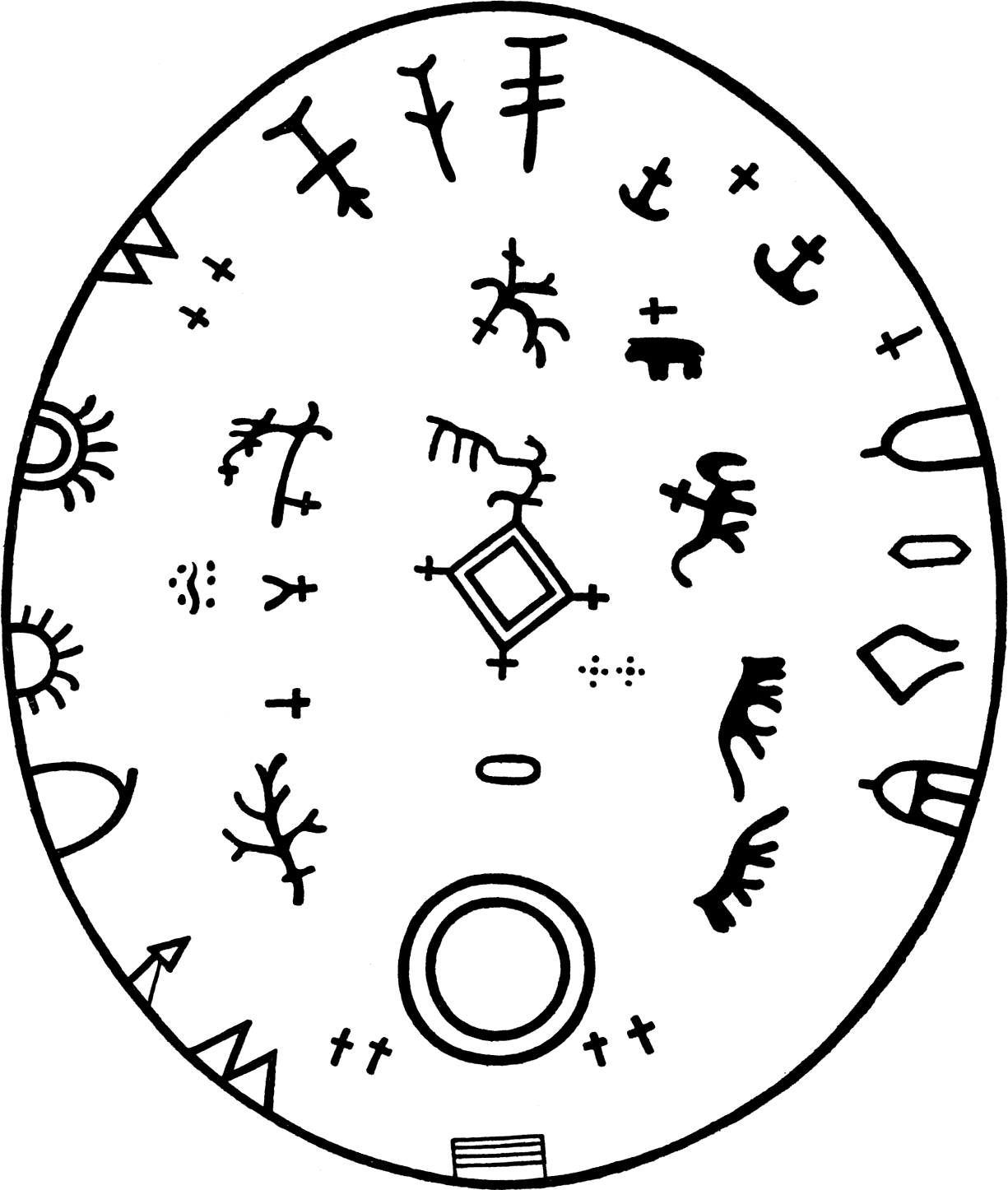
The Sámi drum is a shamanic instrument used by the Sámi people of Northern Europe. The noaidi beat the drum to enter a trance or predict events using a small pointer called a vuorbi.
- The noaidi used a brass pointer to read symbols on the drumhead
- Membranes were made from untanned reindeer calf hide
- Symbols were painted with a paste derived from alder bark
- Southern drums often feature a central rhombus-shaped sun cross
- Many drums were confiscated during 17th and 18th century missions
What it is
The Sámi drum serves as a central tool in traditional Sámi spiritual practice. It functions as a bridge between the physical world and the spirit realm. Practitioners use it to communicate with deities and ancestors. The instrument also aids in predicting future events through specific movements on its surface.
Where it comes from
Early accounts appear in the late twelfth-century Historia Norvegiæ. Later records from the seventeenth and eighteenth centuries document its widespread use. Christian missionaries and officials often confiscated these drums during the conversion period. Many were destroyed or sold to collectors.
How it is done
The noaidi holds the drum in one hand and strikes it with the other. A small die-like object called a vuorbi rests on the skin. As the drummer beats the rhythm, the pointer moves across painted symbols. The final resting place of the vuorbi indicates the answer to a question or a vision of the future.
Tools and materials
Drums are crafted from pine wood bent into an oval shape. The membrane consists of untanned reindeer hide, often taken from a calf's neck. Symbols are painted using a dark paste made from alder bark. The pointer is typically carved from brass or animal horn.
Sámi drum, drawn and placed
- Living
- Revived
- Fading
- Historical
- Legendary
- Performed
- Lineage
- Sámi shamanism
- Timing
- during trance rituals
What it is for
Users seek guidance on hunting, herding, and health. The drum helps locate lost animals or understand natural threats. It also provides insight into personal fate and community relations. The symbols reflect the owner's specific worldview and daily life.
Who does it
The noaidi acts as the ritual specialist and healer. This role involves entering altered states of consciousness. Historical sources suggest the noaidi's spirit travels to other realms while the body remains still. Training involved deep knowledge of the drum's complex iconography.
Peoples and places
Different Sámi groups developed distinct drum styles. Southern Sámi drums often feature a central sun cross. Northern types divide the surface into multiple horizontal levels representing different worlds. Frame drums are common in the south, while bowl drums appear more frequently in the north.
At a glance: who, where and when



What people believe
The drum maps a cosmology where heavens, earth, and underworld interact. Deities such as Ráðði and Horagallis inhabit these spaces. Animals like reindeer and bears hold spiritual significance. The layout mirrors the owner's landscape, including campsites and storage huts.
When it is done
Usage was tied to specific needs rather than fixed annual festivals. Rituals occurred during crises, hunts, or times of uncertainty. The drum provided answers when conventional methods failed. It served as a constant resource for navigating seasonal changes and survival challenges.
How scholars and sceptics see it
Historians analyze missionary reports and court transcripts to reconstruct practices. Anthropologists study surviving examples to understand Sámi cosmology. Researchers note that early European observers often misunderstood the symbols as runes or witchcraft signs.
Cautions and what is closed
Colonial authorities suppressed drum usage as part of Christianization efforts. Possession could lead to legal penalties or confiscation. Many drums were lost to fire or deliberate destruction. Surviving examples are now held in museums, limiting public access to sacred knowledge.
Compare and confuse
The drum shares features with Siberian shamanic instruments. Both use animal skins and rhythmic beating to induce trance. However, Sámi drums feature unique painted iconographies reflecting local ecology. They differ from later folk charms by their complex structural designs.
Questions people ask about Sámi drum
What is a Sámi drum?
It is a ceremonial instrument used by Sámi shamans for divination and trance. The drum features painted symbols that guide spiritual journeys and predictions.
How does the drum work for prediction?
A small pointer moves across the skin as the drum is beaten. Its final position indicates specific symbols that reveal answers about the future or hidden matters.
Where did the tradition originate?
The practice is indigenous to Northern Europe among Sámi communities. Early written records date back to the twelfth century, describing its use in healing and prophecy.
Why are they called rune drums?
Early European observers mistakenly identified the painted symbols as Norse runes. This name persists in some languages, though it reflects a misunderstanding of the original iconography.
Good reading and sources
- Encyclopaedia BritannicaArticle
- Three centuries on, a shaman’s precious rune drum returns homeThe Guardian, Article
- Sámi drum on WikipediaEncyclopedia
- More photos on Wikimedia CommonsPhotos and video
- Wikidata recordOpen data
The facts on this page come from the Wikipedia article "Sámi drum", written by its contributors and used under the CC BY-SA 4.0 licence, and from its Wikidata record (CC0). EveryJaadu rewrote the text in its own words, with AI assistance, and compares every page with the article to make sure no passage is copied. It may be reused under the same CC BY-SA 4.0 licence with a link back.
It may contain mistakes. Names and customs differ from one community to the next, and some knowledge is closed to outsiders and left out here. This page describes belief and practice. It does not say that any of it works, it is not a how-to, and it is not medical advice. If something is wrong, tell us. Last refreshed 2026-10-06.
More from Norway
All the entries from Norway 🇸🇪 Sweden and 2 moreDísdísir
Female spirits of fate and protection in Norse traditionBeing · Protection · Luck and prosperity Historical
🇸🇪 Sweden and 2 moreDísdísir
Female spirits of fate and protection in Norse traditionBeing · Protection · Luck and prosperity Historical
 🇮🇸 Iceland and 1 moreNorse mythology
The mythic tales of the North Germanic peoples and their ancient gods.Tradition · Wonder and entertainment Historical
🇮🇸 Iceland and 1 moreNorse mythology
The mythic tales of the North Germanic peoples and their ancient gods.Tradition · Wonder and entertainment Historical
 🇬🇧 United Kingdom and 4 moreCunning folk
European practitioners of folk medicine and helpful magic from the Middle Ages to the twentieth centuryTradition · Protection · Healing Historical
🇬🇧 United Kingdom and 4 moreCunning folk
European practitioners of folk medicine and helpful magic from the Middle Ages to the twentieth centuryTradition · Protection · Healing Historical
 🇸🇪 Sweden and 2 moreGermanic seeressvǫlva
Diviners and sorceresses of early Germanic and Norse societyTradition · Seeing and foretelling · Power and authority Revived
🇸🇪 Sweden and 2 moreGermanic seeressvǫlva
Diviners and sorceresses of early Germanic and Norse societyTradition · Seeing and foretelling · Power and authority Revived
Related elsewhere
All tradition 🇮🇹 ItalyEtruscan religion
The polytheistic beliefs and divination practices of the ancient Etruscans of ItalyTradition · Seeing and foretelling · Speaking with spirits and the dead Historical
🇮🇹 ItalyEtruscan religion
The polytheistic beliefs and divination practices of the ancient Etruscans of ItalyTradition · Seeing and foretelling · Speaking with spirits and the dead Historical
 🇮🇹 ItalyCumaean SibylSibylla Cumana
The priestess of the Apollonian oracle at Cumae, famous in Roman legend for her prophetic books and underworld guidance.Figure · Seeing and foretelling · Speaking with spirits and the dead Legendary
🇮🇹 ItalyCumaean SibylSibylla Cumana
The priestess of the Apollonian oracle at Cumae, famous in Roman legend for her prophetic books and underworld guidance.Figure · Seeing and foretelling · Speaking with spirits and the dead Legendary
 🇨🇳 China and 3 moreTang-ki童乩 (tóngjī); 乩童 (jītóng)
A Chinese folk-religion medium whose body a deity is held to take overTradition · Speaking with spirits and the dead · Seeing and foretelling Living
🇨🇳 China and 3 moreTang-ki童乩 (tóngjī); 乩童 (jītóng)
A Chinese folk-religion medium whose body a deity is held to take overTradition · Speaking with spirits and the dead · Seeing and foretelling Living
 🇸🇪 Sweden and 1 moreSoul flight
A trance practice where the spirit leaves the body to visit other realmsRite · Healing · Seeing and foretelling Historical
🇸🇪 Sweden and 1 moreSoul flight
A trance practice where the spirit leaves the body to visit other realmsRite · Healing · Seeing and foretelling Historical