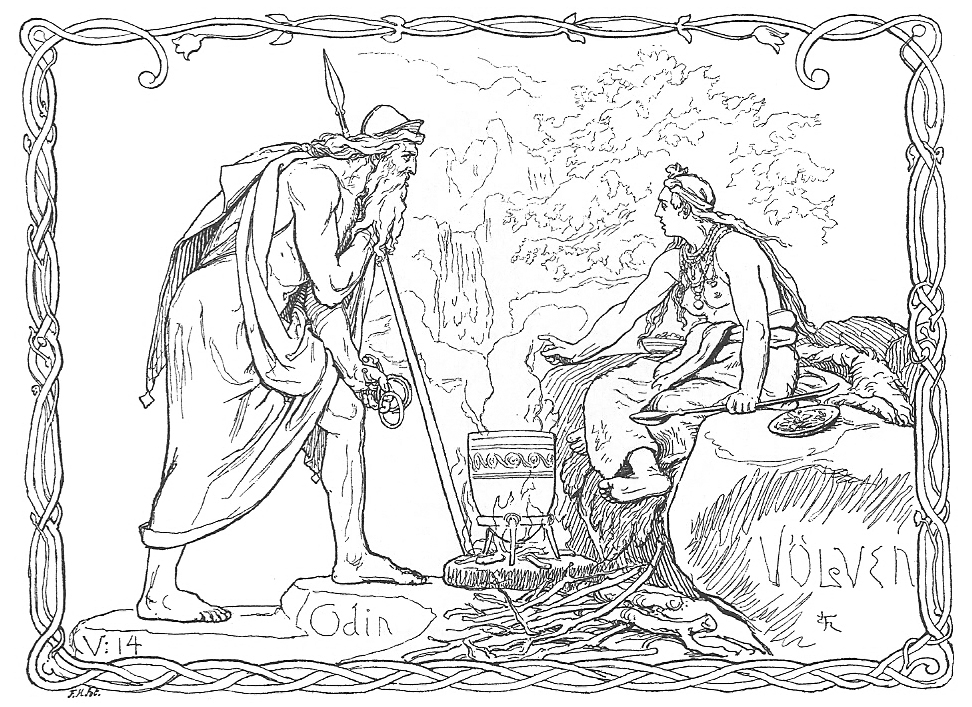
This collection of stories comes from the Old Norse religion of Scandinavia. It features gods like Odin and Thor, giants, and a world tree called Yggdrasil. The myths describe the creation of the world and its eventual destruction in Ragnarök.
- Snorri Sturluson wrote the Prose Edda in the 13th century.
- Yggdrasil is the central world tree connecting Nine Worlds.
- Ragnarök foretells the gods' battle and world's rebirth.
- Thor wields Mjölnir, a hammer that crushes mountains.
- Odin hung on Yggdrasil to gain knowledge of runes.
What it is
Norse mythology is the body of stories from the North Germanic peoples. It stems from Old Norse religion and continued as folklore after Christianization. The tales feature deities, heroes, and beings like jötnar. These narratives explain the cosmos, which consists of Nine Worlds around the sacred tree Yggdrasil. The myths describe the origins of the world and its future end at Ragnarök. Scholars study these texts to understand the beliefs of Viking Age Scandinavia. The stories are preserved in medieval manuscripts and archaeological finds.
Where it comes from
The myths originate from Proto-Germanic folklore and Old Norse religion. They were recorded primarily in Iceland during the 13th century. Key sources include the Prose Edda by Snorri Sturluson and the Poetic Edda. These texts collected oral traditions from pre-Christian times. Other sources include sagas, runestones, and amulets. The religion spread across Scandinavia before Christianization. Later texts show euhemerization, treating gods as historical figures. Comparative linguistics links these myths to broader Indo-European traditions.
Tools and materials
Scholars use various tools to study these myths. They analyze Old Norse texts like the Eddas. Archaeological objects such as Thor's hammer amulets provide evidence. Runes on stones and artifacts mention mythic figures. Place names bearing god names offer clues about local worship. Linguistic comparisons help reconstruct earlier myth forms. These methods reveal how the stories were told and remembered over centuries.
Norse mythology, drawn and placed
- Living
- Revived
- Fading
- Historical
- Legendary
- Performed
- Lineage
- Germanic mythology
What it is for
The myths served to explain the world and human place in it. They described the gods' interactions with humanity and giants. Stories of creation and destruction provided a cosmic framework. Rituals and charms referenced these tales for protection or power. The narratives reinforced social values and religious beliefs. They offered explanations for natural phenomena and fate. Modern interest focuses on cultural heritage and historical understanding.
Who does it
Medieval Icelandic scholars like Snorri Sturluson compiled these myths. Skalds composed poetry using mythic themes and kennings. Modern scholars analyze the texts through history and linguistics. Neopagans revive some beliefs as Germanic Neopaganism. The original practitioners were priests and laypeople in Scandinavia. Their knowledge was transmitted orally before being written down.
Peoples and places
The myths belong to the Norse culture and Vikings. They originated in Scandinavia, particularly Norway and Sweden. Iceland played a key role in preserving the written records. The stories spread with Norse migration and trade. Different regions may have had local variations in the tales. The corpus includes Icelandic family sagas and legendary accounts. These texts reflect the worldview of North Germanic peoples.
At a glance: who, where and when


What people believe
Believers held that gods like Odin and Thor influenced daily life. The cosmos was seen as interconnected through Yggdrasil. Fate was controlled by Norns and other female beings. Afterlife destinations included Valhalla, Fólkvangr, or Hel. Ragnarök was believed to be a future cataclysm and rebirth. Gods interacted with humans, giants, and other creatures. Beliefs included reincarnation and cyclic time. Magic practices like seiðr were associated with specific deities.
How scholars and sceptics see it
Scholarly discourse began in the 17th century with European intellectuals. Comparative mythology links Norse tales to other Indo-European myths. Historical linguistics traces terms back to Proto-Germanic roots. Researchers study euhemerization in texts like Heimskringla. Archaeologists interpret artifacts as depictions of mythic scenes. Psychologists analyze symbols like the world tree and fate. Skeptics view the myths as cultural constructs rather than literal truth.
Compare and confuse
Norse mythology is part of broader Germanic mythology. It shares elements with Old High German and Anglo-Saxon traditions. Comparisons with Celtic and Hindu myths reveal common Indo-European roots. The term 'Norse' distinguishes it from other Germanic branches. 'Scandinavian' and 'Nordic' are often used interchangeably. Modern pop culture references differ significantly from medieval sources.
Today
Interest in Norse mythology persists in modern popular culture. Romanticist Viking revivals sparked renewed attention. Germanic Neopagan groups practice revived religious forms. Academic study continues through philology and archaeology. Merchandise and media frequently adapt mythic characters. Cultural heritage preservation efforts protect related sites and texts.
Questions people ask about Norse mythology
What is Norse mythology?
It is the collection of myths from the Old Norse religion of Scandinavia. It features gods, giants, and a complex cosmology centered on Yggdrasil.
Where does it come from?
It originates from the North Germanic peoples and Proto-Germanic folklore. Most surviving texts were recorded in Iceland during the Middle Ages.
Who are the main gods?
Key figures include Odin, the wise ruler; Thor, the thunder god; and Freyja, the goddess of love and war. They interact with humans and giants.
How was it preserved?
It was preserved through oral tradition and later written in manuscripts like the Eddas. Archaeological finds also provide evidence of these beliefs.
Good reading and sources
- Norse mythology on WikipediaEncyclopedia
- More photos on Wikimedia CommonsPhotos and video
- Wikidata recordOpen data
The facts on this page come from the Wikipedia article "Norse mythology", written by its contributors and used under the CC BY-SA 4.0 licence, and from its Wikidata record (CC0). EveryJaadu rewrote the text in its own words, with AI assistance, and compares every page with the article to make sure no passage is copied. It may be reused under the same CC BY-SA 4.0 licence with a link back.
It may contain mistakes. Names and customs differ from one community to the next, and some knowledge is closed to outsiders and left out here. This page describes belief and practice. It does not say that any of it works, it is not a how-to, and it is not medical advice. If something is wrong, tell us. Last refreshed 2026-10-06.
More from Iceland
All the entries from Iceland 🇸🇪 Sweden and 2 moreDísdísir
Female spirits of fate and protection in Norse traditionBeing · Protection · Luck and prosperity Historical
🇸🇪 Sweden and 2 moreDísdísir
Female spirits of fate and protection in Norse traditionBeing · Protection · Luck and prosperity Historical
 🇷🇴 Romania and 5 moreVampire folklore
Global legends of blood-drinking spirits and undead revenantsBelief · Cursing and harm · Protection Historical
🇷🇴 Romania and 5 moreVampire folklore
Global legends of blood-drinking spirits and undead revenantsBelief · Cursing and harm · Protection Historical
 🇮🇸 Iceland and 2 moreSeiðr
A Norse magic of fate and spirit, practiced by seers and sorcerers in the Viking Age.Tradition · Seeing and foretelling · Cursing and harm Revived
🇸🇪 Sweden and 3 moreRunic magic
The use of ancient Germanic letters for spells, divination, and protectionTradition · Protection · Seeing and foretelling Living
🇮🇸 Iceland and 2 moreSeiðr
A Norse magic of fate and spirit, practiced by seers and sorcerers in the Viking Age.Tradition · Seeing and foretelling · Cursing and harm Revived
🇸🇪 Sweden and 3 moreRunic magic
The use of ancient Germanic letters for spells, divination, and protectionTradition · Protection · Seeing and foretelling Living
Related elsewhere
All tradition 🇪🇬 Egypt and 1 moreSphinx
A mythical hybrid with a human head and lion body, serving as guardian or riddler in Egyptian and Greek traditions.Being · Protection · Wonder and entertainment Legendary
🇨🇱 ChileChilean mythology
The myths and legends of Chile, blending indigenous roots with colonial influences.Tradition · Wonder and entertainment Living
🇷🇺 Russia and 3 moreNart sagaНарты кадджытæ
A collection of epic tales from the North Caucasus about a legendary group of heroes.Text · Wonder and entertainment Historical
🇪🇬 Egypt and 1 moreSphinx
A mythical hybrid with a human head and lion body, serving as guardian or riddler in Egyptian and Greek traditions.Being · Protection · Wonder and entertainment Legendary
🇨🇱 ChileChilean mythology
The myths and legends of Chile, blending indigenous roots with colonial influences.Tradition · Wonder and entertainment Living
🇷🇺 Russia and 3 moreNart sagaНарты кадджытæ
A collection of epic tales from the North Caucasus about a legendary group of heroes.Text · Wonder and entertainment Historical
 🇨🇳 ChinaLan Caihe藍采和
An ambiguous Taoist immortal known for a flower basket and wandering songsBeing · Wonder and entertainment Legendary
🇨🇳 ChinaLan Caihe藍采和
An ambiguous Taoist immortal known for a flower basket and wandering songsBeing · Wonder and entertainment Legendary