Phoenix
from Latin phoenīx, borrowed from Greek phoinix, possibly linked to a West Semitic word for madder dye
A legendary bird that dies and is reborn from its own ashes
The phoenix is a mythical immortal bird found in Greek, Egyptian, and Persian lore. It is said to cyclically regenerate by rising from the ashes of its predecessor.
- Classified as motif B32 in the Motif-Index of Folk-Literature
- Herodotus described it as coming from Arabia with myrrh
- Pliny recorded sightings in 96 BC and 36 AD
- Used as a symbol for Queen Elizabeth I's virginity
- Associated with the sun and cycles of time
What it is
The phoenix is a legendary bird known for its ability to be born again. It represents a cycle of death and rebirth. The creature is often linked to the sun and time. Folklorists classify it as motif B32 in the Motif-Index of Folk-Literature. It appears across many cultures as an analogue to other solar birds.
Where it comes from
Scholars have long debated where this myth began. Herodotus attributed the phoenix to Ancient Egypt. Later scholars suggested Egyptian texts were influenced by Greek folklore instead. The earliest clear mention in Greek literature comes from Hesiod. Mycenaean Greek tablets use a similar word that might mean griffin or palm tree.
How it is done
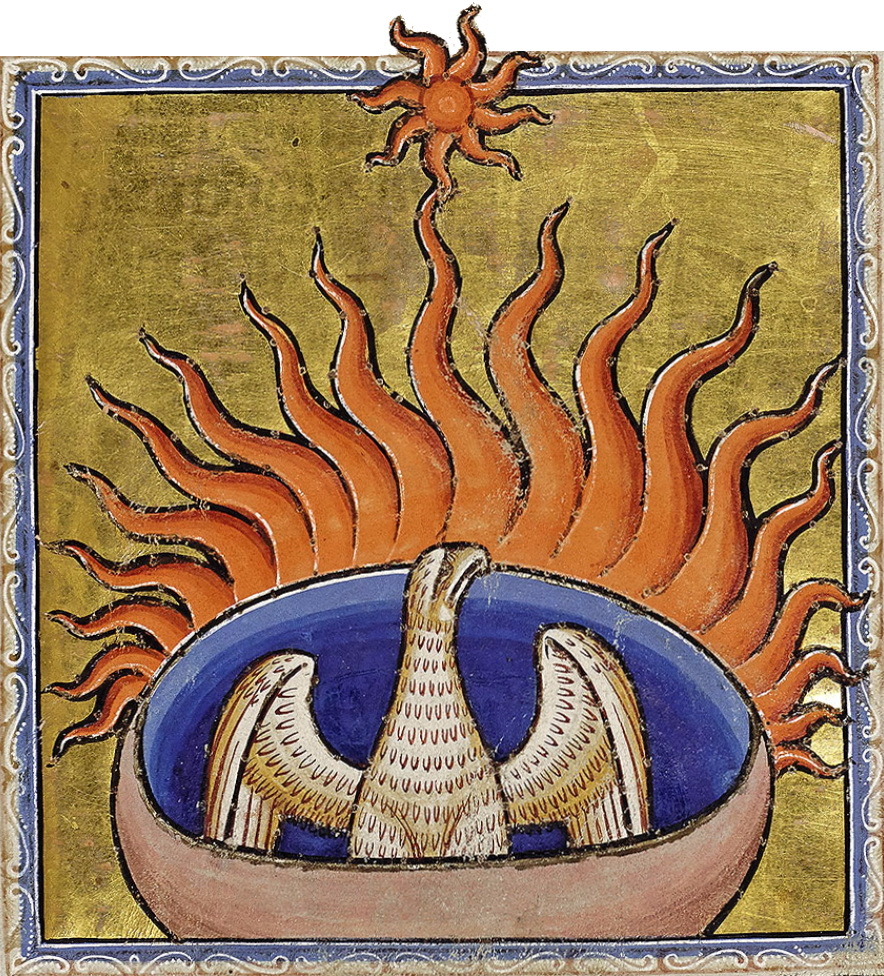
Legends describe the bird's end in different ways. Some say it dies in flames and combustion. Others claim it burns to death and decomposes before being reborn. Herodotus wrote that the bird carries its parent in a ball of myrrh to the temple of the Sun. There it buries the body before starting its new life cycle.
Tools and materials
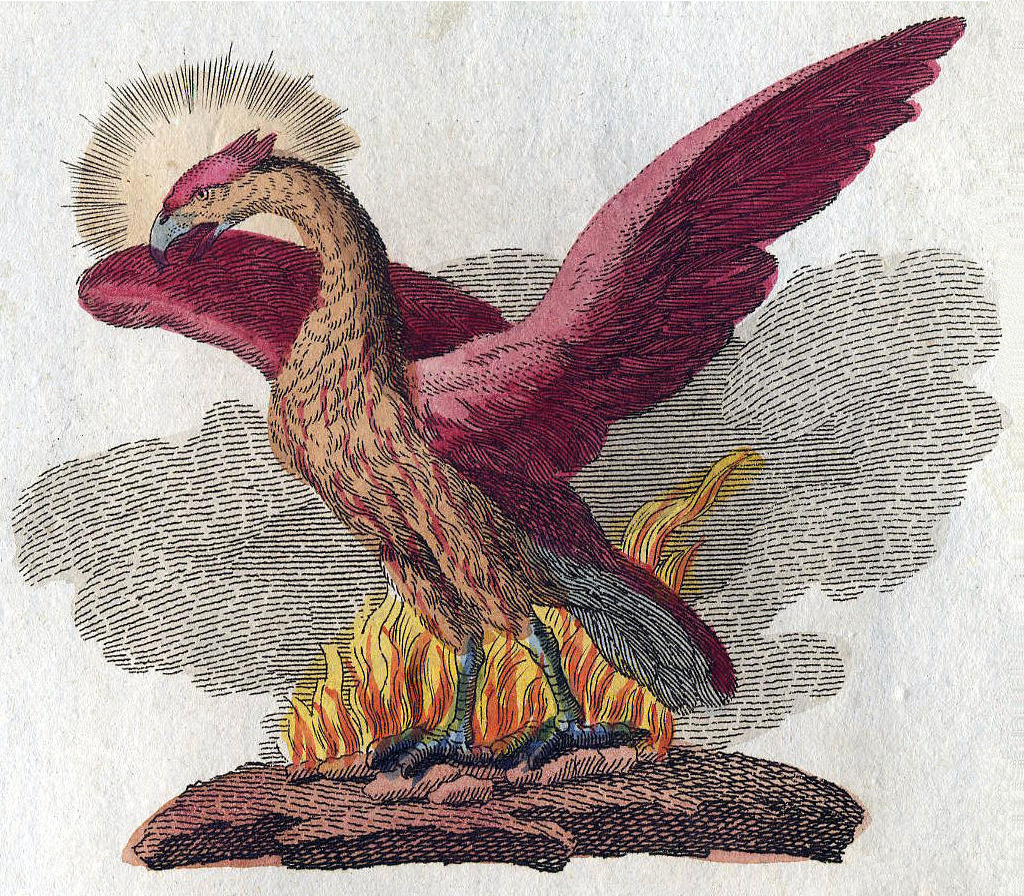
Artists often depict the bird with a halo or nimbus to show its connection to the sun. Early images feature seven rays like the personification Helios. Writers described specific colors such as red, gold, and yellow. Some accounts mention peacock-like coloring or blue eyes. The bird is sometimes shown carrying myrrh in a hollowed-out ball.
Phoenix, drawn and placed
- Living
- Revived
- Fading
- Historical
- Legendary
- Performed
- Lineage
- Greek mythology
- Timing
- every five hundred years or at the end of a Great Year
What it is for
The phoenix has been used to symbolize renewal in general. It represents the sun, time, and the Roman Empire. In Christian contexts, it symbolizes resurrection and consecration. It also stands for life in paradise and virginity. The motif was adapted to represent Christ and Mary in religious art and poetry.
Who does it
No living practitioners perform rites for the phoenix. It is a subject of study for historians and folklorists. Ancient writers like Pliny the Elder and Lactantius recorded details about the bird. They contributed to the transmission of the motif through their texts and observations.
Peoples and places
The myth originated in Greek culture but spread widely. Egyptians venerated the Bennu, a similar solar bird. Persians have the Simorgh, and Arabs the Anqa. Chinese culture features the Fenghuang. These analogues share traits with the Greek phoenix but have distinct local meanings and histories.
At a glance: who, where and when


What people believe
The bird is associated with metempsychosis and the exceptional man. It signifies the cyclical pattern of history and society. In Gnostic texts, it serves as a witness to judgment against Adam's race. The creature embodies the idea of life emerging from death without external intervention.
When it is done
Ancient sources give varying timelines for the bird's appearance. Some say it appears every five hundred years. Others suggest a cycle of 540 years or 1,461 years. Pliny noted appearances in 96 BC and 36 AD. Tacitus mentioned sightings in 34 AD during specific consulships.
How scholars and sceptics see it
Researchers analyze the phoenix as a cultural motif rather than a biological entity. Disputes exist over whether Egyptian or Greek origins came first. Scholars note that later texts may have influenced earlier ones. The bird's adaptability allows it to fit into diverse religious and secular frameworks.
Cautions and what is closed
Historical records mention fabricated phoenixes exhibited in Rome. Pliny stated that people doubted the authenticity of these displays. The myth has been used to justify political claims, such as linking Queen Elizabeth I to the bird's virginal nature. No physical dangers are associated with the creature itself.
Compare and confuse
The phoenix is confused with other mythical birds like the Garuda and Firebird. These analogues share solar attributes but differ in origin. The term phoenix is also used for heraldic emblems and constellations. Its name is linguistically linked to Phoenicians and red dyes.
Law and persecution
The phoenix is not subject to legal regulation as it is a myth. However, historical figures used the symbol for political legitimacy. Queen Elizabeth I adopted the phoenix to emphasize her unique status. The motif appears in European heraldry as a crest or charge.
Questions people ask about Phoenix
What is the phoenix?
It is a legendary immortal bird found in Greek, Egyptian, and Persian myths. It is believed to cyclically regenerate by rising from the ashes of its predecessor.
Where does the phoenix come from?
The myth originated in Greek culture but has analogues in Egypt, Persia, and India. Scholars debate whether Egyptian or Greek traditions influenced each other first.
How does the phoenix die and return?
Legends vary. Some say it dies in flames and combusts. Others claim it decomposes before being born again. Herodotus said it carried its parent in a myrrh ball to the sun temple.
What does the phoenix symbolize?
It represents renewal, the sun, time, and the Roman Empire. In Christianity, it symbolizes resurrection, consecration, and life in paradise. It also stands for virginity.
Good reading and sources
- Phoenix (mythology) on WikipediaEncyclopedia
- More photos on Wikimedia CommonsPhotos and video
- Wikidata recordOpen data
The facts on this page come from the Wikipedia article "Phoenix (mythology)", written by its contributors and used under the CC BY-SA 4.0 licence, and from its Wikidata record (CC0). EveryJaadu rewrote the text in its own words, with AI assistance, and compares every page with the article to make sure no passage is copied. It may be reused under the same CC BY-SA 4.0 licence with a link back.
It may contain mistakes. Names and customs differ from one community to the next, and some knowledge is closed to outsiders and left out here. This page describes belief and practice. It does not say that any of it works, it is not a how-to, and it is not medical advice. If something is wrong, tell us. Last refreshed 2026-10-06.
More from Greece
All the entries from Greece 🇷🇸 Serbia and 5 moreVampire
An undead creature from folklore that feeds on the blood or life force of the livingBeing · Cursing and harm · Luck and prosperity Legendary
🇷🇸 Serbia and 5 moreVampire
An undead creature from folklore that feeds on the blood or life force of the livingBeing · Cursing and harm · Luck and prosperity Legendary
 🇬🇷 GreeceCirceΚίρκη
A Greek goddess and witch known for turning men into beasts with her potionsBeing · Cursing and harm · Love and attraction Legendary
🇬🇷 GreeceCirceΚίρκη
A Greek goddess and witch known for turning men into beasts with her potionsBeing · Cursing and harm · Love and attraction Legendary
 🇬🇷 GreeceTriple Goddess
A Neopagan deity representing three female life stages and lunar phasesBeing · Power and authority Living
🇬🇷 GreeceTriple Goddess
A Neopagan deity representing three female life stages and lunar phasesBeing · Power and authority Living
 🇬🇷 Greece and 3 moreHellhound
A mythological canine that guards the underworld or serves demonic forces across global folkloreBeing · Protection · Cursing and harm Legendary
🇬🇷 Greece and 3 moreHellhound
A mythological canine that guards the underworld or serves demonic forces across global folkloreBeing · Protection · Cursing and harm Legendary
Related elsewhere
All being 🇪🇬 Egypt and 1 moreSphinx
A mythical hybrid with a human head and lion body, serving as guardian or riddler in Egyptian and Greek traditions.Being · Protection · Wonder and entertainment Legendary
🇷🇺 Russia and 3 moreNart sagaНарты кадджытæ
A collection of epic tales from the North Caucasus about a legendary group of heroes.Text · Wonder and entertainment Historical
🇨🇱 ChileChilean mythology
The myths and legends of Chile, blending indigenous roots with colonial influences.Tradition · Wonder and entertainment Living
🇪🇬 EgyptDjedi
A fictional magician from the Westcar Papyrus who resurrects animals and foretells a king's lineage.Figure · Seeing and foretelling · Wonder and entertainment Legendary
🇪🇬 Egypt and 1 moreSphinx
A mythical hybrid with a human head and lion body, serving as guardian or riddler in Egyptian and Greek traditions.Being · Protection · Wonder and entertainment Legendary
🇷🇺 Russia and 3 moreNart sagaНарты кадджытæ
A collection of epic tales from the North Caucasus about a legendary group of heroes.Text · Wonder and entertainment Historical
🇨🇱 ChileChilean mythology
The myths and legends of Chile, blending indigenous roots with colonial influences.Tradition · Wonder and entertainment Living
🇪🇬 EgyptDjedi
A fictional magician from the Westcar Papyrus who resurrects animals and foretells a king's lineage.Figure · Seeing and foretelling · Wonder and entertainment Legendary